
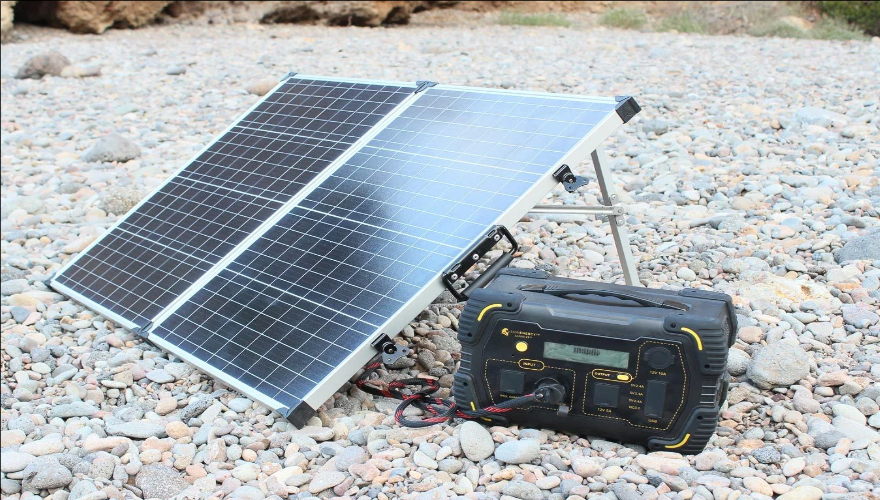
The growing popularity of portable solar power panels is driven by portability, fast deployment, and the ability to generate electricity without complex infrastructure. Simultaneously, portable solar systems must operate under constantly changing environmental conditions.
Weather plays a defining role in how much energy a solar panel can deliver and how consistently it performs over time. Sunlight intensity, ambient temperature, cloud cover, wind speed, humidity, and precipitation all interact with photovoltaic materials and electrical components in measurable ways. These influences do not simply determine peak output; they shape stability, reliability, and usable energy throughout the day.
Therefore, understanding how portable solar panels perform under real-world weather conditions can help users make more informed choices about solar panel manufacturers and select equipment that matches their actual operating environment.
Portable Solar Power Panels and Performance in Full Sunlight
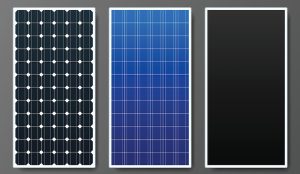
Portable solar power panels reach their highest efficiency under clear skies with direct, unobstructed sunlight. In these conditions, photovoltaic cells receive consistent irradiance, allowing them to operate near their rated capacity. High-quality portable panels typically use monocrystalline silicon cells, which offer superior conversion efficiency and more stable output compared to older cell technologies.
Sun angle and orientation significantly influence performance. Panels positioned perpendicular to incoming sunlight absorb more energy than flat-mounted units. One advantage of portable solar power panels lies in their flexibility. Users can reposition panels throughout the day to follow the sun, capturing additional energy during morning and late-afternoon hours when fixed systems underperform.
While moderate warmth supports efficient operation, excessive heat can slightly reduce voltage levels. Well-designed portable panels incorporate ventilation gaps, heat-dissipating back sheets, and temperature-tolerant materials that help maintain stable performance even during extended exposure.
Portable Solar Power Panels in Cloudy and Overcast Conditions
A portable solar power panel continues to generate electricity even when direct sunlight is limited. Cloud cover reduces irradiance, but diffused light still reaches photovoltaic cells from multiple angles. Depending on cloud thickness and sky brightness, output under overcast conditions commonly ranges from 10% to 40% of rated capacity.
Modern cell structures and surface coatings improve light capture in low-irradiance environments. Anti-reflective layers help reduce surface losses, while dense cell layouts maximize active area. Portable panels benefit further from mobility, allowing placement in locations where cloud breaks or brighter sky exposure is available.
These conditions highlight the importance of energy storage. Batteries paired with portable solar panels smooth out fluctuations caused by passing clouds, ensuring that connected equipment continues operating without interruption. So, portable solar power panels excel when expectations align with natural variability.
Effects of Rain, Snow, and Moisture Exposure
Rain and snow are common concerns for outdoor solar use, yet modern portable solar panels are designed to withstand moisture. Weather-resistant laminates, sealed junction boxes, and corrosion-resistant frames protect internal components during rainfall. Light to moderate rain does not stop power generation and may even improve performance afterward by cleaning dust and debris from the panel surface.
Snow creates a temporary obstruction rather than permanent damage. Accumulated snow blocks sunlight until removed, but portable solar panels offer a clear advantage: mobility. Panels can be tilted more steeply or repositioned to encourage snow shedding. Smooth glass surfaces and dark cell materials also help absorb heat once sunlight returns, accelerating melting.
Humidity presents longer-term considerations. In coastal regions or areas with frequent condensation, moisture-resistant connectors and protective coatings are vital for maintaining electrical integrity. High-quality portable panels are built to withstand prolonged exposure to humid air without corrosion or performance drift, making them suitable for outdoor exhibitions, waterfront installations, and rainy climates.
Wind and Temperature Extremes
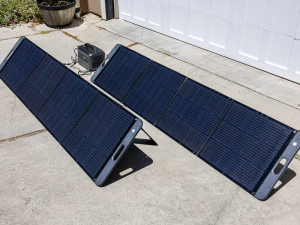
Wind affects solar panel performance both mechanically and thermally. Airflow across the panel surface helps dissipate heat, improving electrical efficiency during hot weather. This cooling effect helps maintain a more stable voltage output under strong sunlight.
At the same time, wind introduces physical stress. Portable solar panels intended for outdoor deployment are designed with reinforced frames, stable stands, and flexible mounting options to prevent vibration or tipping. Secure anchoring becomes essential in open or elevated environments, especially when panels are used to support sensitive equipment.
Temperature extremes influence different system components in distinct ways. High temperatures can slightly reduce panel voltage, while extremely cold conditions affect battery charging efficiency more than panel generation. Well-engineered portable power systems account for these factors by pairing panels with temperature-tolerant batteries and protective electronics.
Portable Solar Power Panels for Unpredictable Outdoor Conditions
Portable solar power panels are often chosen precisely because environmental conditions cannot be controlled. Construction zones, mobile LED displays, emergency response sites, and remote operations all demand energy solutions that remain functional despite changing weather.
Durability becomes a defining feature. Scratch-resistant surfaces protect against transport damage, reinforced connectors maintain electrical continuity during repeated setup, and flexible mounting systems adapt to uneven terrain. Panels designed for portable use tolerate vibration, relocation, and exposure better than rigid installations.
In unpredictable conditions, consistency outweighs peak performance. A panel that delivers stable output across clouds, wind, and temperature shifts provides greater practical value than one optimized only for ideal sunlight.
Long-Term Reliability of Portable Solar Power Panels in Real Weather
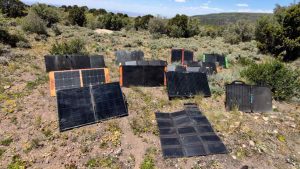
Portable solar power panels demonstrate dependable performance across diverse weather conditions when properly designed, deployed, and maintained. While sunlight intensity determines the maximum output, thoughtful engineering ensures continued operation during cloudy conditions, rain, wind, humidity, and temperature variations.
Actually, Portable solar panels are not limited to perfect weather; they are built for adaptability. Mobility, weather-resistant construction, and compatibility with energy storage systems allow them to deliver usable power where fixed infrastructure cannot.
In unpredictable weather environments, well-engineered portable solar solutions provide resilience, confidence, and operational stability.