
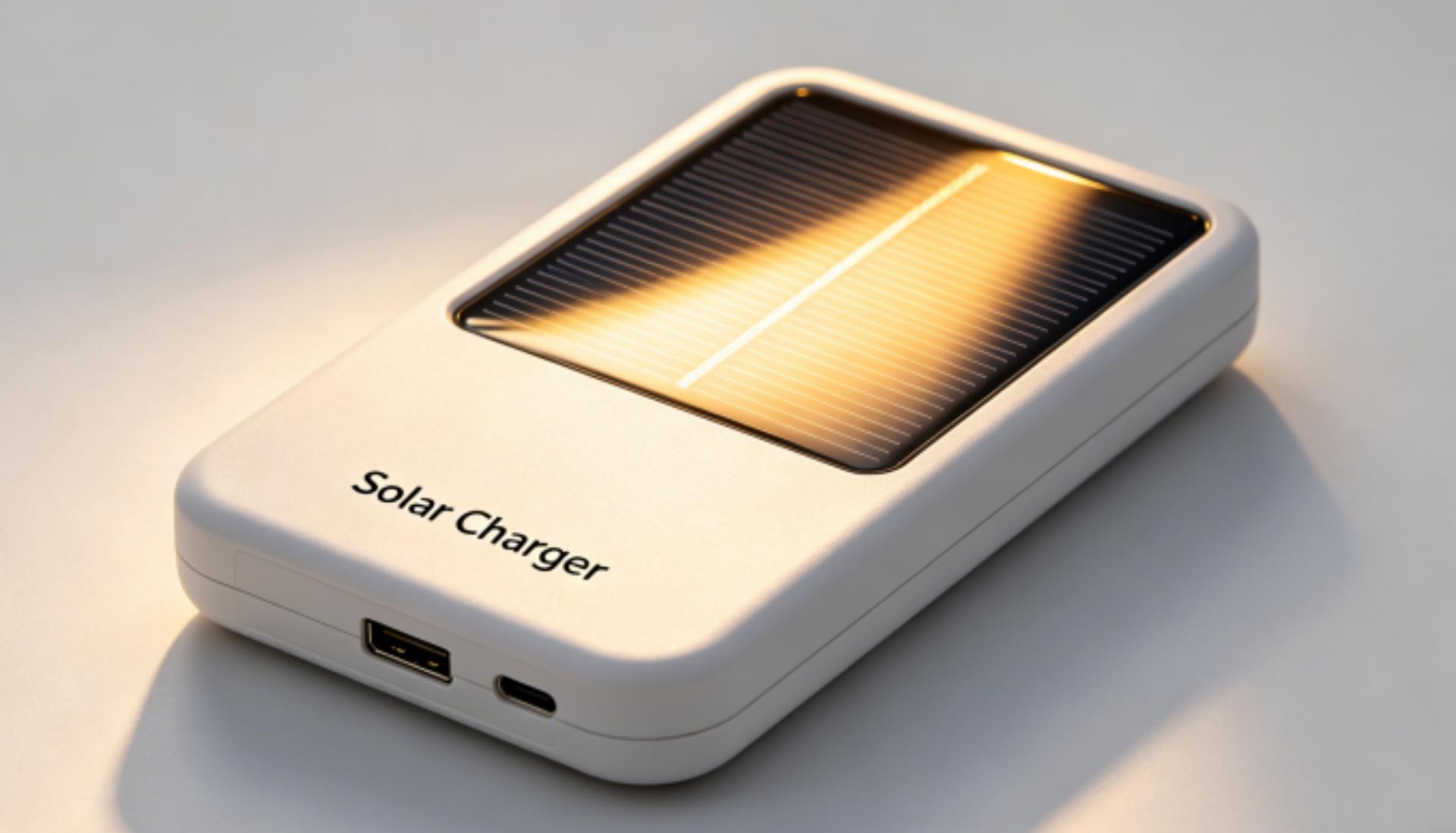
Most dead batteries aren’t caused by a bad battery. They result from a battery sitting too long with nothing sustaining it. A quality 12V solar battery charger solves that at the source. It keeps voltage topped off using sunlight alone — whether you’re parked in a field for the weekend or storing a boat through a six-month winter. The market for these chargers has expanded fast. Unfortunately, so has the quality gap. Knowing what to look for makes the difference between a unit that works for years and one that fails within a season.
Choose the Right Solar Charger to End Power Shortages
A 12-volt lead-acid battery loses roughly 1–3% of its charge per month just sitting idle. Heat accelerates that. Age accelerates it further. For anyone storing vehicles or relying on off-grid equipment, that slow drain adds up fast. Fortunately, a solar maintainer running at just 5 watts can offset that self-discharge entirely. It keeps the battery in a healthy state-of-charge with no manual intervention needed. The target range for a resting lead-acid battery is typically 12.4V–12.7V. Batteries that drop below 12V regularly will sulfate faster, reducing capacity and shortening lifespan. A 12-volt solar charging system prevents that degradation from starting in the first place.
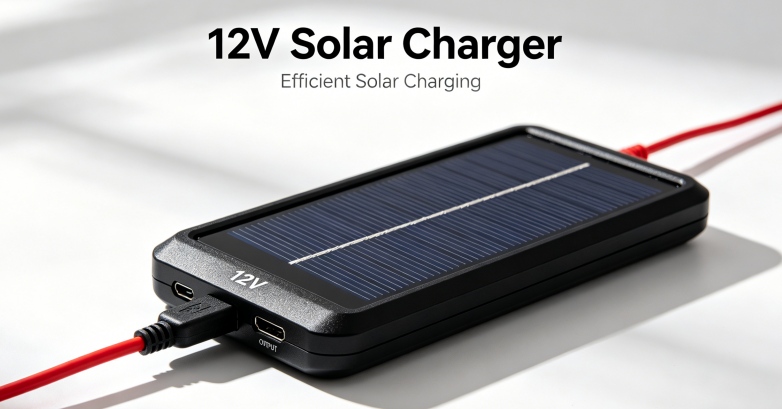
What’s Actually Inside a 12V Solar Battery Charger
The hardware looks simple — a panel, a cable, a connector. But the internal engineering determines real-world performance. Here’s what matters most.
Panel Wattage: What the Numbers Really Mean
Solar panel wattage is rated at Standard Test Conditions (STC). That means 1,000 W/m² of irradiance and a 25°C cell temperature. In practice, real-world output runs at about 70–85% of that figure. A panel rated at 10W will realistically deliver 7–8.5W outdoors. For maintenance use — keeping a resting battery topped off — a 5W to 15W panel is sufficient. For faster recovery after partial discharge, look for 20W or higher. Match the wattage to your actual use case, not just the largest number on the box.
PWM vs. MPPT Solar Charge Controllers
Most entry-level 12V solar panel battery chargers use PWM (Pulse Width Modulation) controllers. They regulate charging by rapidly switching the current on and off. They’re reliable and cost-effective for smaller systems. MPPT (Maximum Power Point Tracking) controllers work differently. They continuously optimise the panel’s voltage-current relationship to extract maximum available power. The result? Typically 20–30% more efficiency than PWM under non-ideal conditions — partial shade, temperature variation, or off-angle sunlight.
For a pure trickle-charge application, PWM is adequate. However, if you’re actively recovering a partially discharged battery, MPPT earns its price difference quickly. Also, always confirm your unit includes reverse current protection. This prevents the panel from drawing power back out of the battery at night. Reputable units include it as standard. Budget units often don’t.
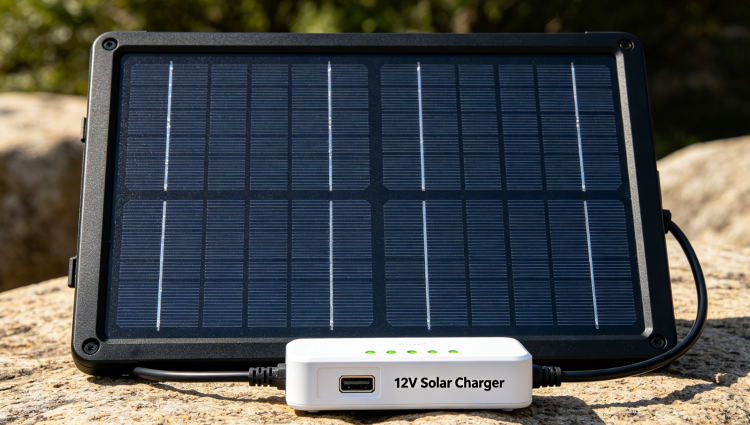
Common Use Cases for a 12-Volt Solar Battery Charger
The applications for a portable 12V solar charger are broader than most buyers expect. Here are the most common:
Stored vehicles — Cars, motorcycles, ATVs, and classic cars lose charge through parasitic draw — alarms, clocks, and ECUs all pull current. A solar maintainer eliminates the need for periodic manual charging.
Marine use — Boat batteries face self-discharge plus the challenge of no shore power. A 10–20W panel mounted on the deck can maintain battery banks through an entire off-season. No manual intervention required.
RVs and campers — Auxiliary batteries powering lighting, refrigeration, and USB loads can be partially recharged daily from a rooftop panel. This extends off-grid capability significantly.
Agricultural equipment — Electric fences, remote water pumps, and monitoring systems in areas without grid access rely entirely on solar charging systems to stay operational.
Matching Your 12V Solar Charger to Your Battery Type
Not all 12V batteries charge the same way. Using the wrong charge profile accelerates degradation. Here’s how to match them correctly.
Flooded lead-acid batteries are the most forgiving. They accept a wide charge voltage range — up to 14.4–14.8V for absorption. Most standard solar chargers are calibrated for these.
AGM batteries require a slightly lower absorption voltage, typically 14.2–14.6V. They’re also sensitive to overcharging. As a result, a charger with an AGM-specific mode or adjustable output is strongly recommended.
Lithium (LiFePO4) batteries need a dedicated lithium charge profile. That means constant current to roughly 14.2–14.6V, then a clean cut-off, with no float stage. Using a lead-acid profile on a lithium battery risks triggering the battery’s BMS protection circuit. If your battery is lithium, confirm your 12V solar trickle charger explicitly supports lithium chemistry before purchasing.
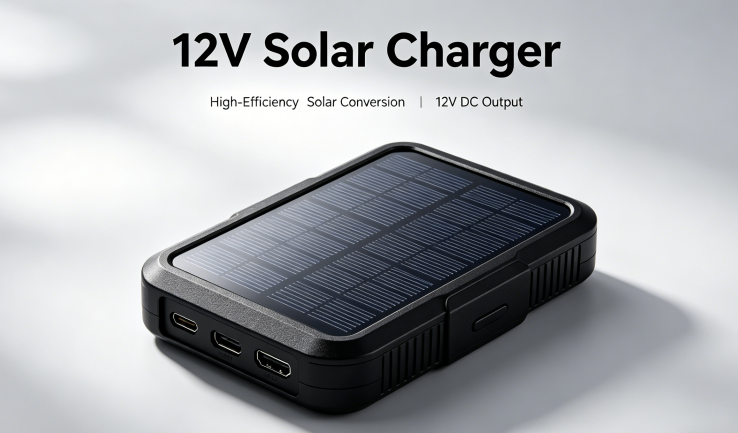
Why Quality 12V Solar Chargers Beat Budget Versions?
The spec sheet tells only part of the story. These are the details that determine long-term reliability — and they’re rarely on the label.
Weather resistance — Any outdoor solar charger should carry at a minimum an IP65 rating on the charge controller. For the panel itself, use tempered glass over monocrystalline cells. Thin-film on flexible plastic backing degrades faster under UV.
Cable quality — Undersized wire creates resistance losses that reduce effective charging current. Specifically, look for 12–14 AWG cable for runs under 10 feet. In marine or humid environments, tinned copper conductors outperform aluminium significantly.
Temperature compensation — This feature allows the controller to automatically adjust voltage targets based on ambient temperature. It prevents undercharging in cold climates and overcharging in heat. Quality units include it. Budget units skip it.
Warranty length — A manufacturer offering a two-year warranty typically builds a more reliable product than one offering 90 days. When spec sheets look similar, warranty length is a useful tiebreaker.
A suitable 12V solar battery charger
Once a solid 12V solar battery charger is in place, battery maintenance stops being something you manage reactively. It simply happens — automatically, silently, and without your involvement. Match the wattage to your discharge rate. Match the charge profile to your battery chemistry. Prioritise build quality over the lowest price. The chargers that hold up through temperature swings and years of outdoor exposure are easy to identify — and they’re worth every bit of the premium.