
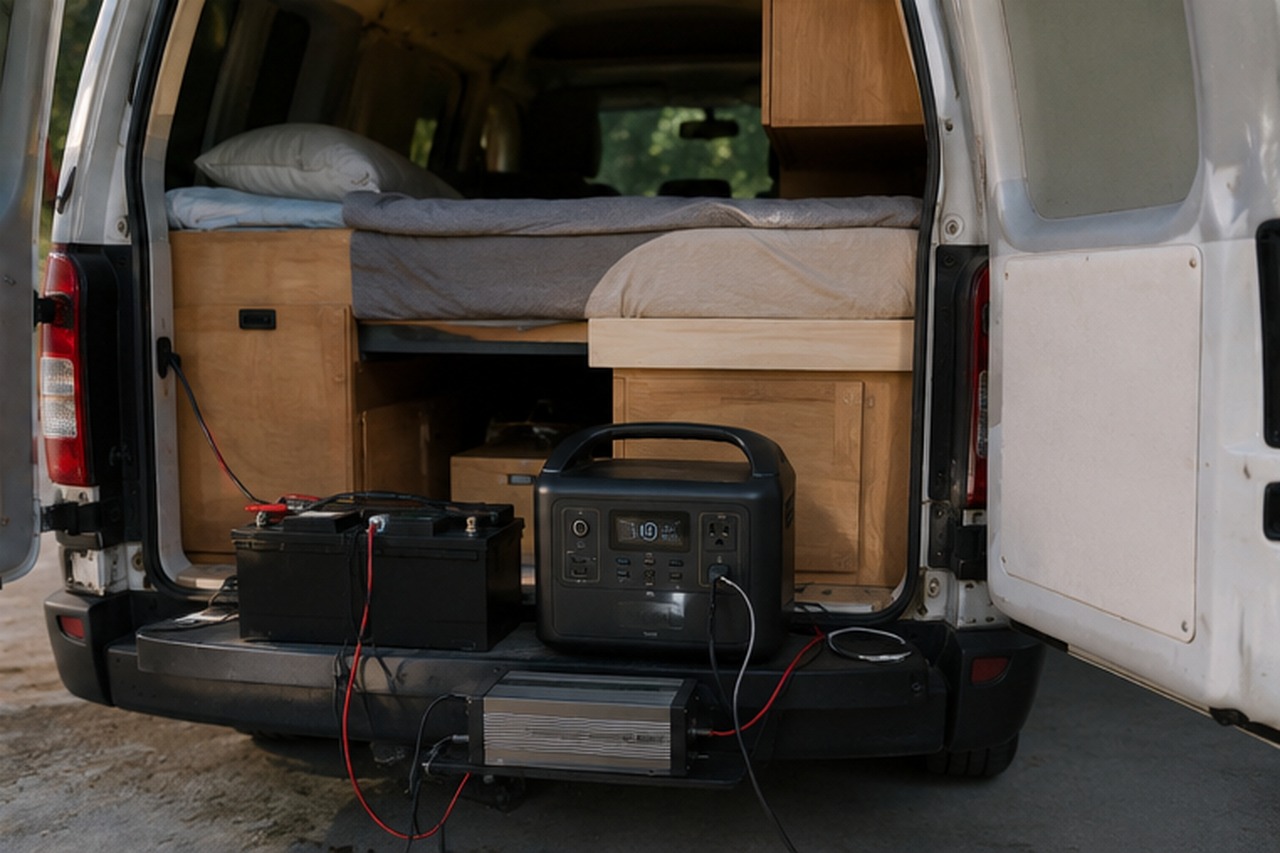
Most buyers pick a portable inverter the same way they pick a USB charger — grab the highest wattage they can afford and hope for the best. That approach wastes money on devices that sit idle and creates frustration when surge loads trip the breaker. A portable inverter only earns its place when its specs match how you actually pull power.
What Is a Portable Inverter and How Does It Work?
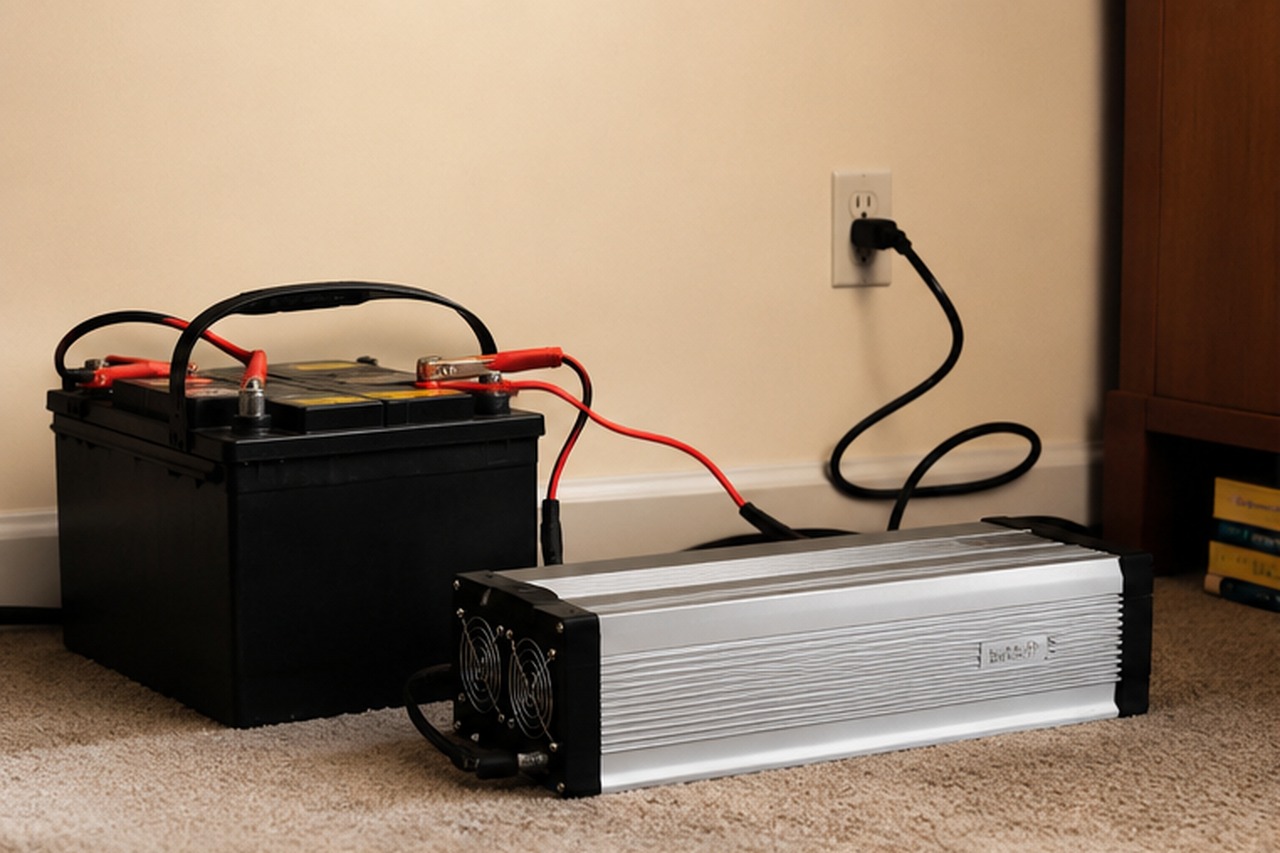
A portable inverter converts direct current from a battery or vehicle into alternating current that household electronics expect. Think of it as a translator. It sits between your 12V or 24V power source and any device built for wall-outlet power.
Three specs define how a portable inverter performs in real use: input voltage range, continuous output wattage, and waveform type. Continuous wattage is what the unit runs all day. Surge wattage covers the brief spike when a motor kicks on. The gap between those two ratings often ranges from 50% to 200%, depending on the model.
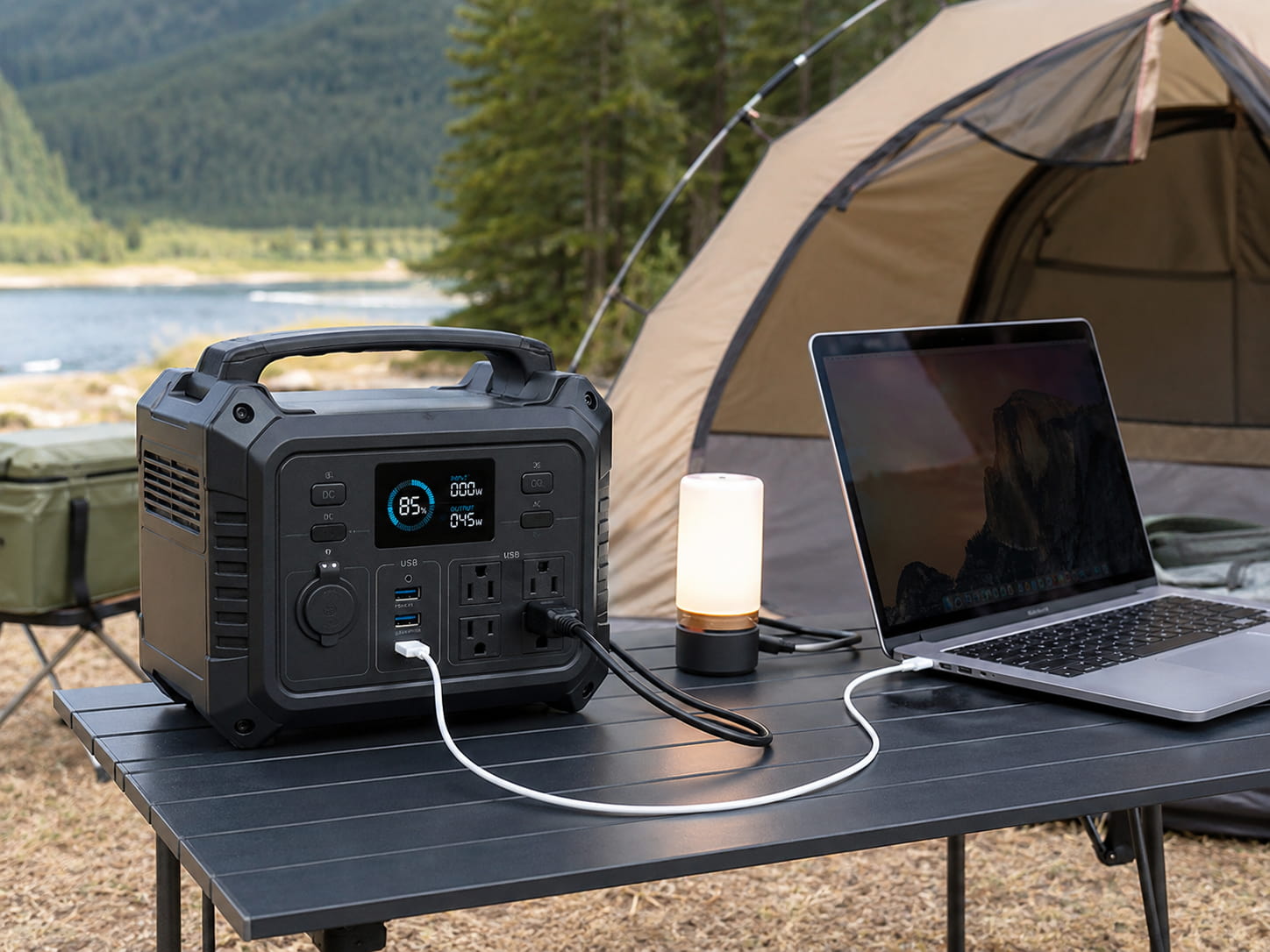
Waveform matters because not every device tolerates the same AC current waveform. Pure sine wave output mirrors utility power and runs everything cleanly. Modified sine wave power supplies cost less but can damage motors, medical equipment, and sensitive electronics over time. One clarification: a portable inverter is not a power station. It converts only—you bring the DC source; it delivers the AC.
Common Use Cases and Specs for a Portable Inverter
No two buyers need the same portable inverter, because no two power loads look the same. A trucker running a laptop and a CPAP machine sits in one wattage bracket. An RV owner running a microwave off a 200Ah lithium bank sits in another. Sizing the unit to the actual application — not the brochure spec — is what separates a useful buy from an expensive paperweight.
The cleanest way to frame the decision is by power tier—light-duty setups under 500W are suitable for fore vehicle use and light camping. Heavy-duty setups starting at 1500W handle sustained loads in RVs, boats, and off-grid builds. Drop into the wrong tier and the inverter either overheats under load or wastes money sitting idle. Each tier maps cleanly onto specific use cases and the spec recommendations that fit them.
Light-Duty Setups — 300–500W Pure Sine for Cars and Trucks
Drivers and truckers spending hours on the road need to keep laptops, phones, and small appliances running between stops. Truckers in particular rely on mini fridges and CPAP machines while parked overnight. The cigarette lighter socket usually draws at around 150–180 watts before the fuse blows, so any setup beyond that needs a direct battery connection.
A 300W pure sine wave unit covers most road needs: a laptop, a phone fast charger, and small camera gear. Step up to 500W for a 12V cooler or CPAP machine. Pure sine is the smarter buy here because modified sine can cause audible distortion in laptop adapters and shorten CPAP motor life. Auto-shutoff protection is essential — trucker setups left running overnight will drain a starter battery in hours, which means a tow-truck call in the morning.
Heavy-Duty Setups — 1500W+ for RVs, Marine, and Off-Grid Use
RVs, overland rigs, boats, and off-grid cabins all push past what a cigarette-lighter inverter can deliver. RV travelers run microwaves, induction cooktops, and roof AC units off house batteries. Overland builds add power tools and recovery winches. Marine setups face salt corrosion plus the need for rock-stable frequency on GPS, radar, and fish finders. Off-grid users pair the inverter with solar panels and a battery bank to run refrigerators, well pumps, and lighting.
Most builds in this category require 2000W continuous power with at least 4000W of surge headroom. An inverter charger combines conversion and shore power battery charging, simplifying RV wiring and eliminating redundant components. Marine applications layer one extra requirement: a sealed, corrosion-resistant housing with low-voltage cutoff protection, because draining a starter battery offshore turns into a safety event. Off-grid sizing starts with the battery bank, not the inverter. A 2000W inverter pulls roughly 200 amps from a 12V battery at full load — draining a 100Ah battery in 30 minutes, a premium inverter suddenly feels useless. Hardwire with proper cable gauge, typically 2/0 AWG for a 2000W unit, to prevent the voltage drop that kills efficiency.
Common Mistakes Buyers Make with a Portable Inverter
Undersizing for surge loads. Refrigerator compressors, power tools, and water pumps can draw three to seven times their running wattage at startup. A 1000W unit that handles an 800W microwave fine will trip when the fridge compressor cycles on. Size for peak surge, not continuous draw alone.
Choosing the wrong waveform. Modified sine wave saves real money up front but ruins TVs, laser printers, microwaves, and most medical devices. The damage often shows up months later as overheating or premature failure, with no obvious cause.
Ignoring the battery and cable gauge. A 2000W inverter on a thin 8-gauge cable loses up to 15% of its output to heat in the wire alone. Cable size and battery capacity matter as much as the inverter rating itself.
Overpaying for unused headroom. A 3000W inverter drawing 200W still has idle current that drains the battery around the clock. Match the unit to your real load, not your aspirational one.
Match Your Portable Inverter to How You Actually Use Power
Pull out a notepad before you pull out a credit card. Write down every device you’ll actually run, find their continuous and surge wattage on the labels, and add 20% headroom. That number — not the bestseller list or the biggest discount — tells you what to buy. A portable inverter is a tool sized for a job. The best unit is the one whose continuous wattage, waveform, and protection features map cleanly onto what you plug in. Start with the load, work backward to the spec, and the right choice usually picks itself.