
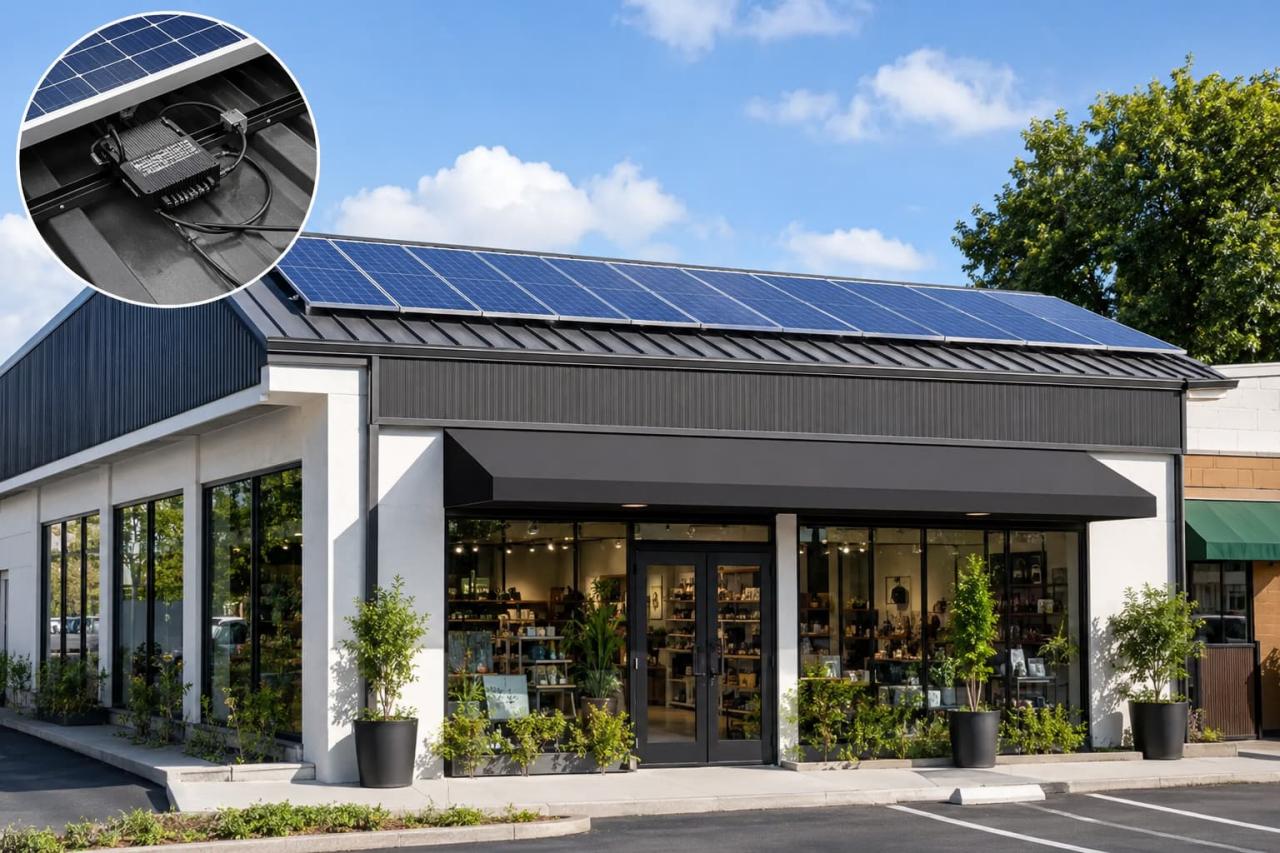
A small shop can use a solar panel micro inverter when its roof has enough space for panels, safe wiring access, and a suitable connection plan. The better question is whether the shop roof actually needs this type of inverter. Many small shops deal with shade from signs, nearby buildings, trees, or rooftop air-conditioning units. Some shops also have limited roof space, uneven sunlight, or plans to add more panels. In those cases, a solar panel microinverter can give each panel more control and make the system easier to expand and troubleshoot.
Why Can Small Shops Use a Solar Panel Micro Inverter?
Small shops can use a solar panel microinverter because the system can be planned around each solar panel rather than a single large inverter location. This matters on small commercial roofs, where space is often tight, and equipment placement is rarely perfect. A shop roof may accommodate only a small number of panels, so the design needs to fit the available area rather than forcing a large system layout onto a small building. A micro inverter usually works at the panel level. Each panel connects to its own inverter, and the system then sends usable AC power into the shop’s electrical system. This layout can suit cafés, small grocery stores, salons, retail shops, repair shops, and street-facing stores with compact roofs.
Before installation, the shop owner still needs a roof check. The roof must support the mounting structure, leave space for maintenance, and allow safe cable routing. The installer also needs to confirm local grid rules if the shop wants a grid-tied system. Once those basics are clear, a panel-level inverter system can be sized according to the actual panel count. This setup also helps shops that want to start small. A store owner may install a few panels first to reduce daytime electricity use. Later, the shop can add more panels if the roof and electrical design allow it. That staged approach feels more realistic for small businesses that need to control upfront cost, because apparently, businesses enjoy surviving cash flow first, a shocking development.
What Shop Problems Can a Solar Panel Micro Inverter Solve?
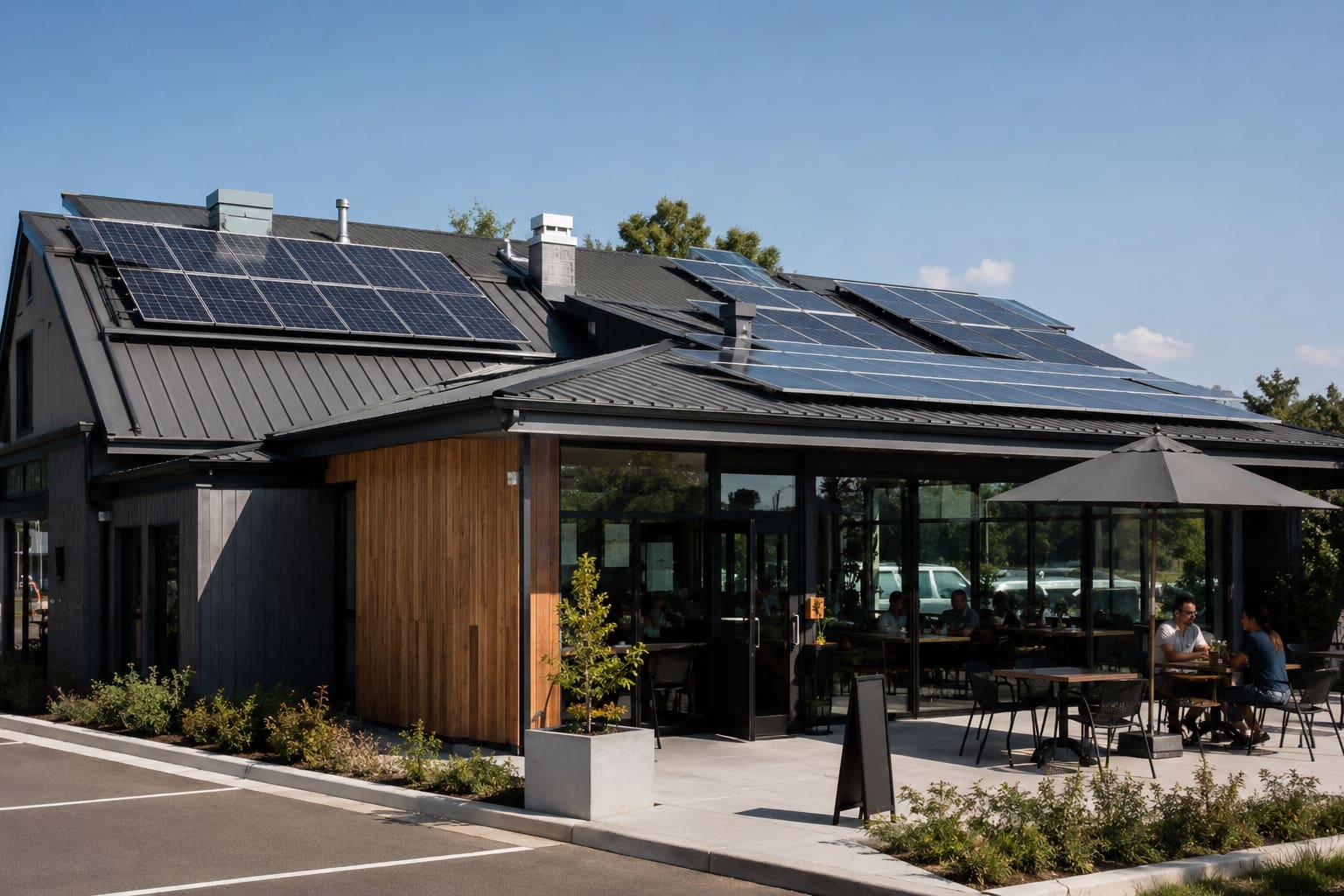
Most small shops do not receive steady sunlight all day. Signs, nearby buildings, rooftop air-conditioning units, trees, parapet walls, vents, and service equipment can all create partial shade across the roof. A solar panel micro inverter helps when one panel performs worse than the others. In a traditional string setup, shade, dirt, angle mismatch, or aging on one panel may reduce the output of the whole group. With microinverters, each panel works more independently, so stronger panels can keep producing under their own conditions.
This matters because shops often use power during daylight hours. Lights, refrigerators, POS systems, fans, ventilation, and air conditioning may run through most of the business day. More stable solar output can help reduce daytime grid use. Micro inverters also make troubleshooting easier. If output drops, the installer can first check panel-level data to find a weak panel, a dirty module, or a loose connection faster. Without that visibility, the whole string may need inspection, which adds time and labor cost.
Why a Solar Panel Micro Inverter Works on Real Shop Roofs?
Real shop roofs often show why micro inverters make sense. A small grocery store may have eight panels, but two panels near the HVAC equipment may lose sunlight in the afternoon. A café may need to split panels across different roof sections. A narrow street shop may get strong morning sun, then face shade from a nearby building later in the day. These layouts create uneven panel output. If two panels in an 8-panel system receive regular shade, those panels will produce less energy during that period. A microinverter setup can help keep losses closer to the affected panels, rather than letting the weakest panel pull down a larger string. It still needs proper panel placement, wiring, and inverter matching, but it gives the system more flexibility on uneven roofs.
Mixed panel directions are another common case. Some panels may face east, while others face south or west. Since each group receives stronger sunlight at different times, micro inverters can help each panel work closer to its own sunlight condition. Maintenance also becomes easier. When output drops, the installer can check panel-level data first and look for one shaded panel, a dirty module, or a loose connection. This targeted check can reduce unnecessary site visits and shorten the time between problem and fix.
How Should a Shop Choose the Right Solar Panel Micro Inverter?
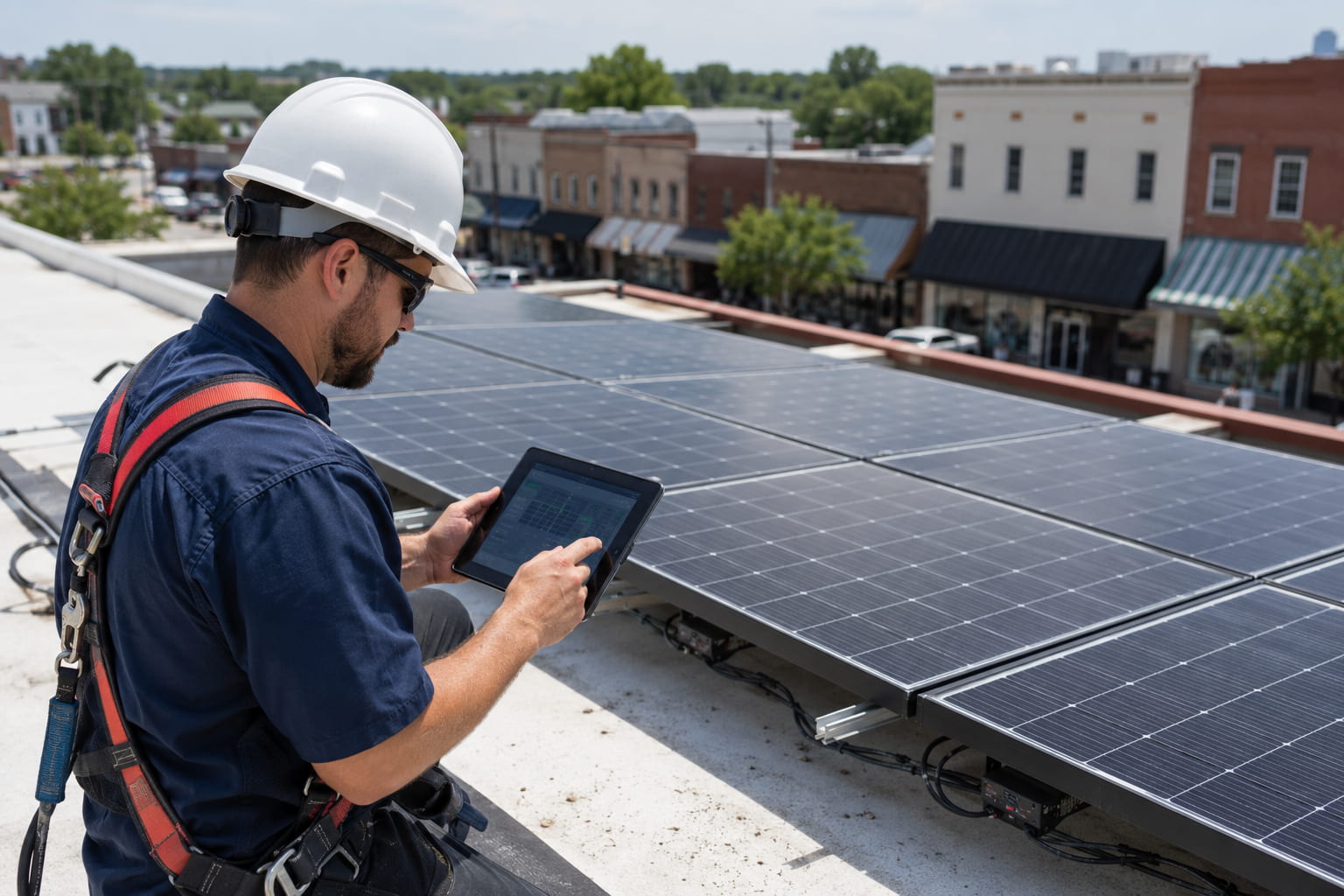
A shop should start with the solar panel rating. The inverter input range needs to match the panel’s voltage, current, and power output. If the panel and inverter do not match well, the system may lose performance or create safety problems. The installer should confirm this during design, before anyone starts putting hardware on the roof and calling it progress.
The next step is system type. Some shops want a grid-tied system to reduce daytime electricity bills. Others may want solar with battery backup for outages. Since an inverter handles DC-to-AC conversion, the selected model needs to match how the shop will use electricity.
Roof condition should guide the buying decision. A solar panel micro inverter makes more sense when the roof has shade, different panel directions, limited mounting space, or future expansion plans. If the roof is open, simple, and all panels face the same direction, a lower-cost inverter setup may already do the job.
The shop should also check durability and support. Outdoor equipment has to handle heat, moisture, dust, and long operating hours. Monitoring support, warranty terms, and installer experience also matter. A good inverter choice can still perform badly if the installer designs the system poorly or disappears after installation, because apparently vanishing after a sale remains a business model in some corners of the planet.
Small shops are ideal for installation
A solar panel micro inverter is worth considering when a small shop has shaded roof areas, limited space, mixed panel directions, or plans to expand later. It gives each panel more independent control and can reduce the impact of partial shading or panel mismatch. If the roof is simple, open, and the budget is the main concern, another inverter setup may cost less and still work well. The right decision comes from roof layout, daytime power use, panel matching, installer support, and long-term maintenance needs.