
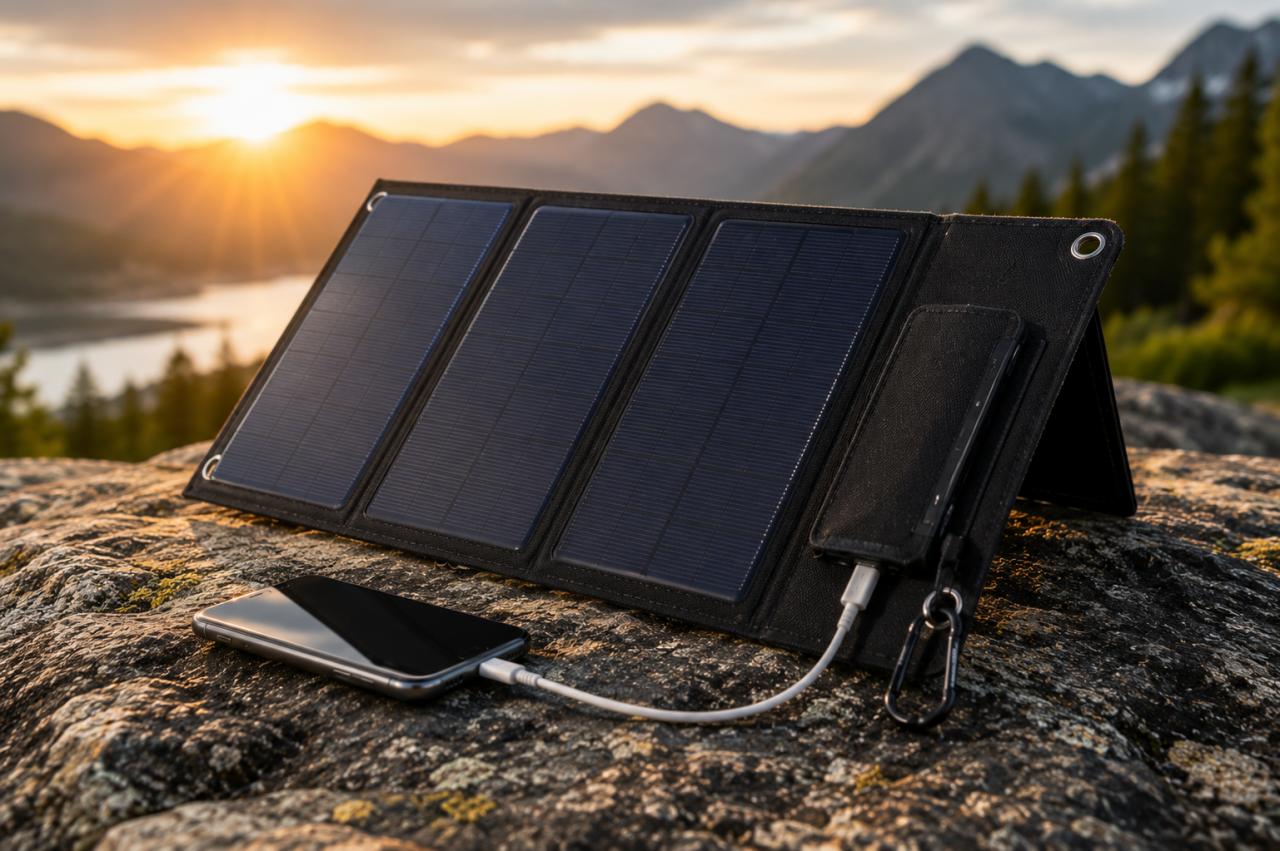
A solar charger is easy to buy and surprisingly easy to choose wrong. Many users look at the product photo, check the price, see the word “solar,” and assume it will solve every outdoor power problem. That is where disappointment begins, because product names are not technical specifications. A good solar charger should match three things: what you need to charge, where you will use it, and how much sunlight you can realistically get. It is not a replacement for a full home backup system. It is a portable charging tool for small devices such as phones, cameras, tablets, GPS units, lights, radios, and other USB-powered equipment. The right choice starts with real use, not with product size.
Start With the Devices You Need to Charge
Before choosing any charger, list the devices that need power. This step matters more than the brand, color, or the optimistic outdoor photo on the product page. A phone, camera, tablet, GPS device, and small LED light do not all need the same charging setup. A phone may only need basic USB charging. A tablet may need stronger output. A camera battery may need a specific adapter. A GPS device may require steady, low-power charging during extended outdoor use. If you only need to charge one phone during short trips, a compact portable solar charger may be enough. If you carry a phone, camera, tablet, drone controller, and camp light, choose a model with more capacity, multiple ports, and better storage. The easiest rule is simple: the more devices you carry, the more you should care about output ports and battery storage.
Choose a Solar Charger Based on Your Main Use Scenario
Different users need different charging setups. A solar charger for camping does not have the same priority as one kept in an emergency kit or used during daily travel. For camping, choose a model that is easy to carry, simple to hang or place in sunlight, and able to store power for evening use. Campers often collect solar energy during the day and charge devices later at night.
For travel, weight and size matter more. A compact charger that fits in a backpack, car storage space, or travel kit is more useful than a larger model that stays at home, since nobody wants to carry it. For emergency power, storage becomes more important. During an outage, sunlight may be limited, and users may need to charge a phone, radio, or light after sunset. A solar charger with built-in storage is usually more practical than a direct-only panel. For outdoor work, durability and stable output matter. The charger may be exposed to dust, vehicles, tools, sunlight, and changing weather. In that case, choose a stronger design instead of the lightest option.
Check Whether the Solar Charger Needs Built-In Battery Storage
One of the most important choices is whether the solar charger has built-in battery storage. A direct solar charger sends power to the device while sunlight is available. This can work well in bright outdoor conditions, especially for short daytime use. But it depends heavily on the sun. If clouds pass, charging slows. If shade covers part of the panel, output drops. If you need power at night, direct charging will not help.
A solar charger with built-in storage gives more control. It collects energy during the day and stores it for later. This is better for camping, road trips, emergency kits, travel, and remote work areas. Choose direct solar charging if you need a lightweight option for short daytime use. Choose built-in storage if you need backup power after sunset, during cloudy weather, or when your devices cannot stay connected to the panel all day. For most outdoor and emergency users, storage is the safer choice.
Match the Output Ports to Your Devices
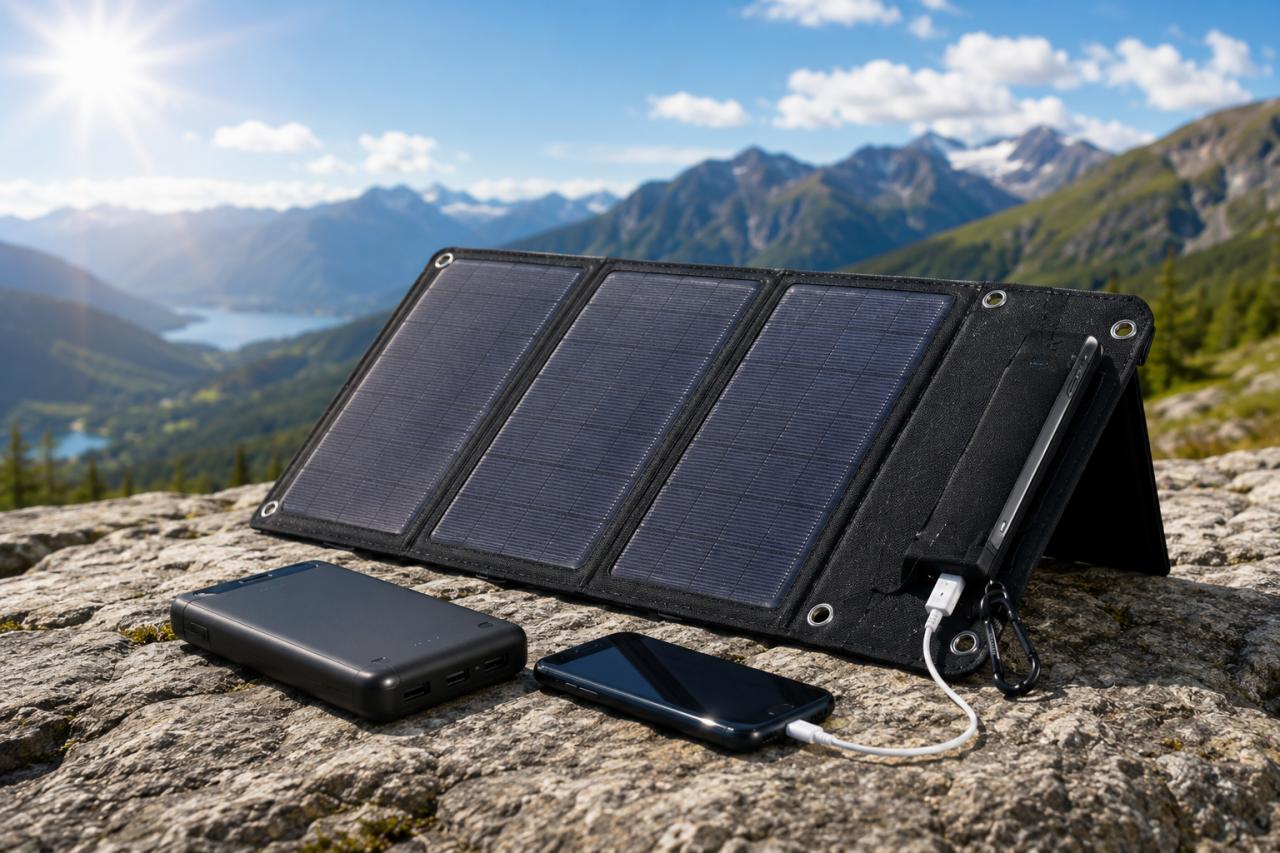
A charger should match the devices you actually use. Do not assume every port will charge every device well. USB-A is common for basic devices and older cables. USB-C is more useful for newer phones and tablets, and for faster charging. Some users may need both. If several devices need power at once, choose a charger with multiple output ports. But multiple ports alone are not enough. Check whether the charger can support practical output when more than one device is connected. Some chargers slow down when charging two or three devices together. That does not mean the product is broken. It means the total output is being shared. For simple phone charging, one or two USB ports may be enough. For camping, photography, field work, or travel kits, multiple ports are more useful.
Compare Solar Charger Performance Under Real Sunlight
Solar charging speed depends on real sunlight, not just the rated number in the product description. Direct sunlight gives the best result. Morning light, cloudy weather, shade, poor panel angle, dirty surfaces, and indoor placement can all reduce charging speed. When choosing a solar charger, think about where you will place it. Can it face direct sunlight? Can it stay there for several hours? Can you adjust the angle during the day? Can it be placed safely without being stepped on, covered, or blown over?
Even partial shade from a tent, backpack strap, tree branch, roof edge, or vehicle can affect performance. A charger with a good rated output still needs proper sunlight. A smaller charger used correctly can perform better than a larger charger placed badly. This is why buyers should look beyond wattage alone. Panel placement, sunlight access, orientation and tilt, and daily charging habits can change the actual result more than expected.
Select a Solar Charger Size You Will Actually Carry
Size affects both charging ability and portability. Larger solar panels usually collect more sunlight, but they are harder to carry. Smaller chargers are easier to pack, but they may charge more slowly. For hiking and short travel, choose a compact model that fits easily in a bag. For camping, vehicle use, patios, sheds, or emergency storage, a slightly larger charger may be acceptable if it offers better charging performance.
The best size is not always the biggest size. It is the size you will actually carry, set up, and use. A powerful charger that stays in a drawer is not a backup plan. It is furniture with cables. Buyers should also think about setup time. If the charger takes too much effort to unfold, position, connect, and store, it may not get used often. Practical design matters as much as capacity.
Check Solar Charger Durability for Outdoor Use
A solar charger for outdoor use should handle movement, dust, sunlight, and regular packing. If the charger will be used for camping, travel, garage work, shed use, patio charging, or outdoor work, durability matters. Look for a structure that feels easy to carry but not fragile. Check whether the surface is easy to clean. Check whether the connection ports are protected. If the charger will often sit outside, weather resistance becomes more important.
This does not mean every user needs a heavy-duty model. A daily traveler may prefer a compact size. A camper or outdoor worker may need stronger protection. Choose based on the environment, not just the product image. A good outdoor charger should survive normal handling. It should not feel like something that needs its own protective case before it can leave the shelf.
Know When a Solar Charger Is Not Enough
A solar charger is useful, but it has limits. It is designed for small devices, not high-power appliances. Do not choose a solar charger if you need to run refrigerators, kettles, heaters, power tools, medical equipment, or large home devices. Those loads need a larger backup power unit, solar generator, inverter, or larger system.
A solar charger is better for phones, cameras, tablets, GPS units, lights, radios, and small USB devices. A portable power station is better for larger loads and longer backup needs. For many users, the best setup is to use both. The solar charger handles small devices. The portable power station supports heavier equipment. This keeps the larger battery from being wasted on small electronics and gives users more options during travel, outdoor work, or outages.
A Solar Charger Is the Right Choice for Small Outdoor Power Needs
A solar charger is the right choice when the goal is simple backup power for small devices. It works well for camping, travel, emergency kits, patios, sheds, vehicles, and remote locations without wall outlets. It should be chosen for practical uses: keeping a phone charged, powering small accessories, supporting cameras, helping with outdoor navigation, and providing a backup option during short power interruptions.
The final decision should follow a clear order. First, check the devices. Then check the number of ports. After that, consider battery storage, sunlight exposure, charger size, and outdoor durability. If the charger matches those conditions, it can become a useful part of an outdoor or emergency power setup. For users who also need air movement in patios, sheds, garages, or campsites, an off-grid cooling option can support a separate comfort need while the charger handles small electronics. The better decision is not choosing the largest product. It is choosing the setup that matches the devices, sunlight, storage needs, and real use scenario.