
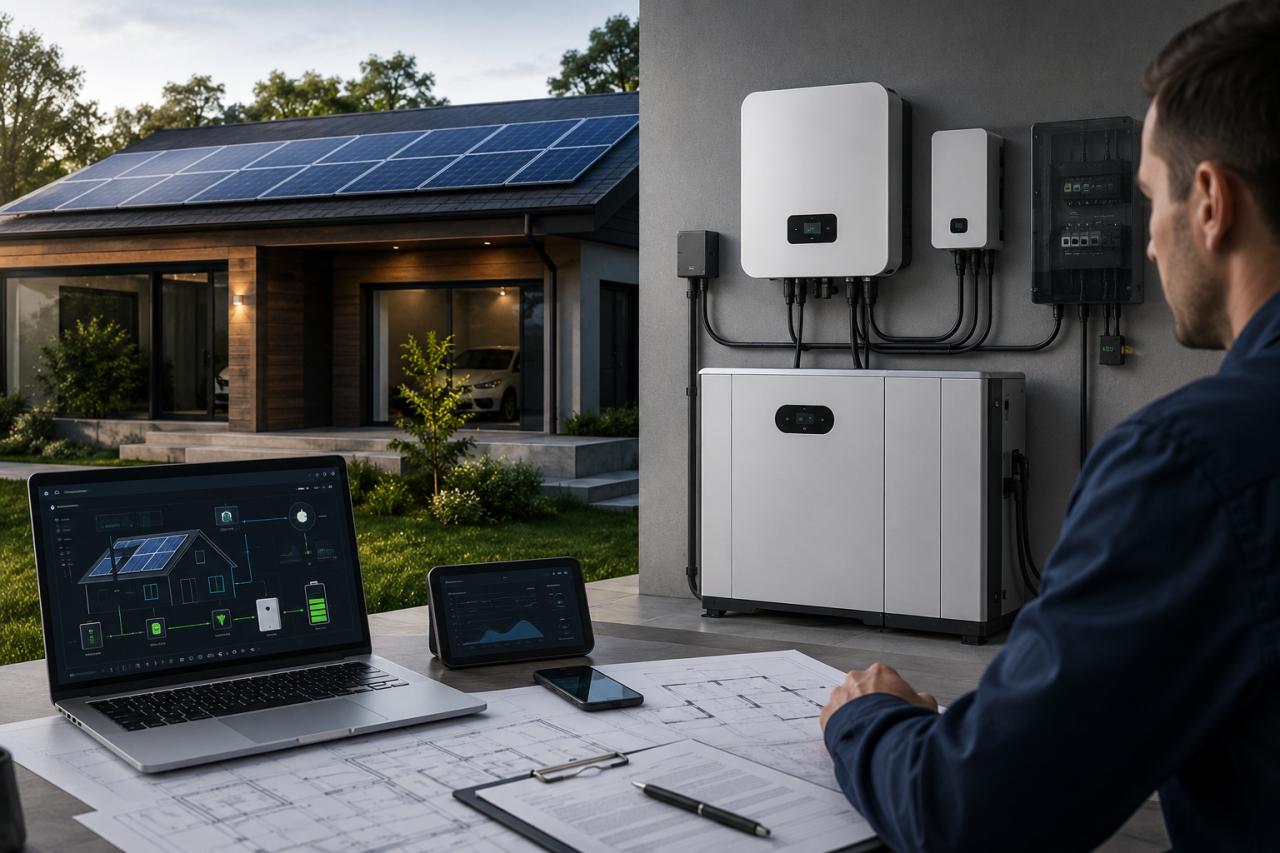
Quotations for the same solar project can show very different battery capacities, inverter ratings, panel counts, and backup times. A lower price may depend on optimistic sunlight estimates, reduced loads, or limited installation work. A larger proposal may include equipment the site cannot fully charge or use. The first comparison should focus on the design reasoning. A capable solar solutions provider should connect the site’s real power demand, operating conditions, installation space, and backup target to a clear system plan. Every equipment choice should be supported by calculations.
A Solar Solutions Provider Should Start With Real Load Data
Ask each provider to list the equipment the system must support. The load schedule should include running power, startup surge, operating hours, and daily energy use. Watts and watt-hours describe different requirements. Watts show the power the inverter must supply at one moment. Watt-hours show how much energy the battery and solar array must provide over time. A proposal that mixes these values may appear suitable but fail when several appliances start together.
The load list should also separate essential and optional equipment. Refrigeration, communication devices, lighting, pumps, medical equipment, and security systems may need continuous support. Air conditioning, electric heating, cooking equipment, and workshop tools may only operate for limited periods.
Ask each supplier to calculate three operating cases:
- Normal daily operation
- Maximum short-term demand
- Emergency operation during an outage
Measured data provides a stronger design basis than nameplate estimates. Utility bills, smart plugs, inverter records, and temporary energy meters can show how the site uses electricity. The provider should also explain whether summer cooling demand, winter sunlight, or another seasonal condition controls the design.

Define the Operating Mode Before Comparing Products
A grid-connected system, backup system, off-grid project, and portable power setup require different designs. A grid-connected system may focus on daytime self-consumption. A backup system must keep selected circuits running during an interruption. An off-grid system must cover demand without relying on utility power. A portable setup must also consider weight, transport, connection methods, and setup time.
Write a direct operating target before reviewing equipment. For example:
“The system must run refrigeration, lighting, internet equipment, and one water pump overnight, then recover enough energy during a typical day.”
This statement gives every solar system supplier the same objective. It also prevents vague claims such as “whole-site backup” from controlling the quotation. After the operating target is clear, review the available solar products in context. A product list can show supply options, but the provider still needs to explain why each component matches the project.
Check Whether the Solar Solutions Provider Matches the Whole System
Battery, inverter, and solar input ratings must work together. Battery capacity alone does not confirm backup time. Runtime also depends on usable battery energy, discharge limits, inverter losses, temperature, battery aging, and changing loads. Ask the provider to show the expected load, usable capacity, loss allowance, and final runtime calculation. The inverter must support continuous demand and short startup surges. It must also match the battery voltage, discharge capability, solar input range, output voltage, and connected equipment. Motors, pumps, compressors, and sensitive electronics may require closer review.
A packaged unit such as the HomePower 3600 Plus should be compared with the project load schedule, charging plan, outlet requirements, and expansion needs. The product name or maximum output cannot replace this check. Solar array sizing should use local conditions. Panel direction, tilt, shading, dirt, temperature, wiring, conversion losses, and weather can reduce daily production. The European Commission’s PVGIS solar resource tool provides location-based solar radiation and photovoltaic performance information. Ask which resource data and system loss factors the quotation uses.

Review the Site Plan and Installation Scope
A site survey should record roof or ground space, shading, mounting conditions, cable routes, ventilation, moisture exposure, equipment clearances, and maintenance access. Long cable runs can increase cost and electrical loss. Poor battery placement can expose equipment to heat, water, blocked airflow, or difficult servicing. The design should show the planned locations of the panels, inverter, battery, protection equipment, and distribution connections.
The scope should also state who supplies and installs:
- Mounting hardware
- Protection and isolation devices
- Cables and connectors
- Distribution-board changes
- Earthing
- Monitoring equipment
- Permits and inspections
- Commissioning and user training
When local contractors complete the installation, the supplier should provide drawings, wiring requirements, connector standards, setup instructions, and a support process. Procurement should price all excluded work before approving the order. Expansion claims also need details. Ask how additional panels, batteries, or loads can be added and which products remain compatible. Spare inverter capacity means little when the battery communication system or solar input cannot support the planned upgrade.
Compare Each Solar Solutions Provider Through Assumptions and Risk
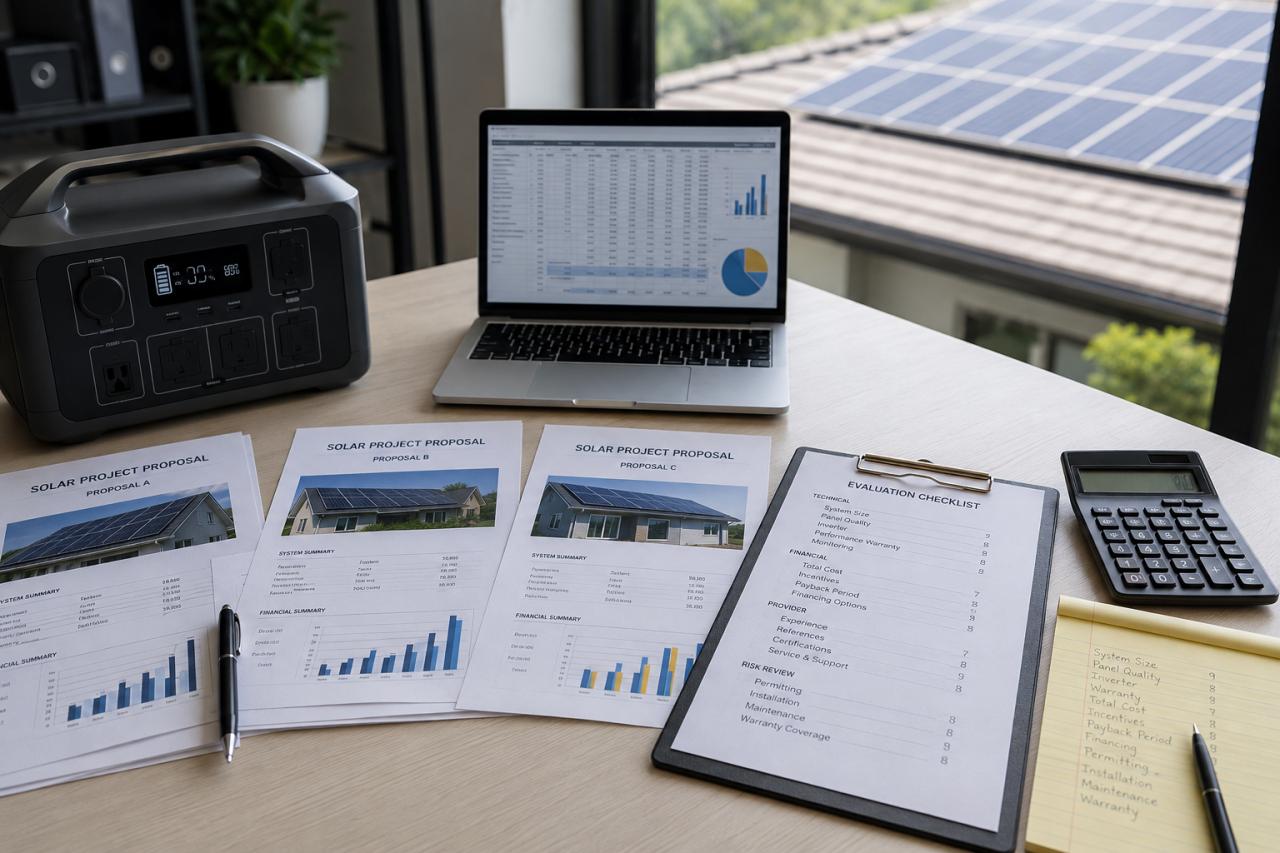
Use one comparison table for every proposal. Include protected loads, daily energy demand, peak power, startup surge, required runtime, usable battery energy, solar resource, expected charging time, environmental limits, warranty coverage, installation work, and exclusions. Require each company to complete the same fields. This approach often explains why one quotation costs more than another.
Watch for these warning signs:
- Guaranteed runtime without a defined load
- Solar output based only on panel wattage and daylight hours
- No allowance for system losses or battery aging
- Unclear installation responsibilities
- No commissioning test
- Warranty coverage that excludes diagnosis, labor, or shipping
- Expansion claims without compatibility limits
Support capability also affects project risk. Ask how the company diagnoses faults, which operating logs it needs, where replacement parts are available, and how warranty cases are handled. Send one load sheet and one site brief to the project team so the technical discussion remains consistent.
A Verifiable Solar Solutions Provider Is the Right Choice
Choose the provider whose design can be checked from beginning to end. The proposal should connect the load list to the inverter rating, usable battery capacity, solar array size, installation plan, and operating instructions.
Before ordering, approve a final design basis that records:
- Protected loads
- Runtime target
- Charging assumptions
- Equipment locations
- Installation responsibilities
- System loss factors
- Expansion limits
- Warranty process
- Commissioning tests
Keep this document with the final quotation and installation records. The completed system can then be tested against agreed operating conditions instead of sales promises. The right solar solutions provider gives the project team a clear reason for every component, states the remaining operating limits, and defines how the system will be installed, tested, supported, and expanded.