
A portable power quote may include a large battery and a high-wattage panel, yet the system can still fail during a long outage or remote trip. Battery capacity alone does not determine runtime. Startup demand, charging time, cable losses, weather, and load priorities all affect the result. Portable Solar Power Solutions should be evaluated as complete energy systems. Buyers need to know what must run, how much energy each device uses, and how quickly the battery can recharge. Start with a daily operating profile. Record each load, its operating time, startup behavior, and priority. This turns a broad request for backup power into a specification that suppliers can size and test.
Define the Job Before Comparing Portable Solar Power Solutions
Divide the operating plan into normal service, reduced service, and emergency service before comparing batteries, panels, or inverter ratings. Normal service may include refrigeration, lighting, communications, laptops, and small tools. Reduced service may keep only refrigeration and communications active. Emergency service should protect the few devices that cannot stop. This hierarchy prevents buyers from paying to support every appliance during the longest interruption and gives users a clear load-shedding plan. The location changes the brief. An RV has limited roof area, a cabin may sit unused for weeks, and a field crew may transport the equipment daily. Include the installation location, storage conditions, temperature range, weather exposure, charging access, and transport frequency in the request.
Measure Real Loads for Portable Solar Power Solutions
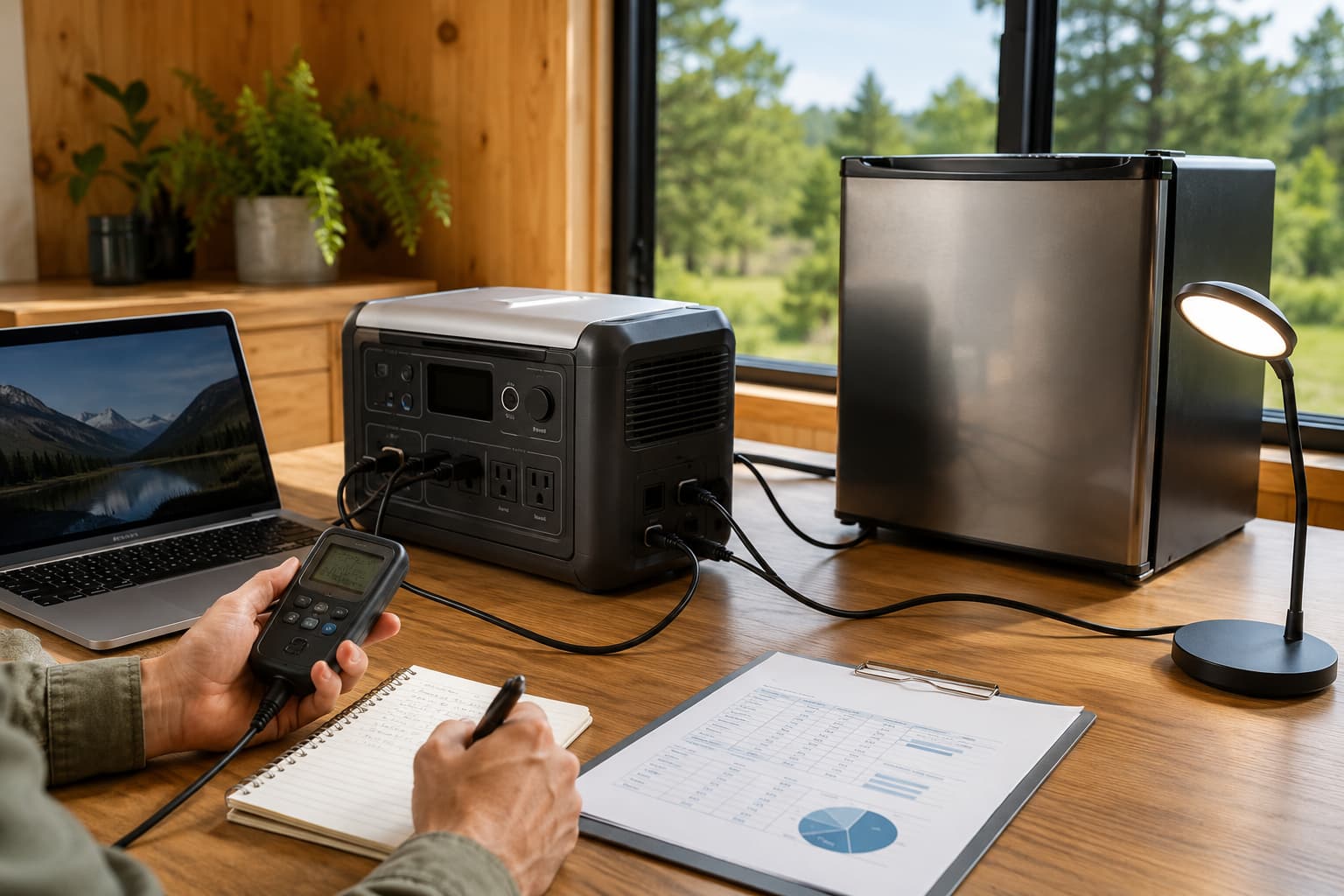
Create a load table showing each appliance, running power, startup power, operating hours, voltage, and priority. Measure real consumption when the equipment exists. A nameplate may show maximum input and may omit operating cycles. A refrigerator does not draw its rated power continuously, but its compressor may require a short startup surge.
Calculate daily energy use with this formula:
Daily energy use = running power × operating hours
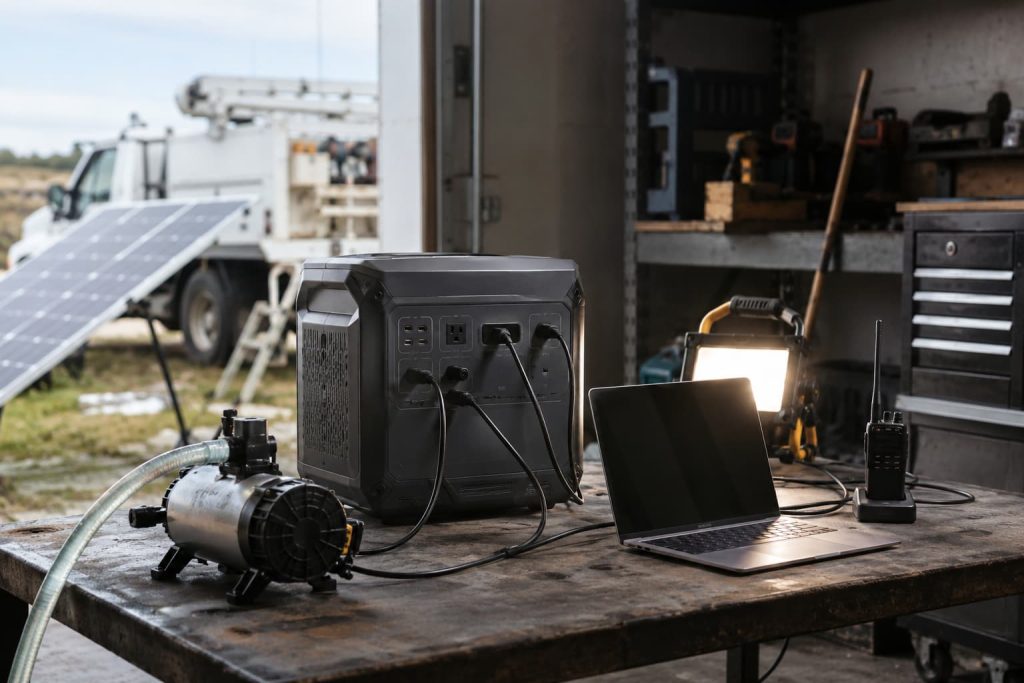
Then identify which appliances may operate together. Adding every nameplate value can oversize the system when those loads never run at the same time. Ignoring realistic combinations may cause the inverter to shut down. A pump starting while refrigeration and lighting are active can exceed the inverter’s surge capability even when the battery contains enough energy. Prepare a typical-use day, a high-use day, and an emergency-use day. For seasonal projects, repeat the calculation for the most demanding month.
Compare Usable Battery Energy and Required Runtime
Rated watt-hours do not equal the energy available to appliances. Compare usable energy after considering the permitted discharge range, inverter losses, protection settings, reserve capacity, and operating temperature. Ask each supplier to show rated capacity, permitted state-of-charge range, conversion losses, reserved capacity, usable energy, and temperature restrictions. Calculate runtime from the protected-load schedule. Add a reserve for unexpected use, forecast errors, and battery aging. The proposal should identify this reserve instead of presenting it as normal operating capacity.
Battery chemistry alone does not confirm cycle life, storage behavior, cold-weather output, or warranty coverage. Request operating limits, storage instructions, cycle-life test conditions, and warranty terms for the exact model offered. Buyers can review equipment categories in the Solar Shop, but the final choice should follow the load calculation rather than the largest advertised battery.
Match Charging Capacity to the Available Time
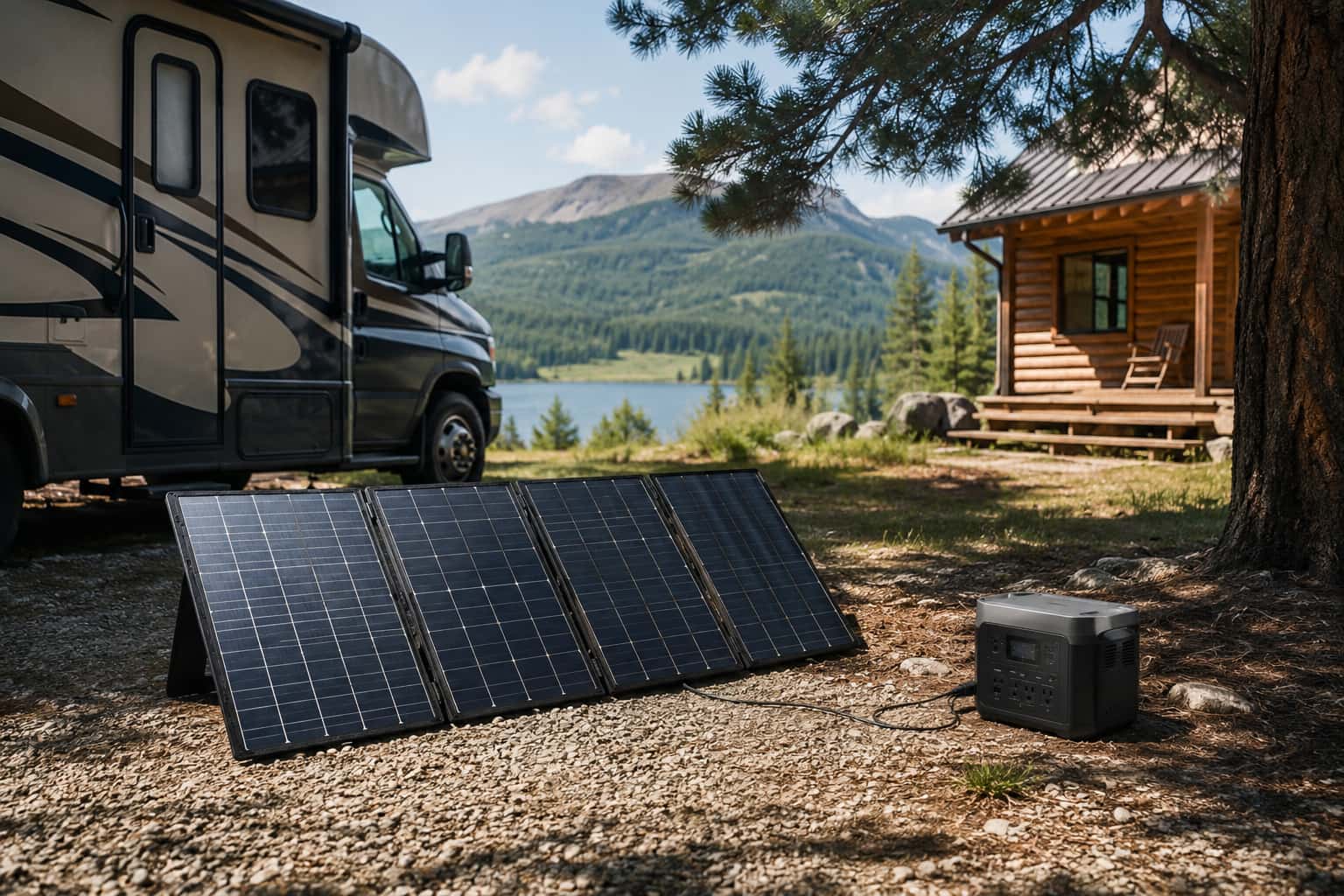
A large battery provides little resilience if it cannot recharge before the next operating period. For solar charging, compare maximum input, voltage range, controller limits, panel connections, cable length, connector ratings, orientation, and shading. Local solar radiation changes with location, season, landscape, and weather, so one annual average may hide weak performance during the most difficult month. Ask for a monthly energy estimate because a system that recharges easily in summer may remain partly discharged after cloudy winter days.
Portable panels can avoid shade but add setup time and exposed cables. Fixed panels reduce labor but limit orientation and installation area. Review alternative charging routes. Vehicle charging must follow the approved connection method. Confirm whether the battery can power loads while charging and whether several inputs can operate together. For phones, cameras, GPS units, and other small electronics, a dedicated solar charger may be more practical than a full power station.
Select the Inverter From Real Load Behavior
Continuous output should support the planned concurrent load with operating margin. Surge output must match the duration and current profile of motors, pumps, compressors, and power tools. Do not accept a surge rating without its duration and test conditions. A very short peak rating may fail to start equipment that needs elevated current for several seconds. Confirm output voltage, frequency, waveform, receptacle type, grounding arrangement, transfer time, and compatibility with sensitive equipment. Computers and control systems may restart if the transfer time is too long. Plan power distribution before deployment. Identify protected outlets, circuit ratings, cable routes, weather exposure, and physical protection. The proposal should state which protective devices are included and which remain the installer’s responsibility. A qualified electrician should review the design whenever it connects to building wiring or worksite distribution.
Check Portability, Safety, and Acceptance Tests
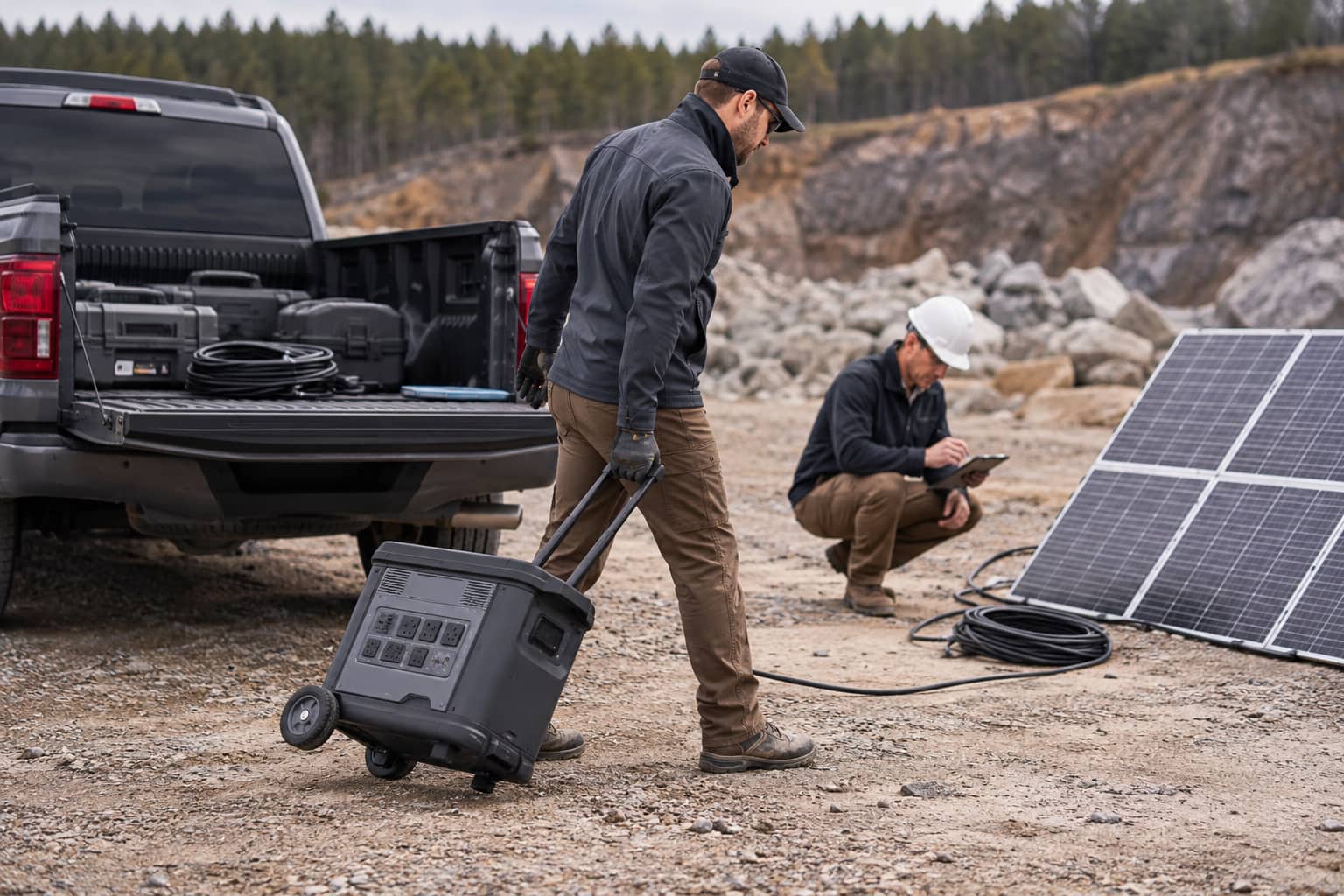
Portability depends on the project. One person may lift the unit into a vehicle, while another team may move it on wheels. Specify lifting limits, operators, door widths, loading height, handle position, wheel surfaces, and tie-down points. Check connector placement and service access. Cables that protrude into walkways are easier to damage. Displays may be difficult to read in direct sunlight. A weather-resistant enclosure does not automatically make exposed connectors safe in rain. Test the complete system before regular use. Start the highest-surge appliance while normal loads are active. Run the protected-load schedule long enough to confirm delivered energy, then recharge through every planned input.
Record the model, test temperature, starting charge, measured load, runtime, recharge time, alarms, connector heating, and inverter trips. Repeat the main checks after transport when the system supports mobile work. Buyers can use HomeSolars to review the broader portable, backup, RV, and off-grid product range before requesting a system-specific proposal.
Portable Solar Power Solutions Work When the Full Duty Cycle Is Verified
Compare Portable Solar Power Solutions through five connected requirements: measured loads, usable battery energy, realistic charging windows, compatible inverter output, and practical handling conditions. Place these items in one matrix and ask each supplier to explain any deviation. Price becomes meaningful only after every proposal supports the same operating case. Before ordering, confirm protected loads, startup demand, required runtime, usable battery capacity, the difficult solar month, charging sources, installation boundaries, user actions, warranty limits, and acceptance tests. This process helps buyers reject systems that appear powerful on paper but cannot support the real operating schedule. It also produces a portable power system that users can recharge, transport, operate, and maintain with clear expectations.