
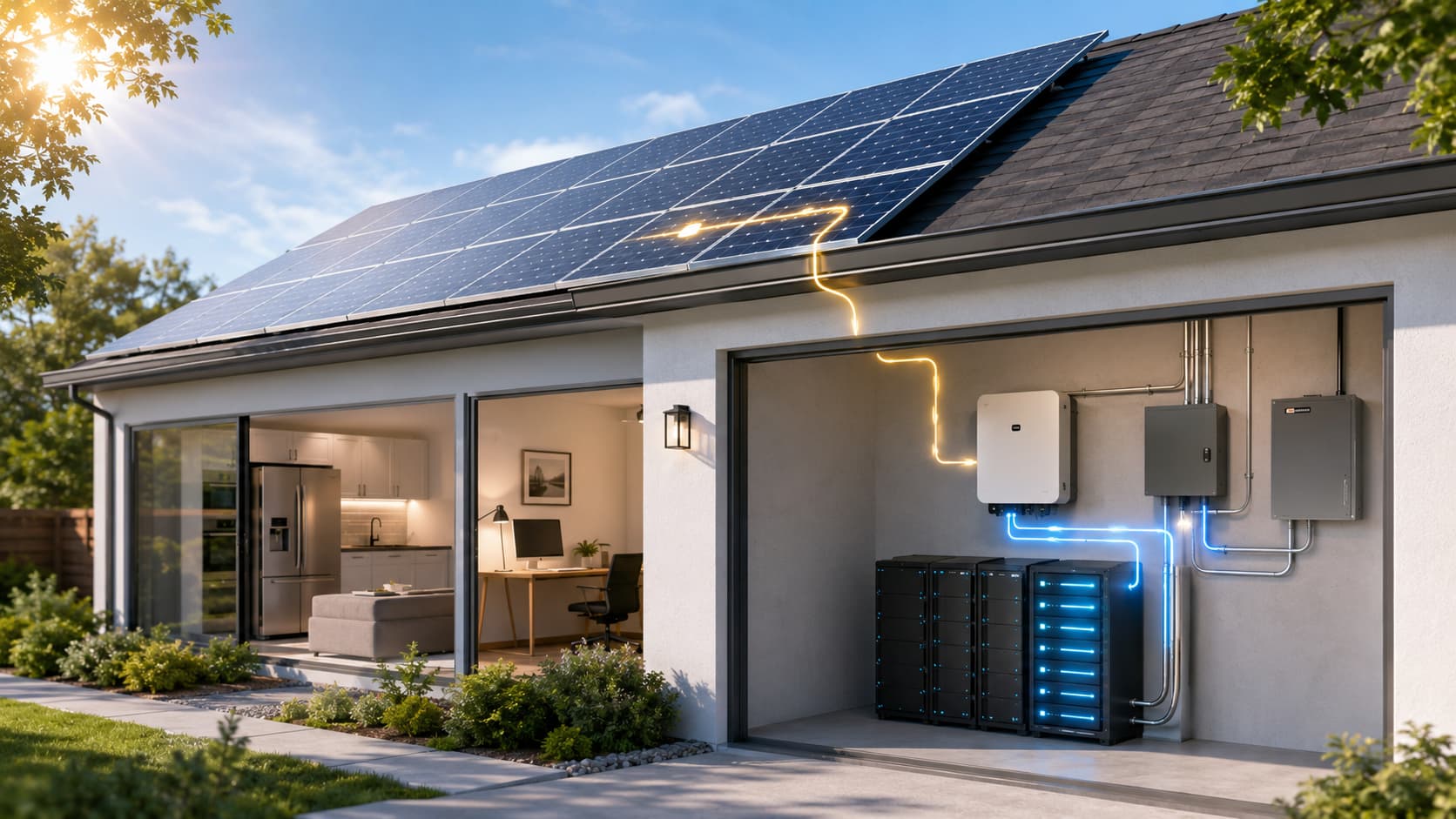
An off-grid system fails in ordinary use when its design starts with the number of solar panels. The real starting point is the energy the property consumes, when it consumes it, and which loads must keep running through poor solar weather. Well-planned off grid solar solutions begin with the load profile rather than panel count, then balance storage, inverter capacity, solar input, and backup requirements. A system with ample annual generation can still shut down after one cloudy evening if storage and peak power do not match the load. Well-planned systems connect four decisions: daily energy, instantaneous power, battery reserve, and backup strategy. Those decisions then guide the relevant solar power solutions and equipment configuration for the site.
Build a load list in watt-hours per day
List each appliance, its operating watts and its daily hours. Multiply watts by hours to estimate watt-hours per day, then add the rows. For cycling equipment such as refrigerators or pumps, use measured consumption or a realistic duty cycle instead of multiplying nameplate power by 24 hours. Separate seasonal loads such as heating, cooling, irrigation, or other equipment.
| Load group | Energy question | Power question |
|---|---|---|
| Always on | How many watt-hours each day? | What runs continuously? |
| Scheduled | How often and for how long? | Can we move it to sunny hours? |
| Motor load | How many operating cycles? | What is the starting surge? |
| Optional | Can it stop during poor weather? | Can controls shed it automatically? |
Divide the list into critical and flexible loads. Refrigeration, communications, lighting, or medical devices may need a protected energy budget. Water heating, workshop tools, or vehicle charging may shift to sunny periods or pause during low-battery conditions. Load management can reduce the storage and backup requirement without reducing reliability for critical uses.
Size storage around usable energy and reserve days
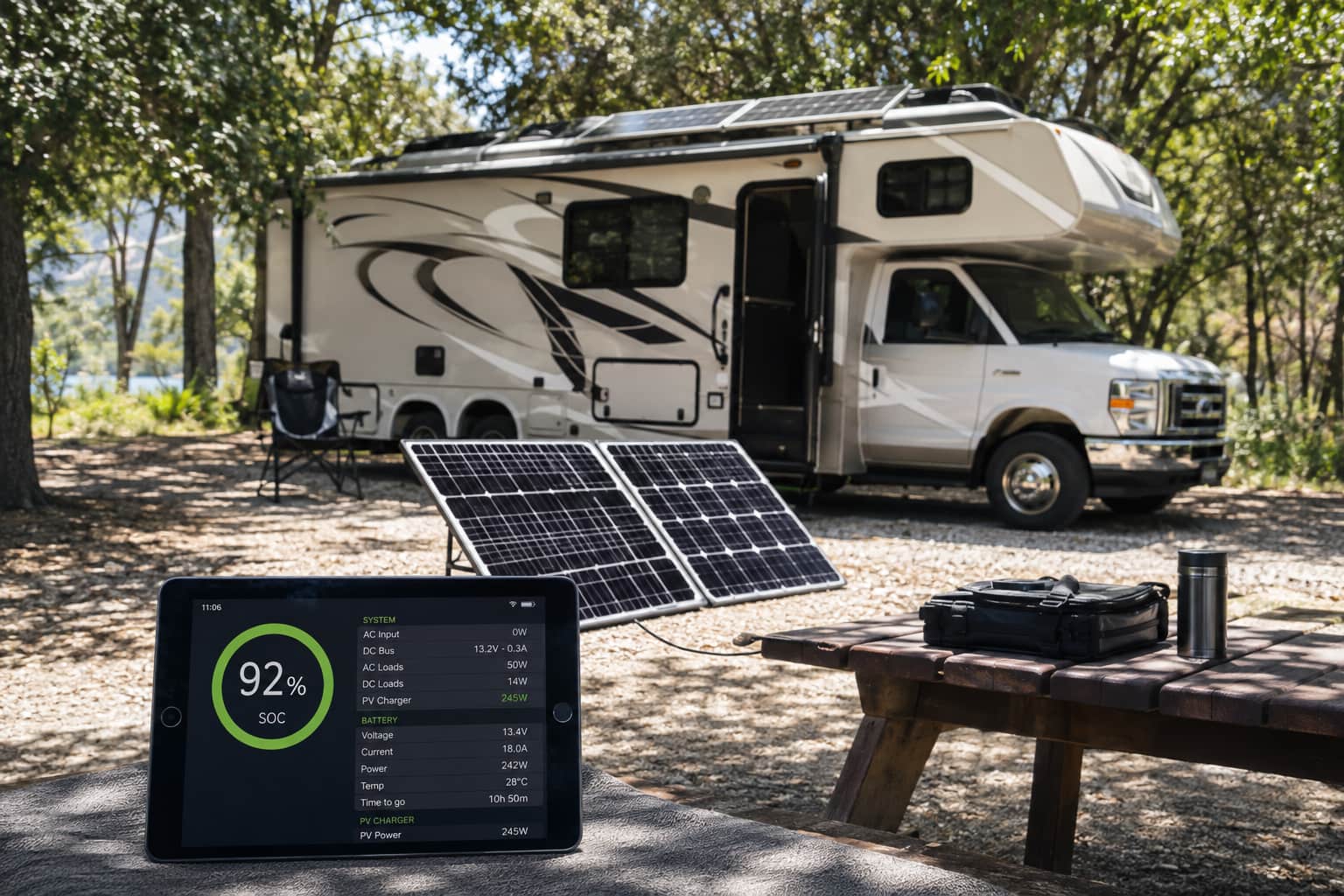
Battery nameplate energy is not the same as planned usable energy. The design must account for the allowed operating window, conversion losses, temperature, and ageing assumptions specified for the chosen system. Start with the critical daily watt-hours, apply the approved allowances, and multiply by the required number of reserve days. Reserve days should reflect the site and the consequence of an outage. A remote communications system may need more autonomy than a cabin with a generator and flexible occupancy. More battery capacity raises cost and charging demand, so the owner should state how long critical loads must operate before backup starts or loads are reduced.
Check inverter power separately from daily energy
Daily watt-hours describe energy, while the inverter must also support loads running at the same moment. Add the likely simultaneous operating watts and identify short starting surges from pumps, compressors, and tools. Confirm the surge duration, output waveform, battery voltage, input limits, and protective coordination for the selected equipment. Check a home solar inverter against the final appliance list and battery architecture. Unnecessary oversizing can add idle consumption and cost. Undersizing can cause trips even when the battery still holds enough energy for the day.
Estimate solar input for the difficult season
Panel capacity should match local solar resources, orientation, tilt, shading, temperature, and system losses. Monthly averages can hide a weak season, so review the period when demand is high and solar input is low. The Global Solar Atlas provides location-based solar resource context for early planning, followed by a site survey for shading and installation conditions. Use the selected off-grid solar panels with the charge-controller voltage and current limits in mind. Check the array configuration across the expected temperature range and leave room for practical charging recovery after a reserve event. A system that only replaces one average day of use may recover too slowly after several poor days.
Define backup operation before the battery reaches its limit
Backup can come from a generator, another charging source, or a planned reduction in loads. Set the battery threshold that starts the backup response, the loads it must cover, and the conditions for returning to normal operation. If a generator is part of the plan, include fuel availability, maintenance, noise, and start reliability. Manual backup may suit an occupied cabin where someone can respond. Remote or critical sites may need automatic control, alarms, and remote status. The design should also describe what happens when the backup source fails, since a nominal backup connection does not guarantee energy during a long weather event.
Confirm equipment compatibility as one system
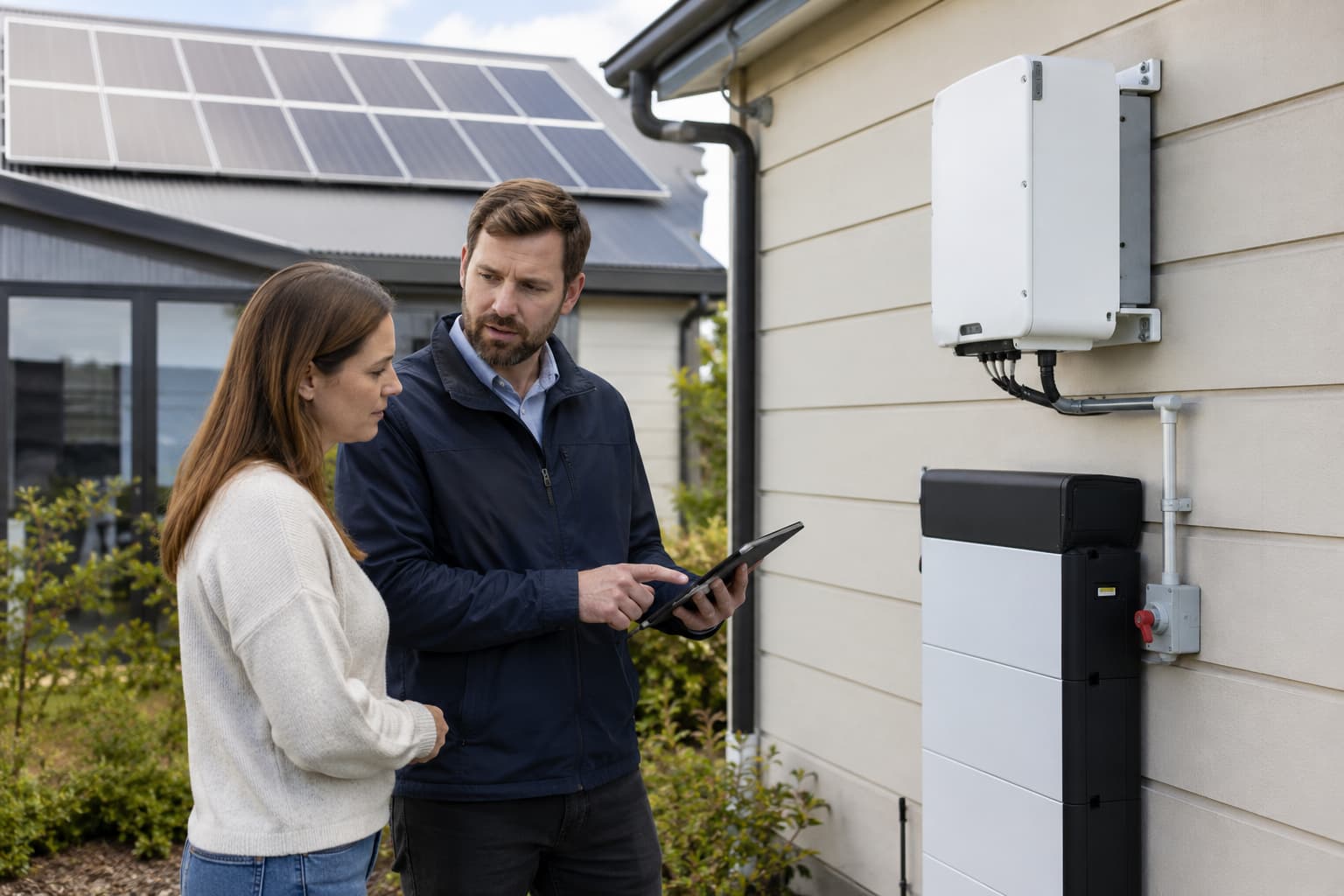
Review the array, charge controller, battery, inverter, protection, monitoring, and backup interface as a complete system. The solar power equipment list should match voltage windows, current limits, communication requirements, protective devices, and environmental conditions. Confirm cable sizes, disconnects, enclosures, and service access with the responsible installer and local requirements.
- Record daily and seasonal energy for critical and flexible loads.
- Check simultaneous running power and motor starting surge.
- Set usable battery energy, reserve days, and low-energy actions.
- Model solar charging in the most difficult operating season.
- Define backup start, stop, and failure behaviour.
- Verify every equipment interface before ordering components.
Off Grid Solar Solutions Start With the Load
Reliable off grid solar solutions come from balancing measured demand, usable storage, inverter capacity, difficult-season solar input, and a clear backup response. Panel count follows those decisions rather than determining them. Submit the load list, location, operating season, and required reserve time to Homesolars for an initial configuration review.