
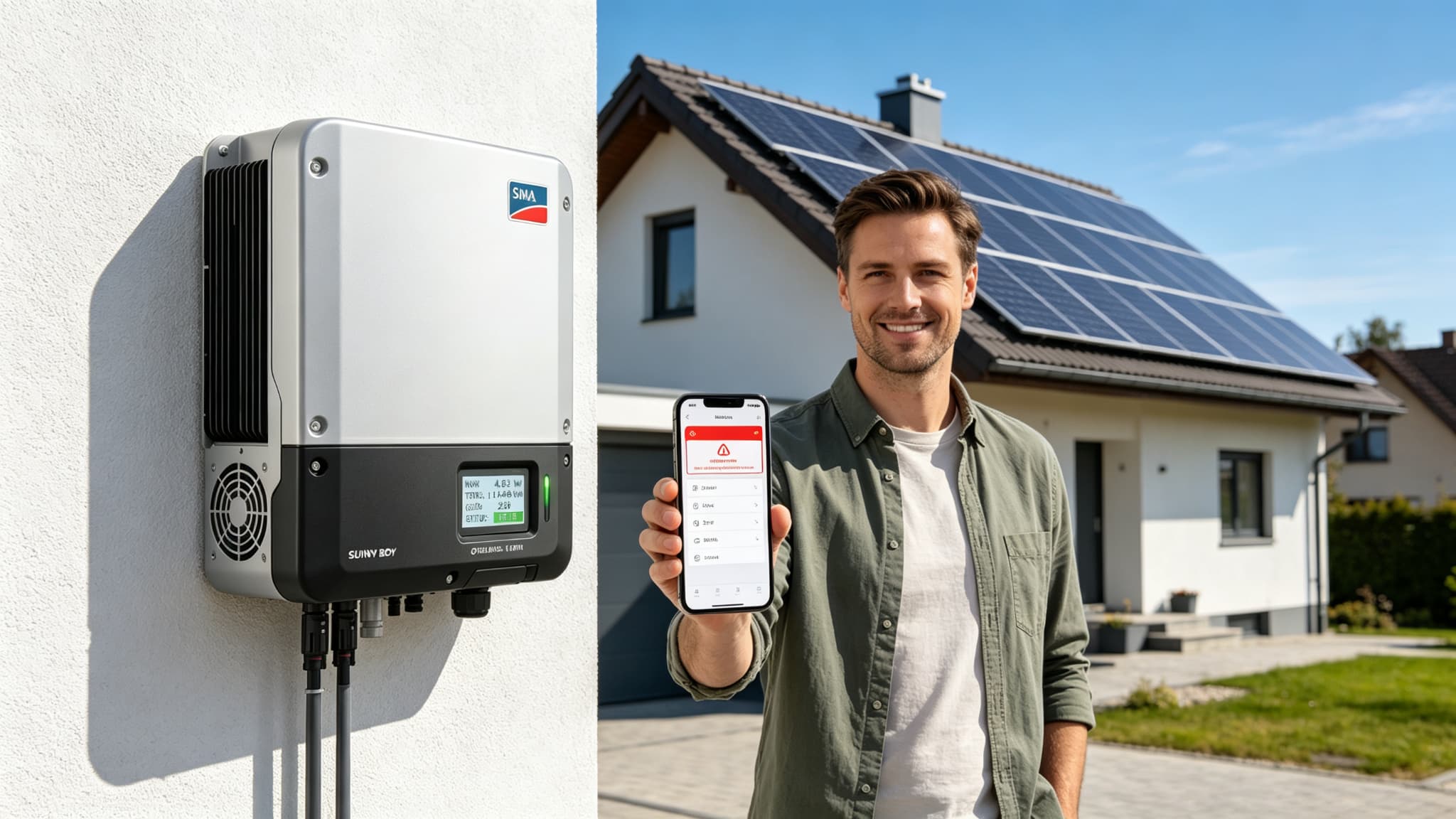
Every solar inverter eventually throws an error code. That code can mean a three-day wait and a service fee. Or it can mean a one-hour fix you handle yourself. Solar Inverter Troubleshooting: Four faults account for nearly all residential inverter shutdowns.
- Grid connection trips.
- DC voltage problems.
- Overheating.
- Ground faults.
Each has a clear cause, a step-by-step fix, and a time estimate. Some are safe DIY jobs like resetting a breaker or clearing dust from vents. Others involving high-voltage wiring demand a certified electrician. Get the four fixes right, and you restore production fast without paying for what you could have handled yourself.
Why Solar Inverter Troubleshooting Matters
The solar inverter is the heart of every solar power system. It converts the DC electricity from your panels into the AC power your home uses. When the inverter stops working, the entire system goes down with it. A faulty inverter can cost you hundreds of dollars in lost solar production over just a few weeks. That is why knowing how to troubleshoot common errors is so valuable. You can often restore full production in minutes instead of waiting days for a service call. The U.S. Department of Energy notes that inverters are the most commonly replaced component in residential solar systems. That makes basic troubleshooting a worthwhile skill for every system owner.
Common Solar Inverter Errors and How to Fix Them
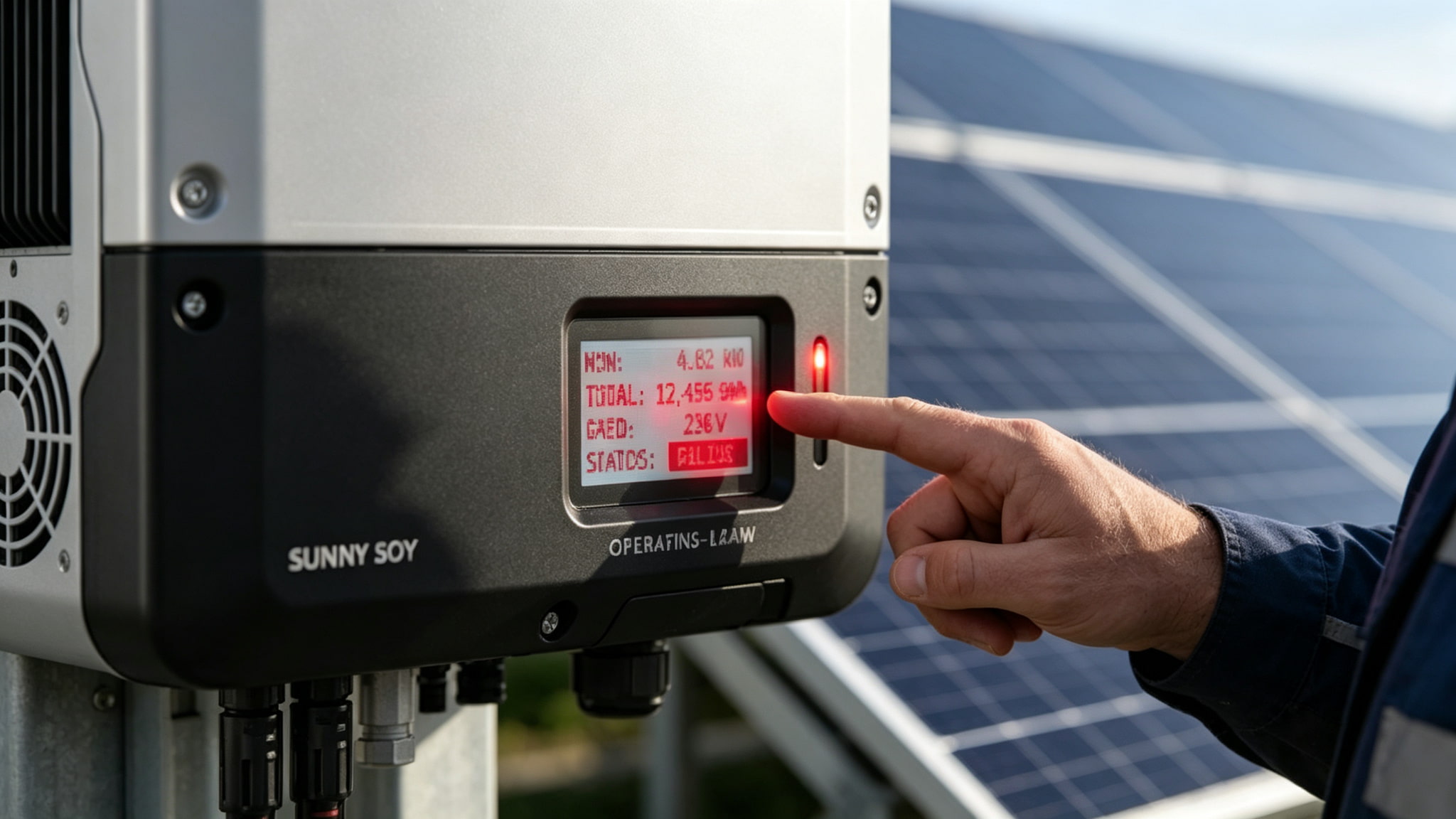
Most inverters display a specific error code or fault light when something goes wrong. Learning to read these codes is the first step in any troubleshooting process. The following four errors account for roughly 80 percent of all residential solar inverter service calls. Each one includes a clear cause, a step-by-step fix, and an estimate of how long the repair takes.
Solar Inverter Troubleshooting Error 1: No Grid Connection or Islanding Fault
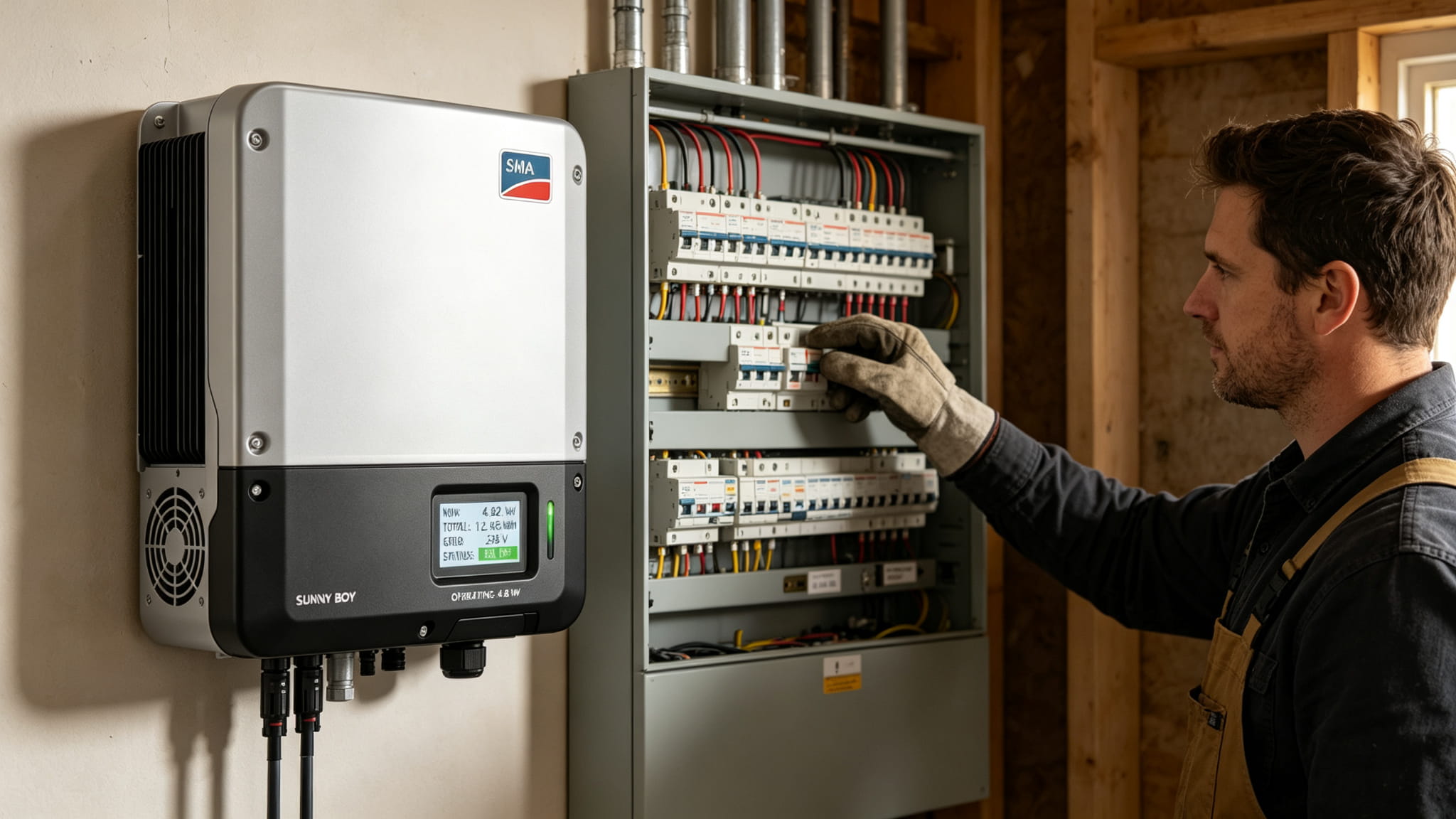
The most common inverter error is a loss of grid connection. This happens when the inverter cannot detect a stable AC signal from the utility grid. By law, grid-tie inverters must shut down during a power outage to protect line workers. This safety feature is called anti-islanding. If the grid is actually down, your inverter is working correctly and will restart automatically when power returns. If the grid is fine but your inverter still shows this error, check the AC breaker between the inverter and your electrical panel. A tripped breaker is the most common cause of a false grid-connection error. Flip the breaker off, wait thirty seconds, then flip it back on. The inverter should reconnect within two minutes.
Solar Inverter Troubleshooting Error 2: Overvoltage or Undervoltage on the DC Side
The second most common error involves voltage problems on the DC side. This means the side connected to your solar panels. Overvoltage happens when too many panels are wired in series, pushing the voltage above the inverter’s maximum input limit. Undervoltage happens when the panel voltage drops below the inverter’s minimum startup threshold. This usually occurs on very cold or very cloudy mornings. For overvoltage, check your panel string configuration against the inverter’s spec sheet.
You may need to split one long string into two shorter strings. For undervoltage, confirm your panels are receiving direct sunlight and that all MC4 connectors are fully seated. A loose connector is often the culprit. Products like the Micro Inverter avoid this issue entirely by converting power at each panel. This eliminates string-level voltage problems that affect traditional inverters.
Solar Inverter Troubleshooting Error 3: Over-Temperature Shutdown
Inverters generate heat during normal operation, and most models will shut down if internal temperatures exceed a safe limit. This error is most common in summer, when the inverter sits in direct sun on an exterior wall. The first fix is simple: improve airflow around the unit. Clear any debris or vegetation blocking the ventilation grills. If the inverter is mounted in direct afternoon sun, consider adding a small awning or shade structure above it. Never cover the ventilation grills. You should also check that the inverter is not mounted in an enclosed space without airflow. A properly ventilated inverter runs 10 to 15 degrees cooler and rarely hits the temperature limit. The National Renewable Energy Laboratory recommends installing inverters in shaded, well-ventilated locations. This maximizes both the inverter’s lifespan and its overall energy production.
Solar Inverter Troubleshooting Error 4: Ground Fault or Insulation Failure
A ground fault error means the inverter has detected an unintended electrical connection between a live wire and the ground. This is a safety issue that should be taken seriously. The most common cause is damaged cable insulation, usually where a wire passes through a metal roof or wall penetration. Water intrusion into a junction box can also trigger this error. Start by visually inspecting all DC cables from the panels to the inverter. Look for cracked insulation, exposed wire, or water damage at any junction box. Tighten any loose wire connections. If you find damaged cable, replace that section immediately. Do not attempt to repair damaged high-voltage DC cable with tape. If the error persists after a full inspection, this is one case where you should call a certified electrician. A persistent ground fault can indicate a more serious wiring problem that requires professional testing equipment.
When to Call a Professional vs DIY Fixes
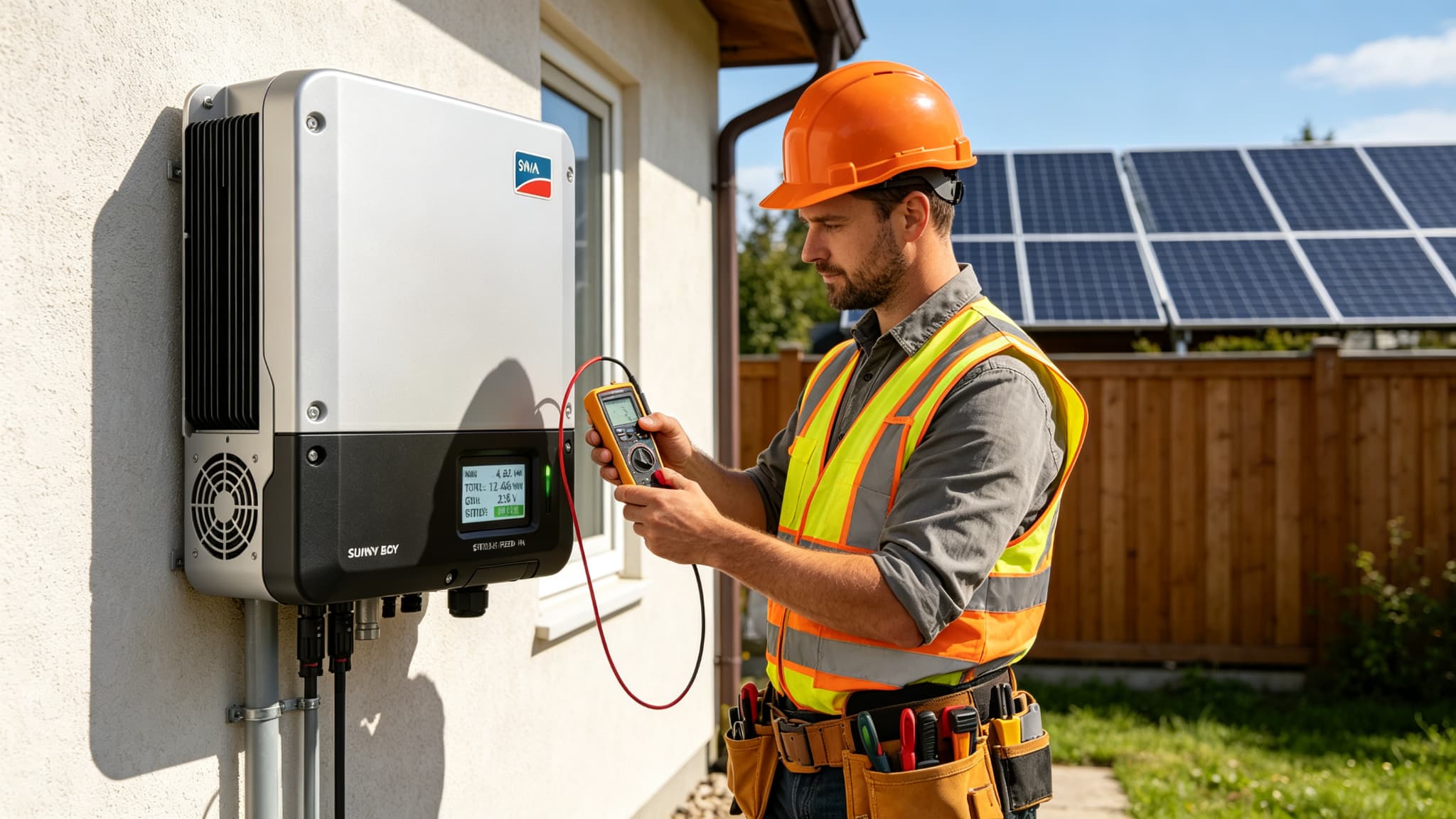
Most solar inverter errors fall into the DIY category, but some require professional help. Call a certified electrician immediately if you see visible burn marks or smell burning plastic. Also call a pro if you hear unusual buzzing sounds from the inverter. You should also call a pro if the same error code reappears within 24 hours of a reset. Or if you cannot identify the cause after a full visual inspection. For all other errors, the step-by-step fixes in this guide will usually resolve the issue in under an hour. Always remember to turn off the DC disconnect switch before opening any inverter cover or touching internal wiring. If you are unsure about any step, stop and call a professional rather than risking injury or equipment damage.
Preventive Maintenance to Avoid Future Inverter Problems
Preventing inverter errors is far easier than fixing them after they occur. A few simple maintenance tasks performed twice a year will keep your inverter running reliably. Most quality inverters have a full 10 to 15-year lifespan with proper care. Every six months, clean the ventilation grills with a soft brush to remove dust and insect nests. Check all cable connections for tightness, especially after severe weather. Inspect the area around the inverter for new shade from growing trees or new structures.
Verify that the inverter’s firmware is up to date. Manufacturers regularly release updates that improve stability and fix known bugs. Products like the Domestic Inverter include self-diagnostic features. These alert you to potential issues before they cause a full system shutdown. If you are also maintaining a battery backup system, our energy storage maintenance guide covers additional checks. These checks are especially important for battery-connected inverters.
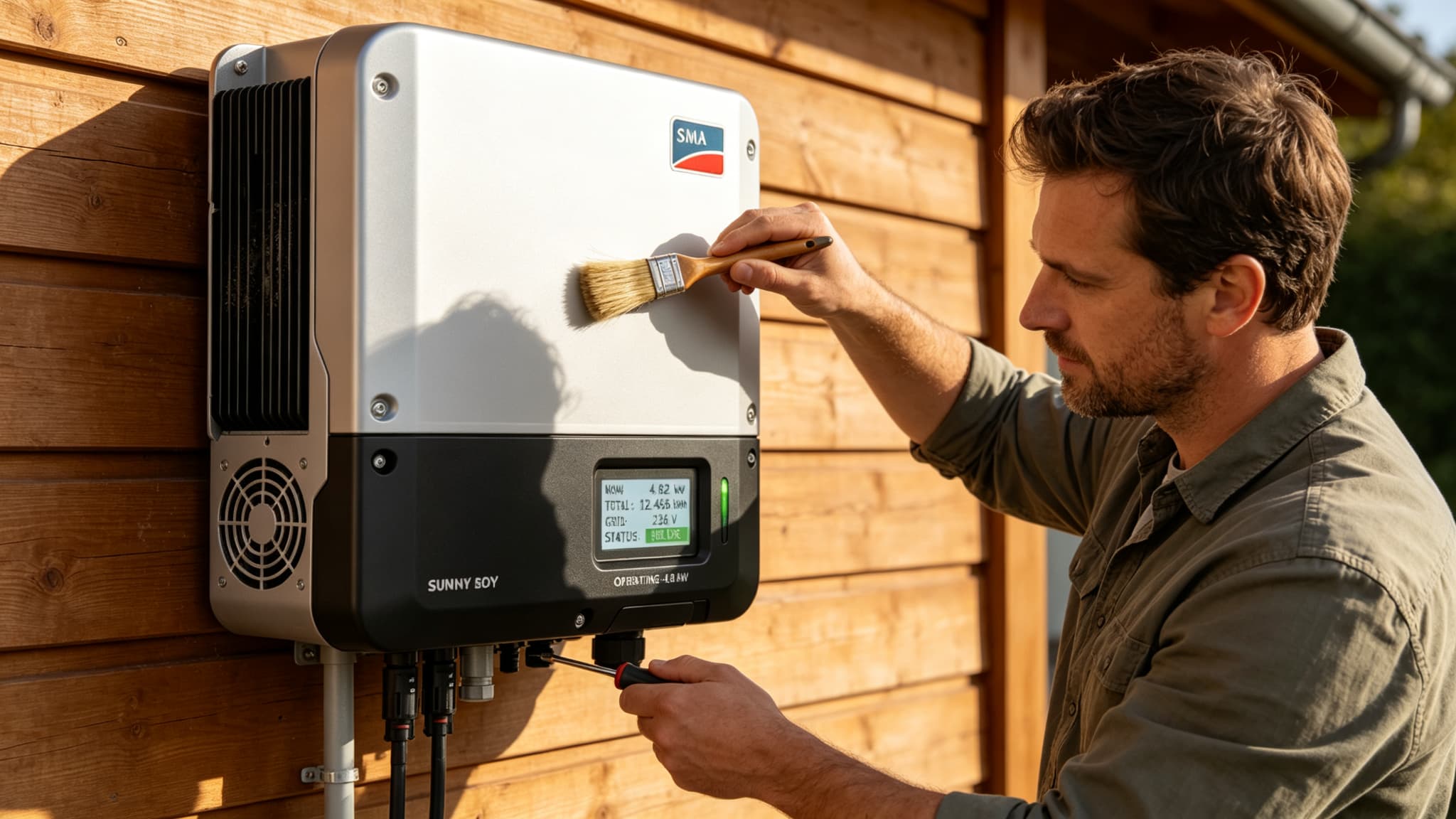
Solar Inverter Troubleshooting keeps your system performing at its best
Solar inverter errors look intimidating, but most are simple to diagnose and fix. You just need a basic understanding of the four common fault types. Start by reading the error code, then work through the corresponding fix in this guide. Always prioritize safety by turning off the DC disconnect before touching any wiring. Call a professional when you see burn marks, persistent errors, or anything you cannot confidently diagnose. With regular preventive maintenance and the knowledge from this guide, you can keep your inverter running smoothly for years. This minimizes lost solar production from unexpected shutdowns and keeps your system performing at its best.