
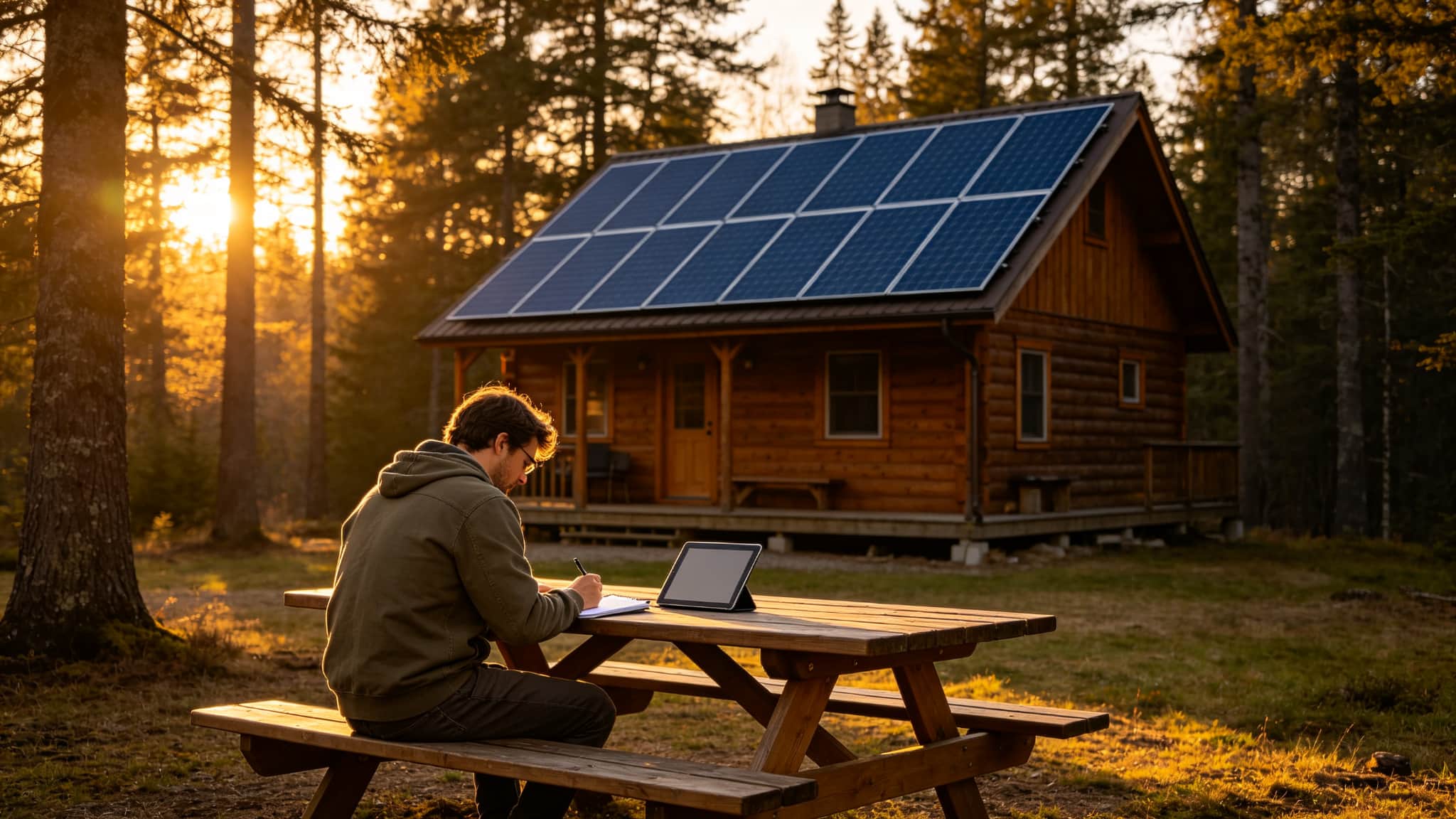
Calculate the demand for solar panels in just four steps
Whether you call it a solar panel calculator, a solar system calculator, or simply a spreadsheet, all tools follow the same four steps. These steps take just ten minutes to complete and work for studio apartments, family homes, or off-grid cabins.
- First, list all the appliances you use. For each appliance, note its power consumption (watts) and daily usage time (hours). Multiply the power by the number of hours to get the watt-hours. Then add all the values together to get your total daily electricity consumption. For a small cabin, this typically includes a refrigerator, a few lights, a laptop, and a water pump. Be sure your list is complete and accurate; omitting a single large appliance will affect the electricity consumption of all subsequent appliances.
- Next, multiply your daily power generation by 1.25 to 1.3. This buffer accounts for actual losses. DC-to-AC conversion, line resistance, panel heat generation, and dusty or overcast conditions can all cause actual power generation to fall a few percentage points below the ideal value. Even if the theoretical calculations are correct, skipping this step will result in insufficient actual power generation.
- Third, divide by the peak sunlight duration in your area. Peak sunlight duration refers to the period around noon when sunlight is strongest, not the total duration of sunlight. The result is the required solar panel power. For example, if the peak sunlight duration is 4 hours and you need 3.6 kilowatt-hours (kWh) of electricity per day, you’ll need a 0.9-kilowatt (kW) solar panel array. In cloudy areas, simply divide by a smaller number and increase the number of solar panels.
- Finally, determine the capacity of the battery and inverter. Depending on the amount of sunlight in your area, the battery should provide power for one to three days. Then, determine the inverter’s capacity based on the startup surge power rather than the operating power. A refrigerator compressor draws three to five times its operating power when it starts up, so the inverter must be able to handle this power surge without tripping.

Your position will change the result of mathematical operations

Roof Orientation and Shade
Tailoring the Numbers to Your Setup
- a full off-grid system
- a lean grid-tied array
- a small backup kit
Common Mistakes the Numbers Expose
A Solar Calculator Is Only as Good as Your Needs
You already know how to calculate your solar panel requirements: list your electrical loads, multiply by the efficiency loss, divide by the peak daily sunshine hours, and then select the appropriate battery and inverter based on your usage. The solar calculator simply automates these steps. Its results depend on two input values you provide—your actual daily electricity consumption and actual hours of sunshine. This way, selecting solar panels, batteries, and inverters is no longer a matter of guesswork but is precisely tailored to your home, electricity usage habits, and climate conditions. That is the whole point of the calculation: to build a system that’s right for your home, not someone else’s.