
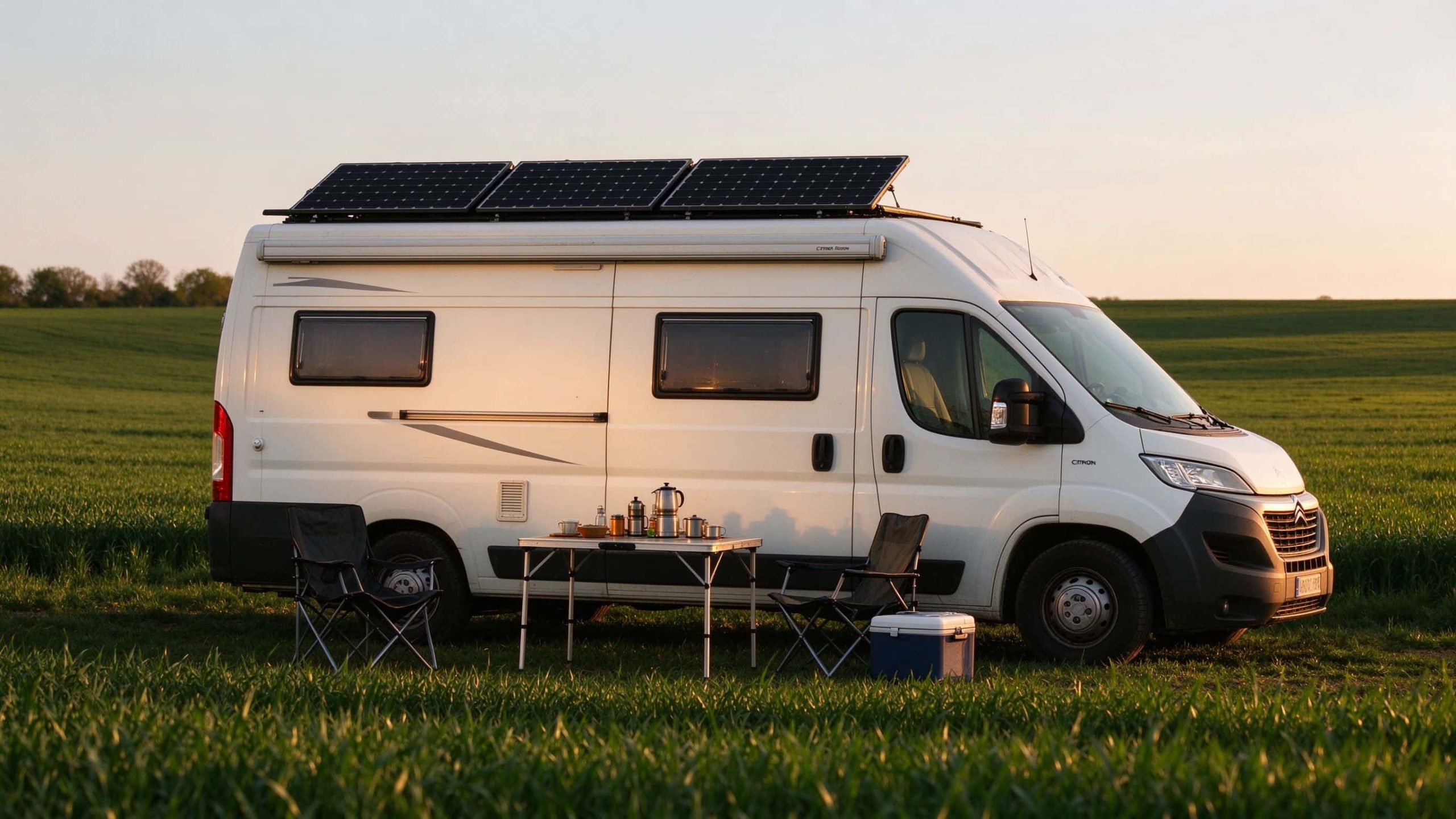
A camper van solar setup lives or dies by whether the battery bank lasts until the next sunny day. The fridge runs all night, laptops get charged at the picnic table, and lights stay on long after sunset. Pick panels too small or the battery too tight, and five days off-grid turns into four. This case study follows a converted Citroën Relay built for a family of three who wanted up to five nights without a hookup. It shows how three roof panels, a multi-battery bank, an MPPT controller, a DC-DC charger, and a small inverter were sized around real loads, and what the owners reported after roughly four months on the road.
Understanding the Camper Van Solar Setup Energy Needs
The build documented by Nohma, a UK campervan electrics specialist, uses a Citroen Relay high-roof van converted for a family of three. The owners wanted to stay on sites with no mains hookup for around five days at a time while still running laptops, a 12V fridge, interior lighting, and a card reader for occasional use. That combination shapes every decision in the build.
The van is not a tiny day camper. It carries three people, clothing, cooking gear, and remote-work equipment. Five nights without hookup means the system cannot rely on shore power. It also means the owners need to know battery state at any time, because a flat bank on day three derails the trip. The build therefore treats solar as one of several charging sources rather than the only one.
Camper Van Solar Setup Daily Electrical Loads and Power Priorities
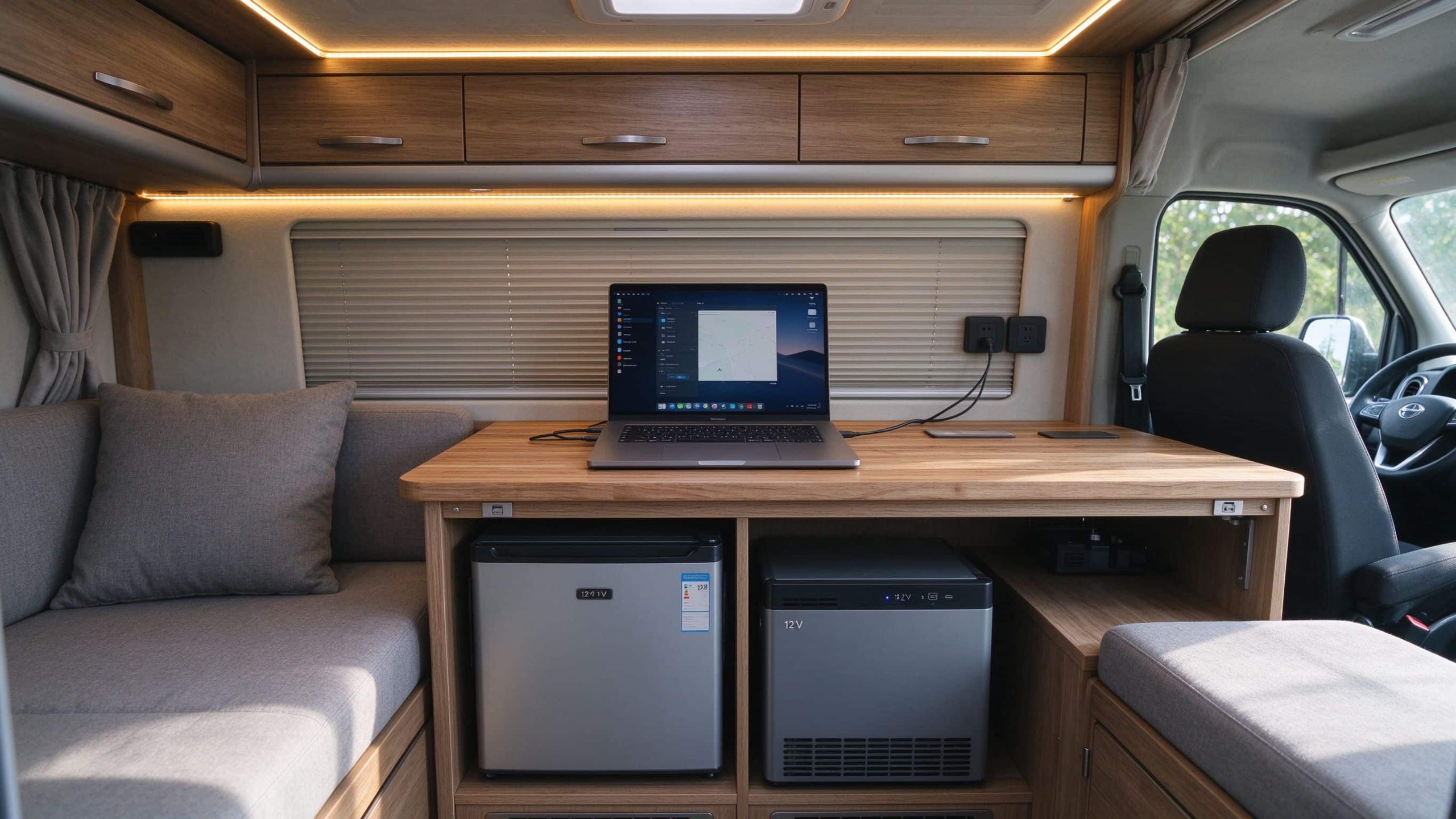
The loads fall into three groups. Continuous loads run all day, mainly the 12V compressor fridge and ventilation. Regular daily loads include phone and laptop charging, interior LED lighting, and the water pump. Occasional loads use the inverter for small AC devices. The card reader and laptop are the items most tied to the owners’ working style, so they get priority in the battery sizing. The fridge, however, is the load that never switches off and drives most of the daily energy budget.
Camper Van Solar Setup: The Main Design Constraints
-
Roof space on a Relay high-roof is generous but not unlimited, and panels must clear roof rails, vents, and the pop-top bed.
-
Five days off-grid sets the minimum battery autonomy. Cloudy days mean solar may not fully recharge on day three.
-
Battery storage has to fit under bench seats without eating into living space.
-
The van drives between sites, so the engine alternator can refill the battery bank through a proper DC-DC charger rather than simple split-charging.
-
Budget has to cover panels, batteries, and protection devices without over-specing an inverter the owners will not use.
Camper Van Solar Setup System Components and Design Choices
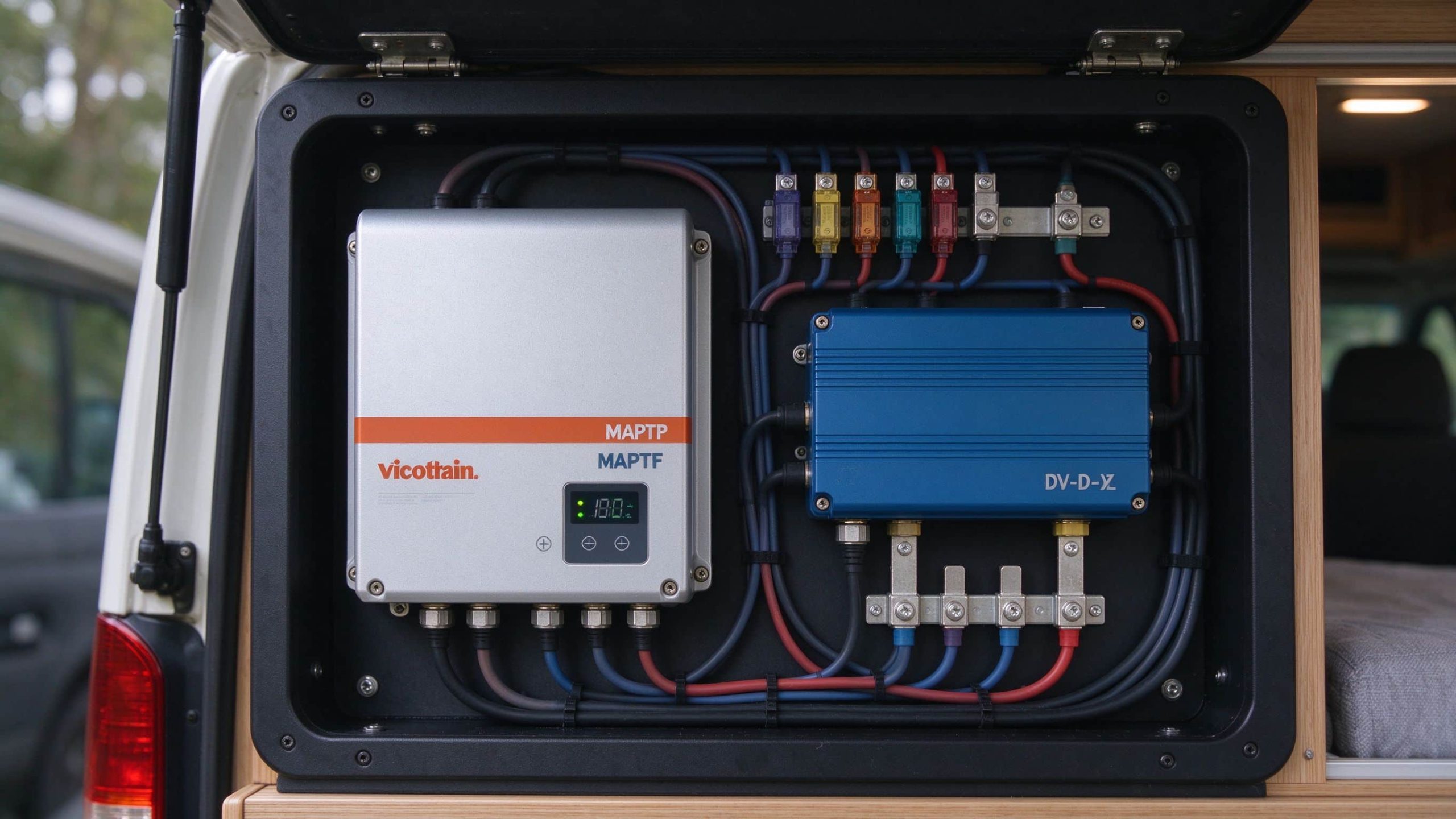
The published case names the major components but does not list every panel wattage or battery amp-hour. That is useful discipline: the design logic matters more than the exact part numbers. The build uses three roof-mounted solar panels, three separate battery banks, a Victron Energy MPPT 100/30 charge controller, a 30A DC-DC charger, and a 500 VA inverter. The three-panel layout spreads weight across the roof and gives partial shading on one panel less impact. The three-battery approach lets the owners match storage to space rather than force one large heavy bank into a single locker.
Camper Van Solar Setup needs Solar Panels and Battery Storage
The three panels feed the MPPT controller, which extracts the available power and charges the battery bank at the correct voltage. The public case does not state the panel wattage or the battery chemistry and amp-hour rating. The design logic is clear: panels cover daily generation on sunny days, the battery bank bridges overnight and cloudy periods, and the DC-DC charger tops up during driving. Solar handles steady-state use, while the alternator covers short-notice top-ups between sites.
Charge Controller, Inverter, and DC-DC Charging
-
Victron MPPT 100/30 handles up to 100V of panel open-circuit voltage and 30A of charging current. MPPT is the right choice here because the panel voltage can sit well above the battery voltage, which leaves more usable energy than a basic PWM controller.
-
500 VA inverter covers small AC loads. It is deliberately not a 2000W unit, because the owners’ AC use is light and a larger inverter would draw more standby current and cost more.
-
30A DC-DC charger charges the house battery from the engine alternator while driving. It manages the charge profile and isolates the starter battery, which a simple split-charge relay cannot do as cleanly.
How the Complete Power System Works Together
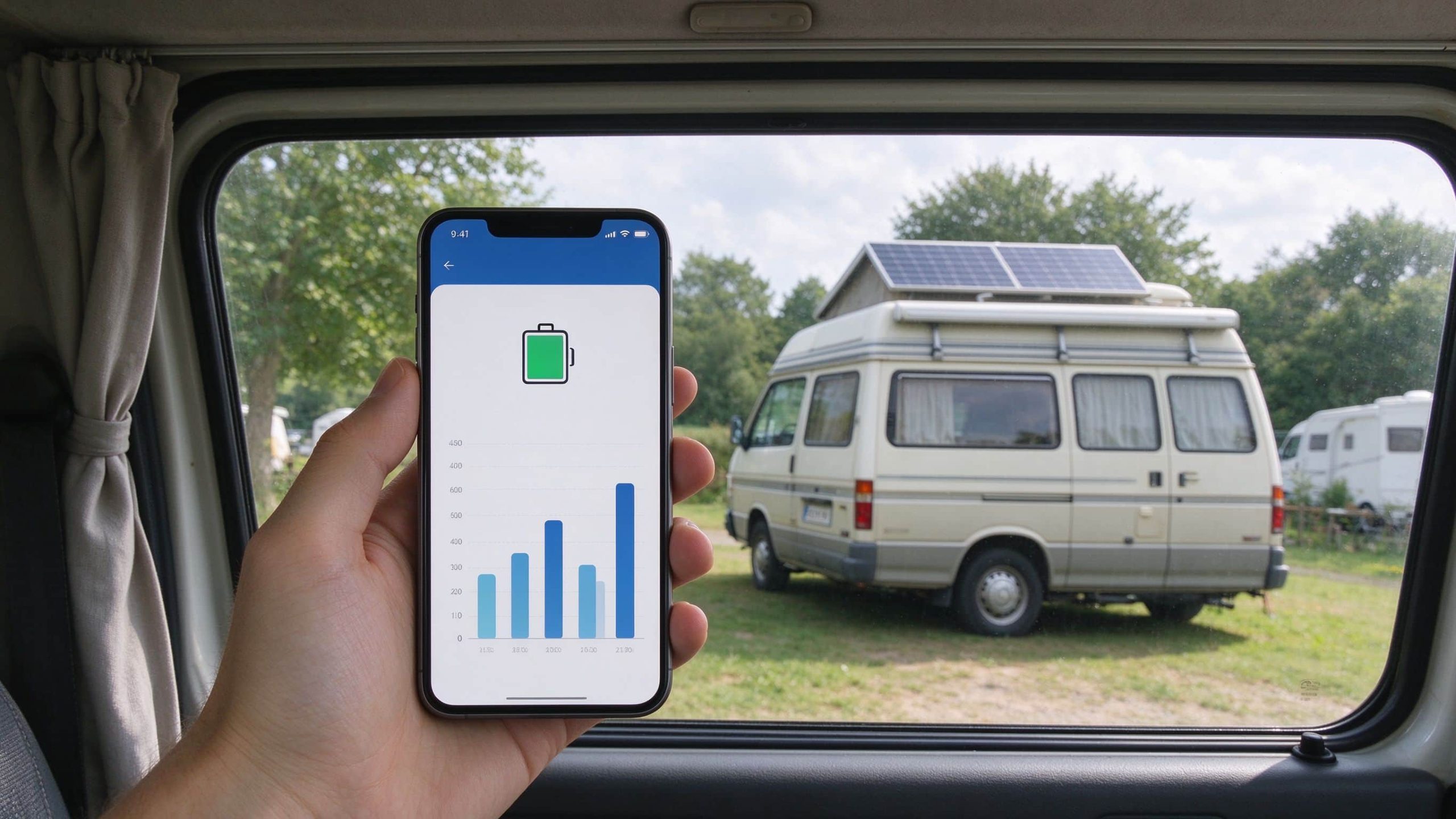
Power flows from three sources. The roof panels feed the MPPT controller. The engine alternator feeds the DC-DC charger on the move. Both charge the house battery bank. The battery then runs 12V loads directly and supplies the inverter for AC devices. A monitoring link lets the owners check the state of charge from a phone. This split is the key design move: solar is sized for average sunny-day use, driving recharge covers multi-day trips, and the inverter is small enough that it does not become a parasitic load. No single source has to do all the work.
Real-World Performance, Challenges, and Lessons Learned
The conversion was finished in April 2022. The owners then used the van for around four months of travel. Their reported experience, as published by Nohma, is that the system ran mainly from roof solar and smart charging without mains hookup, and that they monitored battery use through a phone app. This is owner feedback, not an independent test. It does not give daily kWh figures, cloudy-day generation, or state-of-charge curves.
What the record confirms is narrower than the headline suggests. The owners report they stayed off-grid, ran the expected loads, and could see battery status remotely. That validates the monitoring design and the sizing approach. It does not prove the bank never ran low on a cloudy spell, and it does not give a panel-by-panel production number. Anyone using this case for their own build should treat those missing figures as unknowns, not as reasons to copy the exact sizes.
What Worked Well and What Were the Limitations
The build handles several trade-offs cleanly. MPPT plus DC-DC means the van can recharge while driving between sites, which covers trips with no sunshine. The small inverter matches actual AC use rather than wasting standby power. Phone monitoring changes behavior: owners shift laptop charging to sunny hours once they can see the battery curve. The limitations are equally real. Solar output drops with cloud, trees, and roof-angle differences across the three panels. A 500 VA inverter will not run a microwave or a heater. And the three-battery layout needs tidy ventilation, secure fixing, and proper fusing if it is to last.
Key Lessons for Other Camper Van Owners
-
Size the bank around the loads you actually run, especially the always-on fridge, not around a generic weekend figure.
-
Treat solar, driving recharge, and shore power as a combined system. If you rarely drive, solar and battery have to do more.
-
Match the inverter to the AC devices you own. Upsizing “just in case” adds cost and idle draw.
-
Spend on monitoring. A phone view of state of charge prevents more mistakes than a bigger battery.
-
Use MPPT when panel voltage can exceed battery voltage. It recovers energy a cheaper PWM controller leaves on the table.
What This Build Means for Your Own Van
This case is useful because it starts from a real five-day, three-person off-grid requirement rather than a parts list. Three roof panels, a properly controlled battery bank, an MPPT controller, a DC-DC charger, and a modest inverter add up to a system that matches how the van is actually used. The exact panel wattage and battery amp-hours are not public, and the owner feedback is not an independent trial. Even so, the design logic transfers: define daily loads, plan for cloudy days, keep the inverter right-sized, and monitor what the battery is doing. The right camper van solar setup is the one that keeps the fridge running and the laptops charged without forcing a nightly hunt for a hookup.