
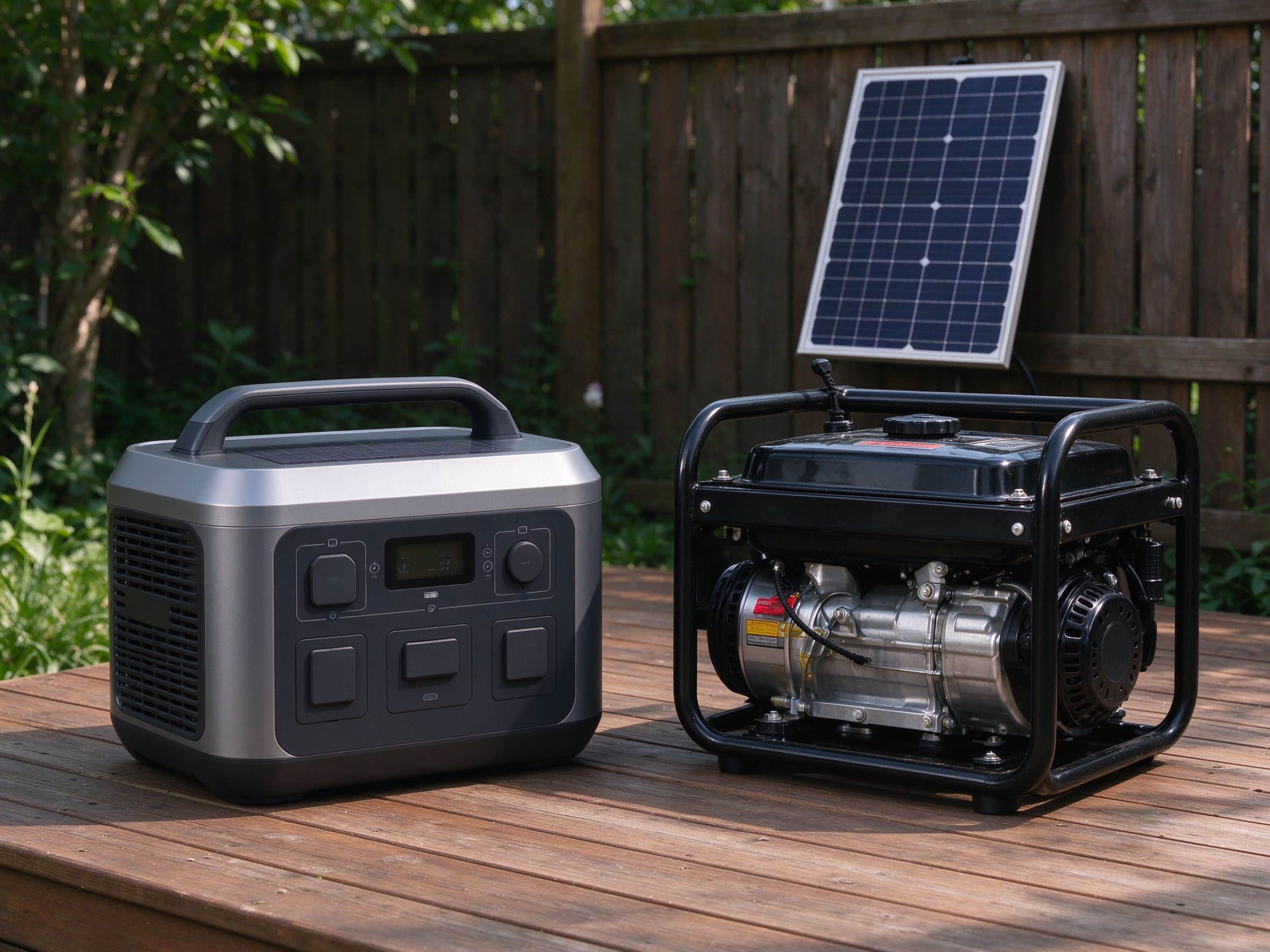
When the power goes out at home, you roll into a campsite with no hookups, or a jobsite needs temporary AC, two backup options come up: a solar generator vs. a gas generator. Both deliver electricity where a wall outlet doesn’t. They work in opposite ways. One stores energy in a lithium battery and recharges from sunlight or the wall. The other burns gasoline in an engine and makes AC on demand. Choosing between them comes down to which is better for your needs. It is about how much power you need, how long you need it, and how you plan to refuel or recharge. The comparison below walks through how each unit works, which use case it fits, and the factors that matter before you buy.
How Do Solar Generator Vs. Gas Generator Options Compare?
The two machines look similar from the outside but run on completely different physics. Four dimensions separate them: how each one actually makes AC, how long it can run and at what surge, how loud it is and what it needs to maintain, and how easy it is to move around. Walk through those four layers below before comparing prices.
Solar Generator Vs. Gas Generator: How They Work
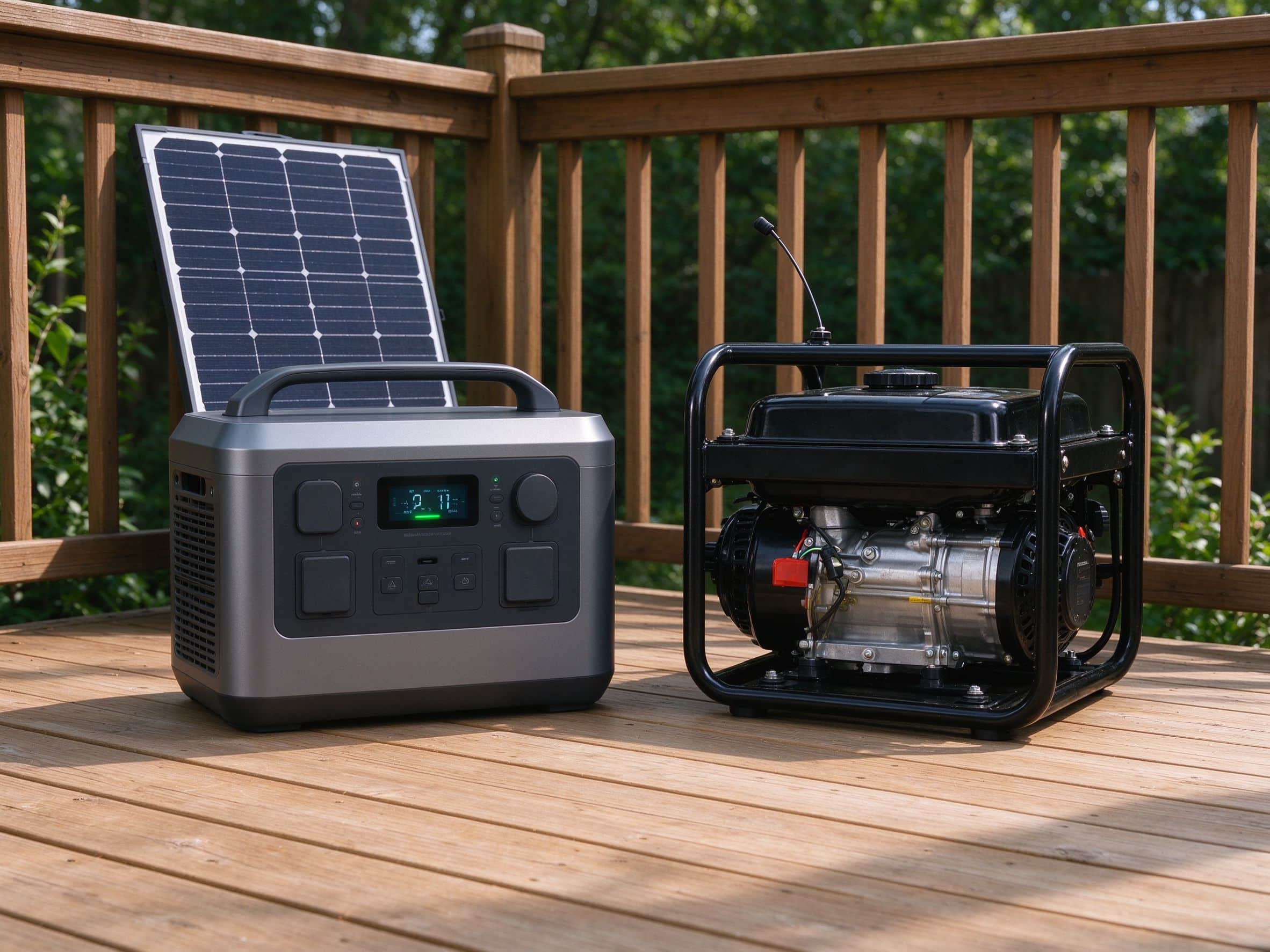
A so-called solar generator is not a generator in the traditional sense. It is a lithium battery pack, an inverter, a charge controller, and a battery management system housed in one box. It stores electricity from the wall or a solar panel and converts it to AC when you plug something in. A gas generator works like a small car engine. An internal combustion engine spins an alternator that produces AC directly as long as fuel flows.
Solar Generator Vs. Gas Generator for Runtime and Power Output
A gas generator runs as long as the fuel tank holds out, typically 8 to 12 hours at half load on a full tank. A solar generator runs on stored watt-hours. Runtime depends on battery capacity, connected load, inverter efficiency, and whether sunlight or wall power tops it off. Gas units commonly deliver 2,000 to 10,000 W continuously. Solar generators range from 200 W suitcase units to 3,000 W whole-home backup stations. Check both the continuous and surge ratings. Refrigerators, pumps, and window AC units draw 2 to 3 times their running wattage at startup. The data is for reference only. If you’d like to see more comparative data, check out this community discussion titled “How Does Solar Compare to Gas Generators for Power During Outages?”
Solar Generator Vs. Gas Generator for Noise, Emissions, and Maintenance
A gas generator makes engine noise and vibration, usually 60 to 75 dB at seven meters. It produces exhaust containing carbon monoxide. You cannot run it in a garage, basement, or enclosed porch. It also needs oil changes, spark plug service, and fuel stabilization if gasoline sits for months. A solar generator runs silently when discharging its battery. It has no exhaust at the point of use. Maintenance is limited to battery health, firmware updates, and keeping the charging ports clean.
Solar Generator Vs. Gas Generator for Portability
A solar generator skips the fuel can, which is a real advantage. It starts with a button. You can carry it indoors, into a tent, or onto a balcony. But large battery stations weigh 25-50 kg. A 2,000 W gas generator also weighs 20-30 kg, plus a fuel can. Portability depends on the size you buy, not the fuel type.
A solar generator prioritizes quiet, battery-based, low-maintenance power. A gas generator prioritizes continuous, fuel-based output and a high starting surge.
Which Power Source Fits Different Use Cases?
Once you understand the operating differences, the right answer depends on the scenario. Quiet home backup, camping and RV use, construction and worksite loads, and remote or emergency sites each favor a different fuel type.
Home Backup Power
Short outages that affect phones, laptops, Wi-Fi, lights, and a refrigerator are a strong fit for a battery-based solar unit. It sits indoors, makes no exhaust, and runs silently overnight. If you need to run central air, electric heat, a well pump, or several high-wattage appliances at once, gas becomes the practical choice. Carbon monoxide safety rules require a gas unit to operate outside, even in a storm.
Camping, RVs, and Outdoor Recreation
Quiet campgrounds and RV parks favor battery units. They power lights, phones, laptops, and a small fridge without disturbing neighbors or violating noise rules. This is the strongest fit for solar vs. gas generator comparisons for camping. A gas generator still wins if you need to run power tools, a large rooftop AC, or air tools all day and can easily refuel.

Construction, Worksites, and Heavy-Duty Loads
Circular saws, air compressors, water pumps, and welders draw high continuous wattage. A gas generator handles these loads for hours. A battery-based unit works for short jobs, indoor spaces, and noise-restricted sites. It will ride along on a remodel, but it won’t power a jobsite welder.
Emergency and Remote Applications
Remote cabins, off-grid monitoring gear, and disaster response have a real tradeoff. Solar panels are free from sunlight but stop working after dark. Gas runs through storms at night but depends on fuel deliveries. The question is whether sunlight or gasoline is the more reliable input at your site.
Use-Case Match at a Glance
|
Use case
|
Solar/battery generator
|
Gas generator
|
|---|---|---|
|
Quiet home backup
|
Strong fit
|
Less suitable indoors
|
|
Camping and RV
|
Strong fit
|
Suitable, check noise rules
|
|
Multi-day outage
|
Depends on recharge
|
Strong fit
|
|
High starting loads
|
Depends on surge rating
|
Often strong fit
|
|
Indoor operation
|
Suitable when rated for it
|
Not suitable
|
|
Remote site
|
Strong fit if sun is reliable
|
Strong fit if fuel is reliable
|
What Should You Consider Before Choosing a Generator?
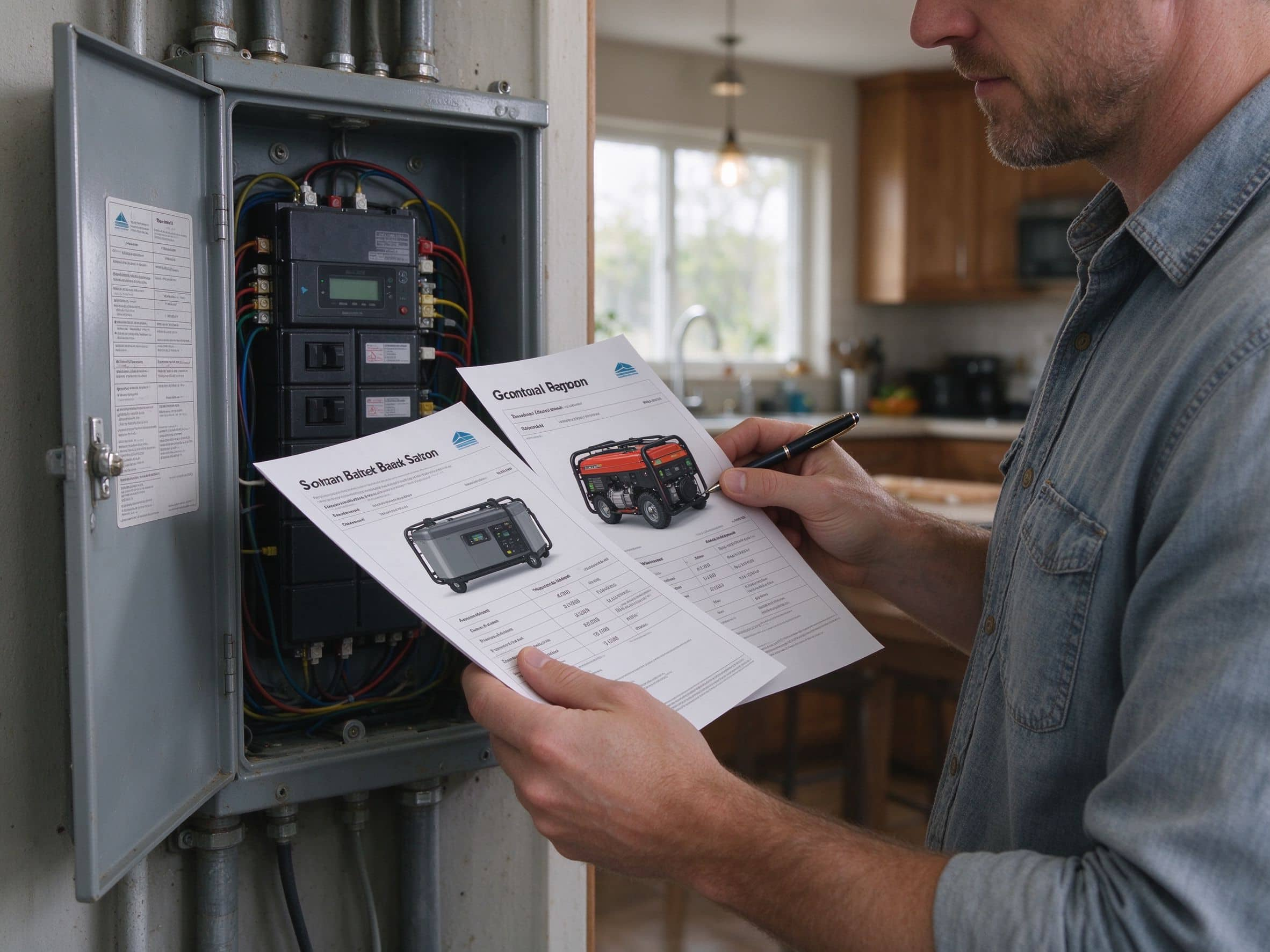
Scenario matching gets you halfway. Next, consider sizing and cost. Six factors decide whether the unit on the shelf will actually meet the need: real load and starting wattage, runtime and recharge, total cost of ownership, noise and carbon monoxide safety, portability, and a simple go/no-go decision framework that ties it all together.
Power Requirements and Load Type
List every device the unit must run at once. Add running watts and starting watts. A refrigerator pulls 600 W running but 1,800 W at startup. A window AC pulls 1,500 W running but 3,000 W on surge. Size the inverter for the peak, not the average.
Runtime and Recharge Options
For a battery unit, look at usable watt-hours, not marketing capacity. Divide by the connected load to get hours. Note solar input rating, AC recharge time, and whether the unit can charge while powering loads. For a gas unit, check tank size, fuel consumption at half and full load, and whether you can store enough fuel for the longest plausible outage.
Total Cost of Ownership
The sticker price is only the start. A gas generator costs more to run: gasoline, oil, spark plugs, and yearly service. A solar battery costs more upfront but almost nothing to operate, except eventual battery replacement after roughly 10 years of cycles.
Noise, Storage, and Safety Requirements
Gas units emit carbon monoxide. Store them outside, at least 20 feet from doors and windows, with exhaust pointing away from the house. Never run them in a garage. Battery units have no exhaust, but they still need ventilation during charging and a dry spot to sit. Check the rated operating temperature. Lithium packs lose capacity below freezing and cannot charge safely in extreme cold.
Portability and Ease of Use
Weigh the loaded unit. Add the fuel can if you go gas. Check whether the model has wheels, a pull handle, or a suitcase form factor. Note startup: push-button for battery, pull-cord or electric start for gas.
Build a Simple Decision Framework
-
Choose a solar battery generator when quiet operation matters, indoor use is needed, no fuel storage is wanted, and loads are moderate.
-
Choose a gas generator when continuous high-power output, multi-day outages, or heavy starting loads dominate the use case.
-
Consider a hybrid setup when you want silent overnight battery power plus gas backup for extended storms or jobsites.
Which Generator Should You Actually Buy?
Choosing between a solar generator and a gas generator depends on how much power you need, how long you need it, and how you will replenish that energy. Battery-based solar units fit quiet, portable, low-maintenance backup for homes, campsites, and short outages. Gas generators suit long outages, heavy starting loads, and job sites where fuel is easy to bring in. Some households end up with both: a battery station for daily quiet power and a gas unit for storm weeks. Size the loads first, then pick the fuel type that matches.