
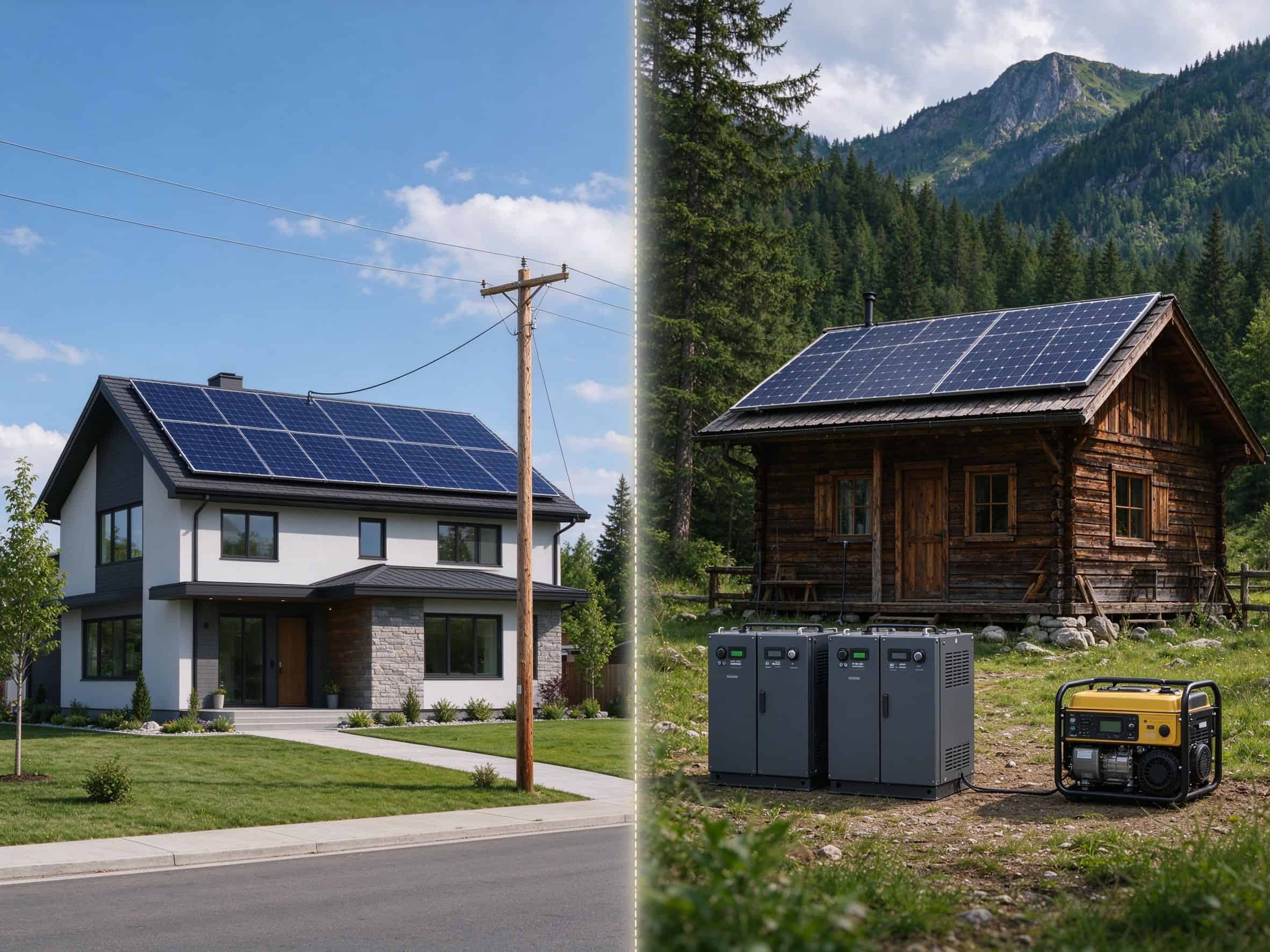
Going solar means making one foundational decision before you compare panel brands or inverter models. Grid-Tied VS. Off-Grid: You must choose between a grid-tied solar system that connects to the public utility grid and an off-grid solar system that operates independently. Grid-tied systems suit homeowners who want to lower electric bills while retaining grid backup. Off-grid systems serve remote properties where grid access is unavailable or prohibitively expensive. This choice shapes everything from upfront cost to battery storage requirements. A standard grid-tied setup stops feeding power back to the grid during outages to protect line workers. Only configurations with proper isolation hardware and battery backup can power selected loads when the utility fails.
How Do Grid-Tied VS. Off-Grid Systems Work?
Before comparing costs or components, it helps to understand how each system type moves electricity from sunlight to your outlets. A grid-tied system relies on the utility grid for both storage and backup power. An off-grid system must generate, store, and manage all its own electricity. They also explain what happens when sunlight fades, or the grid goes down—two situations where the two designs behave very differently.
How a Grid-Tied Solar System Generates and Supplies Electricity
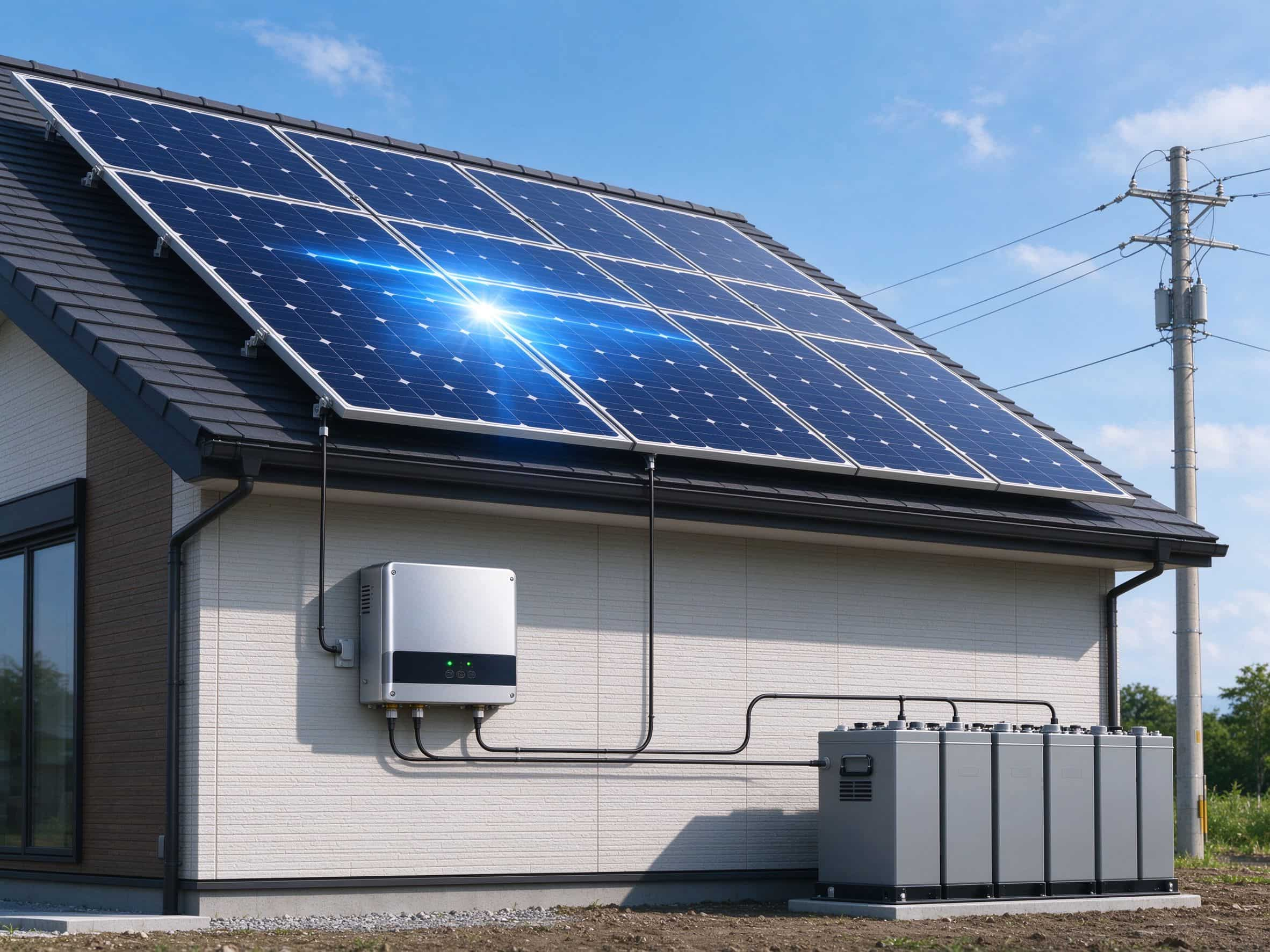
Grid-tied vs. off-grid solar comparison starts with understanding how each setup produces electricity. A grid-tied solar system starts when photovoltaic panels convert sunlight into direct current (DC). A grid-tied inverter then converts that DC power into alternating current (AC) that matches the grid’s frequency and voltage. Generated electricity first flows to loads inside the building. Any surplus production typically feeds back into the public grid. Compensation for that surplus depends on local net metering rules and your utility’s interconnection agreement. When solar output falls short, the building draws additional power directly from the grid.
How an Off-Grid Solar System Generates and Stores Power
An off-grid solar system works differently. Panels still produce DC electricity. However, a charge controller manages battery charging to prevent overcharging and extend battery life.
Batteries store excess energy for nighttime use or cloudy periods. An inverter converts stored DC into AC for standard household appliances. Some DC-powered devices run directly from the battery bank without inversion. During extended rainy stretches or high-demand periods, a backup generator may kick in to recharge batteries.
What Happens When Solar Production Falls or the Power Goes Out?
Low solar production and grid outages affect the two setups very differently. A grid-tied home simply pulls more power from the utility when panels underperform. In contrast, an off-grid home relies entirely on its battery state of charge and any backup generator. During a grid outage, a standard grid-tied inverter shuts down automatically. This anti-islanding protection prevents homeowners from energizing lines that repair crews assume are dead. Off-grid systems are not affected by utility outages. Their operation depends only on their own generation and storage capacity.
What Are the Main Differences Between the Two Solar Setups?
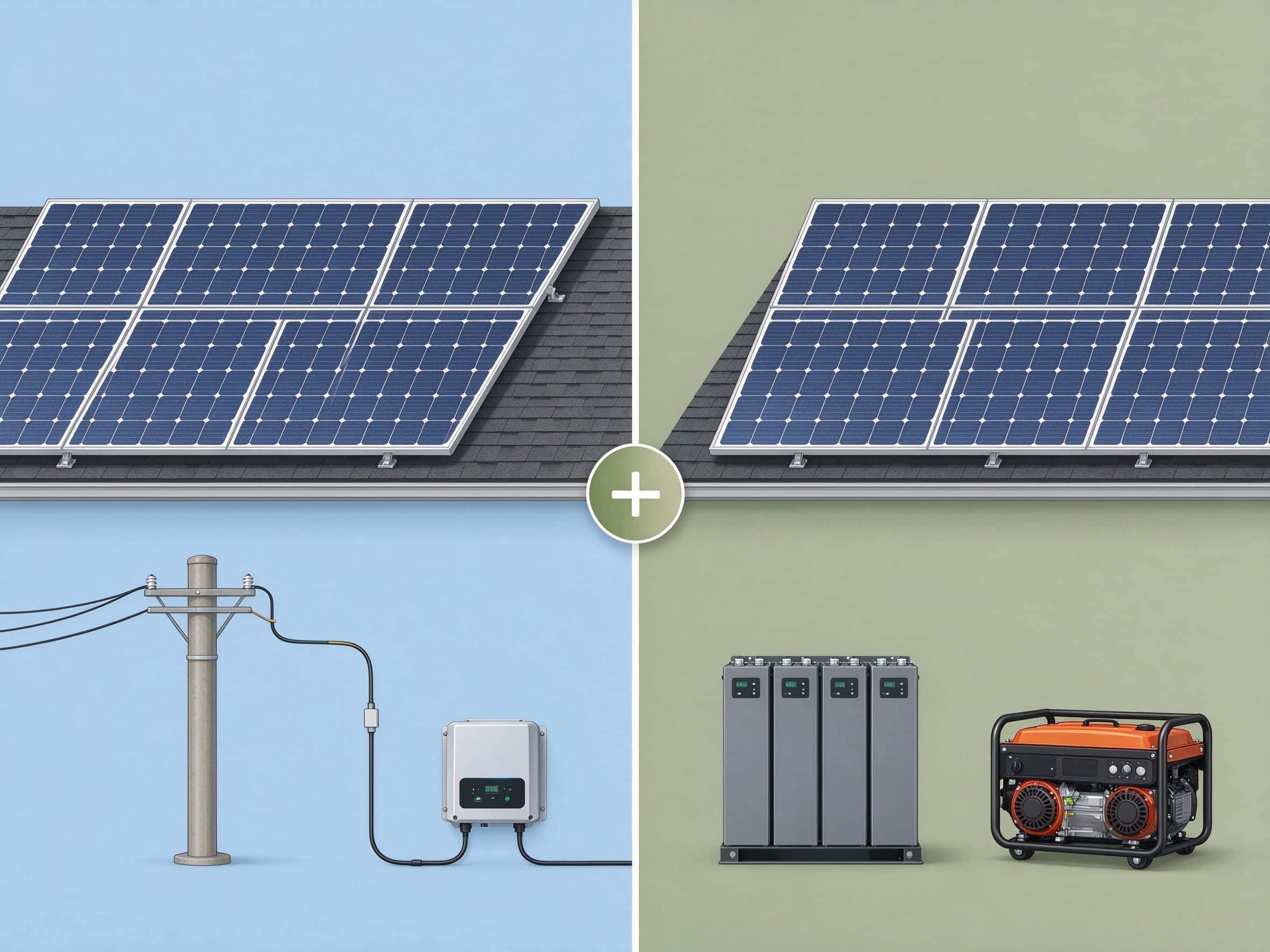
Once you understand how each system works, compare them side by side across the factors that matter for your decision. The four sections below cover grid connection and energy independence, battery storage and backup power, installation cost and long-term expenses, and maintenance reliability and system design. A summary comparison table follows these sections so you can quickly scan the key trade-offs.
Grid Connection and Energy Independence
The most obvious distinction is whether they are physically connected to the grid. Grid-connected vs. standalone solar systems differ fundamentally in how they source power. A grid-tied setup stays linked to the utility network at all times. It automatically exports surplus power and imports power when needed.
An off-grid system has no such connection. It must generate, store, and manage every watt the property consumes. This independence comes at the cost of more careful load planning.
Battery Storage and Backup Power
Battery storage separates the two designs in practical terms. Most grid-tied systems operate without batteries. They rely on the grid as a virtual storage buffer. Adding batteries to a grid-tied system is optional and usually done for backup power during outages. Off-grid systems cannot function without batteries. The battery bank must cover nighttime loads and several consecutive cloudy days. Sizing that bank correctly is one of the most critical steps in off-grid design.
Installation Cost and Long-Term Expenses
Grid-tied vs. off-grid solar cost comparisons usually show grid-tied systems have a lower upfront investment. A grid-tied installation needs panels, an inverter, and grid interconnection hardware. It does not require a large battery bank. Off-grid systems cost more initially. You must budget for batteries, a larger inverter, a charge controller, and possibly a backup generator. However, off-grid owners avoid monthly utility bills entirely. Grid-tied customers still pay for any grid power they consume beyond what their panels produce.
Maintenance, Reliability, and System Design
Maintenance needs also diverge. Grid-tied systems have fewer moving parts and a simpler design. The grid itself acts as a reliable fallback. Utility crews handle line repairs and power restoration.
Off-grid systems place more maintenance responsibility on the owner. Battery health, generator servicing, and charge controller settings all require attention. On-grid vs off-grid solar power reliability depends on different factors. Grid-tied reliability mirrors the local utility. Off-grid reliability depends on battery sizing, access to generators, and solar resource quality.
|
Comparison Dimension
|
Grid-Tied Solar
|
Off-Grid Solar
|
|---|---|---|
|
Connected to public grid
|
Yes
|
No
|
|
Batteries required
|
Not usually
|
Typically required
|
|
Behavior during grid outage
|
Standard units stop feeding grid
|
Unaffected by utility outages
|
|
Power source on low-sun days
|
Grid supplies deficit
|
Batteries + backup generator
|
|
Upfront investment
|
Generally lower
|
Generally higher
|
|
Design focus
|
Grid codes, export rates, payback
|
Load sizing, battery capacity, autonomy days
|
|
Best for
|
Grid-served homes and businesses
|
Remote homes, farms, isolated facilities
|
NOTE: Cost figures above reflect typical trends only. A large grid-tied system with storage may cost more than a small off-grid cabin setup. Always get quotes sized to your specific energy use.
Which Solar Setup Best Fits Your Property and Energy Needs?
With the core differences clear, the final step is matching the right system to your specific situation. Below, we break the decision into four practical questions:
- whether your property is already connected to the grid
- whether you need backup power during outages
- whether you can afford the higher upfront cost of off-grid equipment
- how your local utility rules affect a grid-tied system’s payback.
Choose Grid-Connected Solar for Most Grid-Served Homes
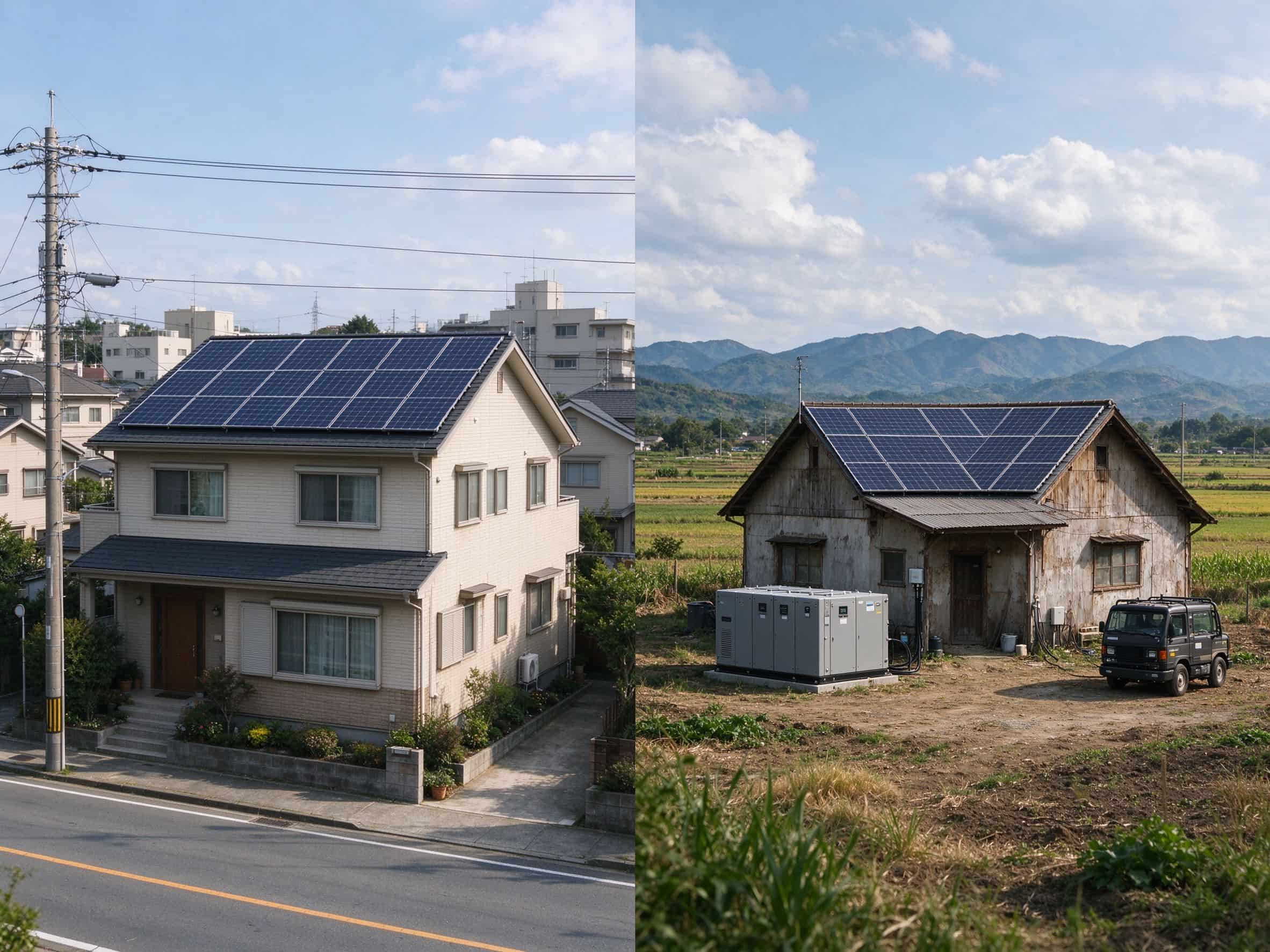
Start with grid-connected solar if your home is already connected to the utility grid. This option makes sense if your main goal is to reduce monthly electric bills. It also works well when local net metering policies fairly credit surplus generation. Most suburban and urban homes fall into this category. They enjoy stable grid service and do not need full energy independence.
Choose Standalone Solar for Remote Properties
Standalone solar is the right choice when grid connection doesn’t exist or costs too much. Running a utility line to a remote parcel can cost tens of thousands of dollars per mile. In those cases, designing a proper off-grid system often beats paying for grid extension. This applies to rural cabins, farm buildings, and remote communications equipment. According to Solar Power World, off-grid installations have grown steadily as battery prices decline and more properties seek energy independence.
Consider a Hybrid System if You Need Backup Power
A hybrid system bridges the two approaches. It stays connected to the grid but includes batteries for backup. During normal operation, it behaves like a grid-tied system. During an outage, it can power selected critical loads such as refrigeration, lighting, and communication devices. Confirm that your inverter, battery bank, and transfer switch meet local electrical codes before installing a hybrid setup.
Evaluate Your Budget, Energy Use, and Local Utility Rules
Do not compare solar panel prices in isolation. Factor in inverters, batteries (if needed), mounting hardware, permits, installation labor, and grid-connection fees. Review your last twelve months of electric bills to estimate your average daily consumption. Check your utility’s net metering policy and interconnection requirements. These policies directly affect how much you save with a grid-tied system. For off-grid planning, calculate your daily load and decide how many cloudy days your batteries must cover.
Match Your Solar System to Your Energy Priorities
Grid-tied vs. off-grid solar comes down to one core question. Do you want to reduce costs while staying connected to the grid, or do you need complete energy independence? Grid-tied systems cost less upfront and fit most homes already served by utilities. Off-grid systems require a higher upfront investment but free you from utility bills and outages. Hybrid options offer a middle ground for homeowners who want backup power without going fully independent. Before you commit, measure your actual energy use, review local utility rules, and size your system to your real daily loads. The right choice depends on your property’s grid access, your budget, and how much reliability you need when the sun stops shining. Have questions about sizing a system for your home? Share your average monthly electric bill in the comments below.