
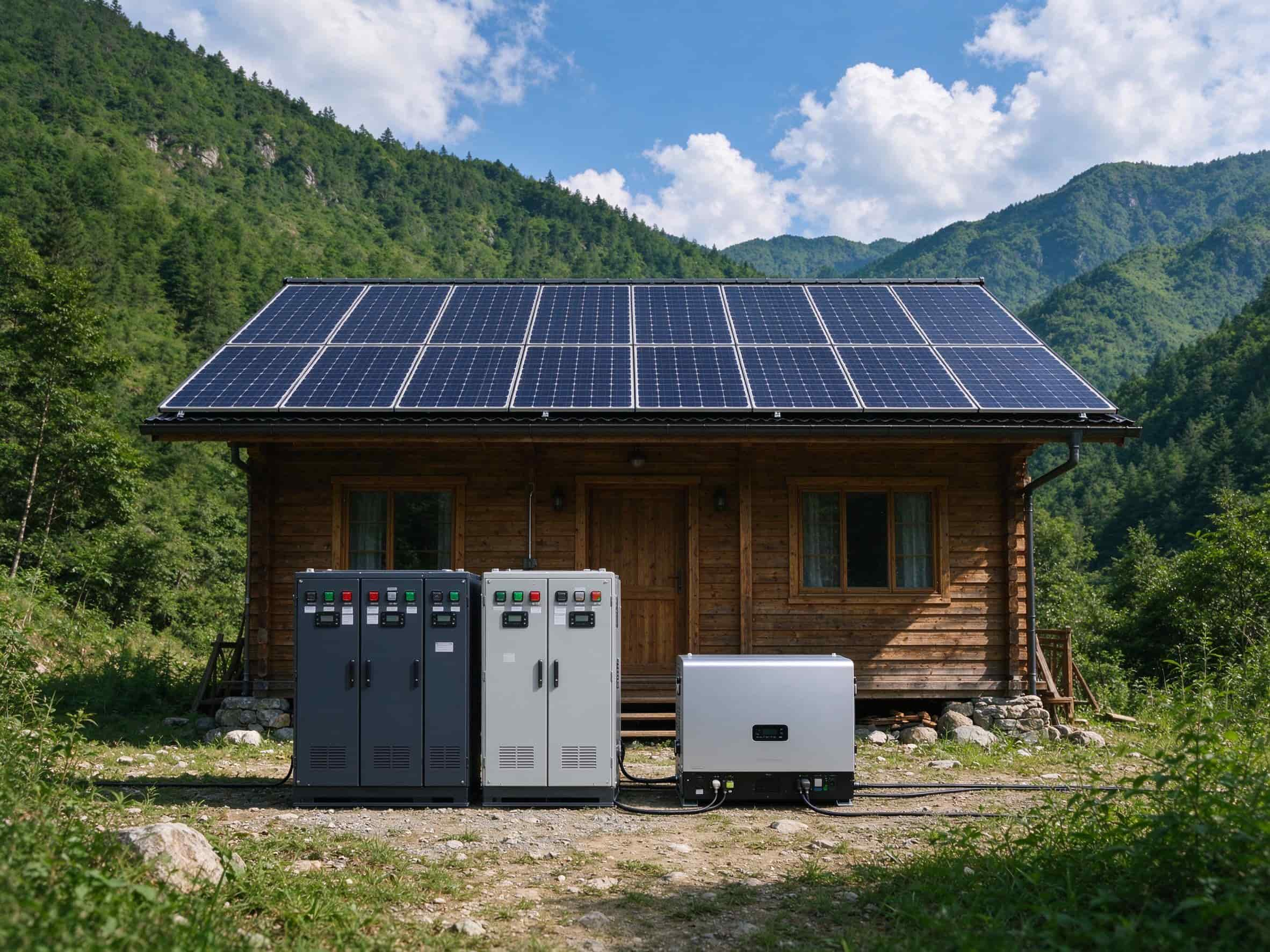
When a remote property sits miles from the nearest utility pole, extending the grid can cost tens of thousands of dollars per mile. In those situations, off-grid solar systems offer a practical alternative. They combine photovoltaic panels, battery storage, and inverters to generate and manage electricity entirely on site. Uses a representative remote home scenario to show what changes after installation. Before installation, the property relied on a generator and limited battery capacity. After installation, it runs on solar panels paired with a properly sized battery bank. The comparison table at the end summarizes the key shifts across energy access, cost, and reliability. It covers the main benefits of a well-designed system, how daily power access shifts from generator-dependent to solar-stored, and which design decisions most affect the outcome.
What Benefits Can Off-Grid Solar Systems Bring to a Remote Property?
Before looking at installation numbers, it helps to understand the practical value these systems provide. Off-grid solar power systems solve four core problems for remote properties: they bring power where the grid cannot reach, run essential household appliances, cut generator runtime and fuel costs, and shift daily energy use away from fossil fuels through battery storage.
Providing Electricity Where Off-Grid Solar Systems Access Is Limited
Rural cabins, farmsteads, and woodland homes often sit far from existing utility lines. Running a new line to the property can cost more than the building itself. Off-grid solar power systems remove that barrier entirely. They generate power on the roof or on the ground, with no need for utility cooperation or permits to extend the grid. This independence matters most for properties where grid access is physically impossible or economically unreasonable. A mountain cabin on a ridge or a farm in a valley can run the same basic loads as a grid-connected home—as long as the system is sized correctly for local sunlight.
Supporting Essential Household Loads
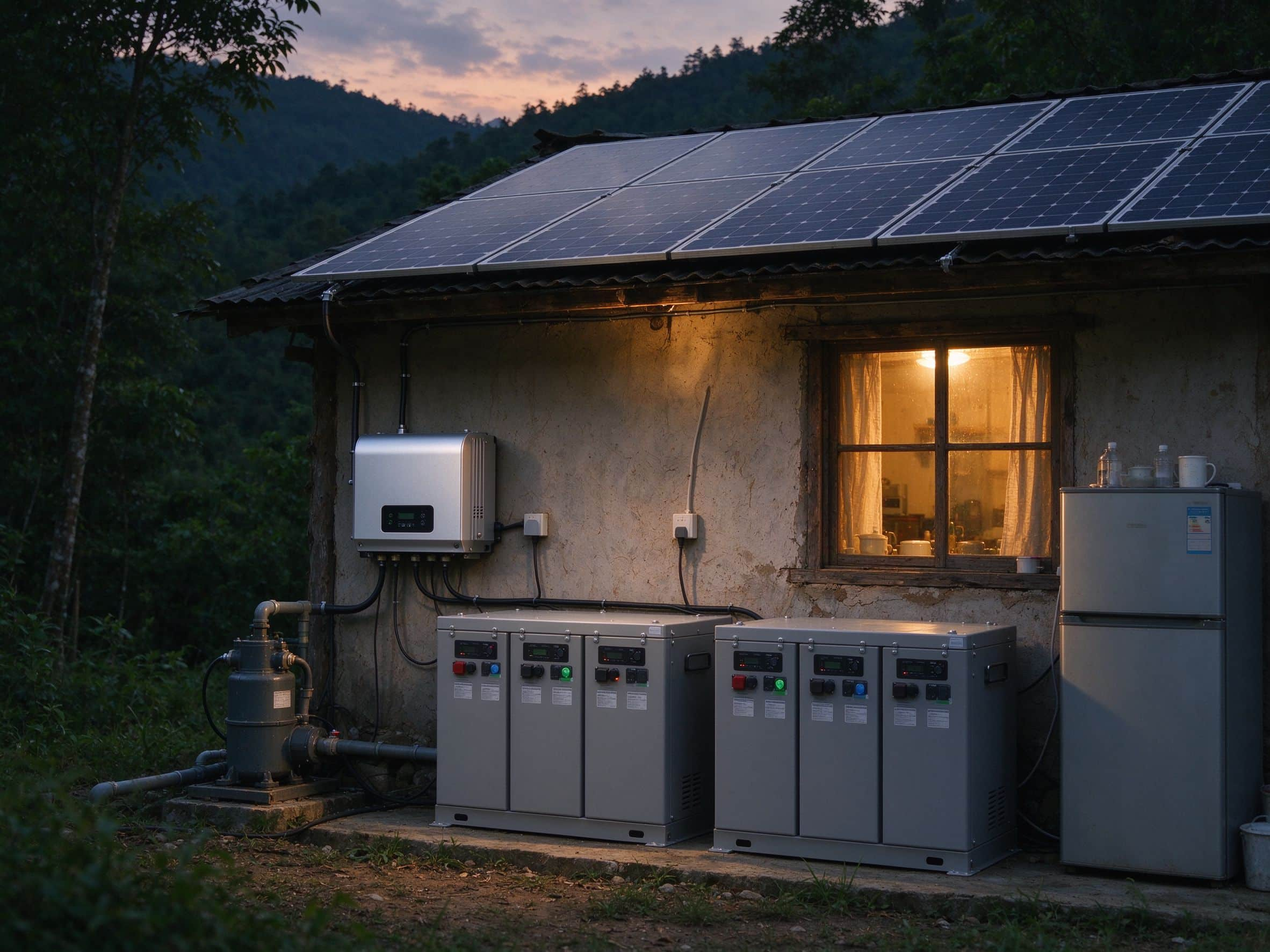
A well-designed off-grid solar installation covers the appliances people actually use every day. Lighting runs throughout the evening. A refrigerator keeps food cold 24/7. Communication devices like phones and routers stay charged. A water pump draws groundwater for household use. Not every load works on solar alone. Electric heaters, induction stoves, and power tools draw heavy current. They may require a larger inverter and more battery capacity. Most remote homes prioritize essential loads first and use gas or wood for heating and cooking.
Reducing Dependence on Fuel-Powered Generators
Generators have long been the default power source for off-grid properties. They run on gasoline or diesel and need fuel deliveries. And they make noise. They require regular oil changes and part replacements. A properly sized solar and battery system cuts generator runtime dramatically. On sunny days, solar panels charge the batteries and power loads directly. The generator only starts on cloudy stretches or during heavy usage. According to IEA solar PV data, declining battery costs have made solar-plus-storage competitive with generator-heavy setups in many remote locations. Fuel bills drop. Maintenance hours drop. Noise levels drop.
Improving Energy Independence With Battery Storage
Solar panels only produce power when the sun shines. Off-grid solar battery storage solves the timing problem. It stores daytime surplus for nighttime use. It also keeps the system running through short cloudy periods. Battery capacity depends on two factors: how much energy the home uses at night and how many cloudy days the system must cover without recharging. A system sized for two or three autonomy days handles most weather patterns. A system sized for one day risks running low during extended rain.
What Changes Before and After Installation?
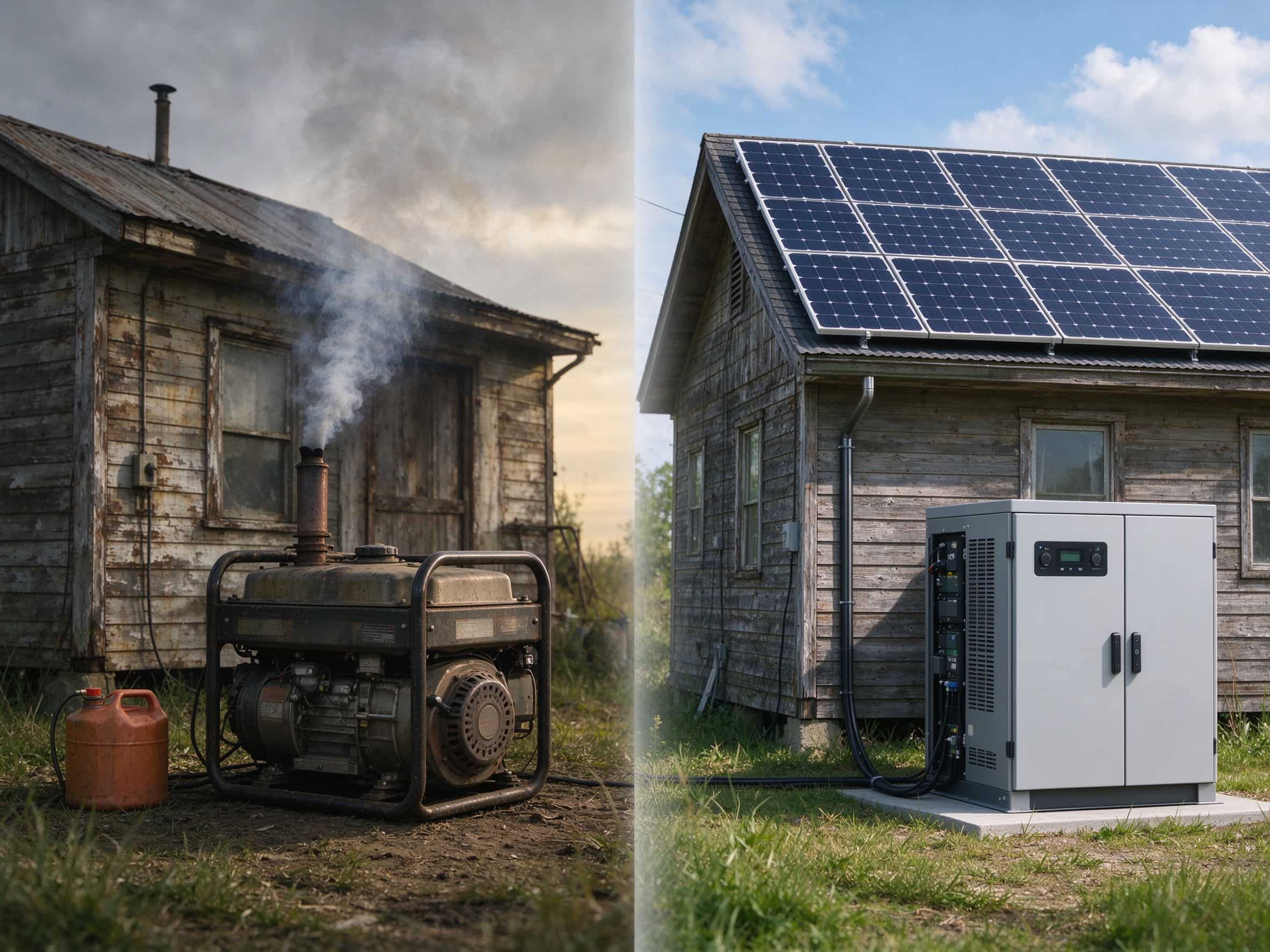
The clearest way to understand the value of a remote home solar system is to compare daily life before and after the installation. A typical off-grid home is an example. Before installation, the property relied on a generator and limited battery capacity. After installation, it runs on solar panels paired with a properly sized battery bank. The comparison table at the end summarizes the key shifts across energy access, cost, and reliability.
Before Installation: Limited and Less Predictable Power
Before solar, the home ran mainly on a gasoline generator. People started the generator when they needed power. It stopped when fuel ran low or when the operator shut it off. A small battery provided lighting and charged for a few hours each day. The refrigerator ran only when the generator was on. Every week, someone drove into town for fuel. The generator needed oil changes every few hundred hours. On rainy weeks, fuel deliveries took longer than expected. Power availability depended on fuel supply and generator condition. Planning meals, charging tools, or running a pump always meant checking the fuel gauge first.
After Installation: A Planned Independent Power Supply
After installation, solar panels generate power during the day. Excess energy charges the battery bank. At night, the battery runs the lights, refrigerator, router, and phone chargers. The generator stays off most days. It starts only during long cloudy stretches or when heavy loads demand extra current. Daily power becomes predictable. The refrigerator runs continuously. Lights come on automatically in the evening. The water pump operates on a schedule. Fuel stops being a weekly purchase. Instead of checking fuel levels, the homeowner checks battery state of charge on a display.
Comparing Energy Access, Operating Costs, and Reliability
Tips: The table below summarizes the typical shifts. These are qualitative comparisons for a well-designed system. Actual results depend on panel size, battery capacity, local sun, and household loads.
|
Comparison Dimension
|
Before Installation
|
After Installation (well-designed system)
|
|---|---|---|
|
Main power source
|
Fuel generator
|
Solar panels + battery bank
|
|
Daytime power
|
Depends on generator runtime
|
Direct solar during sunlight hours
|
|
Nighttime power
|
Small battery or generator
|
Stored solar energy
|
|
Fuel dependence
|
High — weekly deliveries
|
Low — backup only for cloudy stretches
|
|
Operating costs
|
Fuel + generator maintenance
|
Lower fuel, ongoing battery maintenance
|
|
Reliability
|
Tied to generator condition and fuel supply
|
Tied to panel size, battery reserve, weather
|
|
Upfront investment
|
Generator already owned
|
Panels, inverter, batteries, installation
|
These patterns hold for most off-grid solar installation projects. However, a system sized too small won’t deliver these benefits. The design work matters as much as the hardware.
What Should You Consider Before Installing a Standalone Solar System?
Getting those benefits depends on making the right design choices before you buy equipment. Standalone solar systems have many variables. Walk through the five most critical steps:
- estimating daily loads.
- sizing the array and battery.
- accounting for weather and shading.
- planning costs and maintenance.
- preparing for common challenges.
Skipping any of these steps usually leads to a system that underserves the home.
Estimate Daily Electricity Consumption and Peak Loads
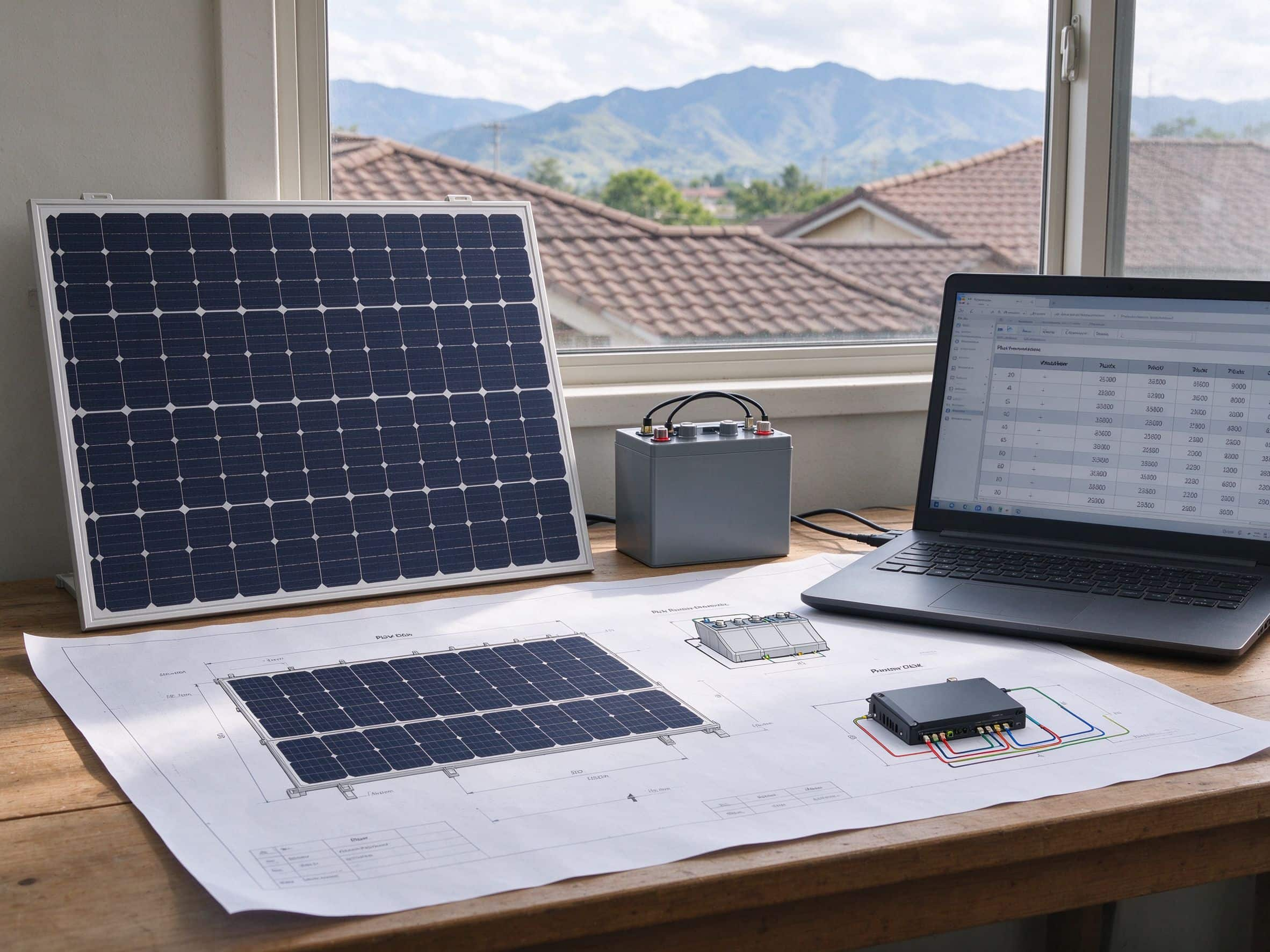
Start with a list of every appliance the home uses. Note how many hours each runs per day. Multiply watts by hours to get daily watt-hours. Add all loads together to find total daily consumption.
Peak load matters just as much as daily average. A refrigerator compressor or water pump can draw several times its running wattage at startup. The inverter must handle that surge. Undersize the inverter and the system trips off every time the compressor kicks in. Oversize it unnecessarily, and you waste money.
Size the Solar Array and Battery Bank
Panel sizing depends on how much sun the location receives. A location with five peak sun hours per day needs fewer panels than one with three. Use the worst-case month, not the summer average. Panels must recharge the battery every day, even in the shortest days of the year. Battery sizing follows two rules.
- First, the battery must hold enough energy for overnight loads.
- Second, it must cover several cloudy days in a row.
Most systems are designed for 2-3 days of autonomy. According to SolarReviews off-grid guides, deep-cycle lithium batteries now offer longer cycle life and deeper discharge than older lead-acid types.
Account for Weather, Shading, and Seasonal Production
Trees, chimneys, and nearby hills reduce output even when panels face the right direction. Shading on just one panel can drag down the whole string. Survey the site at different times of year before mounting. Winter sun comes from a lower angle. Summer sun comes from overhead. Seasonal changes matter more for off-grid than grid-tied systems. A grid-tied system can make up for short winter days by drawing from the utility. An off-grid system cannot. Design for the worst production month, not the best.
Plan for Installation Costs, Maintenance, and Backup Power
Budget for more than panels and batteries. Mounting hardware, cables, breakers, charge controllers, and the inverter all add up. In some regions, installation labor costs as much as the equipment. Permits and inspections may be required depending on local rules. Maintenance includes battery checks, panel cleaning, and inverter diagnostics. Plan for a backup generator even in a well-sized system. Extended rainy periods or unusual load spikes can drain the battery. A backup generator covers those gaps without sacrificing the everyday solar savings.
Understand Common Challenges and System Limitations
Off-grid systems work well when designed right. They also have known limits. Battery capacity degrades over years. Panels lose output through dust or snow. Inverters fail eventually. Load growth can outgrow the original design. Most problems trace back to one cause: undersizing. A system that barely works on sunny days will struggle on cloudy ones. Build in extra capacity from the start. It costs less than replacing undersized panels later.
Build an Off-Grid Solar System Around Real Energy Needs
Off-grid solar systems turn a remote property into a self-sufficient home. They bring power where the grid cannot reach. They reduce dependence on generators, cut fuel bills, and make daily electricity predictable, not dependent on fuel runs. The results depend on three things: accurate load calculation, properly sized panels and batteries, and realistic planning for weather and maintenance. A system designed for actual usage and local sunlight delivers real value.
A system sized on estimates without site surveying usually disappoints. Before buying equipment, spend time measuring your daily loads and surveying your roof or ground mount. Compare quotes from multiple installers. Plan for backup power even if the system seems large enough. Done right, off-grid solar delivers reliable independent power for years.