
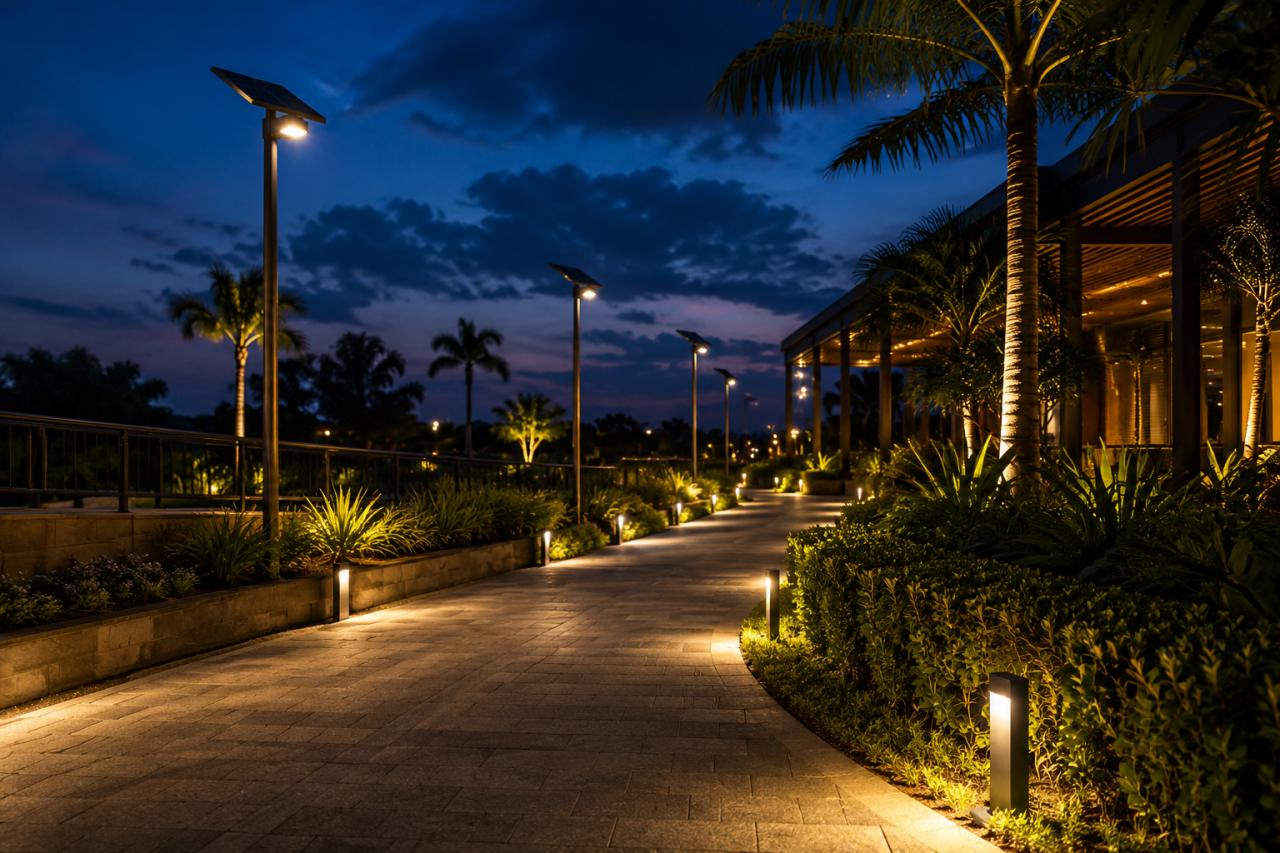
Outdoor lighting becomes harder to plan for when the site is far from grid power, covers a wide area, or requires reliable lighting every night. A small decorative lamp cannot handle that job. Commercial solar lights need to support real project use, from parking lots and farm roads to warehouse entrances, resorts, schools, and outdoor work areas. A good choice starts with the site. The buyer needs to know where the lights will be placed, how long they must run, how much light the area needs, and whether the solar panel can fully charge during the day. When those details stay vague, the result usually looks fine on the first night and disappointing by the first cloudy week.
Commercial Solar Lights Should Match the Site First
Commercial solar lights work better when the product is suited to the actual use area. A narrow pathway, open parking lot, private road, warehouse gate, and farm entrance all need different lighting plans. A path usually needs even, comfortable light. A parking lot needs wider coverage and fewer dark areas between poles. A security gate needs stronger visibility around vehicles, faces, and movement. A farm road may require a long service life and strong weather resistance because maintenance access can be limited.
Before choosing a model, define the site clearly:
- Where will the lights be installed?
- What area should each light cover?
- Will people, vehicles, or equipment move there at night?
- Does the site need constant lighting or sensor-based lighting?
- Are there trees, walls, roofs, or buildings blocking sunlight?
This step keeps the project grounded. A product photo cannot tell you whether a lamp will cover a 6-meter driveway or a 30-meter parking aisle. Annoying, yes. Reality often refuses to behave like a catalog page.
Choose Brightness Based on Ground Visibility
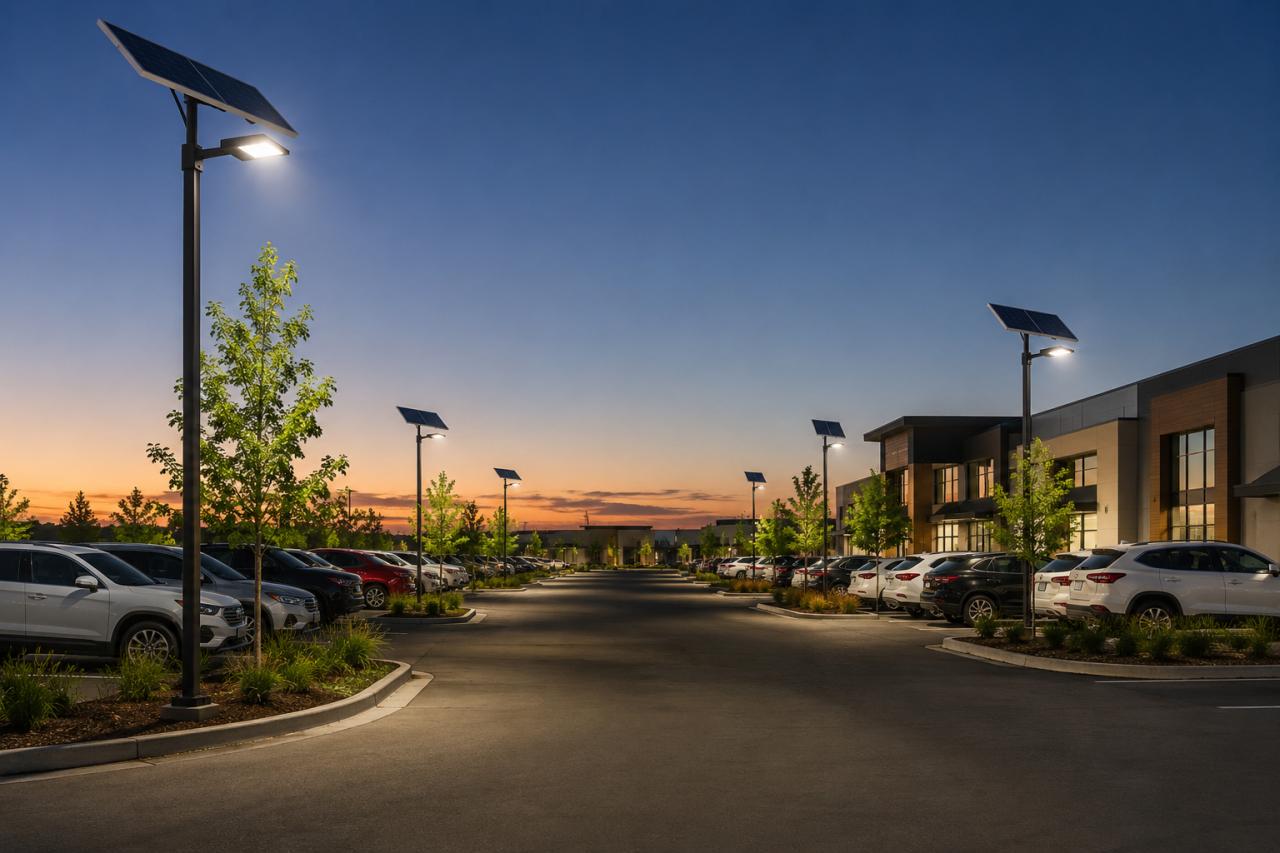
Outdoor solar lighting solutions should provide enough ground visibility without wasting battery power. Higher brightness does not always create better results. Too much light can cause glare, shorten runtime, and increase product cost. The required brightness depends on the area type and mounting height. A low pole concentrates light into a smaller zone. A taller pole spreads light farther, but the ground may look dimmer if the fixture does not have enough output.
For outdoor projects, buyers should review:
- Required lighting area
- Pole height
- Distance between poles
- Beam angle
- Ground visibility
- Risk of glare
- Dark corners near walls, gates, or turns
A parking area needs more uniform coverage than a garden path. A loading entrance needs clearer visibility than a decorative courtyard. A private road needs enough light for direction, but it may not need the same brightness as a work yard. Good lighting design balances brightness, spacing, and runtime. A higher lumen value may help in security areas, but the final result still depends on fixture angle, pole spacing, and ground coverage. Buying the strongest lamp and hoping the result behaves is not planning. It is just expensive guessing with a pole attached.
Battery Runtime Controls Night Performance
The battery decides how long the light can run after sunset. This detail matters more than first-hour brightness. Many low-grade solar outdoor lights look bright at dusk, then fade before the night ends. A commercial project should define the required working hours before choosing the light. Some sites need 6 hours of lighting. Others need 10 to 12 hours. Security areas may need light throughout the night.
Check these battery details before ordering:
- Battery capacity
- Battery type
- Expected nightly runtime
- Charging time
- Backup performance during cloudy weather
- Battery replacement access
- Controller protection
Lithium batteries are common in modern solar lighting systems because they store more energy in a smaller size and support repeated charging cycles. Still, capacity alone does not guarantee performance. The battery, controller, LED power, and dimming schedule all work together. In low-traffic areas, motion-sensor mode can save energy. The light can stay dim when no one passes and brighten when movement appears. For parking lots, road entrances, and security zones, constant lighting may be preferable because users need consistent visibility.
Solar Panel Size Affects Daily Charging
A solar light only performs well when the panel collects enough energy during the day. If the panel is too small, the battery will not recover fully. The light may work during sunny weeks and fail during cloudy periods. Panel size should match the lamp power, battery capacity, lighting hours, and local sunlight conditions. A sunny open site can use a different setup from a shaded courtyard or rainy region.
Buyers should check:
- Solar panel wattage
- Panel direction
- Panel angle
- Shade from trees or buildings
- Dust exposure
- Local weather pattern
- Distance between panel and fixture
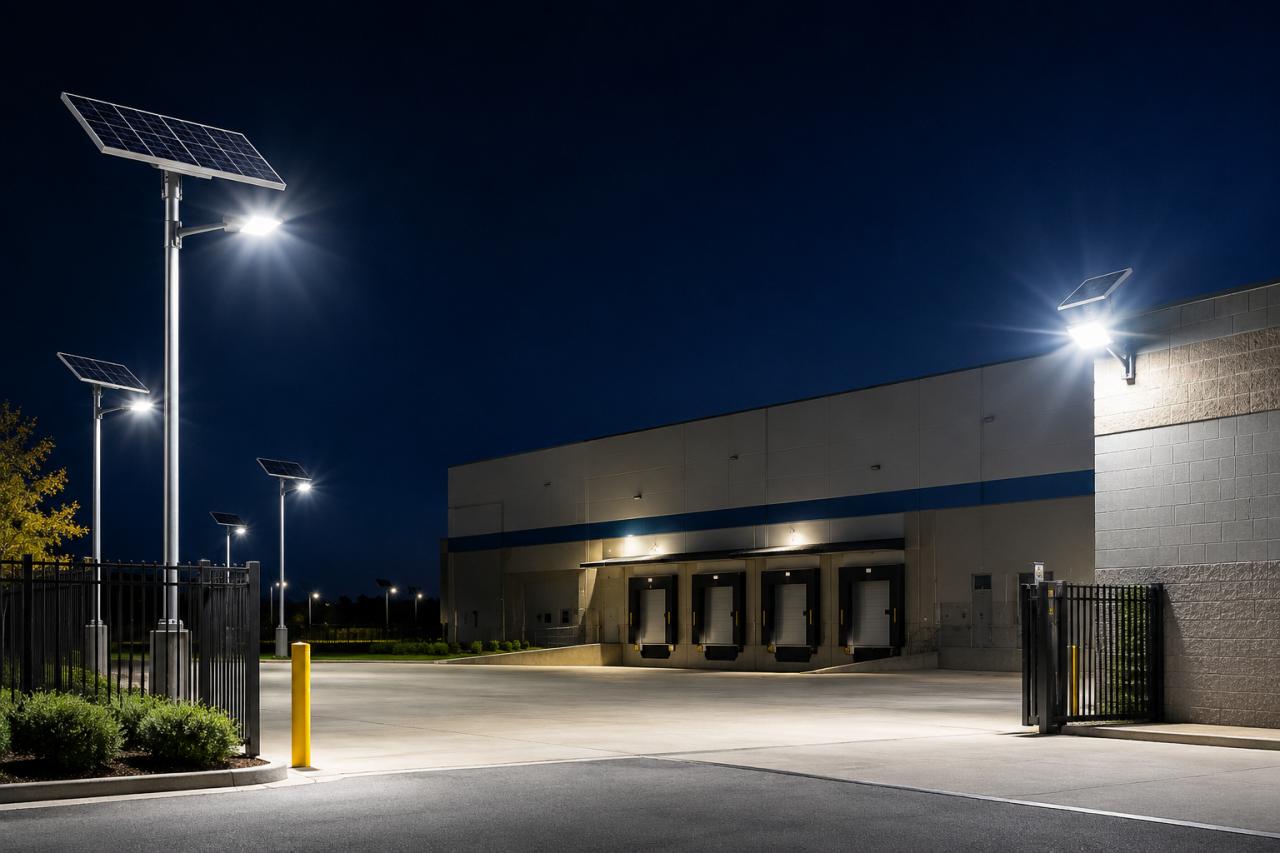
Integrated lights combine the panel and lamp into a single unit. They install faster and work well in open spaces. Split solar lights separate the panel from the lamp. They give more freedom when the lamp must face the road, but the panel must face the sun. Split designs often work better near buildings, gates, walls, and shaded areas. Integrated designs work better in open yards, pathways, and simple pole installations.
Installation Method Changes the Final Result
Commercial solar lighting needs more than a lamp head. The project also needs the right pole, mounting base, wiring route, panel position, and maintenance access. A wall-mounted light may work for a warehouse entrance. A pole-mounted light may work better for parking lots, roads, and open sites. A split-panel system may require additional cable routing and a stronger mounting point for the panel.
Before installation, confirm:
- Pole height and foundation
- Wall or pole mounting method
- Panel direction
- Fixture angle
- Cable route for split designs
- Wind exposure
- Maintenance access
- Distance between lights
Outdoor projects also need durable materials. The fixture should handle rain, dust, heat, UV exposure, and long-term outdoor use. Coastal areas need better corrosion resistance. Farms and construction areas need stronger dust protection. Hot regions need batteries and controllers that can handle high temperatures. A cheap fixture may reduce the first purchase cost. It can also create more replacement work later. Nature, as usual, does not care about the buyer’s budget spreadsheet.
Project Planning Makes Commercial Solar Lights More Reliable
Commercial solar lights deliver better results when buyers plan the system rather than choosing individual products. A complete plan connects lighting demand, solar charging, battery storage, fixture placement, and installation support.
For a project quote, prepare these details:
- Site photos or layout
- Lighting area size
- Mounting height
- Required working hours
- Local sunlight conditions
- Preferred lighting mode
- Installation surface
- Quantity estimate
- Maintenance expectations
This helps the supplier recommend a practical setup. It also reduces the risk of buying lights that cannot cover the area or run long enough. Project planning matters more for B2B buyers because lighting affects safety, access, and daily operations. A resort pathway, warehouse gate, school road, and farm entrance each need different priorities. The same fixture may not work across every site.
The Right Commercial Solar Lights Start With Project Conditions
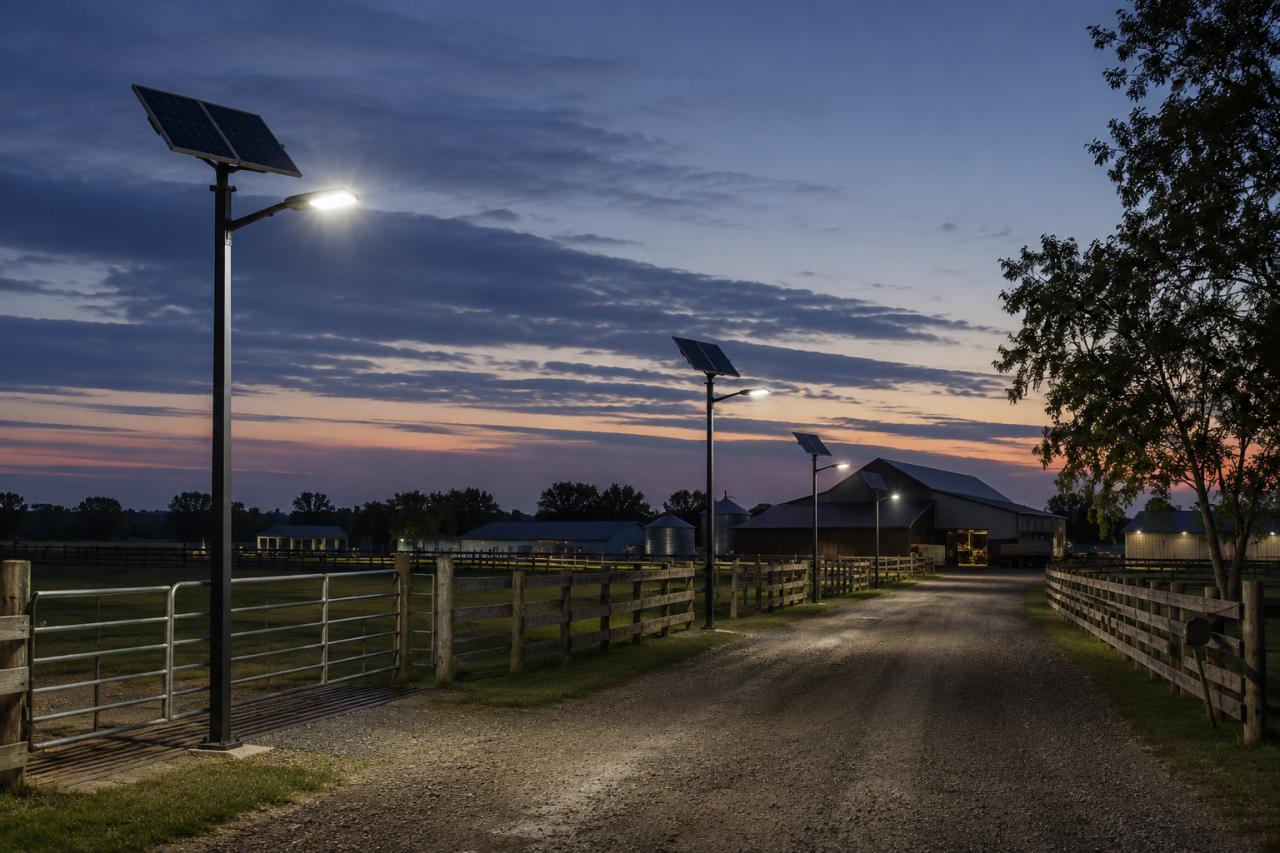
Choose commercial solar lights by matching the system to the site. Start with the area size, then define brightness, runtime, panel exposure, battery capacity, mounting height, and installation method. For pathways and gardens, lower-power solar-powered outdoor lights may be enough. For parking lots, farm roads, warehouse entrances, and security areas, choose stronger outdoor solar lighting solutions with better battery support, wider coverage, and more durable outdoor construction.
A good choice should answer four questions clearly:
- Can the panel charge enough energy each day?
- Can the battery support the required lighting hours?
- Can the fixture cover the target area?
- Can the installation handle local weather and long-term use?
When those answers are clear, the lighting project becomes easier to install, easier to maintain, and more reliable after the first few sunny nights are over.