
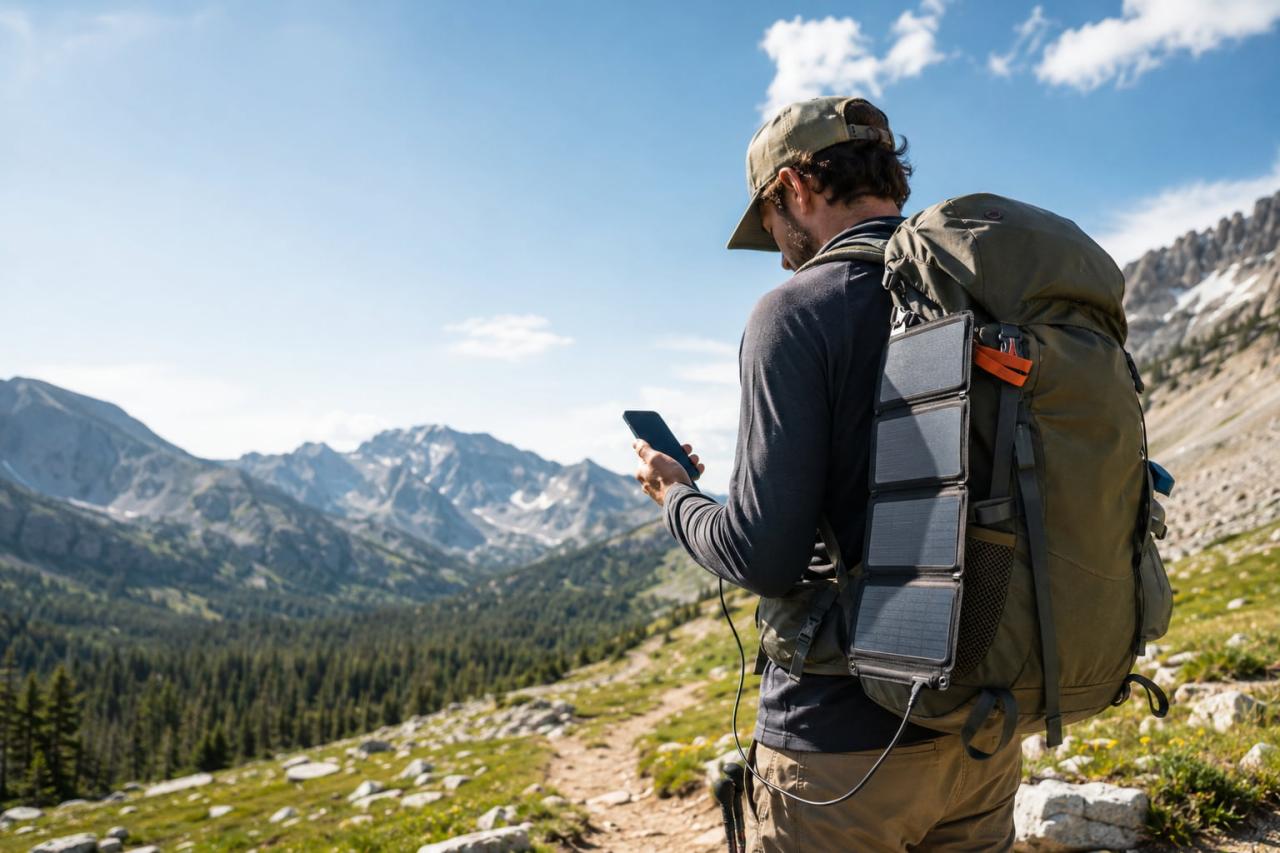
You’re three days into a backcountry trail. The sun is out, your pack is loaded, and your phone is sitting at 4%. The solar powered charger you bought six months ago is barely moving the needle. That’s not a sunlight problem. That’s a wrong-charger problem—and it’s one of the most common mistakes hikers make before a trip. Picking the right solar powered charger isn’t complicated, but it does require knowing what to look for. This guide walks you through everything: why solar makes sense for off-grid travel, which specs actually matter, and which Homesolar options fit different trip types.
Why a Solar Powered Charger Belongs in Every Hiker’s Pack?
A traditional power bank has one job: store energy someone else generated. Once it’s empty, you’re done. A solar powered charger keeps working as long as the sun rises—which, on most trails, it does. For hikers and campers, that difference is significant. Multi-day routes push far beyond what any fixed battery can cover. Solar charging fills that gap without adding weight from extra battery packs. Modern foldable designs slip into a side pocket or clip to the outside of a pack, collecting energy while you move. Beyond convenience, solar is simply the smarter long-term choice for off-grid travel. You’re not dependent on finding an outlet at a trailhead or rationing screen time to stretch your battery. Power becomes a renewable resource—just like the trip itself.
What to Look for in a Solar Powered Charger Before You Buy?
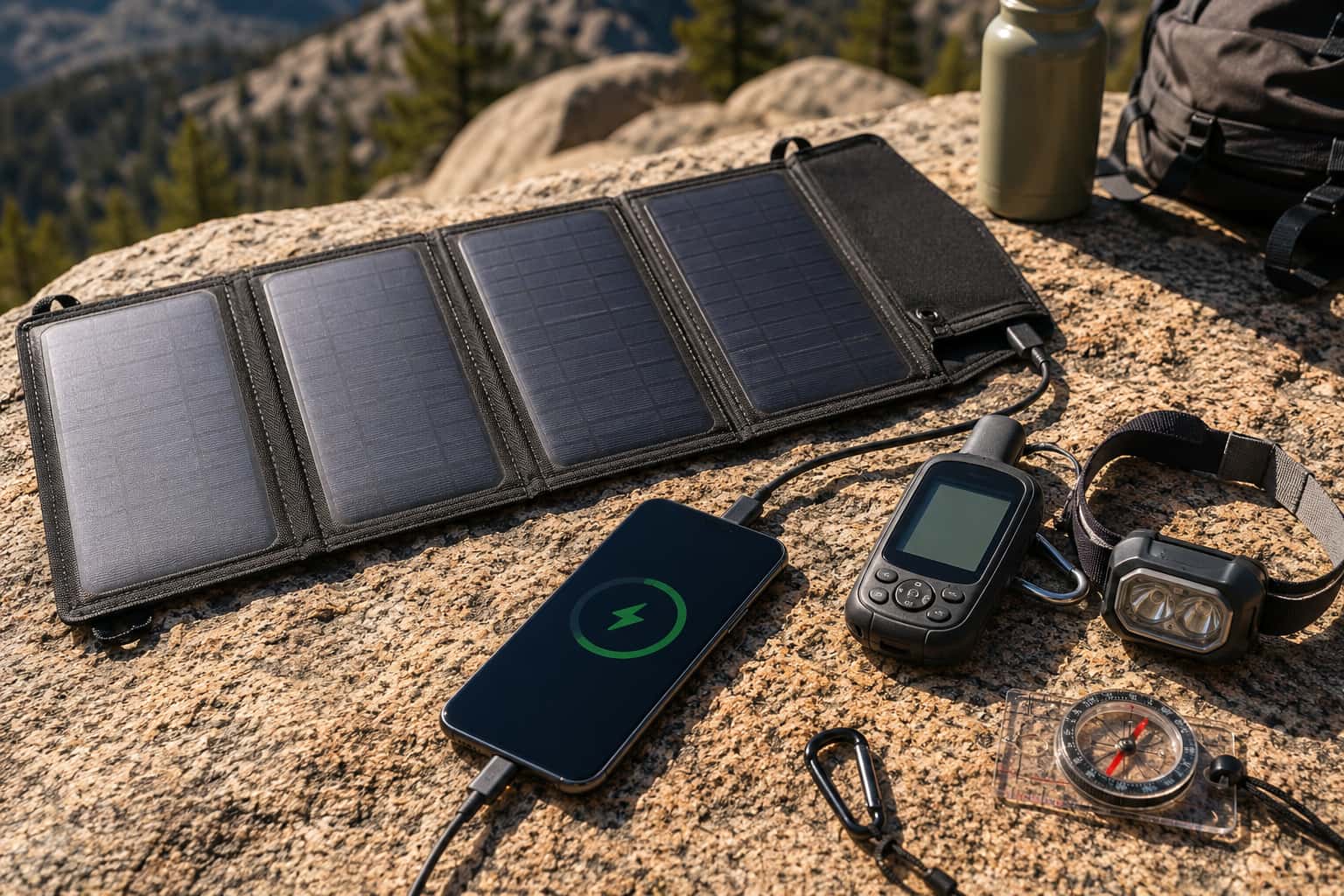
Not all solar powered chargers perform the same outdoors. Four specs separate a reliable trail companion from a disappointing purchase.
Panel Wattage — the real number that drives charging speed
Wattage determines how fast a solar powered charger converts sunlight into usable power. For single-device charging on a day hike, 10W is workable. For multi-device loads over several days, 15–20W is the practical minimum. Anything below 5W in real-world outdoor conditions will struggle to keep pace with normal phone usage.
Battery Capacity (mAh) — matching your device load per day
Panel wattage takes in energy; battery capacity determines how much you can store and use later. A smartphone with a 4,500mAh battery needs at least a 10,000mAh charger to fully recharge twice. If you’re running a phone, GPS device, and headlamp simultaneously, double that figure.
Durability Ratings — IP67, drop resistance, and why they matter outdoors
Rain happens. Gear gets dropped. A solar powered charger without an IP65 rating or higher isn’t built for serious trail use. IP67 means the unit is submersible to 1 meter for 30 minutes—more than enough for creek crossings and sudden downpours. Drop resistance ratings matter too; look for units tested to military-grade MIL-STD-810 standards.
Port Types — USB-C PD vs. USB-A for fast charging on the go
USB-C Power Delivery charges modern phones two to three times faster than standard USB-A. If your devices support it, prioritize a solar powered charger with at least one USB-C PD port. Dual-port models let you charge two devices simultaneously without splitting power inefficiently.
Best Solar Powered Charger by Trip Type
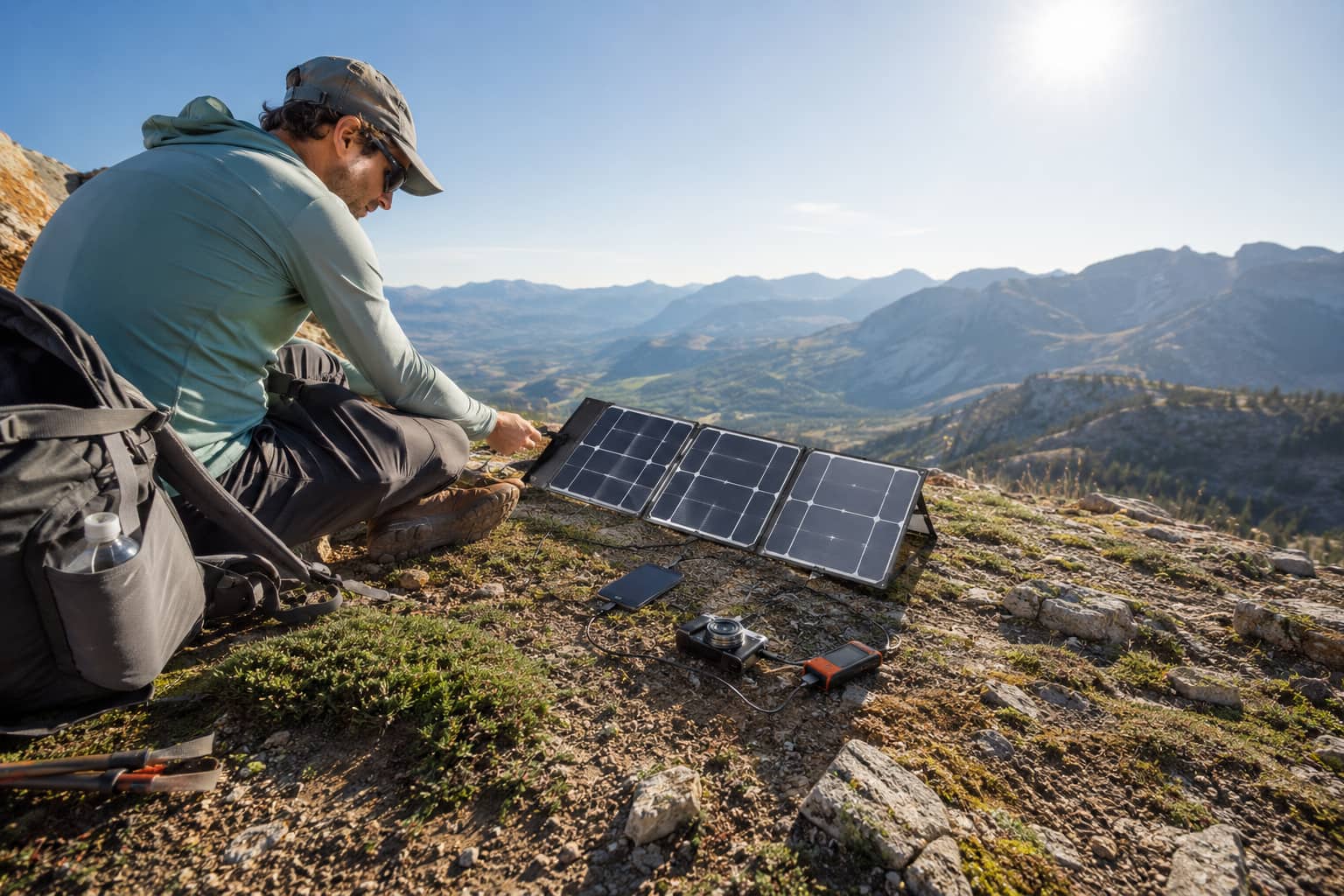
Homesolars offers options across different trip lengths and power needs. Here’s how to match the right product to your itinerary.
| Trip Type | Recommended Capacity | Recommended Wattage | Home Solar Pick |
|---|---|---|---|
| Day hike | 10,000 mAh | 10W | Solar Board ($35) |
| Weekend camping | 20,000 mAh | 15W | Solar Charger ($80) |
| 7-day+ backcountry | 25,000+ mAh | 20W+ | Camping Solar Power Station ($120) |
The Solar Charger at $80 is the strongest all-around pick for most hikers. It supports both direct solar charging and internal energy storage, meaning you charge it during daylight and draw from its battery after dark. That dual-mode capability is what separates a capable trail charger from a basic panel. Its compact, lightweight build fits cleanly into a hiking pack without adding meaningful weight.
For longer expeditions where you’re managing multiple devices—phone, satellite communicator, camera—the Camping Solar Power Station at $120 provides the headroom you need. The Solar Board at $35 works well as a lightweight backup for short day hikes where you only need to top off one device.
How to Get the Most Out of Your Solar Powered Charger Outdoors?
Buying the right solar powered charger is step one. Using it well is what actually keeps your devices running. Angle and positioning make a measurable difference. Solar panels perform best when facing directly toward the sun at a 90-degree angle. On a moving hike, clip the charger to the back of your pack and adjust the panel tilt during breaks—a 15-degree correction can increase output by 10–15% in mid-afternoon light.
The charge-through-panel vs. charge-battery-first debate has a clear answer for most scenarios: charge the internal battery first during peak sun hours (10 am–2 pm), then draw from storage as needed. Direct panel-to-device charging works, but output fluctuates with cloud cover and panel movement, which some devices handle poorly. Cloud cover and shade reduce output significantly—not eliminate it. Overcast skies typically drop solar output to 10–25% of full capacity. Dense tree cover is worse. Plan your heaviest charging during open-sky segments of your route, and don’t rely on shaded ridgeline stretches for meaningful power recovery.
Solar Powered Charger FAQs for Hikers and Campers
Can a solar powered charger charge a laptop? Most portable solar powered chargers don’t generate enough wattage for laptops, which typically require 45–65W input. A unit like the Camping Solar Power Station can power smaller ultrabooks under certain conditions, but it’s not reliable for sustained laptop use on the trail.
How long does it take to fully charge via solar? Under direct full sun, a 20,000mAh battery charged by a 15W panel takes approximately 10–12 hours to reach full capacity. That’s why most experienced hikers charge throughout the day rather than waiting for a full cycle. Two to three hours of good sun during midday is often enough to recover 40–50% capacity.
Is a solar powered charger worth it for one-day hikes? For a single-day outing, a standard power bank is often more practical. Solar powered chargers earn their value on multi-day trips where you can’t recharge conventionally. That said, the Solar Board at $35 is light enough to toss in any pack as a low-commitment backup.
The Solar Powered Charger That Matches Your Trail
The right solar powered charger comes down to three things: how long you’re out, how many devices you’re running, and how much weight you’re willing to carry. Match wattage to your daily sun exposure, match capacity to your device load, and prioritize durability over price for any serious backcountry use. Homesolars carries options across all three trip categories—from the lightweight Solar Board for short day hikes to the full-capacity Camping Solar Power Station for extended expeditions. Start with your trip length, work backward to your power needs, and pick accordingly.