
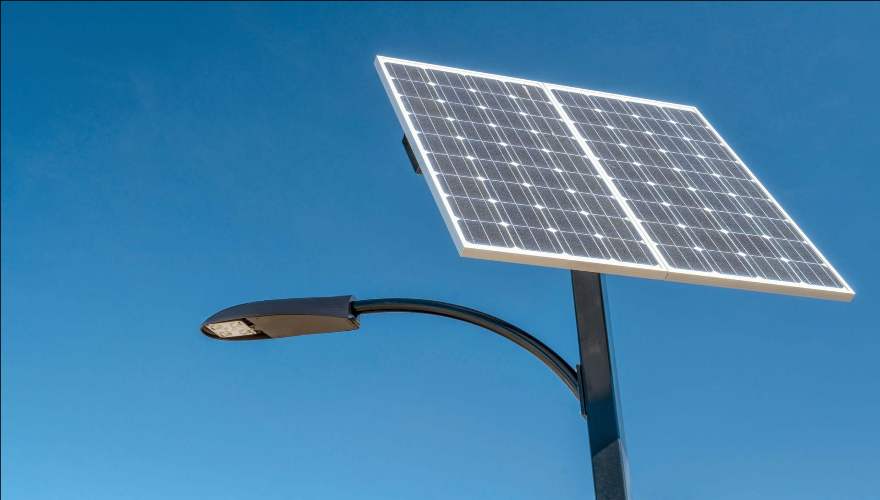
A solar street light is a self-contained outdoor lighting solution that harnesses solar energy to provide illumination without dependence on the utility grid. Solar street lights convert sunlight into electricity during the day using photovoltaic (PV) panels and store the energy in rechargeable batteries to power LED or fluorescent lamps at night. This independence from the electrical grid makes solar-powered street lights ideal for urban, suburban, and remote locations, offering both energy efficiency and environmental benefits. Modern designs support integration with smart controls, motion detection, and wireless networking, enabling advanced features such as automated scheduling and networked operation. Solar street lights are increasingly preferred for public roadways, parks, bus stops, and other outdoor areas due to their sustainability, ease of installation, and cost efficiency in long-term operation.
Components and Design Considerations
A high-quality solar street light consists of four primary components: the solar panel, lighting fixture, rechargeable battery, and supporting pole. The solar panel converts sunlight into electricity and is available in monocrystalline and polycrystalline options, with monocrystalline panels offering higher conversion efficiency. The lighting fixture, usually an LED, provides bright, energy-efficient illumination while consuming significantly less power than traditional high-pressure sodium lamps. Rechargeable batteries store energy for nighttime use; common types include gel-cell, lead-acid, and lithium-ion. Battery capacity determines how long the light can operate without sunlight, which is critical in regions with variable weather. Poles are designed to support all mounted components, resist wind loads, and ensure stability. In some modern designs, the solar panel and electronics are fully integrated into the pole for a compact, all-in-one solution. Proper selection of these components ensures reliability, performance, and longevity. 
Solar Street Light Placement and Orientation
The placement and orientation of a solar street light significantly impact its efficiency and illumination effectiveness. Installers position panels to receive maximum sunlight throughout the day. In the northern hemisphere, they face panels toward true south. In the southern hemisphere, they face panels toward true north. Installers optimize tilt angles based on latitude and seasonal changes. They minimize shadows cast by trees, buildings, and other obstacles to reduce energy loss.
Designers position lighting fixtures to ensure uniform coverage of the area. This prevents dark spots and excessive glare. They calculate pole spacing and pole height based on roadway width, lighting requirements, and fixture type. In windy or storm-prone regions, flat or aerodynamic panels help reduce wind resistance and enhance structural stability. At the same time, foundation design should account for soil conditions and local regulations to ensure long-term safety.
Solar Street Light Wiring and Connections
Wiring and connections are critical steps in the installation of solar powered street lights to ensure proper operation and safety. All electrical connections between the solar panel, battery, and lighting fixture must be secure and weather-resistant. Modern solar street lights often feature plug-and-play connectors or pre-wired systems to simplify installation. In some configurations, each light operates independently with its own panel and battery, while others use a central power source to supply multiple lights. For networked or intelligent solar street lights, wireless control modules allow synchronization, remote monitoring, and automated on/off cycles. Careful attention should be paid to cable routing to avoid mechanical stress, moisture exposure, or interference from nearby electrical systems. Proper wiring delivers power efficiently and prevents energy loss, ensuring the light functions reliably throughout the night. 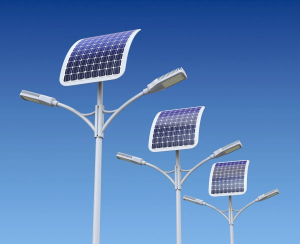
Installation Techniques for Solar Street Light
Installing a solar street light involves several steps that ensure the product functions effectively and remains durable under environmental stress. Begin by preparing the foundation, which may include a reinforced concrete base or a pre-cast foundation cage, depending on pole height and local regulations. The pole is then mounted securely and leveled. In all-in-one models, the solar panel, battery, and lighting fixture are often pre-integrated, reducing the complexity of assembly.
For modular designs, carefully mount the solar panel on the pole or designated structure and secure the lighting fixture to achieve the desired illumination angle. Installers place the battery inside the pole, in a weatherproof enclosure, or at the base of the pole. This placement ensures proper ventilation and protects the battery from moisture. After assembly, installers connect all components according to the manufacturer’s guidelines. They then test the system, including automatic light activation and sensor response. Proper installation maximizes energy efficiency, safety, and operational longevity.
Advanced Features and Technology
Modern solar street lights incorporate advanced technologies to enhance efficiency, control, and performance. Wireless communication systems allow each light to operate as part of a network, enabling centralized control, scheduling, and fault detection. Motion sensors or dimming controls can extend battery life by reducing illumination when areas are unoccupied. Intelligent battery management, sometimes employing fuzzy logic or adaptive charging algorithms, ensures optimal charge and discharge cycles, extending battery life and maintaining consistent performance. Designers prefer LED fixtures for their high luminosity and low energy consumption. LEDs require no warm-up time. This allows easy integration with motion detection and intelligent controls. Advanced designs may also include hybrid systems combining solar with kinetic energy or grid support for areas with limited sunlight. By leveraging these technologies, solar street lights deliver reliable, energy-efficient illumination with minimal maintenance requirements. 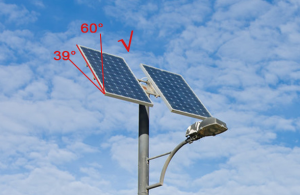
Solar Street Light Installation Guide Highlights
Solar street lights are independent of the utility grid. By carefully selecting high-quality components, optimizing panel orientation and pole placement, and following proper installation procedures, these lights can provide consistent, energy-efficient illumination for years. Modern solar street lights benefit from intelligent control systems, wireless networking, and advanced battery management, making them adaptable to a variety of applications from urban roadways to parks and bus stops. While initial costs may be higher than those of conventional streetlights, the long-term savings, reduced maintenance, and environmental benefits make solar-powered streetlights an increasingly attractive choice. Properly installed, these solar products offer both functional and aesthetic advantages, supporting safe, well-lit environments while contributing to sustainable energy goals.