
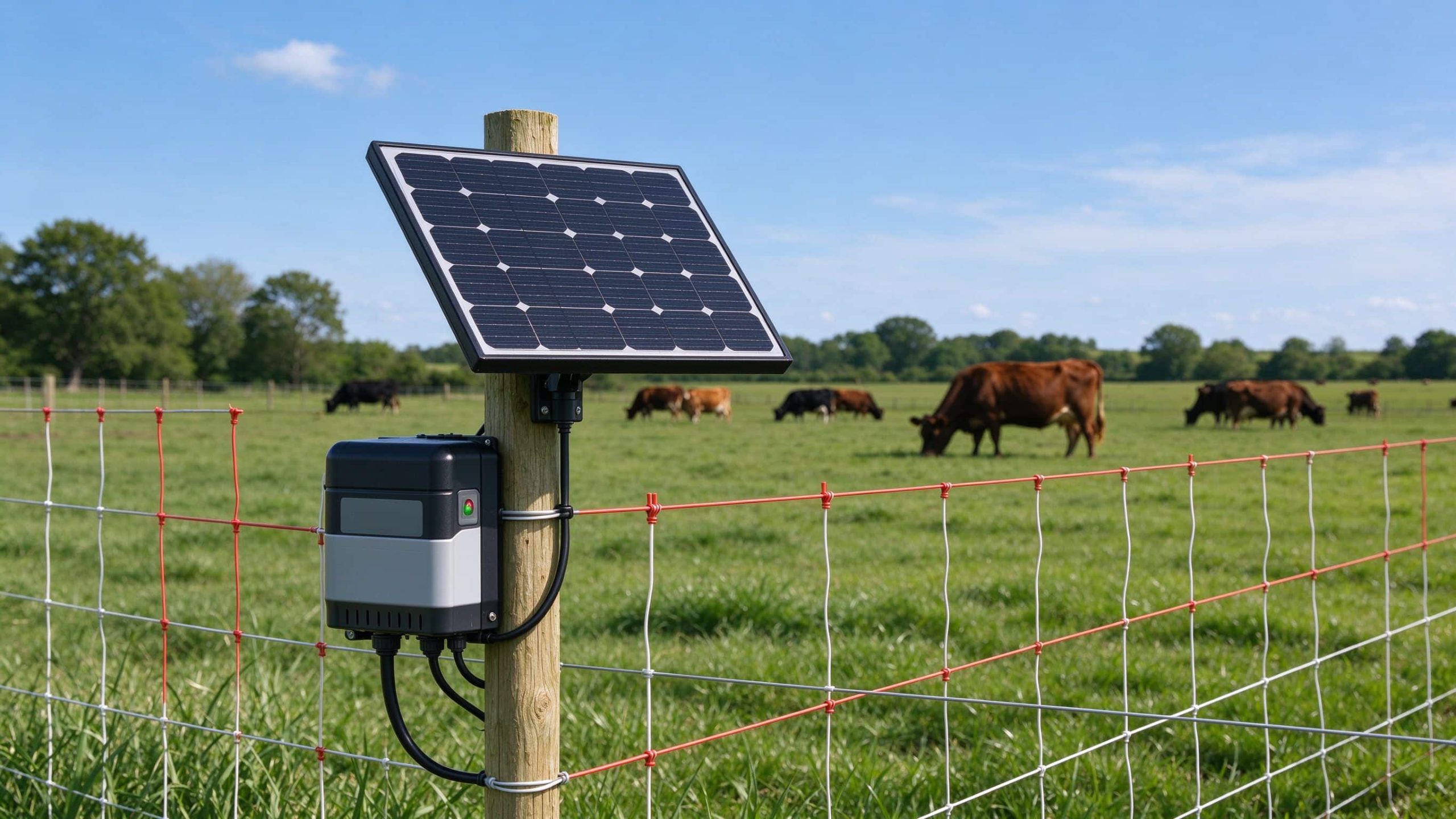
Solar for electric fence powers remote pastures reliably when the energizer is sized by output joules, the solar panel is matched to the daily drain, and the ground rod array is driven in damp soil. A modern solar fence charger is a sealed 12V unit that combines a small panel, a battery, and the pulse generator in one weatherproof box. It will run all year on a few hours of sun per day, even through cloudy stretches, as long as you size for winter rather than summer. The failures I see in the field almost always trace back to three mistakes: undersized joules for the wire length, weak grounding, and vegetation touching the fence.
What Solar for Electric Fence Actually Powers
A solar for electric fence installation is not a scaled-down home solar system. It is a dedicated low-power loop: a small panel charges a 12V battery, the battery feeds the energizer, and the energizer delivers short voltage pulses to the fence wire. The whole draw is tiny compared with a cabin load. A typical unit consumes less than half an amp when pulsing, so even a 10W panel can keep a 7Ah battery topped up over a full day. The trick is not the wattage but the energy reserve. The battery must hold enough joules to keep the fence live through several overcast days in a row.
The Energizer Is the Whole Solar for Electric Fence System
Most buyers shop panels first and end up with a box that cannot push the required voltage. In practice, the energizer is the product. Look for output joules rather than stored joules. Stored joules are what the capacitor holds before discharge. Output joules are what actually reach the fence wire, and that is the number livestock feel. A unit rated 3.0 stored joules may deliver only 2.0 at 500 ohms. The NRCS construction spec for permanent electric wire fence uses the conservative rule of about one output joule per mile of fence, and that is the right starting point.
Panel and Battery Sizing Basics
The solar panel on a solar energizer does not need to be large. Most off-the-shelf units pair a 10W to 30W panel with a 12V 7Ah to 20Ah sealed battery. The panel runs at a simple on-charge configuration with a built-in charge controller, so you do not size it by the load the way you would a cabin. You size it by the no-sun autonomy you need. Three to five days of autonomy is typical. If your region sees weeks of cloud cover in winter, pick the next size up. For a deeper explanation of how charge controllers handle this energy tradeoff, the MPPT vs PWM comparison on this site walks through the efficiency logic.
How to Size Solar for Electric Fence Loads
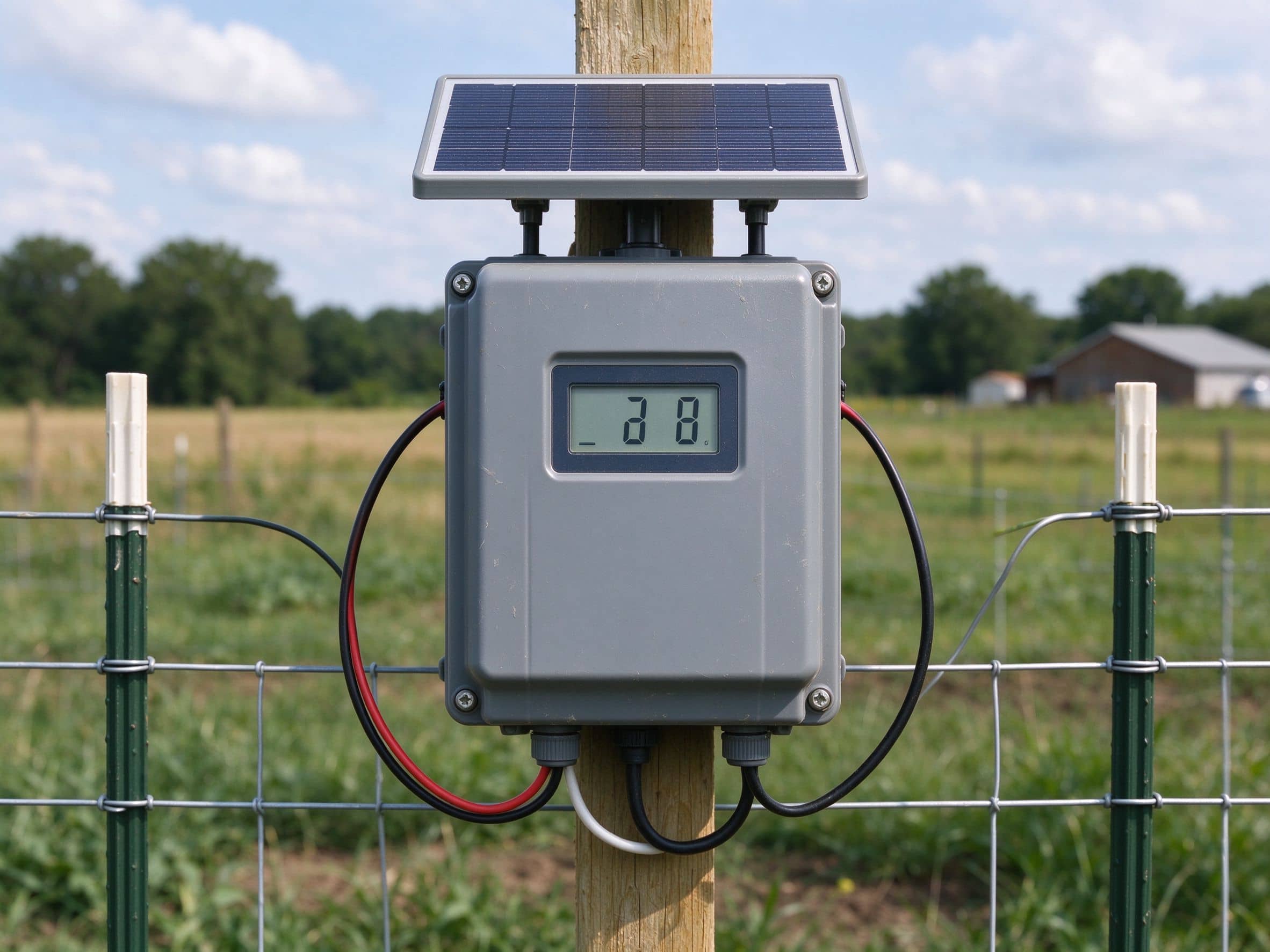
Sizing solar for electric fence starts with the wire, not the panel. Count the total miles of electrified strand, then apply the rule of thumb and adjust for conditions. A clean fence on well-drained soil with light grass contact needs about one output joule per mile. Heavy vegetation, dry soil, or predator control pushes that to two or three joules per mile. Buy about 20 percent more capacity than the number comes out to. That headroom absorbs leaf season, longer strands, and a battery that loses capacity over winter.
Size Solar for ElectricRule of Thumb: One Joule per Mile
For cattle and horses, target a fence voltage of 3,000 to 5,000 volts under load. Sheep and goats with thick wool need 4,000 to 6,000 volts, because the fur insulates them. Predator control around poultry pushes that to 5,000 to 7,000 volts. Those voltages are measured at the far end of the fence, not at the energizer terminals. A short fence around a small paddock needs only 0.5 to 1.0 output joules. A multi-strand cattle fence across 20 acres lands at 3 to 6 joules.
Grounding and Vegetation Matter
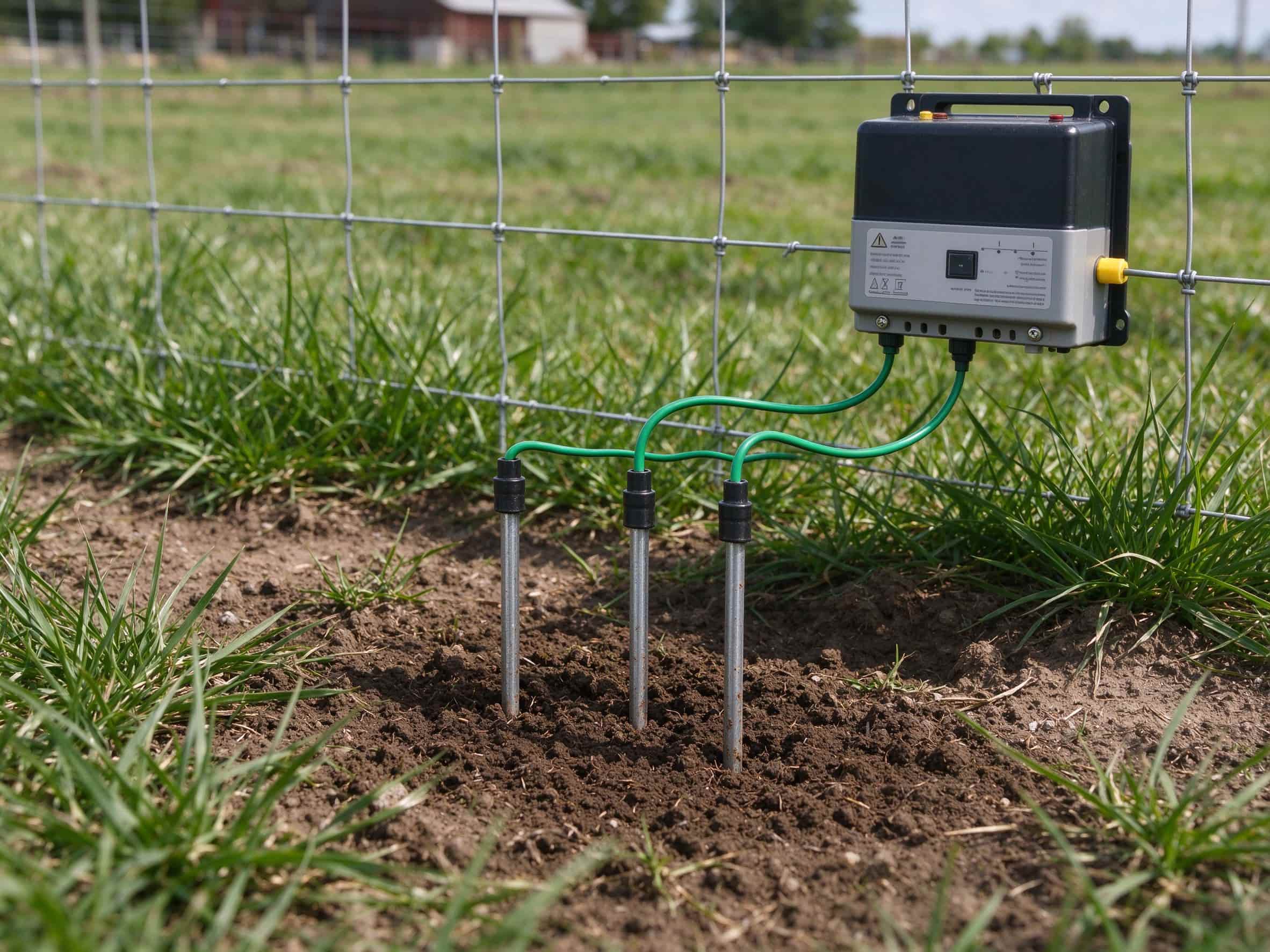
A fence charger can be perfectly sized and still feel dead if the ground is bad. The pulse travels down the hot wire, passes through the animal, and returns through the soil to the ground rods. Poor grounding means the circuit never completes. Drive at least three ground rod electrodes six feet deep, spaced ten feet apart, and connect them to the ground terminal with insulated green wire. Keep rods out of bone-dry sand. Vegetation on the wire bleeds energy continuously. A single blade of tall grass touching the hot strand can drop fence voltage by hundreds of volts. Weed whack under the fence line before you trust the reading.
Before you order a unit, walk the perimeter with a notebook. Count every electrified strand, estimate the total wire miles, note the soil type, and list the animals you contain. Then pick the output joules from the one-joule-per-mile rule, add 20 percent, and choose a panel and battery that hold three cloudy days. That is the whole design. If you later add a strand or move the fence, resizing is a one-number recalculation rather than a redesign.
Key Advantages of Solar for Electric Fence
Once the system is sized right, solar for electric fence wins over a generator or a grid-tied charger on almost every practical point:
-
No grid connection required. Mount the energizer on a T-post in the middle of a pasture, miles from the nearest outlet. There is no trenching, no utility bill, and no extension cord to run.
-
Zero fuel and no noise. There is no generator to refill in winter, no exhaust, and no engine vibration. The unit runs quietly enough for nervous horses and close neighbors.
-
Sealed and weatherproof. The whole charger is a sealed 12V box that handles rain, snow, dust, and direct sun. There are no exposed moving parts to service.
-
Low running cost. A 10W panel and a 7Ah battery cost almost nothing to operate after the initial purchase. There is no fuel, no maintenance contract, and no moving diesel engine to rebuild.
-
Fast to move and expand. Rotate pasture, add a strand, or shift the fence line. Unbolt the energizer and remount it in minutes. If the herd grows, add a second panel or a larger battery rather than rewiring a whole system.
-
Predictable performance. The energizer pulses on a fixed schedule, the battery holds its charge for days, and the fence voltage stays within a known band. You stop guessing whether the fence is hot.
The Right Solar Power System for the Right Pasture
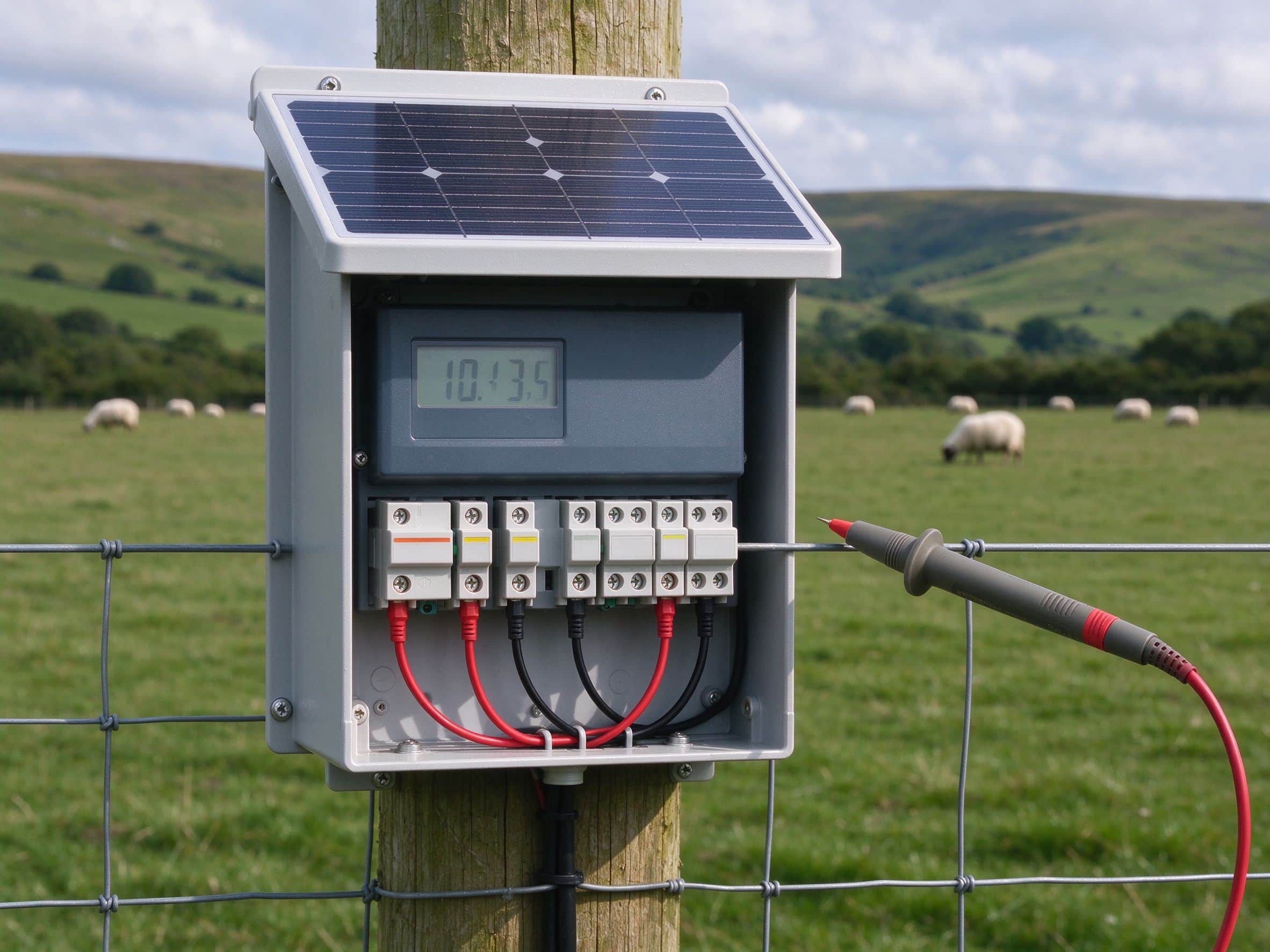
Solar power for an electric fence is reliable because the load is so small. A 10W panel and a 7Ah battery will run a small paddock for months, while a 30W panel with a larger battery handles multi-strand cattle fencing across hundreds of acres. Size the energizer by output joules, not panel watts. Drive the ground rods deep. Keep the fence line clear. Do that, and you will not need a generator, a grid tie, or a service call — just an annual check of the battery and the fence voltage at the far end.