
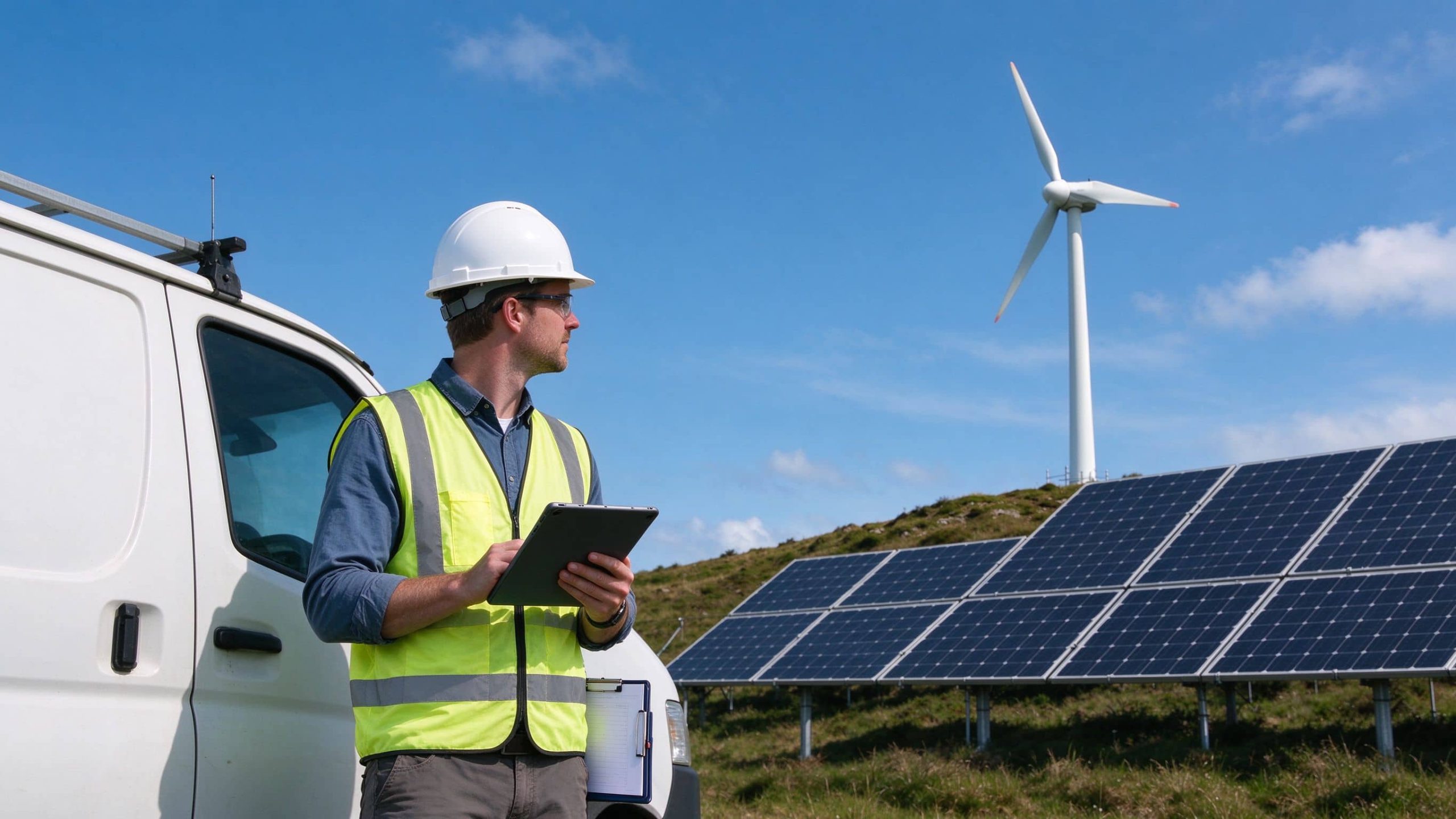
Renewable energy systems are the engineered assemblies that turn sunlight, wind, and flowing water into power a building can actually use. The difference between a system that runs for twenty years and one that dies in its first winter comes down to three on-site decisions: size the load before you size the panels, match the generation source to the local resource, and protect the battery bank with the right charge controller, wiring, and disconnects. Get those three right, and the cabin, the farm, or the remote telecom cabinet runs quietly on fuel that costs nothing. Get them wrong, and the array becomes an expensive experiment.
Components and Setup of Renewable Energy Systems
Before we talk about watts and kilowatt-hours, it helps to see a renewable energy system as a chain. Every link has one job, and a weak link caps the whole build. On most small commercial and off-grid projects, the chain has five pieces: generation, regulation, storage, conversion, and protection. Get any one of them wrong, and the rest of the hardware sits idle.
How the Generation, Storage, and Conversion Chain Works
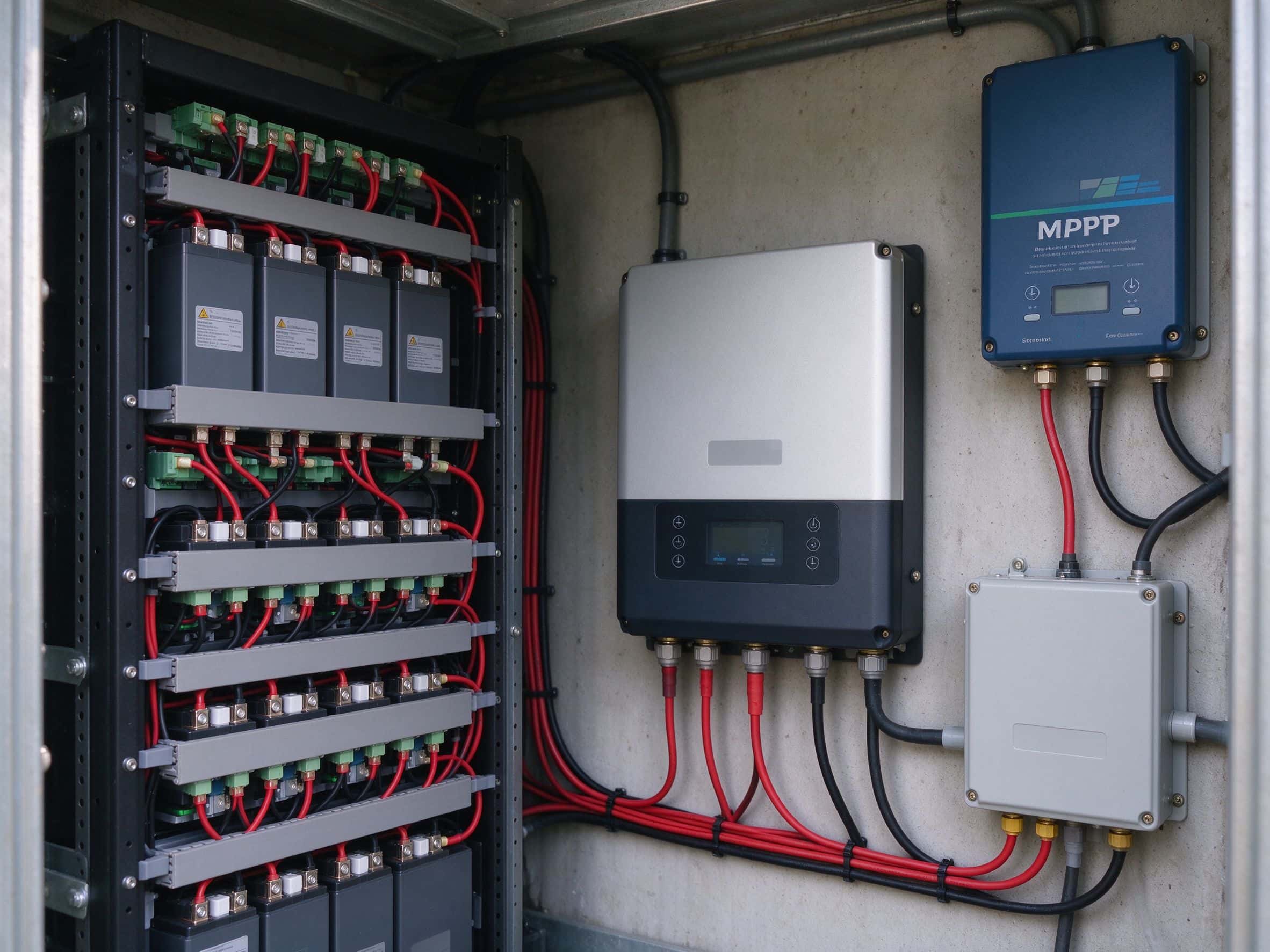
Solar PV panels, a wind turbine, or a micro-hydro turbine are the generation side. They produce DC or AC as the resource allows. A charge controller sits between the source and the battery bank and prevents overcharging. The battery bank stores energy for night and cloudy stretches. The inverter turns stored DC into the AC that appliances and tools expect. The remaining wiring, fuses, disconnects, and racking are the balance of system, or BOS. On site, you wire them in that order: source to controller, controller to battery, battery to inverter, inverter to load.
Most problems in the field do not come from the panels. They come from undersized cables, a missing DC disconnect, or a controller that cannot handle the panel short-circuit current. The hardware only works when every piece is rated for the fault current the whole string can produce. Spend an hour at the bench with a multimeter before you energize the array. That one check catches the mistakes that would otherwise burn a controller on commissioning day.
Matching the Local Renewable Energy Systems Resource to the Right Technology
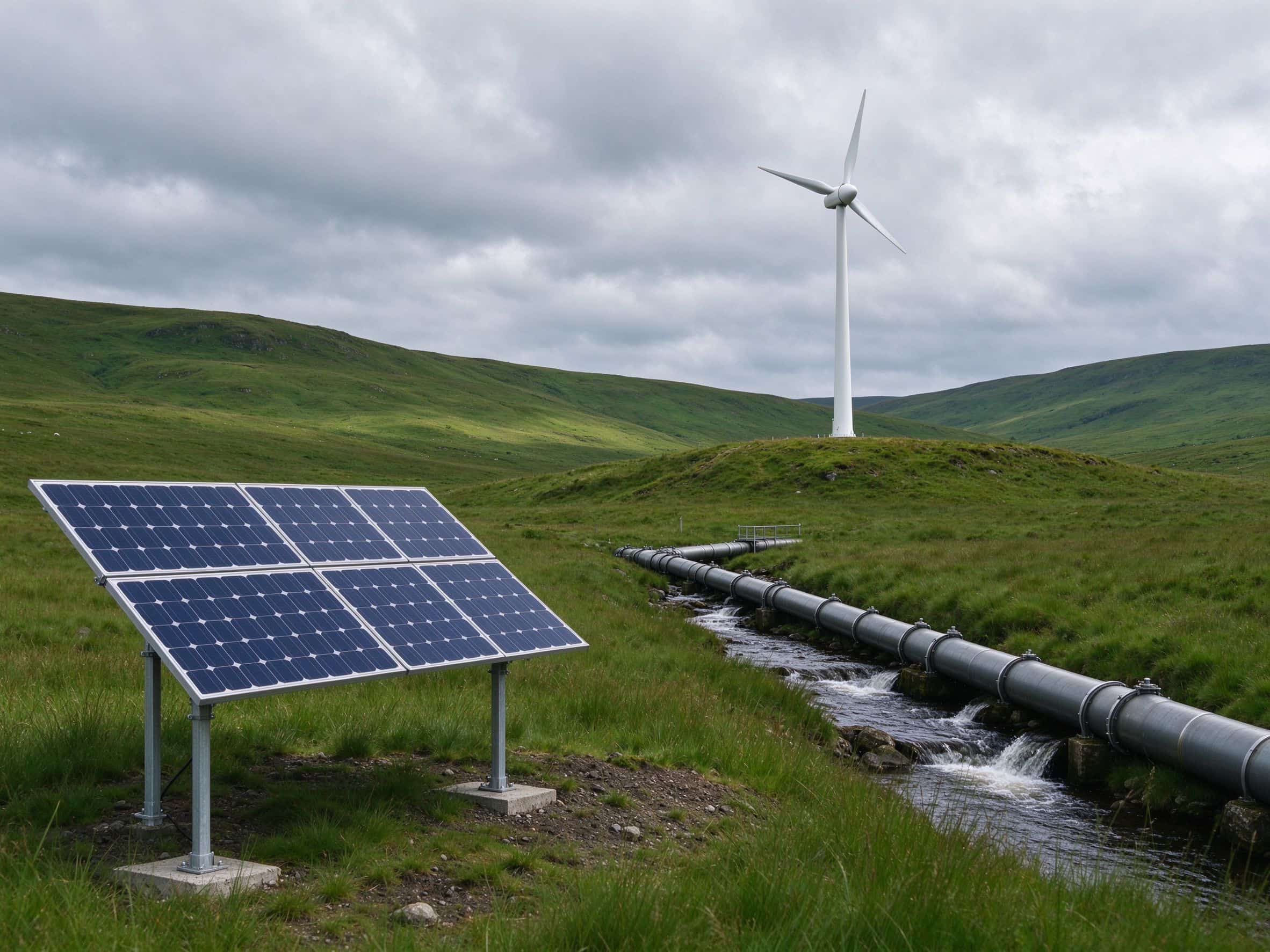
Solar PV dominates small builds because panels have no moving parts and prices have fallen steadily. Wind adds real value on exposed ridges where average speeds top five meters per second. Micro-hydro pays off along a reliable year-round stream, even a small one. Biomass and geothermal only make sense when a local waste fuel or hot resource already exists. A recent spatial study of hybrid plant sites in Spain found that wind speed, rainfal. And distance to watercourses are the three variables that decide whether a mixed plant is viable at all. Run the numbers on the local resource before you commit to a single technology. And you avoid building an array that was never going to meet the load.
How We Size Renewable Energy Systems on a Project
Sizing is where most self-designed systems lose money. We start with a load list, not a parts cart. A load list names every circuit the system must run, its wattage, and how many hours per day it actually runs. A 12V fridge that draws 60 watts for eight hours burns 480 watt-hours. A 15W LED light on for four hours burns 60 watt-hours. A 1,500W microwave used for three minutes a day burns less than 10 watt-hours. Multiply watts by hours, and you get daily watt-hours. That single number drives every downstream decision, from the amp-hour rating of the battery to the roof area you need to clear.
Size the Load Before You Size the Hardware
Once you know the daily watt-hours, you pick the battery bank to hold two to three days of autonomy, then size the array to refill it each day. The off-grid kit sizing guide on this site walks through the same arithmetic for cabin and small farm builds, and the math transfers directly to commercial sites. Choose the battery voltage first — 12V for small cabins, 24V for most RVs and small shops, 48V for anything over 2,000Wh a day — because higher voltage lets you run thinner copper.
Add a 20 percent derate for heat, dust, and wire loss, and you land at a panel wattage that survives bad weather. Finally, size the inverter for the largest simultaneous load plus the surge that motor-driven tools draw on startup. A well pump or a fridge compressor can pull three to five times its running wattage for a few seconds, and an inverter that clips under that surge will nuisance-trip at the worst moment.
Why Hybrid Designs Win on Remote Sites
A pure solar array fails in the wrong climate. In cloudy northern winters, a PV-only system can go two weeks without enough sun to refill the batteries. A pure wind turbine fails just as badly during the calm anticyclone spells that settle over a region for days. A hybrid renewable energy system pairs the two so that the panels work in the clear summer weeks and the turbine keeps the battery up when storms roll in. Add a small micro-hydro line on a stream, and you get a third source that runs almost regardless of weather.
The trick is not to overbuild one source. We run a simple hourly simulation over a full year, compare wind and solar output against the load curve, and add storage until the worst month still meets demand. That simulation is what keeps a remote site from becoming a generator that never stops running. Design tools like PVsyst and HOMER Pro exist for exactly this tradeoff.
Where Renewable Energy Systems Actually Get Used
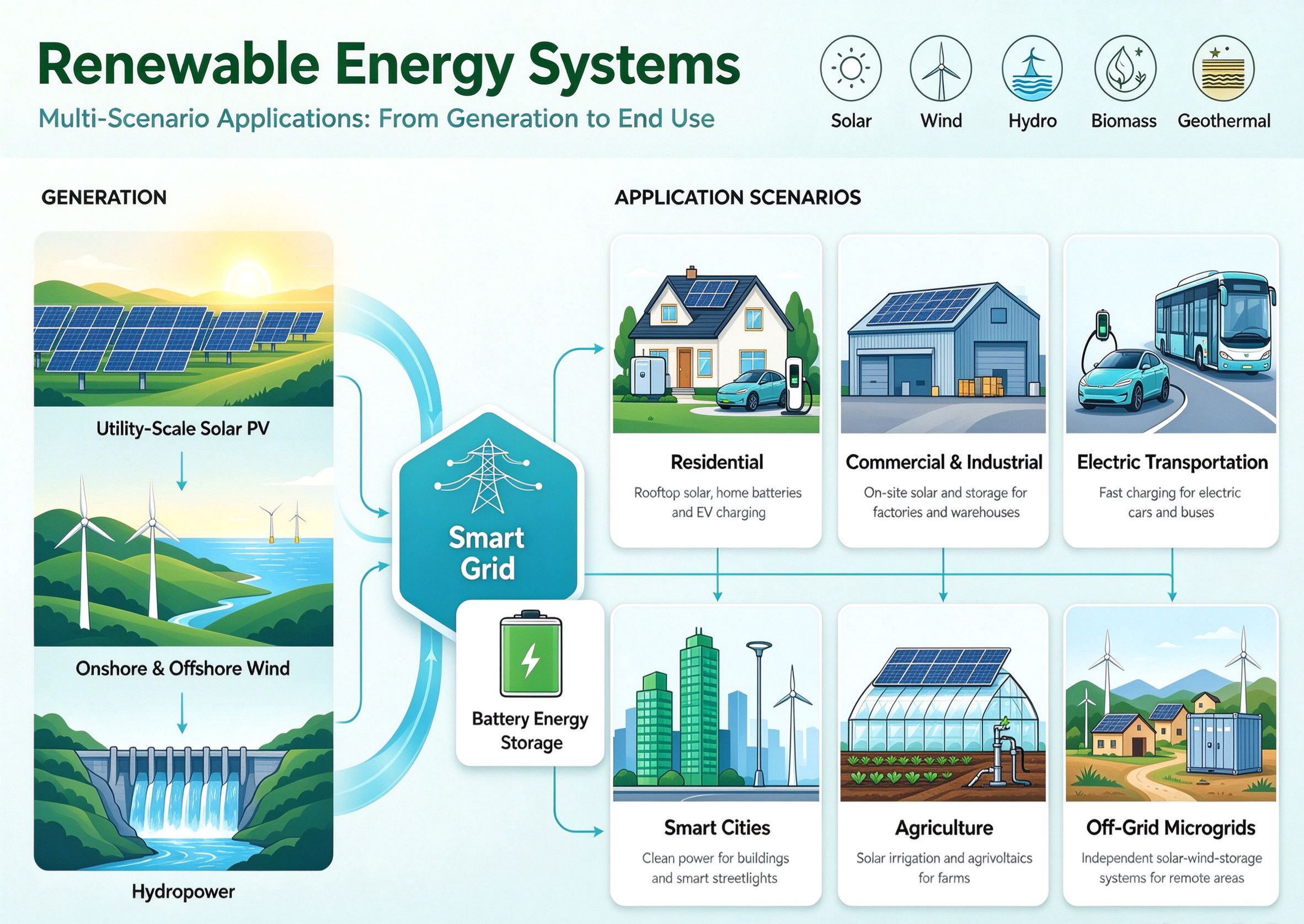
A well-sized renewable energy system shows up in more places than the average homeowner realizes. Once the load list is small enough and the site is off the utility meter, the same core hardware solves a surprising range of jobs. The applications below share one trait: the grid is either too far away, too expensive, or too unreliable to rely on.
- Off-grid cabins and remote homes. This is the classic use. A 2 to 5 kW array paired with a 48V battery bank runs lights, fridge, Wi-Fi. And a small well pump for families who live on land the utility never reached.
- RVs, boats, and mobile lifestyles. Roof-mounted panels and a charge controller keep the house battery topped up while boondocking, so the fridge and phone chargers keep working without a generator. Most RV builds run 200 to 400 watts.
- Remote telecom and monitoring stations. Cell towers, weather sensors, and trail cameras sit on hilltops with no grid. A small solar-wind hybrid powers the radio and data radio for months between site visits.
- Agricultural pumping and livestock fencing. A panel and a small battery pump water to a remote pasture tank, and another panel powers the energizer on a multi-strand cattle fence. Both loads are tiny, so the hardware lasts for years with almost no maintenance.
- Small commercial farms and workshops. A workshop that runs a table saw, an air compressor, and LED lighting can go off-grid with a 10 to 20 kW array. The same sizing logic scales from a one-person shop to a small greenhouse.
- Backup power for critical loads. Even sites on the grid add a battery-based system to keep the fridge, the internet router, and the well pump running during outages.
Start With a Site Walk, Not a Parts Cart
Renewable energy systems reward the engineer who measures twice and buys once. The work is really four moves in order: list the load, match the source to the resource, protect the battery with the right controller and wiring, and add a second source only when the simulation shows it is needed. Skip that order, and you end up with expensive panels chasing a battery that was never sized for the winter. Do it the other way around, and the system quietly runs the cabin, the farm, or the remote telecom cabinet for decades, with fuel costs fixed at zero from the day you flip the main breaker.