
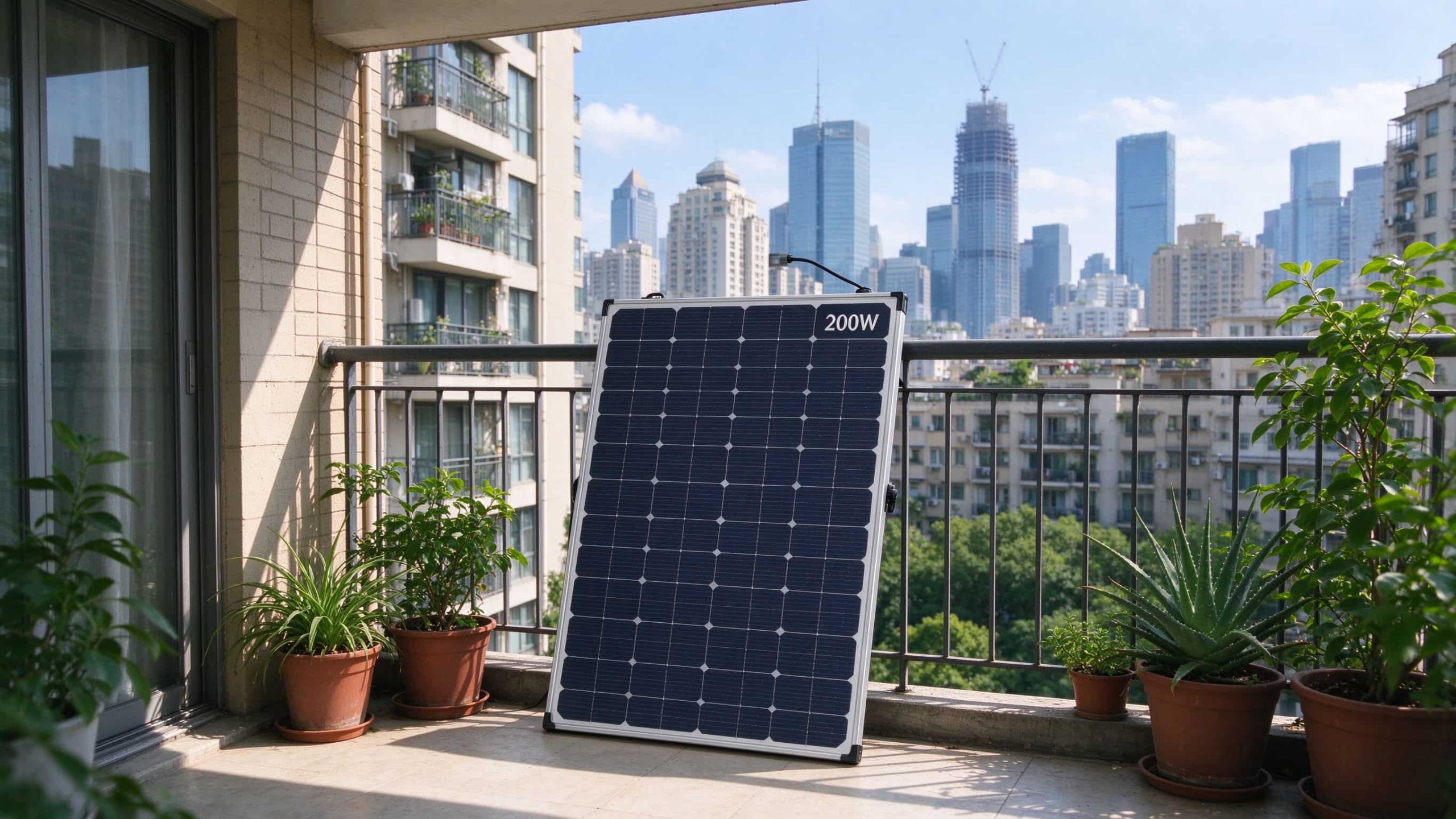
Solar Energy in apartment living is possible, but it looks nothing like the rooftop arrays you see on houses. You cannot bolt panels to a roof you do not own. And you almost certainly cannot run a cable down to a shared basement. What you can do is put panels on a balcony, clip a charger to a window, or roll a folding panel out on the patio. The right setup depends on three things: which direction your balcony or window faces. How much sun it actually gets, and what you want to run off the sun.
Three Solar Energy in Apartment Setups That Actually Work
After talking to a few renters who already run some o and their own power, three setups come up again and again. They range from a $30 window charger to a $600 balcony rig. Each one solves a different piece of the problem. The right choice depends on the sun you actually get and the loads you want to back up. And how much gear you are willing to move when the lease ends. Read through all three before you buy, because the cheapest option on paper is not always the one that fits your window.
Solar Energy in Apartment: Balcony Solar Panels With a Small Battery
If you have a balcony that faces south (or north, if you live in the southern hemisphere) and gets four or more hours of direct sun. A balcony solar setup is the most cost-effective option. Two 100W panels lean against the railing and feed a small MPPT charge controller. Charge a 100Ah lithium battery stored under a chair.
That arrangement gives you roughly 150 to 250 watt-hours a day, enough to run LED lights, a Wi-Fi router, a laptop, and a small fan through an outage. Use a folding stand or a ratchet strap so the panels do not become a projectile on a windy day. Wire the whole rig with MC4 connectors so you can unplug it and carry it inside in five minutes when a storm rolls in. Expect to spend $400 to $600 for the panels, controller, and battery together. And plan on about an hour of setup the first weekend.
Portable Power Station and Folding Panel
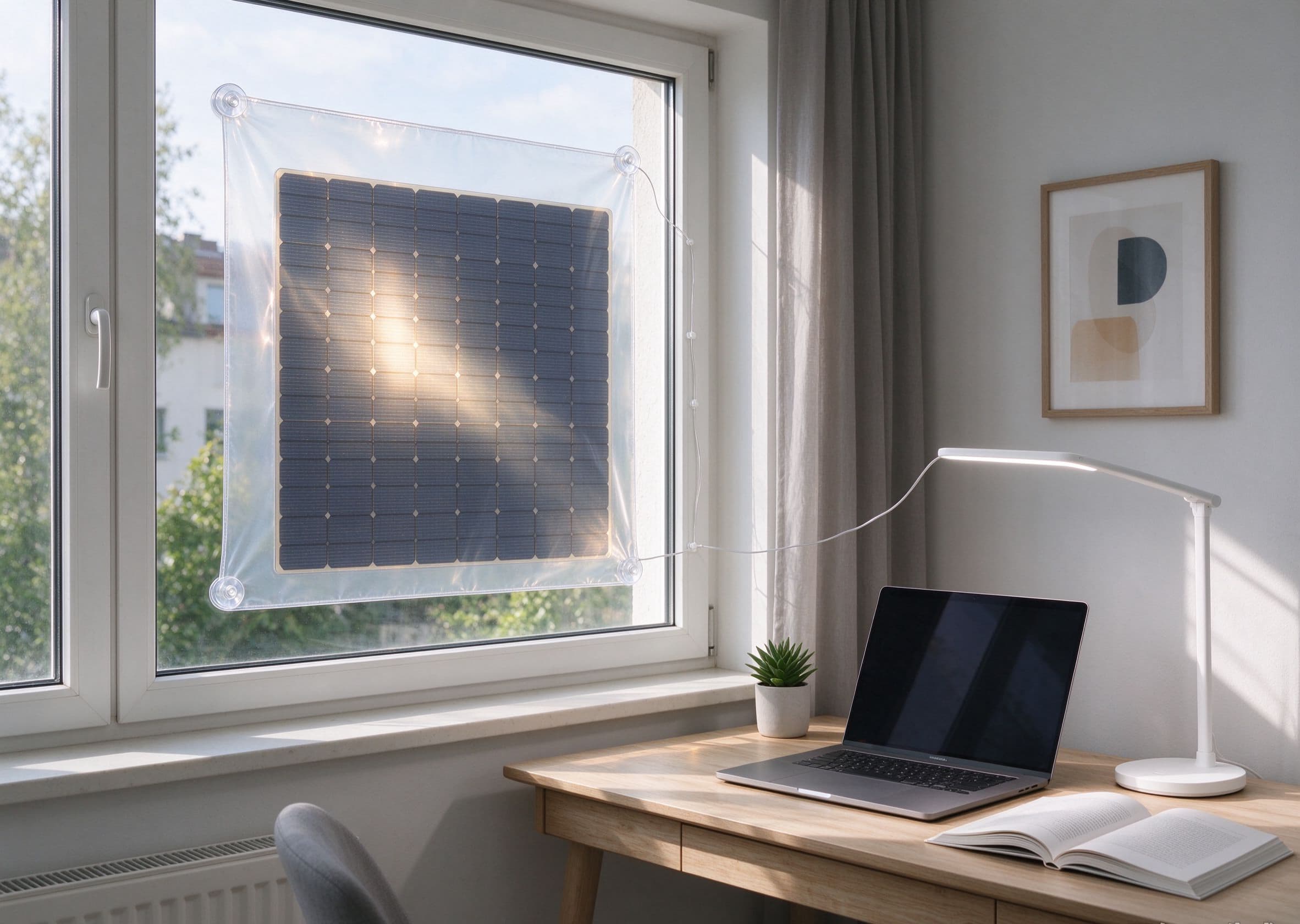
If your balcony is shaded or faces the wrong direction, a portable solar panel paired with a battery-based power station is the cleaner answer. The station lives inside on a shelf or under the desk. The folding panel lives in a closet or by the door. On sunny days, you roll the panel out on the patio, the fire escape, or even on a friend’s roof, and top the station up. When the grid goes down, the station runs the fridge for a few hours. The modem overnight and all of your phones. Most modern units have built-in charge controllers, so you do not wire anything yourself. Pick a station with at least a 500Wh battery and a 200W folding panel. That combination costs $300 to $500, weighs about 30 pounds, and fits in the trunk of a car when you move.
USB Window Chargers for Small Devices
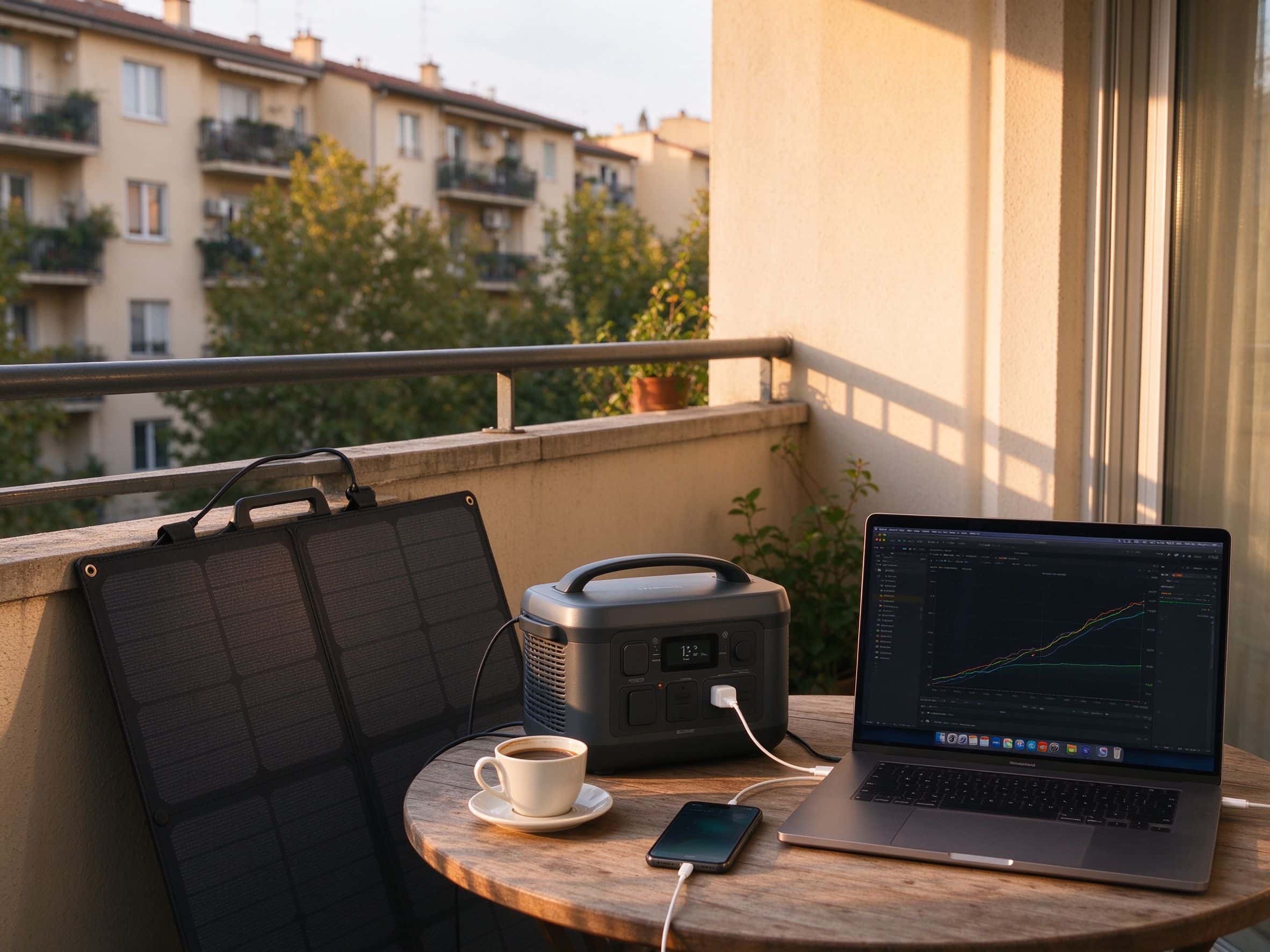
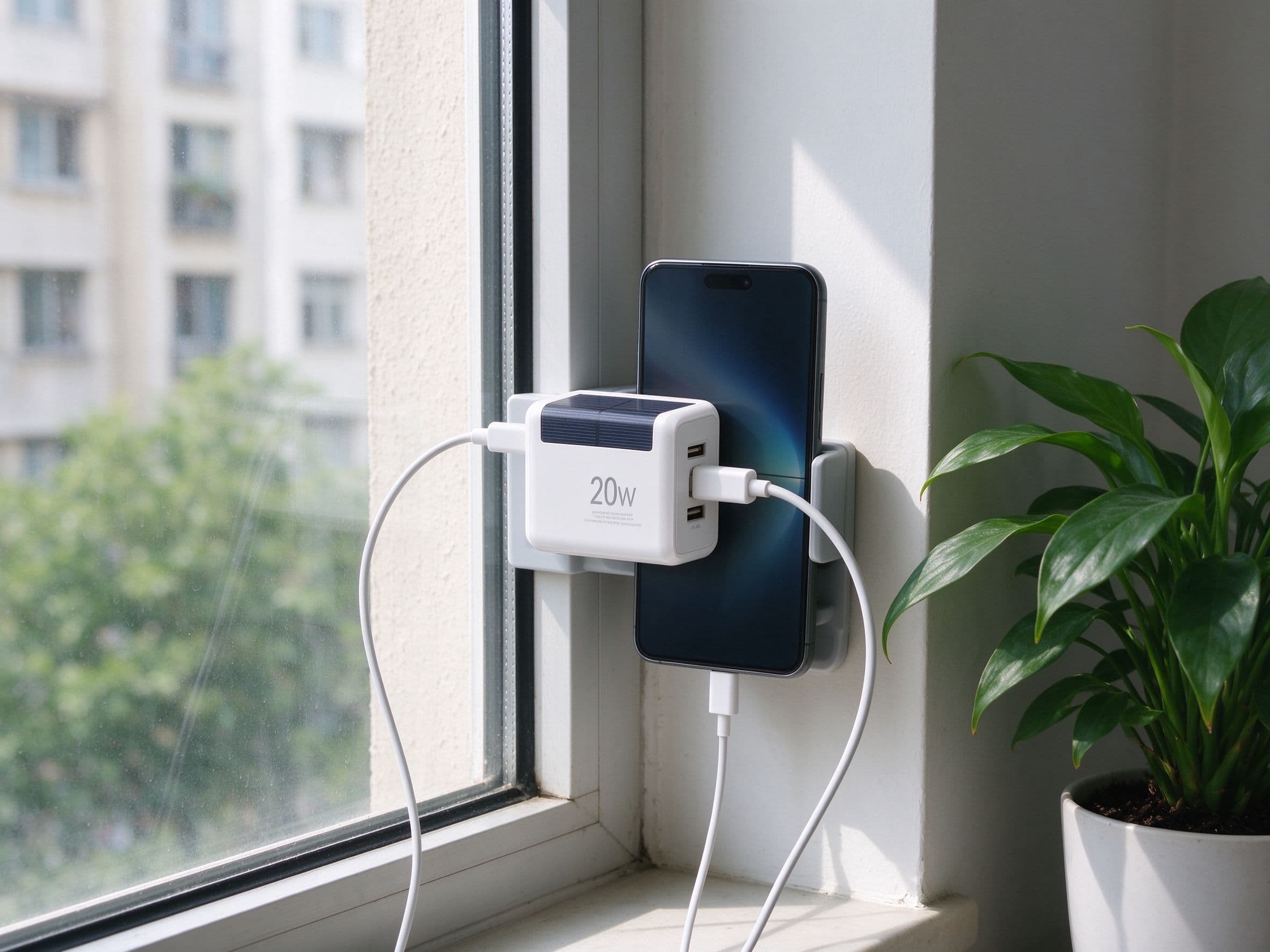
If you have no balcony at all, a small 15W to 25W window solar charger clips to the glass and charges a phone or a tablet. A set of low-voltage LED strip lights. This is not going to run your fridge, and anyone who tells you otherwise is selling you something. What it does is keep your phone alive during a multi-hour blackout, trickle-charge a backup battery. While you work from home, and cut a few watt-hours off your monthly bill. Pick one with USB-C Power Delivery so it charges modern laptops at least slowly. Mount it on a south-facing window, wipe the glass once a month, and expect 1 to 2 full phone charges on a sunny day. The whole rig costs $25 to $60 and lives in a drawer when you are not using it.
What You Can Realistically Power With Apartment Solar
The honest answer is not “everything.” A solar setup for an apartment replaces a slice of your use, not the whole bill. A 200W balcony rig with a 1 kWh battery will run a laptop (50W for four hours), a few LED bulbs (10W for five hours), a Wi-Fi router (10W around the clock), and a small fan (30W for four hours). That adds up to about 400 watt-hours a day — enough to take the edge off a summer bill and to keep essentials running when the neighborhood loses power. It will not run an air conditioner, an electric oven, or a dryer. Those loads need a rooftop array and a utility meter, and renters should not try to fake it on a balcony.
The other thing apartment solar does well is shave your phantom load. A router, a cable box, a modem, and a phone charger draw 20 to 30 watts around the clock even when you are asleep. Put that slice on a small battery and a balcony panel. And you stop paying to power electronics you are not using. Over a year, that quiet trickle adds up to a few dozen kilowatt-hours. And it means the next blackout does not kill your internet mid-call.
Start With the Smallest Setup You Actually Use
Solar for apartment living works best when you start small and add panels only after you know what you need. Buy the USB window charger first. If it proves useful, add a folding panel and a modest power station. If you have a sunny balcony and want to cut the bill further. Bolt on a pair of 100W panels and a small battery. Do not start with a 2000W array you cannot move when the lease ends. Size the load, match the panel to the sun your window actually gets, and keep every component portable. Do that, and you get the same quiet, independent power a rooftop owner enjoys — minus the roof bolt, minus the HOA meeting, and minus the installation crew.