
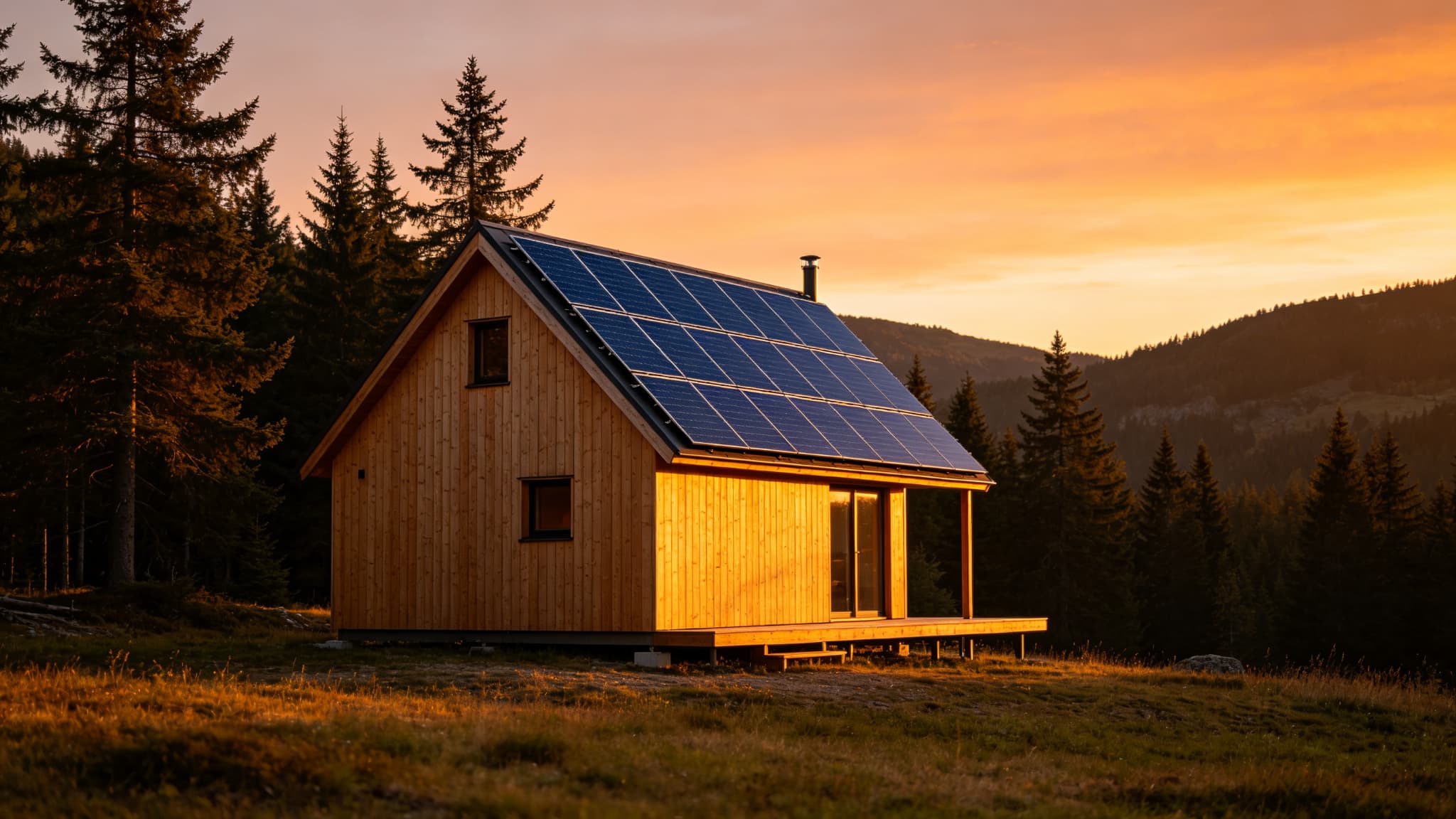
When I moved into my small off-grid cabin two winters ago, my first question was simple: can solar power for a cabin off-grid really cover the lights, a fridge, my laptop, and a morning coffee without a generator? I ran the numbers, tested the gear, and found the answer comes down to three things
- How many kilowatt-hours a day I actually use,
- How many hours of sunlight the roof sees,
- How much buffer the battery holds across cloudy stretches?
The setup that finally worked now runs every weekend, year-round, with no extension cords and no fuel.
Sizing a Solar Power System for My Off-Grid Cabin
The mistake most people make is buying panels first; I started with a load audit instead, and that single habit pinned down the three numbers I actually needed. Our cabin draws about 2.8 kWh a day: a compact refrigerator near 1 kWh, LED lighting under 0.3 kWh, a laptop and phone around 0.4 kWh. And a small water pump plus odds and ends make up the rest. The roof sees about four usable peak sun hours a day, which is typical for most of the U.S. And our 3,584-Wh battery holds just over a full day of autonomy — enough to carry us through a couple of cloudy stretches without touching the generator. For reference, the average U.S. household uses about 11,000 kWh a year from the grid. Our cabin runs on roughly a tenth of that. And those three figures are exactly why a modest array works here.
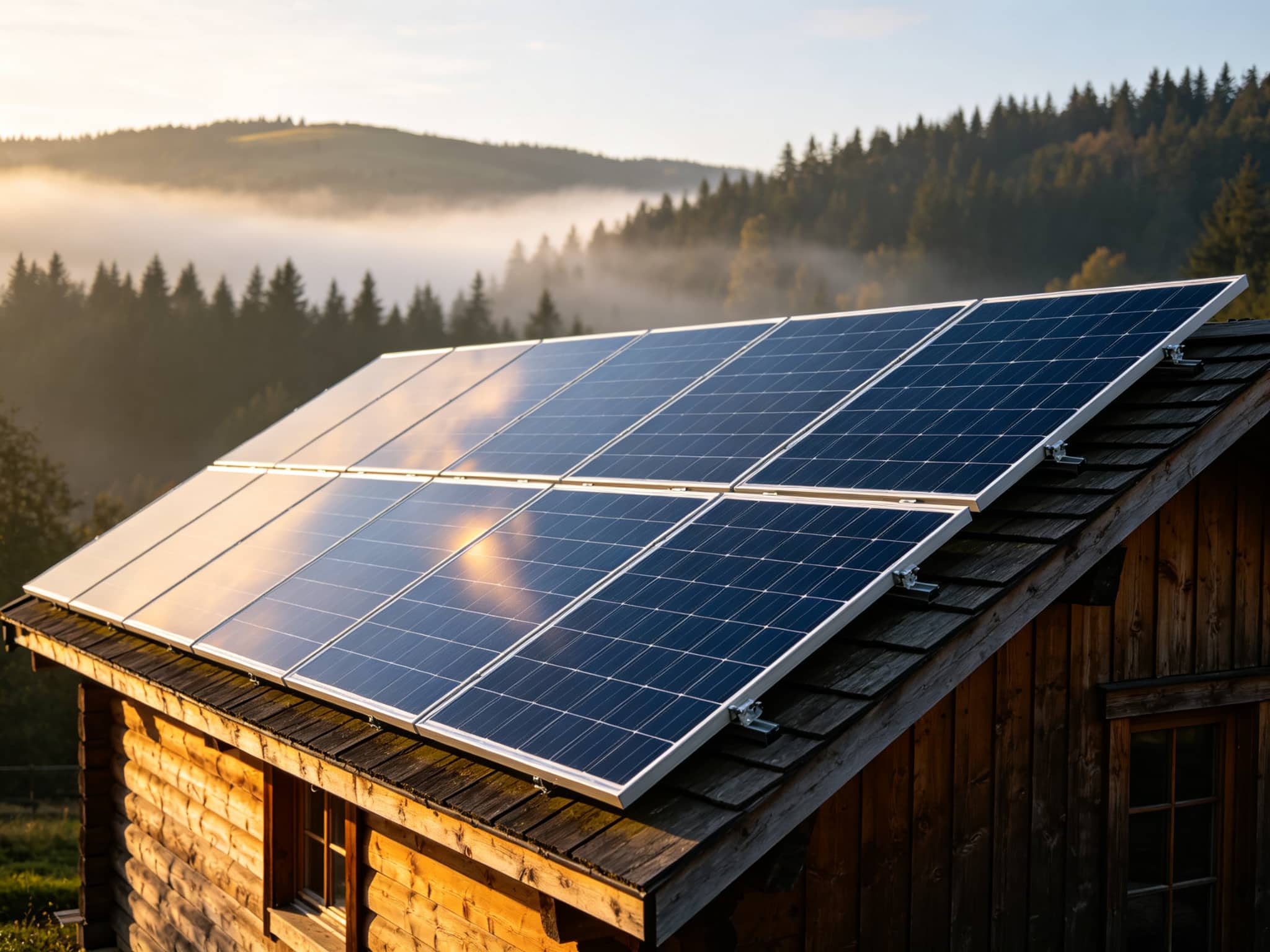
To turn that number into panels, I multiplied daily use by 1.3 to cover conversion losses, then divided by the site’s peak sun hours. With about four usable sun hours a day in most of the U.S., 2.8 kWh × 1.3 ÷ 4 gives roughly 0.9 kW, so I rounded up to a 1 kW array. A step-by-step off-grid system sizing guide walks through it. I used monocrystalline Solar Board panels; they hold their output in low light and early mornings, which matters far more for solar power for an off-grid cabin than chasing the last percentage point of efficiency that photovoltaics research keeps pushing.
The beauty of this approach is that the array is rarely the bottleneck. Once I knew the daily number, every later choice — battery, inverter, controller — followed from it, and the system stopped being a guessing game. So a solar power system for an off-grid log cabin can meet the entire cabin’s electricity needs
What a Solar Power System for Cabin Needs Beyond Panels
Panels only make power while the sun is up, so the rest of a solar power system for a cabin is really a storage and delivery problem. I built ours around three parts: a charge controller that feeds the battery cleanly. A lithium iron phosphate (LFP) battery bank that stores the day’s surplus. And an inverter that turns stored DC into 120V AC for normal appliances. The chemistry matters here, as Argonne National Laboratory explains in its battery explainer. A lithium-ion battery shuttles ions through an electrolyte to release stored energy, and that same mechanism is what lets LFP cells cycle deeply every single day.
For our cabin, the heart of the system is the HomePower 3600 Plus. It packs 3,584 watt-hours of LFP storage and a 3,600-watt inverter in one unit, enough to start a refrigerator’s compressor, drive the water pump, and still leave headroom for the kettle. The manufacturer rates the cells for 6,000 cycles, and the unit can expand to 21 kWh if we ever add a workshop. That single box replaced what would otherwise be three separate components, and it simplified the wiring inside our small cabin.
Weather-Proofing Solar Power for Cabin Setups
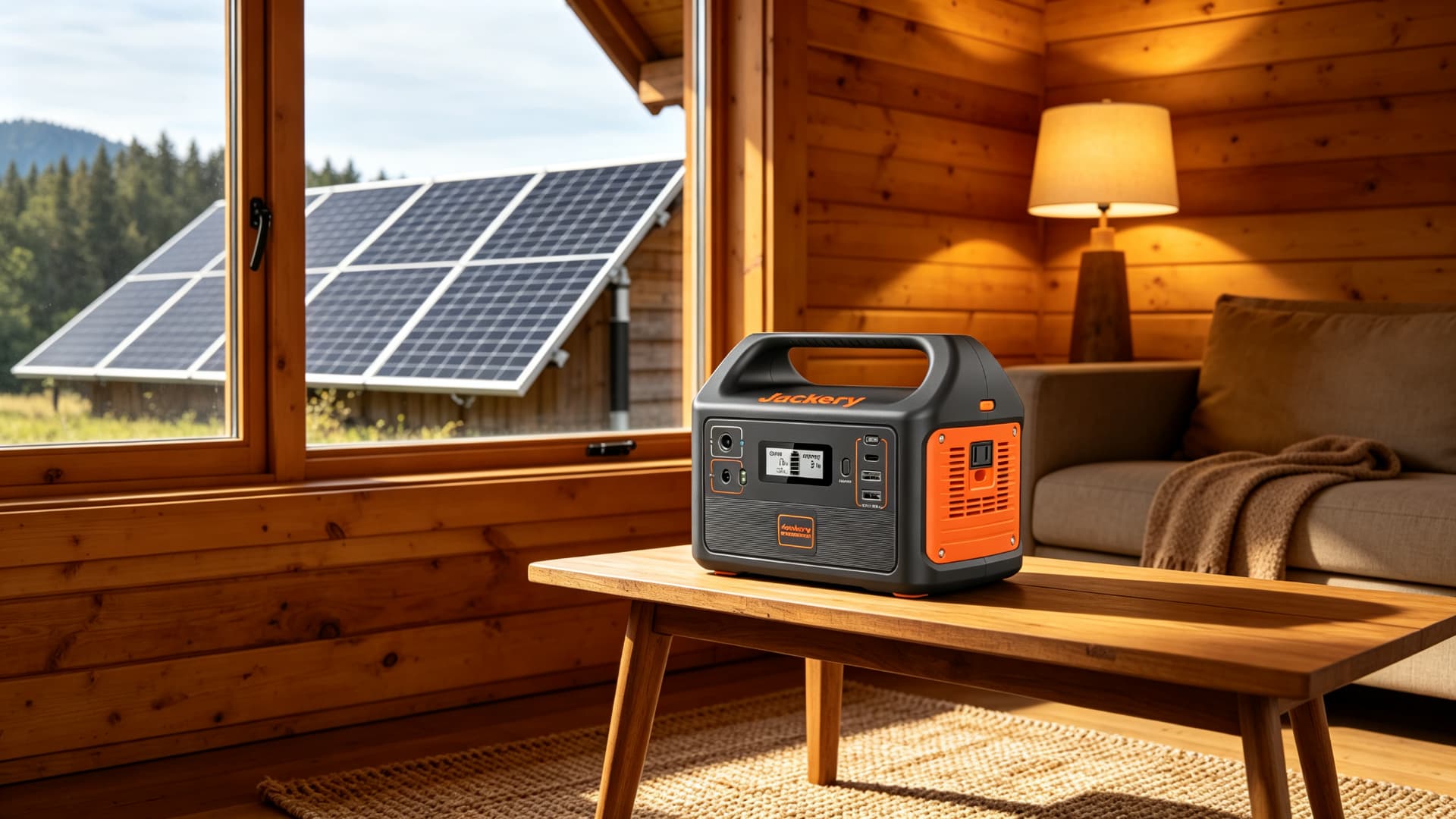
Our cabin sits in a region with real winters, so weather was my biggest worry. Monocrystalline panels still produce in overcast conditions, just at a lower rate. And the Solar Board’s sealed, anodized aluminum frame handles snow, rain, and UV without much attention. What surprised me was how much a simple tilt adjustment changed winter output. Before the first snow, I read up on winterizing an off-grid system. Then raised the array angle for the low sun so snow slides off instead of burying the glass.
Batteries dislike cold more than panels do. I keep the HomePower unit indoors, where it stays above freezing, which also protects the inverter’s electronics. On the shortest days, when generation drops to around two usable sun hours. The array still covers most of the cabin’s needs, and the rest comes from stored energy.
Extras That Make Solar Power for Cabins Easier
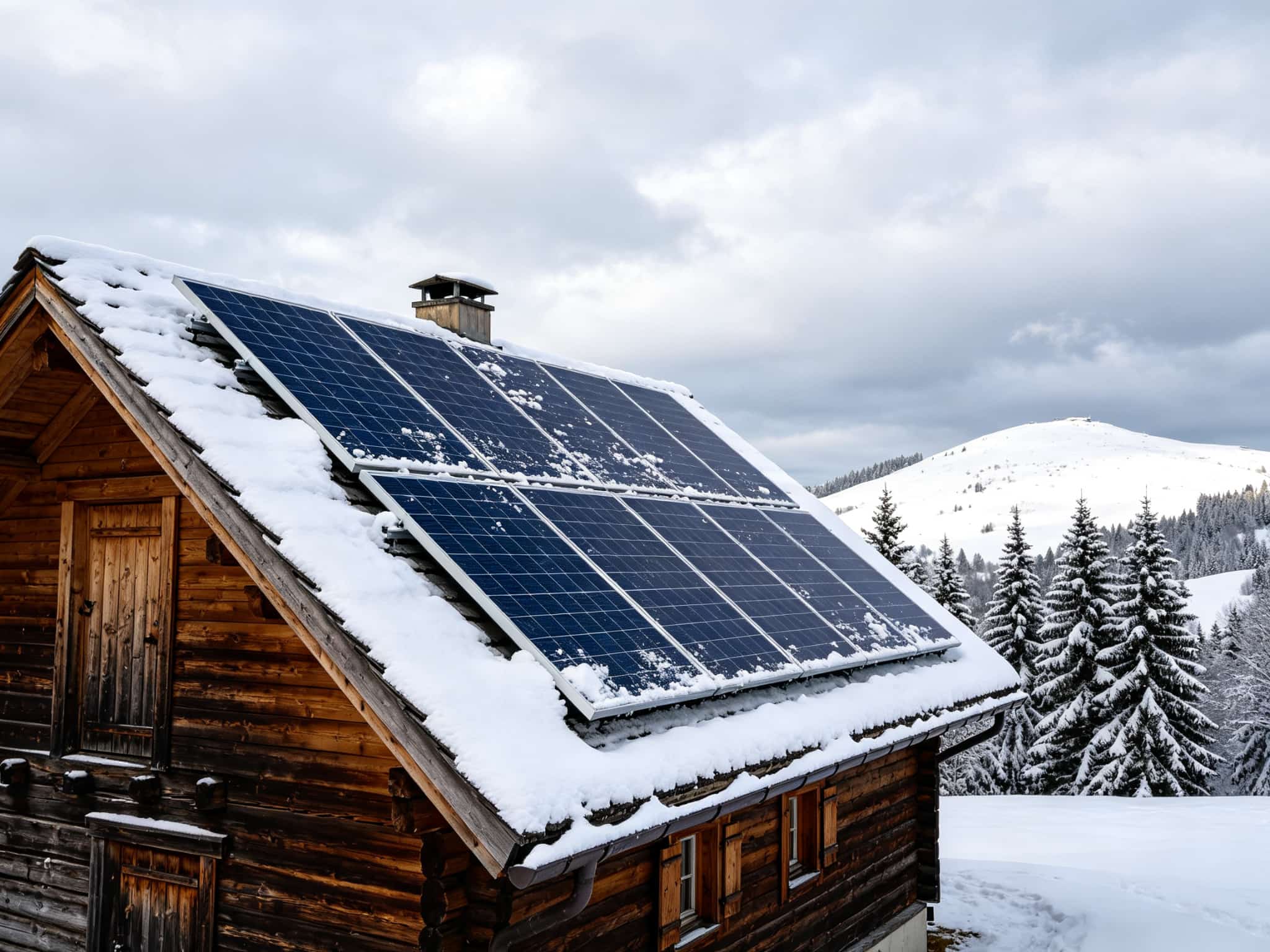
Once the core system ran reliably, a few small additions stretched it further. A solar-powered charger tops up phones and a tablet on the porch during the day. That way, the battery bank serves only real loads at night. A portable power station handles short camping trips. And when friends borrow the cabin, I hand them that unit plus a foldable panel instead of touching the main setup. Every addition followed one rule: it had to serve an actual weekend routine. Because gear that solves a real problem earns its place in solar power for cabins. While gear that just sits in a corner does not.
The same logic applies to expansion. If the cabin ever grows into a full-time home. The HomePower unit can scale to 21 kWh, and a microinverter setup makes it easy to add panels one by one as needs change. Start small, measure what you actually consume. And grow the system with the habit—that path has been far cheaper and more reliable than guessing big on day one.
Keeping Solar Power for Off-Grid Cabins Reliable Year-Round
Two years in, the system has run through snowstorms and heat waves. And long rainy stretches without a single generator start—proof that solar power for off-grid cabin setups works when built around real usage. The lesson I keep coming back to is that reliability comes from the plan. Not the wattage: know your real daily load, size the array for your worst month, give the battery a full day of buffer, and protect it from temperature extremes. A few sensible habits turned a dark cabin into a comfortable one, and yours can do the same.