
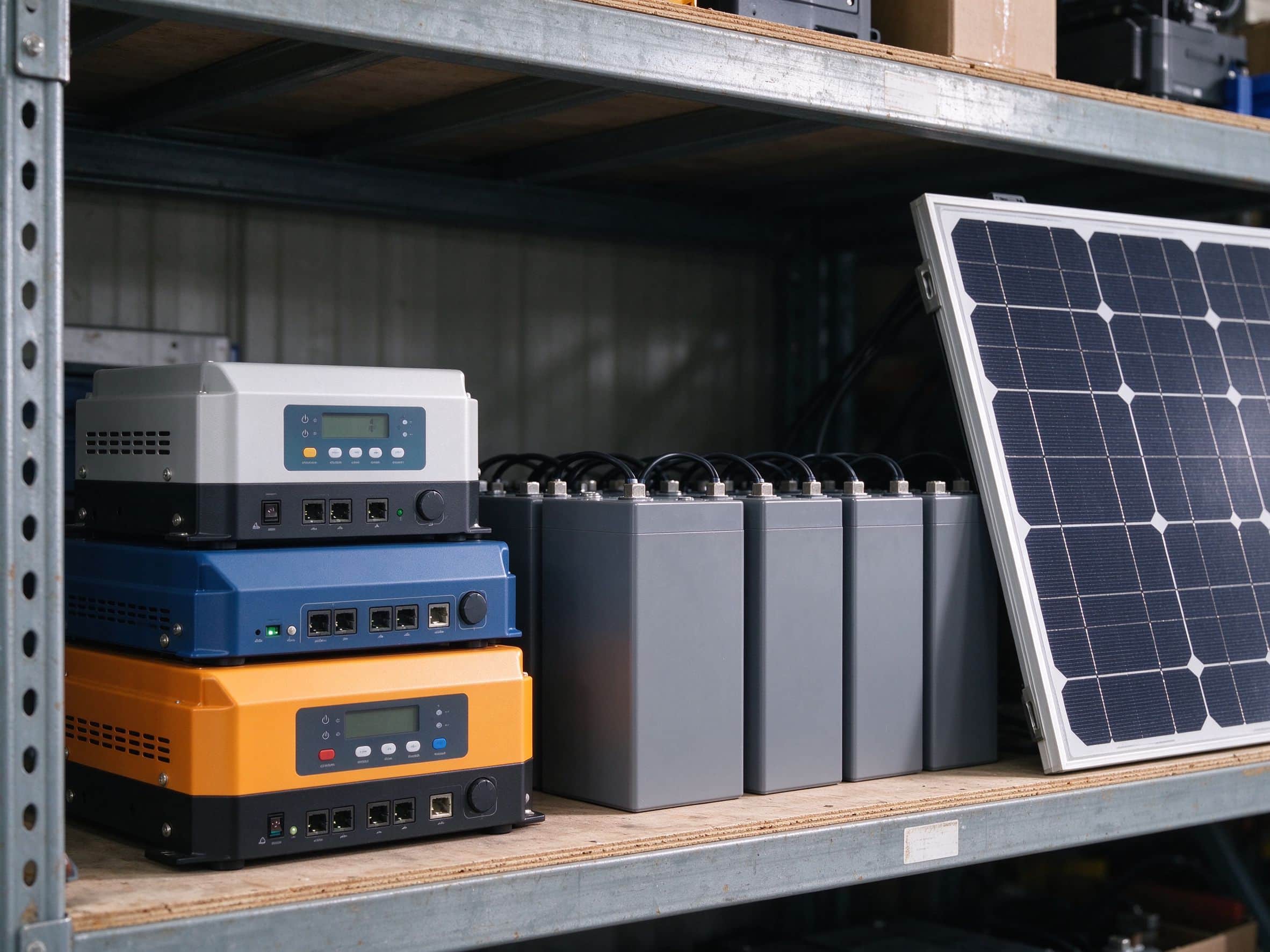
A reliable solar equipment supplier ships certified parts on time and backs them with a real warranty. And picks up the phone when a project hits a snag. It is not the one with the lowest catalog price. Three things decide whether a supplier will hold up on your project: the certifications on file. The track record on comparable installs. And the after-sales support for the parts you actually bolt to the wall.
What a Reliable Solar Equipment Supplier Actually Provides
A supplier is more than a parts catalog. The right one acts as a technical partner across the whole build. It helps you match the panel wattage to the inverter and confirm the charge controller rating. Spec the right battery for the climate. When a shipment arrives short, or a label is wrong, that partner fixes it before your crew drives two hours to the site.
Walk the product range before you negotiate. A competent solar panel supplier stocks panels, inverters, lithium batteries, charge controllers, racking, and the small balance parts in one order. The point is that one PO ships as one container, with one warranty pack and one point of contact for returns.
Product Quality and Certifications
Ask the supplier what brand of cells and components it actually ships. Tier 1 panel makers buy cells from the top wafer producers and hold tighter batch-to-batch tolerance. On paper, the units should carry TÜV and CE for the EU market and UL for the US market. Ask for the test report numbers, not just a certificate scan. A supplier that hesitates to share flash test data across two production lots is betting your project on luck.
Supply Chain and Stock Availability
Project delays cost more than the parts themselves. A reliable supplier confirms the production slot. The container loading date and the port of loading in writing before you sign. It keeps common inverters, charge controllers, and spares on the shelf, so a broken unit on a Friday does not push your commissioning into next month. When lead times slip, it tells you early and proposes a substitution that still meets the spec sheet.
Warranty and Technical Support
Panels should carry a 25-year linear performance warranty, and inverters a five- to ten-year product warranty. The warranty only matters if someone stands behind it. Ask what happens when a unit fails in the field: does the supplier ship a replacement within 48 to 72 hours, or make you send the broken one back at your cost? Local or regional technical support means an engineer can read your single-line diagram, talk through a fault, and approve a swap over email before your crew leaves the site.
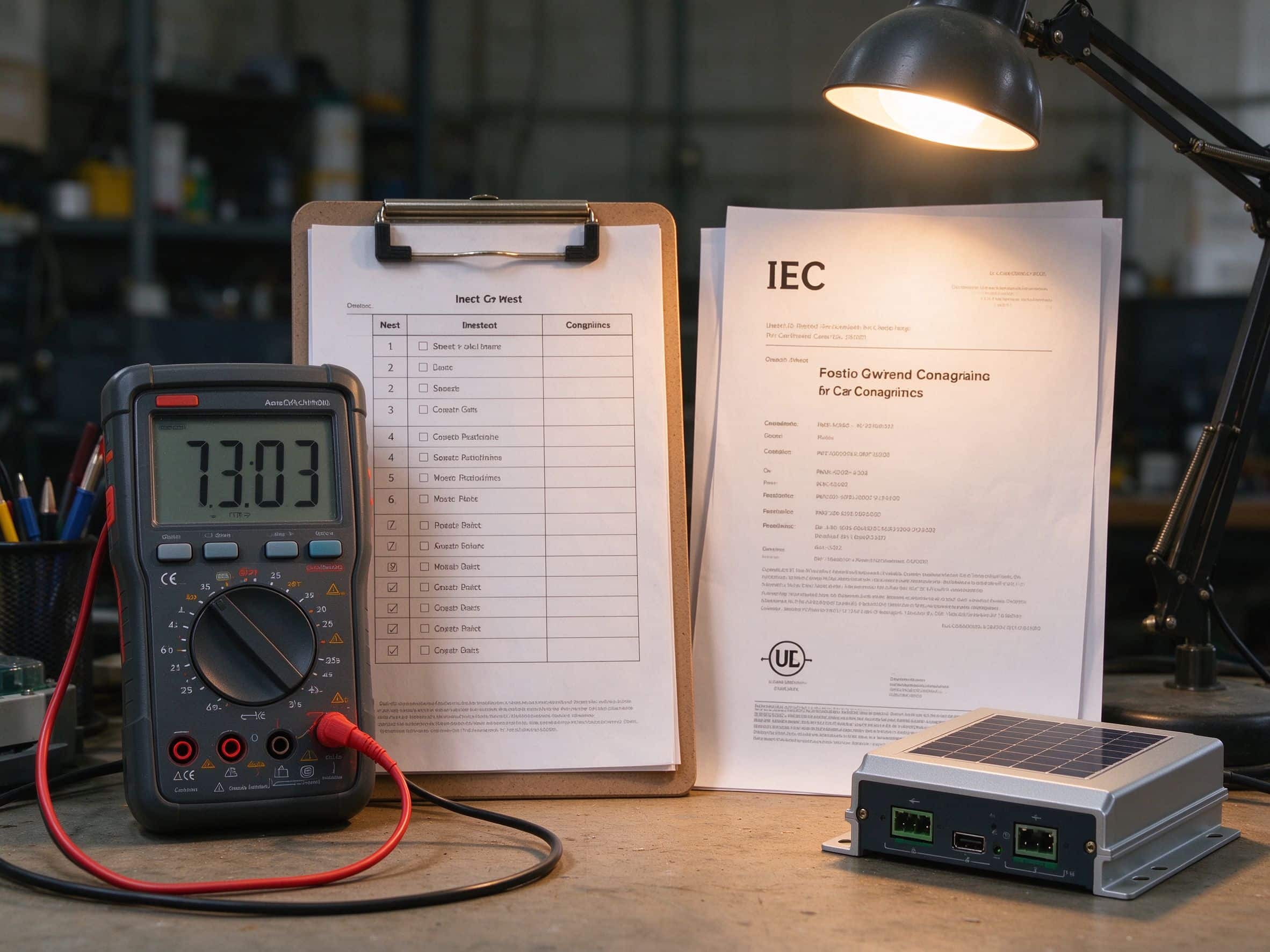
What Problems a Solar Equipment Supplier Solves for Your Project
A good solar equipment supplier does not just drop a container at your dock. It removes the three problems that sink small solar builds: wrong sizing, late shipments, and dead units with no one to call. Each problem costs more than the parts themselves, and each one is preventable before you sign the PO.
Many EPCs size panels to the budget and then wonder why the inverter clips on hot afternoons. A competent solar panel supplier reviews your daily watt-hours, recommends the right panel wattage. And pairs it with a properly rated charge controller and battery. The off-grid kit sizing guide on this site shows the math; the supplier’s job is to catch the mismatch before you order, not after the array is bolted to the roof.
Project delays usually come from a single part that is out of stock. A reliable wholesale solar equipment partner keeps common inverters, charge controllers, and fuses on a local shelf. When your crew finishes early and needs a spare, that spare is on a truck the same day, not on a ship from another continent. It also confirms the production slot and container loading date in writing. So your commissioning date does not slip because of a port backlog.
A panel fails in year two. A battery cell drops capacity. These are not rare events. A serious supplier has a documented claim process: you send a photo and the serial number, and a replacement ships within 48 to 72 hours.
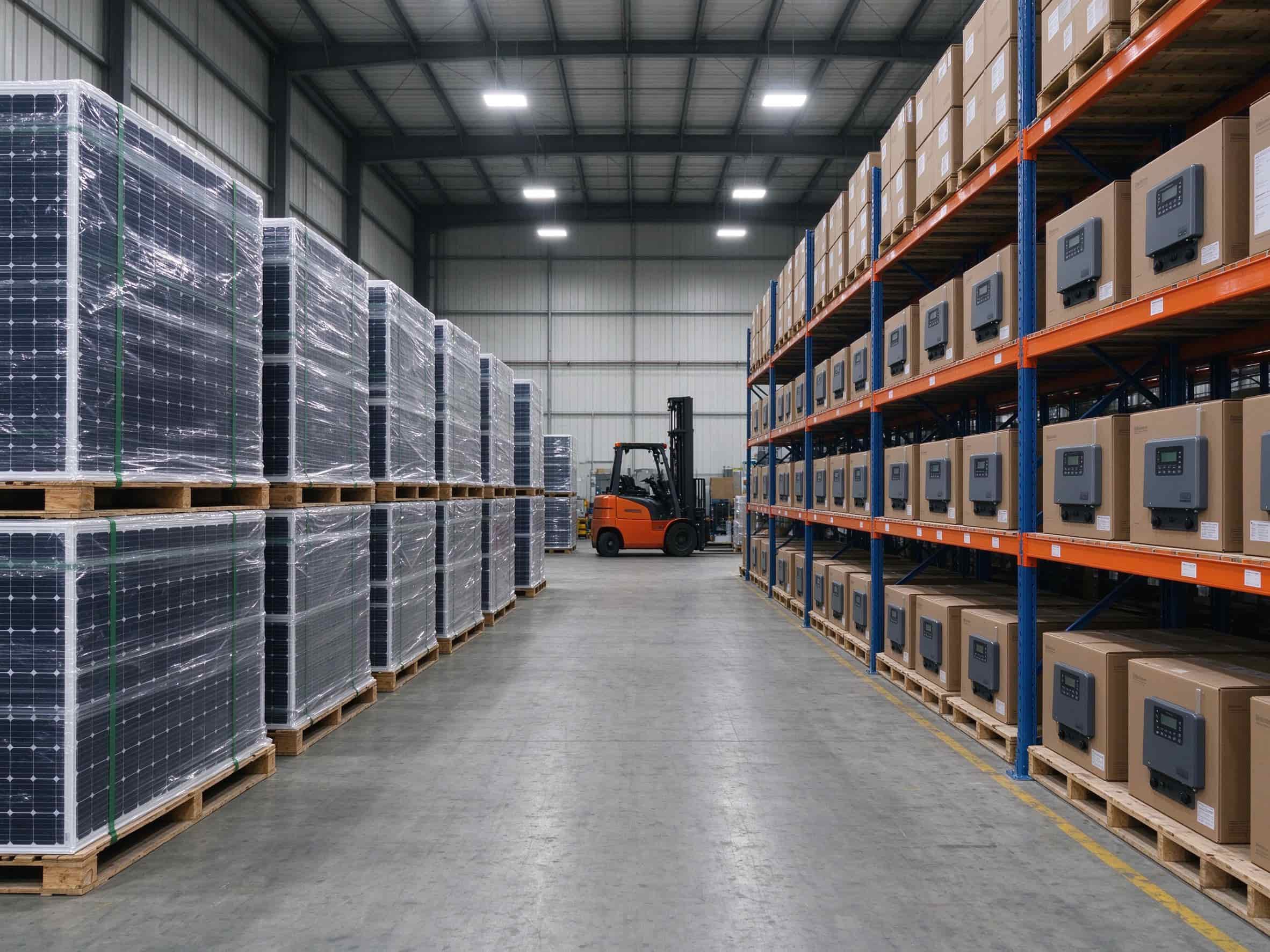
What to Require From a Solar Equipment Supplier Before You Order
Once two or three suppliers clear the checks above, the last step is to write your requirements into the PO. A quote is not a contract. The three asks below protect you when a shipment lands, a part fails, or a price changes before the container closes.
Do not compare a price that excludes tax, freight, and insurance against one that includes everything. Ask each solar equipment supplier for an all-in delivered price to your port or jobsite. State the Incoterm you want, usually DAP or DDP for small EPC buyers. A supplier that refuses to quote all-in is hiding a fee somewhere, and that fee shows up the day the container clears customs. Before the container ships, ask for the packing list, the commercial invoice, the datasheets for every SKU, and the certificate of origin.
Agree on a deposit split, usually 30 percent up front and 70 percent against the bill of lading. Set a fixed lead time and a clear penalty for delay. Get the production slot and loading date in writing, not on a WeChat message. A solar panel supplier that shakes hands on a delivery date and then asks for two more weeks without notice will do it again on your next order.

Choose the Solar Equipment Supplier That Stays With Your Project
Picking a solar equipment supplier comes down to the same three tests the intro opened with: certified parts that ship on time, a warranty someone will actually honor, and a phone that still answers in year three. The three problems it removes from your build, and the three requirements you should write into the PO before you pay. The low bid will always tempt you, but a late container, a dead inverter on day one, or a supplier that ghosts you during commissioning costs far more than the dollars it saves. Verify the paperwork, call a reference, normalize the quote, and lock the delivery terms in writing. Do that, and your project ships on time, installs cleanly, and keeps producing for the decades the panels are rated for — long after the purchase order itself is forgotten.