
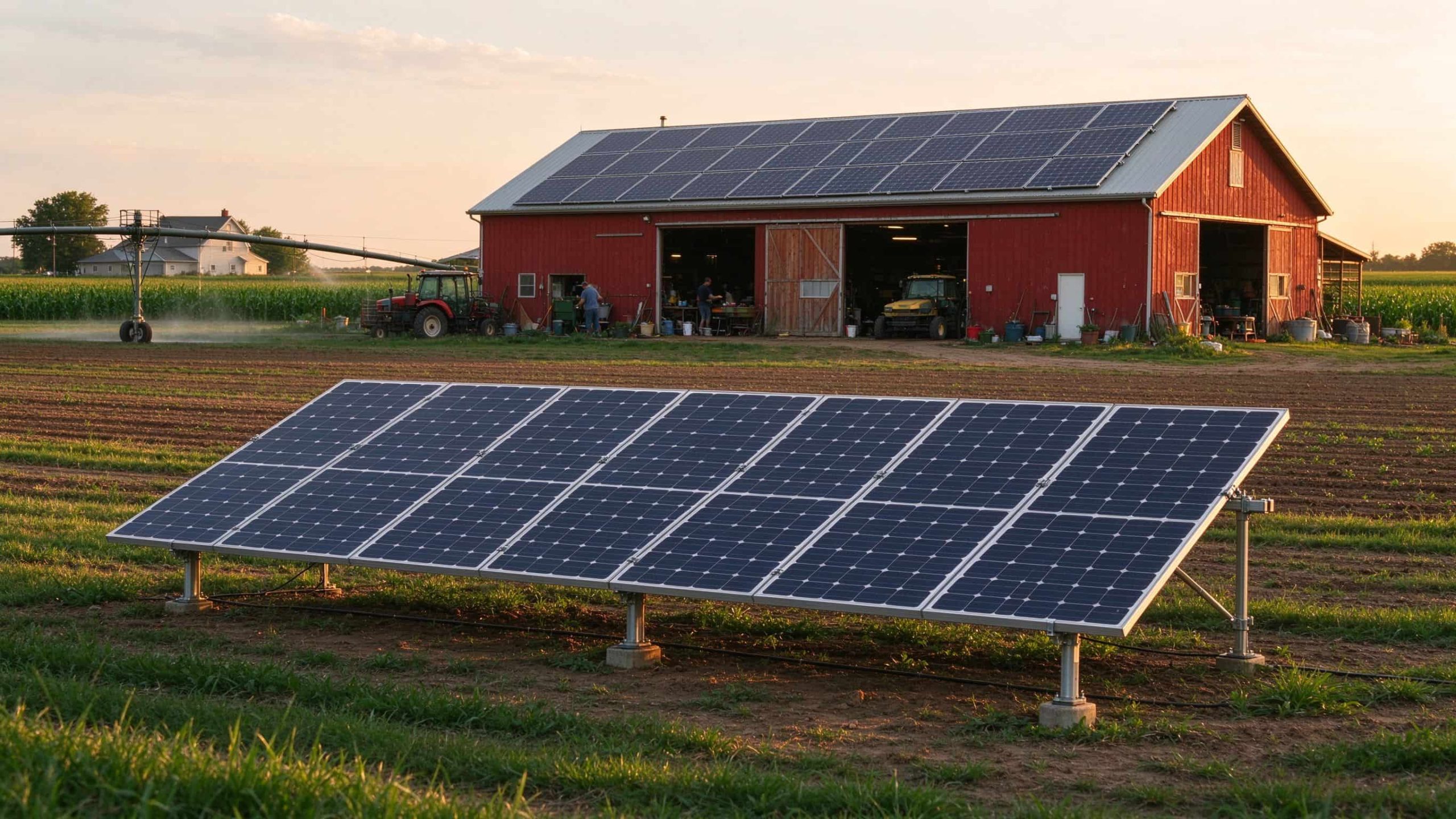
Farm Solar Solutions fails the moment it is sized to a panel wattage instead of a real load. Irrigation pumps, milk chillers, ventilation fans, and cold storage all run on different clocks. A dairy needs cooling around the clock. A row-crop farm pumps water during the day. A remote field has no reliable grid to fall back on. The right system starts with those loads and the site, then chooses between rooftop arrays, ground mounts, solar pumping, battery backup, or agrivoltaics. Each option solves a different problem, and picking the wrong one costs more than it saves.
What Can Farm Solar Solutions?
Farm electricity demand does not look like a typical household load. It often combines large motors running on fixed schedules, equipment that must keep running through a power cut, and buildings spread across several acres. Before choosing hardware, separate the main load groups.
Farm Solar Solutions: High Electricity Demand for Irrigation and Water Pumping
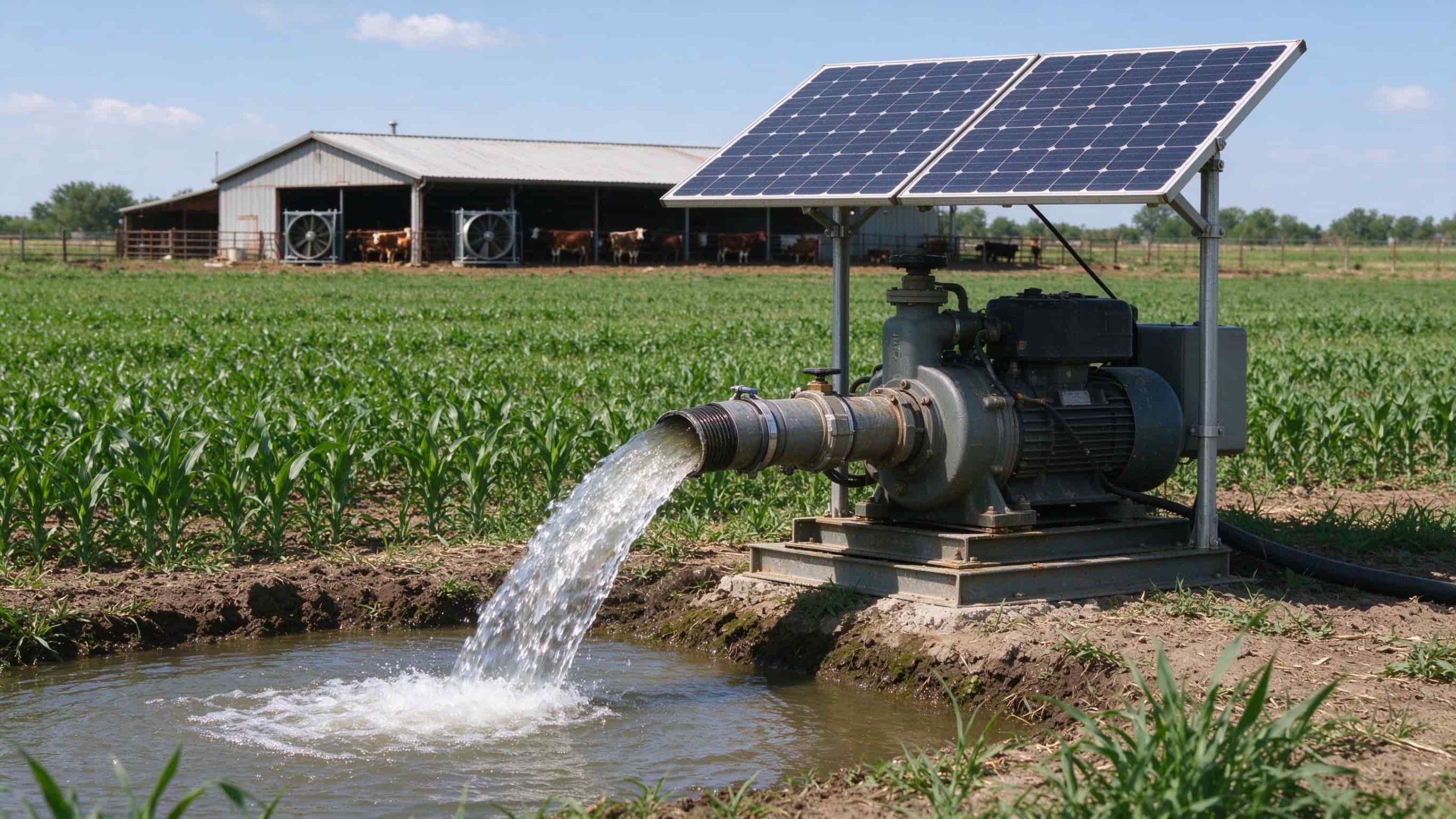
Irrigation is one of the largest controllable electricity uses on many farms. Pumps run for hours to move water from wells, rivers, or storage tanks to fields. Motor power, head, flow rate, and daily watering windows all drive the system size. Solar generation peaks around midday, which fits many irrigation schedules. But if pumping must continue after dark or through a stretch of cloudy weather, the design needs storage, backup power, or a water tank rather than electricity storage. The USDA lists solar pumping as a common on-farm application because it lines up well with daylight watering.
Powering Barns, Livestock Facilities, and Cold Storage
Barn ventilation, milk cooling, egg handling, and refrigerated produce storage run on different clocks. Ventilation fans cycle with temperature, milk chillers demand steady power, and refrigeration cannot simply be switched off during a grid outage. These loads usually require a grid-tied system with backup capability rather than a small off-grid kit. Process equipment such as grain dryers, milking machines, or packing lines may run for short, high-demand periods that drive inverter and battery sizing. The key is to rank loads by how long they can tolerate an outage.
Limited Grid Access and Unreliable Electricity Supply
Remote fields, leased ground, and farms at the end of a long distribution line face a different problem: connection fees, weak voltage, and outages that hit pumps and cooling. A grid-tied solar array reduces daytime power draw but won’t keep the farm running when the grid drops. Adding storage lets a farm ride through short outages and protect critical loads. Fully off-grid systems make sense where a new line is expensive, or the site is used only seasonally. Each option changes the equipment list and the economics.
What Solar Solutions Are Available for a Farm?
Once the loads are clear, the next step is matching them to a real solution. The options below overlap, and many farms combine more than one. The comparison table gives a starting point.
|
Solar solution
|
Most suitable for
|
Main consideration
|
|---|---|---|
|
Rooftop solar
|
Farms with sound barn, shop, or farmhouse roofs and steady daytime loads
|
Roof condition, orientation, shade, remaining life
|
|
Ground-mounted solar
|
Farms with open land near the point of use
|
Land take, drainage, access, equipment crossings
|
|
Solar irrigation pumping
|
Daytime water transfer and livestock watering
|
Pump power, head, flow, storage needs
|
|
Solar plus battery storage
|
Critical loads that cannot tolerate outages
|
Battery cost, autonomy hours, maintenance
|
|
Agrivoltaics
|
Land where crops or grazing can share the space
|
Crop light needs, row spacing, machinery clearance
|
Rooftop and Ground-Mounted Solar Systems
Rooftop arrays use space the farm already owns. A south-facing barn roof can offset shop, home, and office loads without taking cropland out of production. The roof has to carry the extra weight, face the right direction, and be free of shade from trees or taller buildings. Ground-mounted arrays sit on racks in open fields or paddocks. They are easier to angle and clean, but they occupy land, need concrete or pile foundations, and must leave room for vehicles and farm traffic. A USDA guide to solar on farms notes that the choice usually comes down to roof suitability and land availability rather than one being inherently better.
Solar-Powered Irrigation and Water Pumping
A direct-drive solar pump can run as soon as the sun is strong enough, with no battery and minimal control gear. That fits remote watering points and seasonal irrigation where the pump runs only on bright days. Larger systems use a solar pump controller to match panel output to the pump, and may pair with a backup generator or a small battery for early morning start-up. Water storage is often the simpler route: pump into a tank during the day and use the water whenever it is needed.
Solar and Battery Storage for Off-Grid Farms
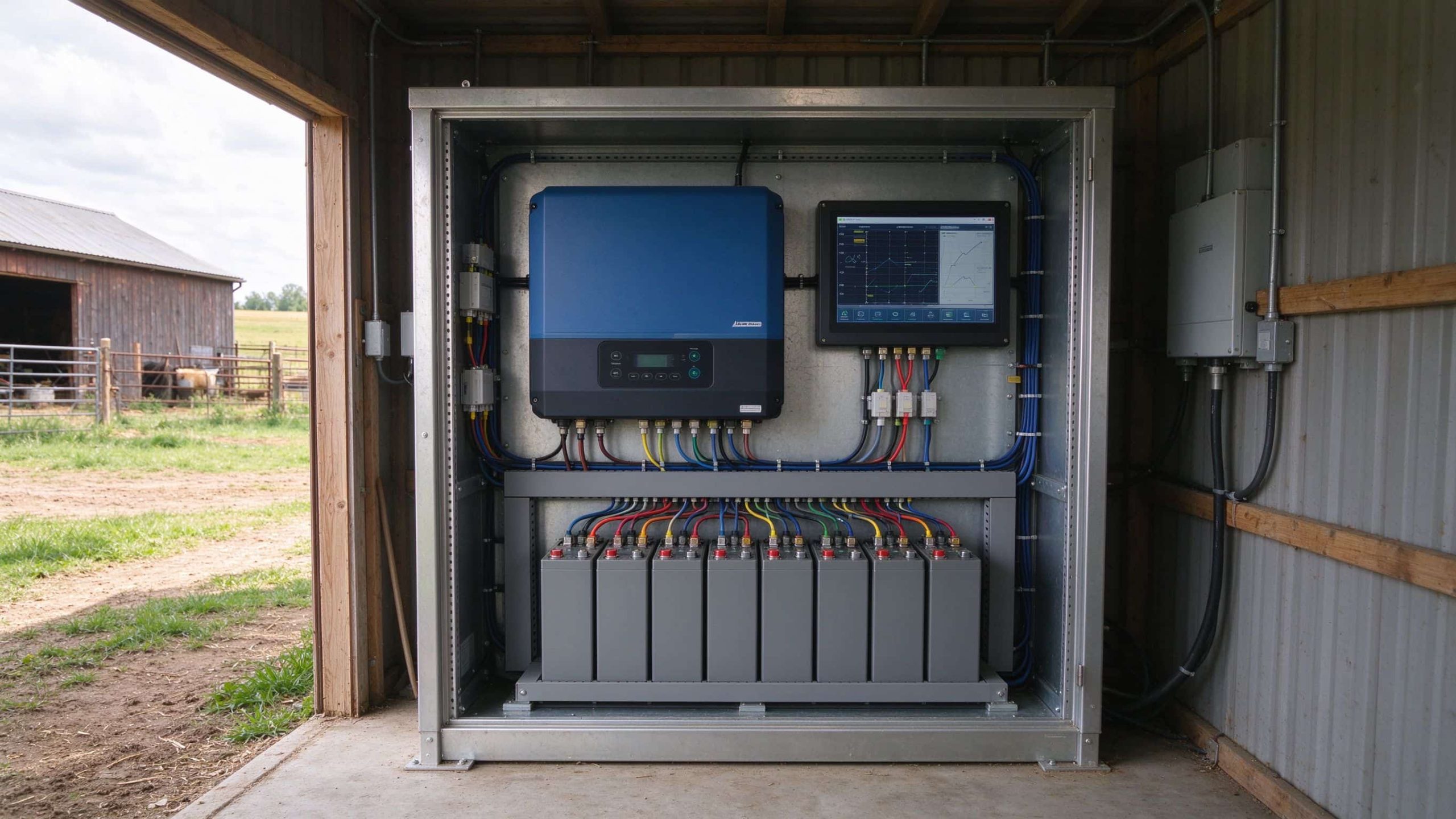
Batteries turn a solar array into a power source for night loads and grid outages. The size depends on the critical load profile, the desired autonomy in cloudy weather, and the inverter surge capacity for motor start-up. Milk coolers, ventilation fans, and well pumps are common reasons to add storage. Storage raises the upfront cost and adds a maintenance item, so it is usually reserved for loads that must keep running. It does not make sense to size a battery for every tool on the farm when many of them can wait for daylight or the grid.
Agrivoltaics: Combining Solar Power with Agriculture
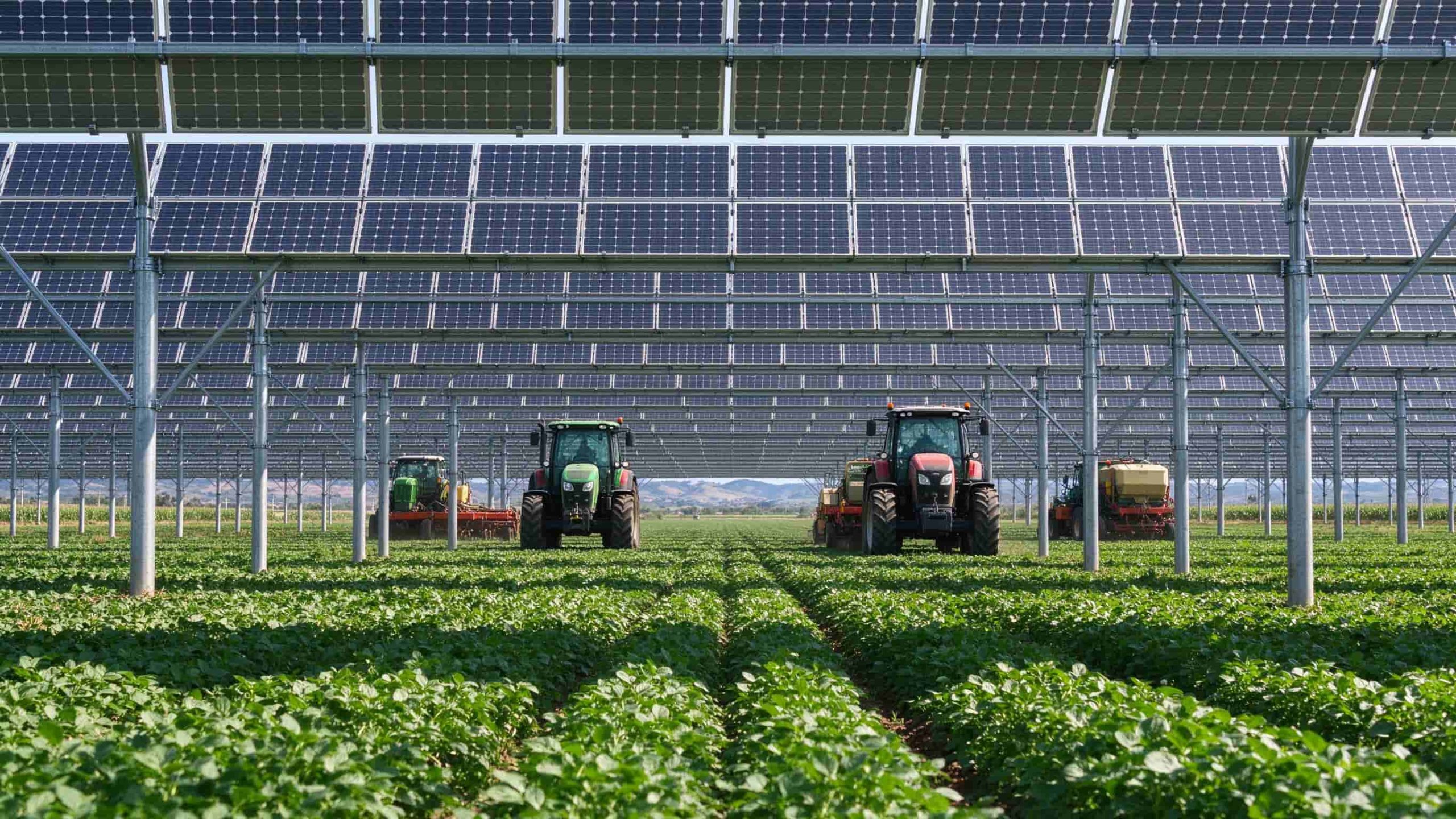
Agrivoltaics raise panels high enough to let crops, livestock, or pollinator habitat grow underneath. The idea is double use of the same land: electricity from above, forage or crops below. The USDA and NREL both describe it as site-specific, not a universal upgrade. Row spacing, panel height, and tilt decide how much light reaches the plants. Tractor clearance and harvesting equipment need to be planned in. Shade can help heat-sensitive crops in dry regions, but it will reduce yield for sun-loving varieties. Local rules, soil, and crop choice decide whether the extra revenue beats the extra complexity.
How to Choose a Cost-Effective Farm Solar Solution
Farm Solar Solutions to Meet Agricultural Energy Needs become cost-effective when the system is sized to real loads and matched to real conditions.
Start with a year of electricity bills, not a guess. Note monthly kWh, demand charges if any, and the equipment that draws the most power. Walk through the farm and list every load, its run time, and its priority. Pumps and refrigeration often have high startup current, so the inverter and battery have to handle the surge, not just the running watts. Separate daily loads, seasonal loads, and must-run loads. That split decides whether storage is essential or optional.
The installed price covers panels, racking, inverter, wiring, switchgear, and labour. Add batteries and the balance of system grows quickly. Compare the package against the avoided electricity cost, the time-of-use rate, demand charges, and any available grants or incentives. Do not rely on a fixed payback period quoted without the farm’s location and tariff. A system designed for self-consumption may pencil out very differently from one designed to export power, depending on the local rate structure. Ask installers for an annual production estimate modelled on the site, not a national average.
Consider Site Conditions, Maintenance, and Expansion
-
Check roof age, structural capacity, shade, and orientation before a rooftop quote.
-
For ground mounts, plan access for cleaning, snow removal, and farm equipment.
-
Confirm interconnection rules, permitted outage limits, and any required standby generator interlock.
-
Choose hardware rated for dust, humidity, and temperature swings common to farm buildings.
-
Leave room to add storage or extra panels later if the farm is growing.
-
If agrivoltaics is on the table, involve the grower or grazier early, so the layout fits the farming operation.
Build a Solution Around the Farm’s Priorities
Use the farm’s dominant need as the starting point. Daytime irrigation and watering point toward solar pumping, possibly with water storage. Steady farmhouse and shop loads on a sound roof favour rooftop grid-tied solar. Cooling or ventilation that cannot tolerate an outage calls for storage and critical-load circuits. Farms that want to keep producing on the same land should evaluate agrivoltaics against specific crops and equipment. None of these starting points rules out the others. Most farms end up with a mix chosen around their own loads rather than a single all-in-one kit.
Choosing the Solar Setup That Fits Your Farm
The right Farm Solar Solution is the one that matches how the farm actually uses electricity. Rooftop arrays fit buildings with spare roof area. Ground-mounted systems use open land. Solar pumping serves daytime water needs. Storage protects critical loads through outages. Agrivoltaics shares the land where crops and grazing can work under panels. Before signing a design, collect bills, walk the loads, and compare modelled production and lifecycle costs for the site. A well-matched system lowers operating costs over decades. A poorly matched one becomes an expensive lesson. A site-specific assessment is the step that separates those two outcomes.