
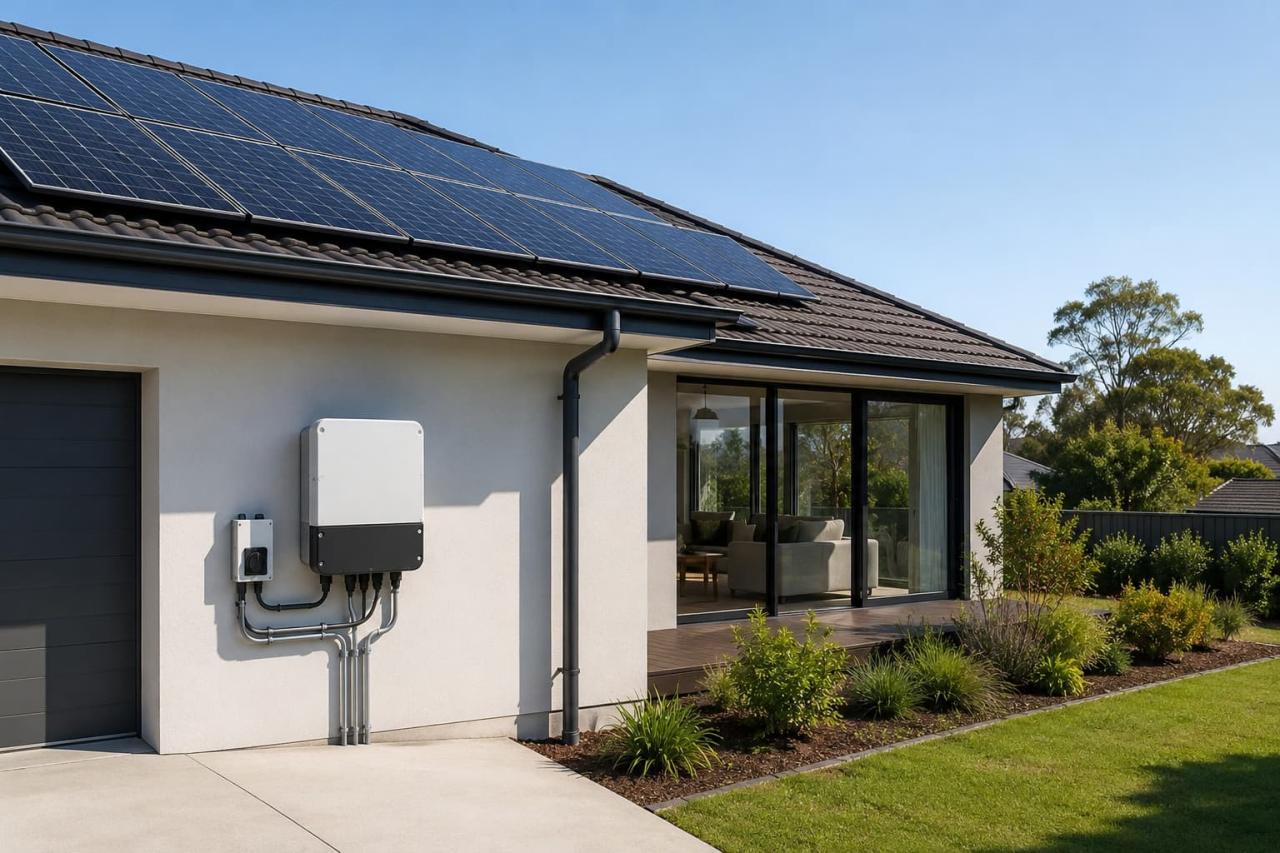
Most domestic solar inverters last between 10 and 15 years — but that number means very little without context. The actual lifespan depends on inverter type, installation conditions, and how well the system is maintained. Get those factors right, and some units push well past 20 years. Get them wrong, and you’re looking at a replacement inside a decade.
What Affects Your Domestic Solar Inverter’s Lifespan
No two installations age at the same rate. The gap between a 10-year inverter and a 20-year one rarely comes down to luck — it comes down to decisions made at the point of installation and in the years that follow.
Heat is the biggest enemy. Inverters generate heat during operation, and when that heat has nowhere to go, internal components degrade faster. A domestic solar inverter mounted in a poorly ventilated garage or directly exposed to afternoon sun will consistently underperform its rated lifespan. Industry data suggests that for every 10°C rise above the optimal operating temperature, electronic component failure rates roughly double. That’s not a small margin.
Component quality matters at every price point. Budget inverters often cut corners on capacitors — the components most likely to fail first. Premium models use industrial-grade capacitors rated for 100,000+ hours of operation. The difference isn’t always visible on a spec sheet, which is why brand reputation and warranty terms serve as useful proxies for internal build quality.
Grid conditions in your area play a role, too. Frequent voltage spikes, brownouts, or unstable grid connections put additional stress on an inverter’s protection circuits. Homes in areas with inconsistent grid supply tend to see accelerated wear compared to those with stable utility connections.
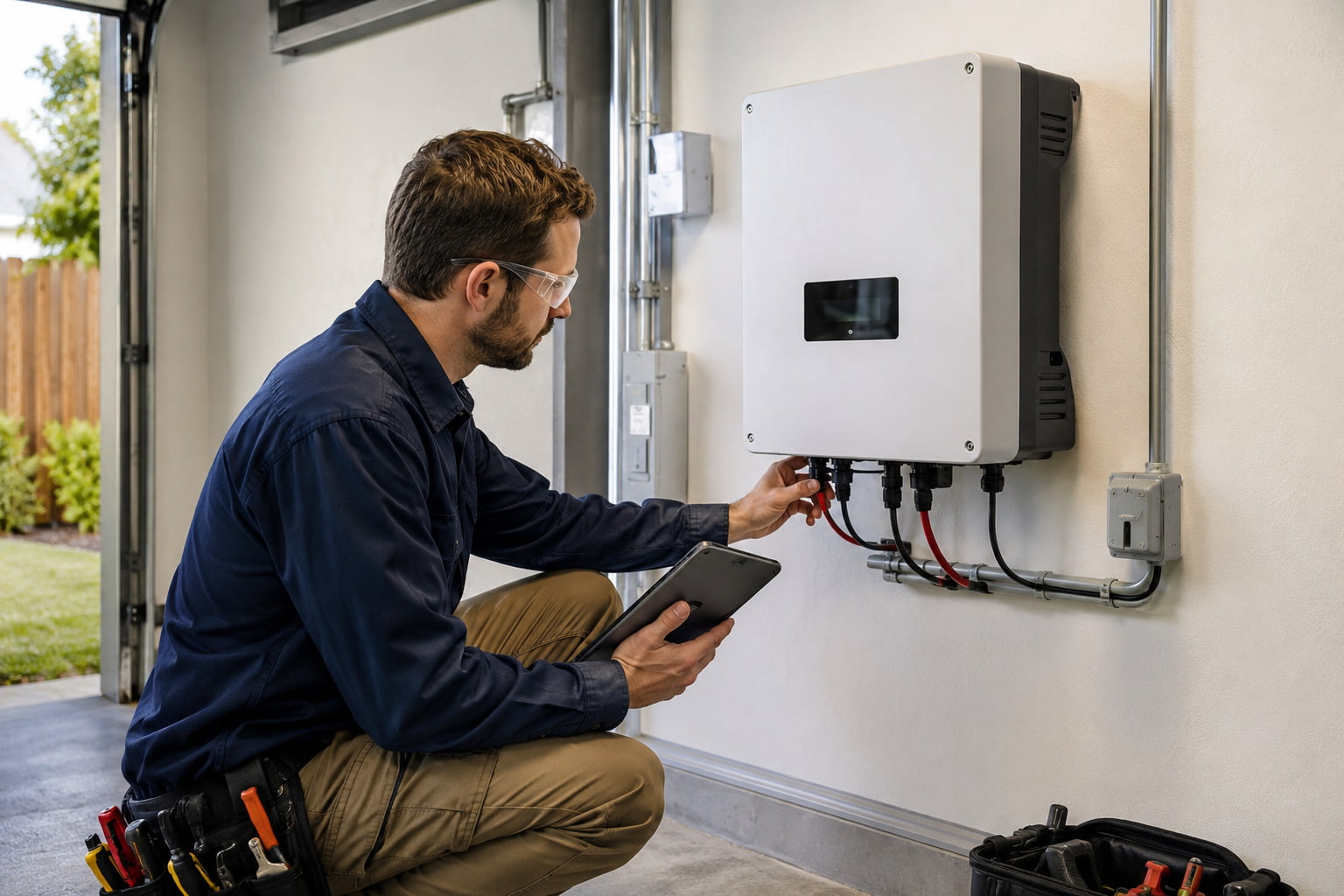
How Long Each Type of Domestic Solar Inverter Typically Lasts
Inverter type is the single biggest predictor of longevity — more so than brand or price tier.
String inverters are the most common type found in residential installations. They centralize DC-to-AC conversion for an entire panel array. A well-maintained string inverter in a domestic solar system typically lasts 10 to 12 years. Because the entire system runs through a single unit, any degradation in that unit immediately affects the total output.
Hybrid inverters manage both solar input and battery storage, which makes them more complex but also more versatile. That added complexity comes with a slightly longer design life — most reputable hybrid models are engineered for 12 to 15 years of operation, with some commercial-grade units carrying 15-year warranties as standard.
Micro inverters are a different category entirely. Mounted directly on each individual panel, they convert DC to AC at the source rather than centrally. Because each unit handles a fraction of the total load, thermal stress is distributed rather than concentrated. That design advantage translates directly into lifespan — micro inverters routinely last 20 to 25 years, and several manufacturers back this with 25-year product warranties. For a domestic solar inverter setup where longevity is the priority, micro inverters are the strongest long-term option despite their higher upfront cost.
Signs Your Domestic Solar Inverter May Need Replacing
An inverter rarely fails without warning. The signals are usually there — most homeowners just don’t know what to look for. The clearest sign is a measurable drop in energy output that can’t be explained by weather or seasonal change. If your monitoring app shows consistently lower generation than the same period last year, the inverter is worth inspecting. A 15–20% unexplained drop in output is a threshold worth taking seriously.
Frequent fault codes or automatic shutdowns are another red flag. Modern inverters have self-diagnostic systems, and repeated error messages — especially thermal protection trips — indicate the unit is struggling under normal operating conditions. Unusual noise or heat coming from the unit itself suggests internal component failure is already underway. And if your domestic solar inverter is past its warranty period with no extended coverage, factor that into any repair-versus-replace calculation carefully. At that age, parts availability becomes a real concern.
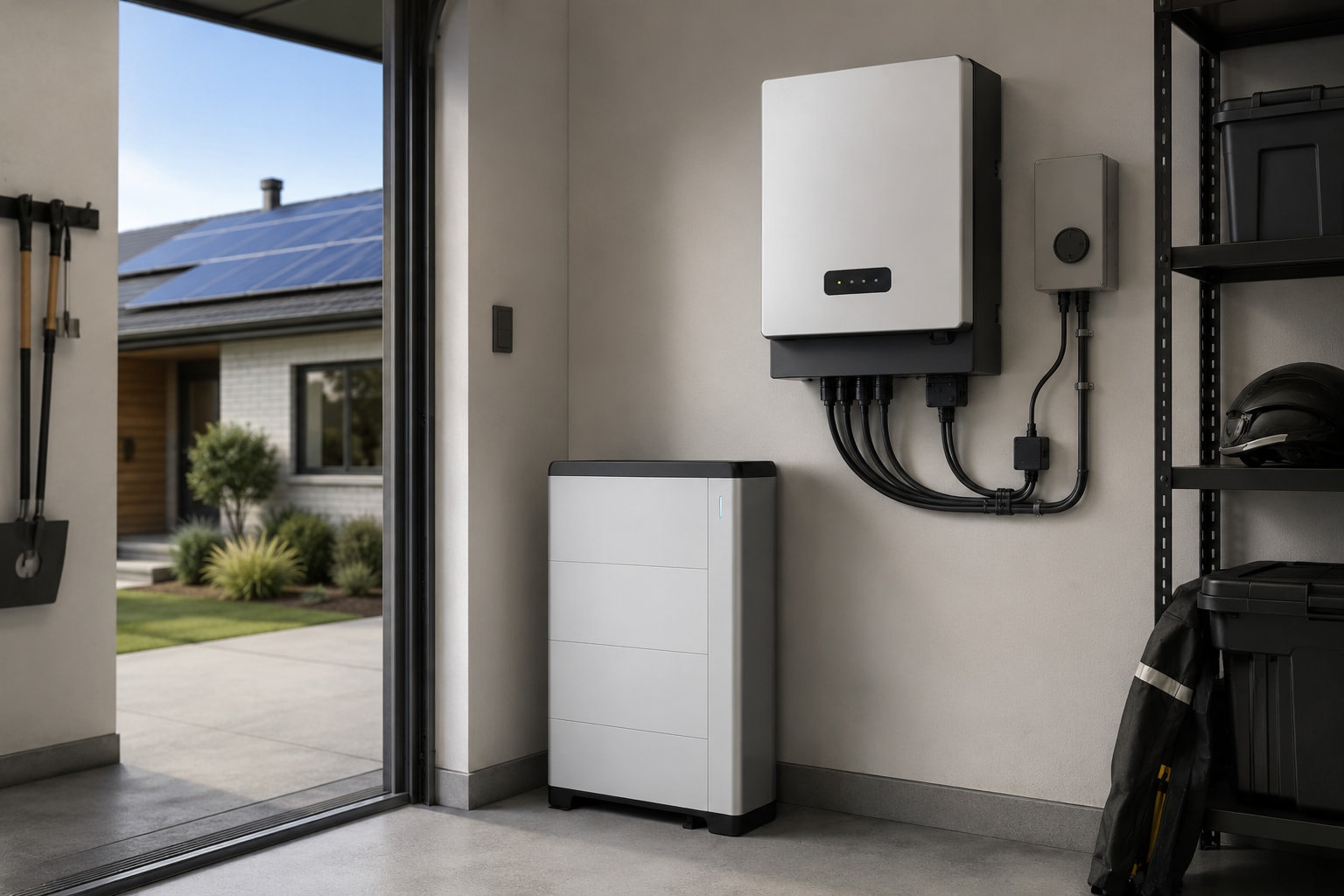
How to extend the service life?
The good news is that most premature inverter failures are preventable with straightforward maintenance habits.
Ventilation first. Ensure at least 30cm of clearance around the unit, and keep the installation area free of dust accumulation. Dirty heat sinks are a common cause of overheating that goes unnoticed until a fault develops.
Schedule annual professional checks. A qualified solar technician can identify early-stage component wear, clean internal filters, and confirm that all DC/AC connections remain tight. Loose connections increase resistance, which generates excess heat — exactly the condition inverters can’t tolerate over the long term.
Keep firmware updated. Smart and hybrid inverters receive manufacturer updates that improve efficiency algorithms and grid management performance. An outdated firmware version can leave your system running suboptimally without triggering any visible error.
Don’t ignore minor faults. A single fault code that resolves itself isn’t automatically harmless. Log it. If the same fault recurs within a few weeks, it’s signaling an underlying issue worth investigating before it becomes a full failure.
When Replacing Your Domestic Solar Inverter Makes Financial Sense
Repair costs for an aging inverter often run between $200 and $600 for parts alone — and that assumes parts are still available. A replacement domestic solar inverter, depending on type and capacity, typically ranges from $1,000 to $2,500 installed.
The calculation shifts when you factor in two things: efficiency gains and warranty resets. Inverter technology has improved significantly over the past decade. A new unit will almost certainly operate at a higher efficiency than a 12-year-old model, resulting in better energy yields from the same panel array. Beyond the numbers, a new unit comes with a fresh warranty — typically 5 to 10 years — which eliminates near-term replacement risk entirely.
If your current inverter is past the 10-year mark, shows recurring faults, and is out of warranty, replacement is usually the smarter financial call. Investing in a quality domestic solar inverter now extends your system’s productive life and protects the solar investment you’ve already made.