
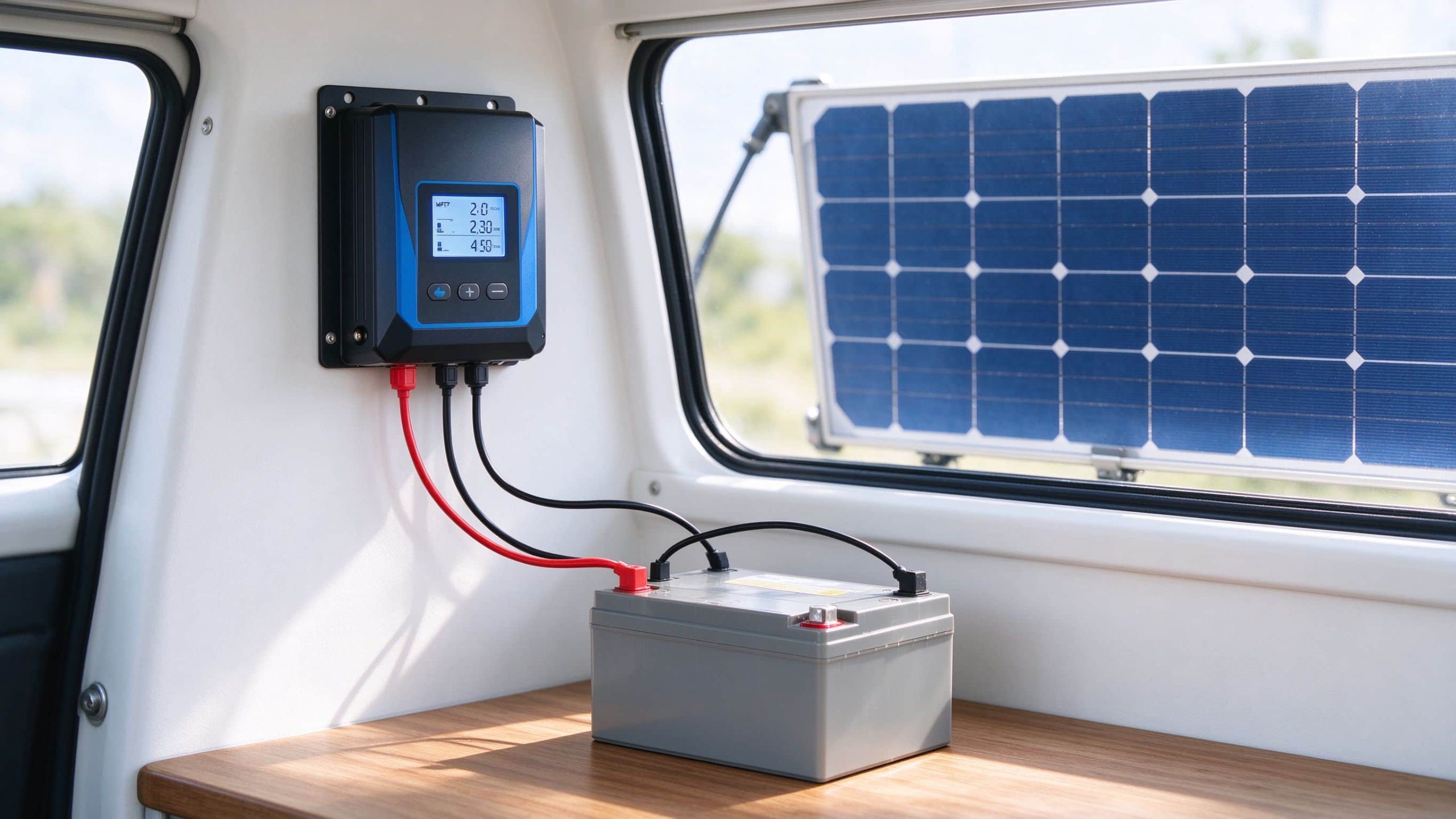
An MPPT solar charge controller is the smart link between your solar panels and battery bank. It converts excess panel voltage into extra charging current, so you store more of what your array actually produces. You notice the difference most when your panel voltage runs higher than your battery voltage. When your array grows past roughly 200 watts, or when you power an off-grid cabin, RV, or home backup setup. Under the hood, Maximum Power Point Tracking keeps the panel at its peak-power voltage and turns that surplus into amps, and the buying decision comes down to three numbers: A maximum PV input voltage above your array’s cold-day output, rated current at least 20 to 25 percent above your charging amps, and a charge profile that matches your battery chemistry.
What Is an MPPT Solar Charge Controller?
An MPPT solar charge controller regulates the power flowing from your solar array into your batteries and protects them from overcharging. What sets it apart from a basic PWM unit is a built-in DC-to-DC converter and a microprocessor that constantly tracks the panel’s maximum power point. Sunlight, temperature, and shade shift throughout the day, so the voltage where your panels make the most power keeps moving. The controller follows that point in real time and adjusts the current to match your battery’s needs. This is why an MPPT system can pull up to 30 percent more energy from the same panels than a PWM regulator. That constant adjustment matters because a panel’s best operating point can move by several volts between morning shade and midday sun.
For most off-grid builds, that extra harvest is the difference between a battery that tops up before dark and one that starts the evening half empty. It also opens the door to thinner, cheaper wiring. Because panels can be strung in series at higher voltage without wasting the difference. Beyond the energy gain, the controller completes the absorption and float stages correctly, keeping the battery healthier and extending its service life.
How Maximum Power Point Tracking Works
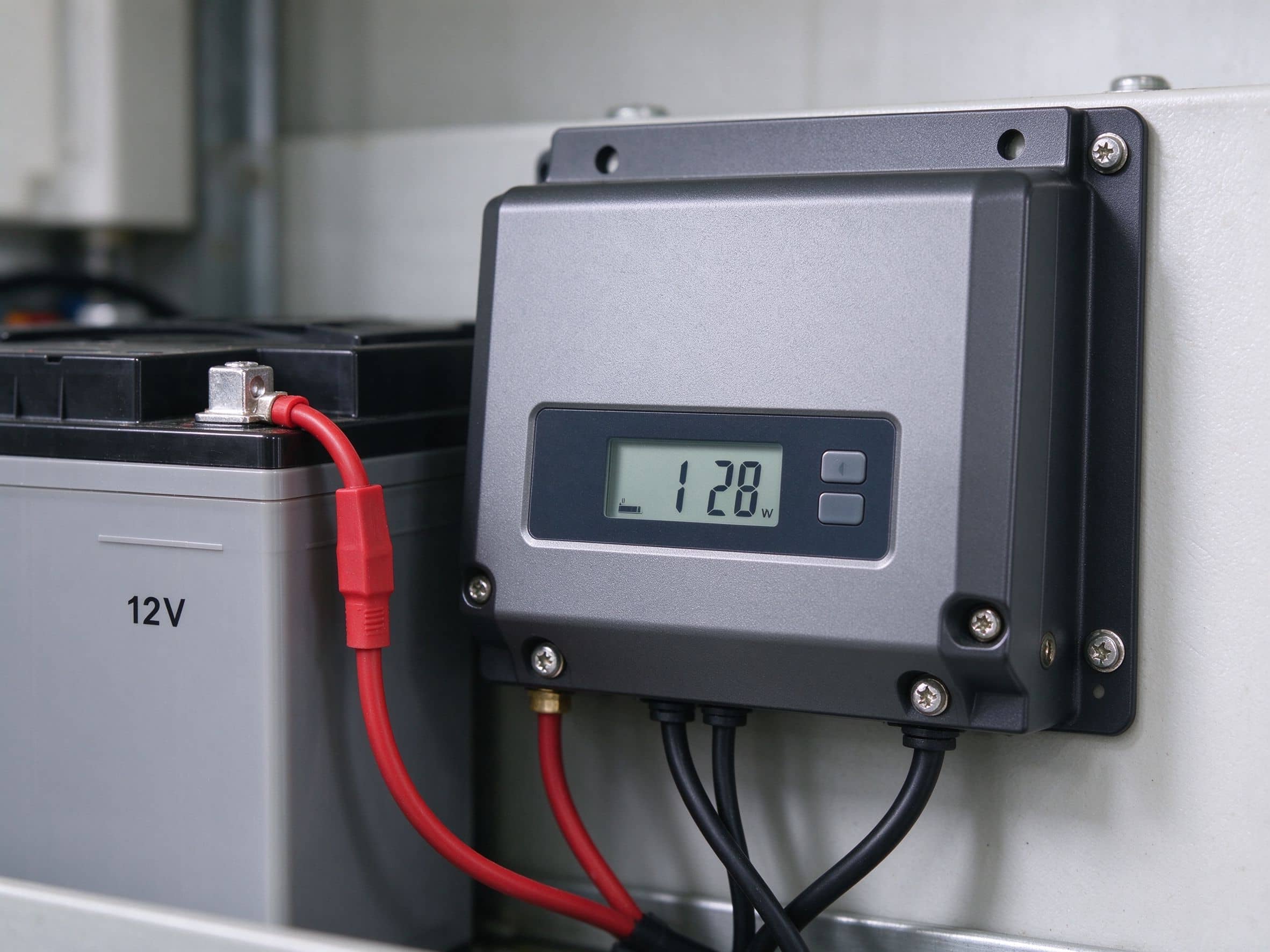
Maximum Power Point Tracking sounds technical, but the job is straightforward. A typical 12V solar panel produces 18 to 22 volts under load, while a 12V battery charges at about 13 to 14 volts. A PWM controller pulls the panel down to battery voltage and discards the extra volts as heat. An MPPT solar charge controller instead steps the voltage down and raises the current in return. So the same panel feeds more amps into the battery. On cold mornings, panel voltage climbs even higher, and the controller turns that bonus into a stronger charging boost. The same logic helps on cloudy days, when light drops and the panel’s best voltage falls closer to the battery’s level. A good MPPT unit keeps harvesting instead of switching off.
Where an MPPT Solar Charge Controller Pays Off
Three setups get the most from an MPPT solar charge controller. Off-grid cabins and remote homes usually run 24V or 48V battery banks charged by higher-voltage panels, and the controller handles that voltage gap efficiently instead of wasting it. RVs and vans with limited roof space benefit from series-wired panels, which lift voltage and cut cable losses along the run. Campers and portable power station owners above 200 watts also see noticeably faster charging. In each case, the recovered energy typically pays back the controller’s higher price within two to three years. If you are still weighing controller types, our comparison of solar charge controllers walks through the differences in detail.

How to Choose the Right MPPT Solar Charge Controller
Choosing the right MPPT solar charge controller comes down to four numbers: maximum PV input voltage, rated output current, battery voltage, and battery chemistry. The controller’s input limit must stay above the highest voltage your array can produce on a cold day. Its output rating should cover your charging current with at least 20 percent headroom. Pay attention to the rated charging current at your battery voltage, because a label rating often assumes ideal conditions. Size it correctly so the controller runs cool, charges fast, and protects the battery bank you depend on.
Match Voltage, Battery, and Load First
Start with the battery. Lithium, AGM, and flooded lead-acid batteries each need a different charge profile. So confirm your MPPT solar charge controller supports your type before anything else. Next, check the input voltage range against your panel wiring. And match the output current to your daily load and array size. Modern units add useful safeguards such as reverse-polarity protection, overcurrent cutoff, temperature compensation, and an LCD or app that shows live charging data. These features make a real difference when you troubleshoot a system in the field. Once you know your numbers, you can match the controller with compatible panels and portable power stations.
PWM Solar Charge Controllers Compared to MPPT
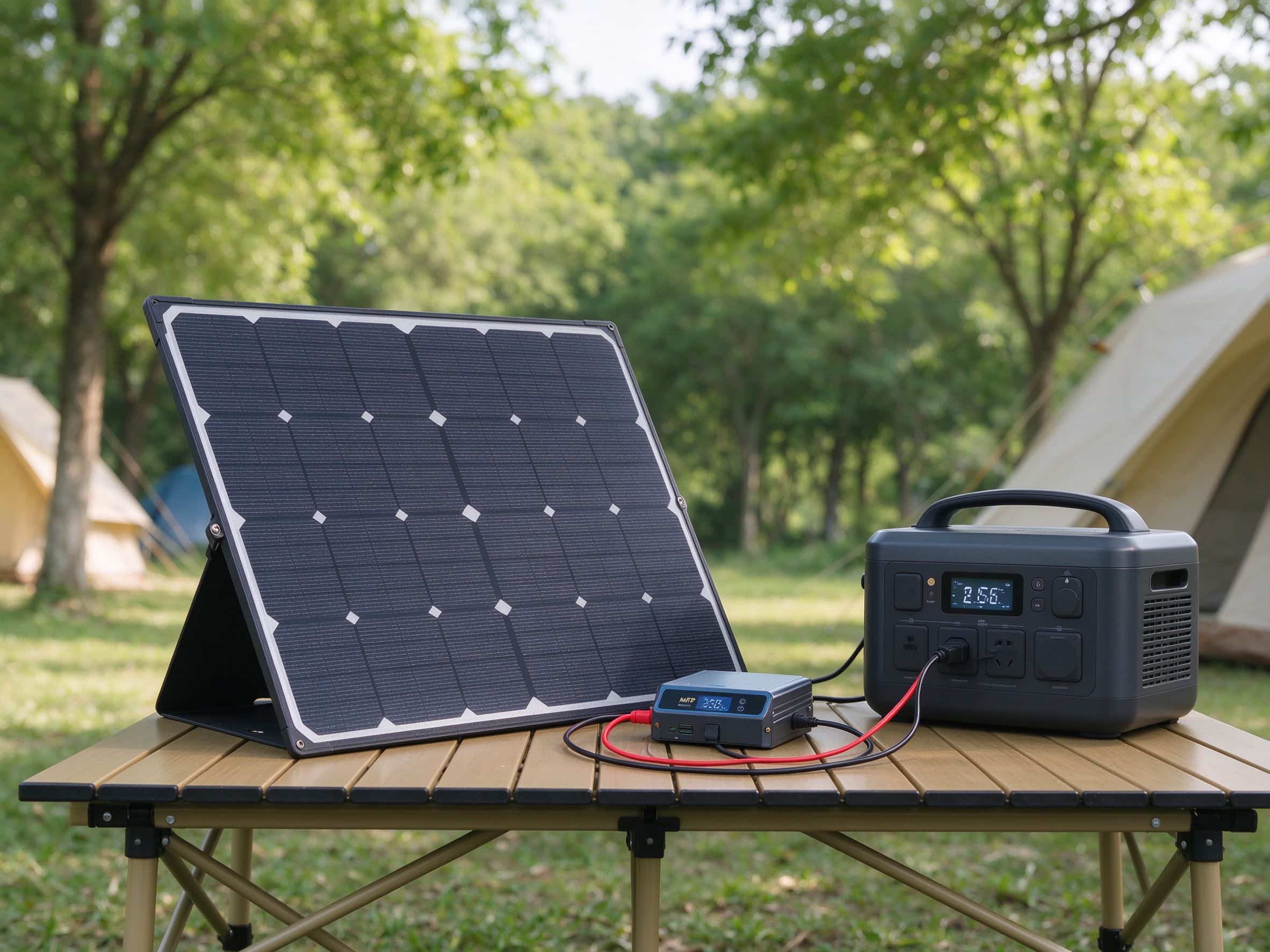
MPPT is not the only type of solar charge controller you will find. The most common alternative is a PWM (Pulse Width Modulation) charge controller. It simply switches the panel straight to the battery instead of converting the voltage gap. A PWM unit costs $20 to $60. But it needs the panel voltage to match the battery — run a 12V battery. And you must use 12V panels — and on bright, cold days it leaves roughly 10 to 20 percent of available energy on the table. An MPPT charge controller costs more upfront, but it pairs almost any panel voltage with your battery. And recovers that lost energy, which is why it becomes the better choice once your array grows past a few hundred watts.
A Smart Link That Pays for Itself
That smart link between your solar panels and battery bank ties it all together. Maximum Power Point Tracking keeps the array at its peak-power voltage and converts the surplus into charging amps, so you get more than your panels’ nameplate suggests. Choose your MPPT solar charge controller by the three numbers that matter — a maximum PV input voltage above your array’s cold-day output. Rated current with 20 to 25 percent of headroom. And a charge profile matched to your battery chemistry. A PWM unit may be enough for a small setup under a few hundred watts. But once the array grows, MPPT recovers the lost energy and pays for itself trip after trip.