
Most people buy a solar panel charger, use it a dozen times, and never think about upkeep. Then they wonder why output drops by 20–30% after a season outdoors. Dirt, moisture, and storage habits quietly kill performance long before the hardware fails. A little attention to cleaning and maintenance keeps your portable solar charger running at rated efficiency for years.
How to Clean Your Solar Panel Charger
Surface contamination is one of the most underestimated killers of efficiency. Dust, fingerprints, and sunscreen residue can cut light absorption by 15–25%, and most users never notice because the drop happens gradually. What makes this frustrating is that the charger still works — just noticeably slower than it should. Many users blame the weather or the panel quality when the real issue is a film of grime that takes two minutes to remove.
Cleaning a solar panel charger is not complicated, but the method matters. Using the wrong cloth or cleaning solution causes micro-scratches on the anti-reflective coating — damage that compounds over time and permanently reduces the amount of light the panel can absorb. The steps below protect the surface while restoring full performance.
Remove Loose Debris First
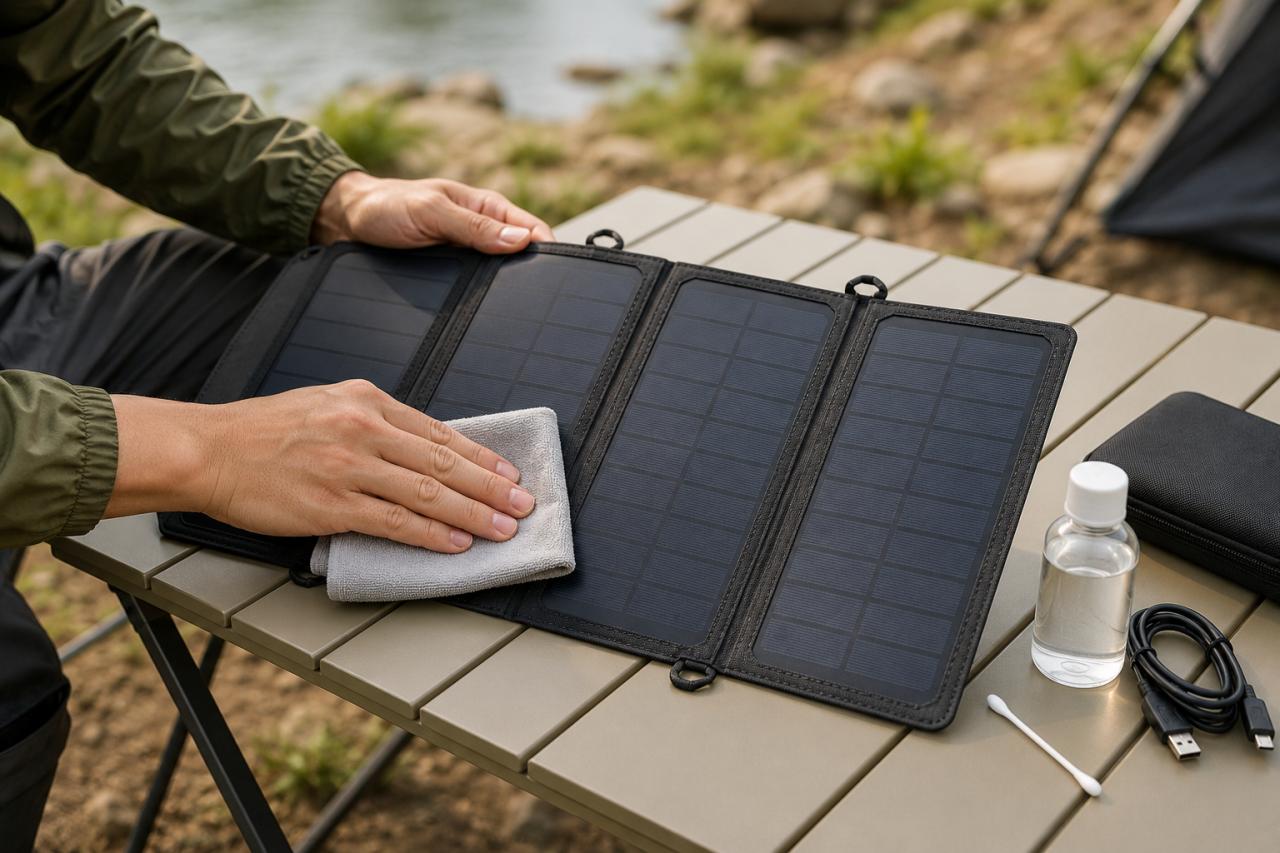
Before applying any liquid, wipe down the panel surface with a dry microfiber cloth. This removes loose dust and grit that would otherwise scratch the surface if rubbed in with a wet cloth. Pay attention to the panel edges and folding hinges on foldable models — debris collects there and can work into the seams over time.
Clean the Panel Surface
Dampen a clean microfiber cloth with plain water or a small amount of 70% isopropyl alcohol (works well). Wipe the panel in straight lines, not circular motions, to avoid micro-scratching the anti-reflective coating. For stubborn residue like sunscreen or tree sap, let the damp cloth sit on the spot for 30 seconds before wiping — this lifts the residue without scrubbing.
Avoid glass cleaners with ammonia, paper towels, and abrasive sponges. These are the three most common cleaning mistakes that permanently degrade panel coatings. After cleaning, let the surface air dry completely before folding or storing the charger.
Clean the Ports and Connectors
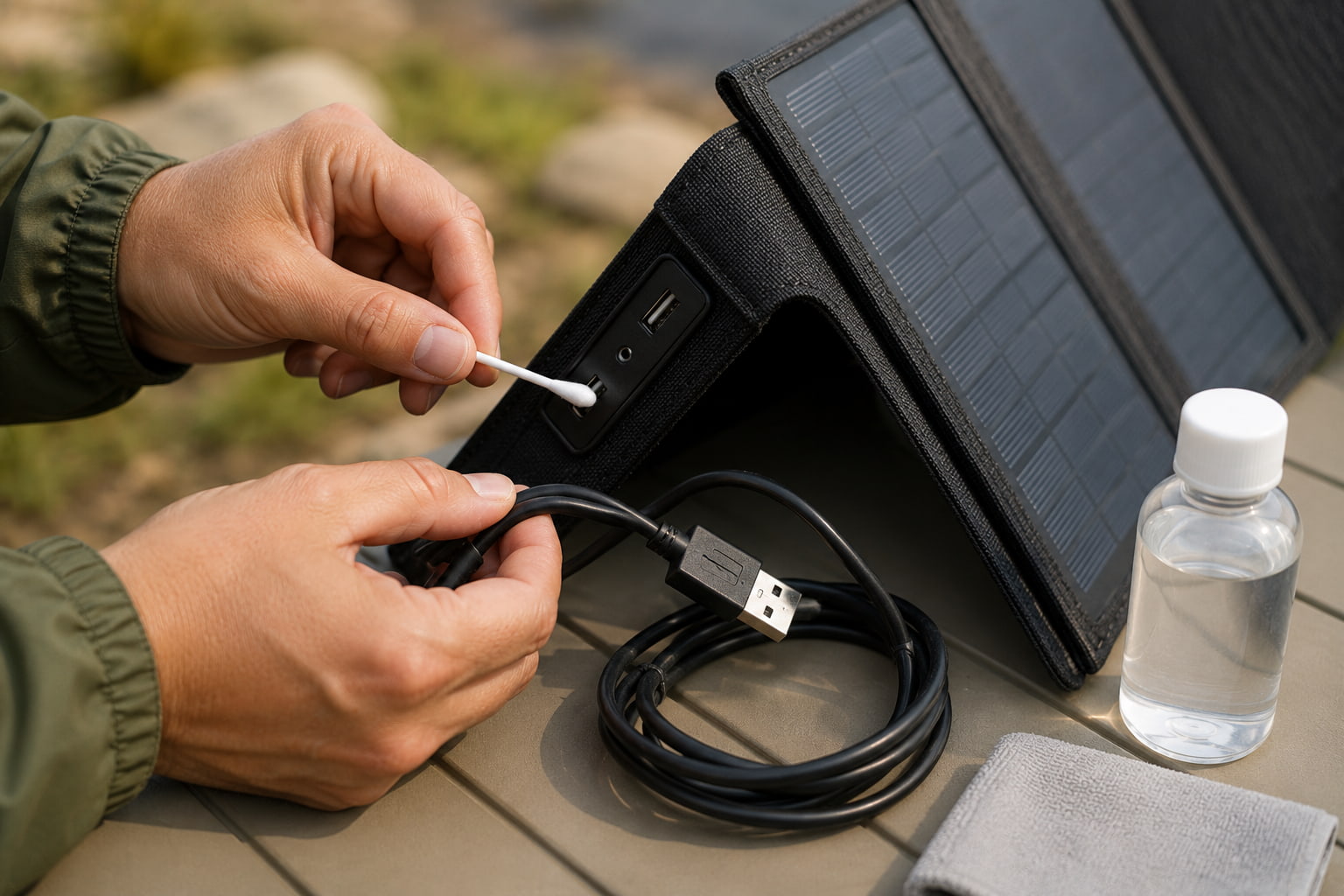
USB ports and charging connectors accumulate dust and moisture faster than the panel surface. Use a dry cotton swab to clear visible debris from each port. For oxidized or tarnished connectors, a brief wipe with a 70% isopropyl alcohol swab restores conductivity. Do not use compressed air directly into the ports at high pressure — it can push debris deeper into the connector housing.
How to Maintain a Solar Panel Charger Long-Term
Cleaning handles what you can see. Maintenance covers everything underneath — the structural integrity of the panel, the health of the cables, the condition of the connectors, and the storage habits that determine whether the charger lasts two years or six. Most solar panel charger failures that get blamed on build quality are actually maintenance failures. The panel degraded because heat, moisture, or mechanical stress accumulated unchecked over time.
Long-term maintenance does not require technical knowledge or special equipment. It requires consistency. A five-minute inspection after every few uses catches problems early — before a frayed cable becomes a dead unit or a corroded port becomes an unreliable connection in the field. The four habits below cover the areas that matter most.
Inspect Cables and Connections Regularly
Cable damage is the leading cause of solar panel charger failure in the field. Check the cable at both connection points — where it meets the panel and where it meets the device end — because these stress points develop micro-fractures from repeated bending. A cable that looks intact externally may already have internal wire breakage. If output becomes inconsistent or the connection feels loose, replace the cable before assuming the panel is faulty.
Store It Correctly Between Uses
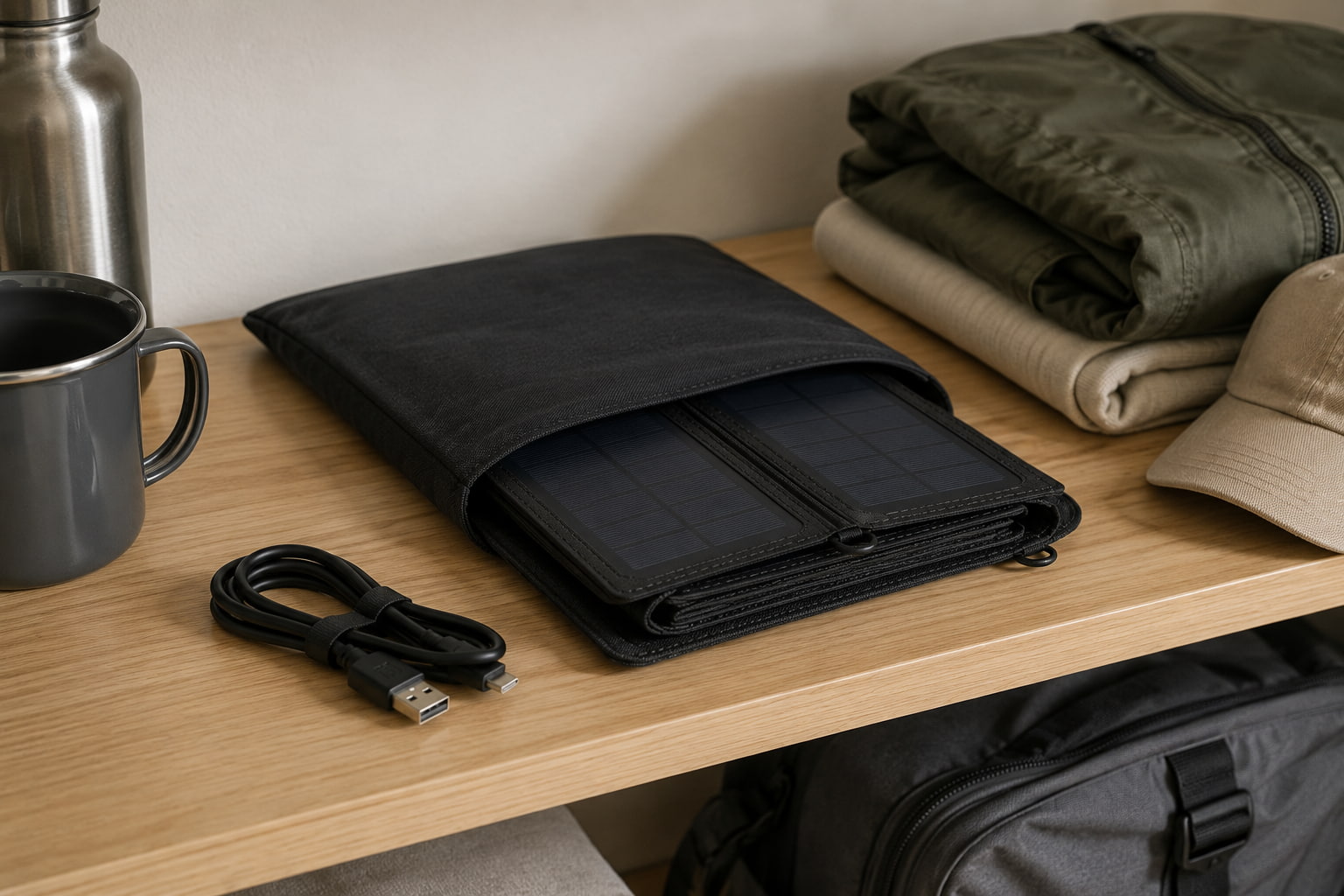
Improper storage causes more long-term damage than outdoor use. Heat is the primary enemy — storing a solar panel charger in a closed car on a hot day exposes it to temperatures above 70°C, which degrades both the panel laminate and the internal battery cells in models with built-in storage. Store the charger in a cool, dry location, ideally in its original pouch or a fabric sleeve that prevents surface contact with hard objects.
For foldable models, avoid compressing the panels tightly during storage. The fold lines take stress with each compression cycle. A relaxed fold, with the panels loosely aligned, significantly extends the life of the hinge and laminate.
Check Output Performance Periodically
Every two to three months, run a simple output test: connect the charger to a USB power meter under direct midday sun and compare the reading against the rated output. Industry-standard efficiency loss on quality panels runs around 0.5% per year. A sudden drop of 10% or more points to physical damage, connector corrosion, or delamination — all of which are addressable before they become permanent.
Protect It from Prolonged Water Exposure
Most solar panel chargers carry an IPX4 or IPX5 splash-resistance rating, which handles rain and brief submersion but not sustained water exposure. After use in wet conditions, open any flaps covering the ports and let the charger air out for at least 2 hours before closing them. Moisture trapped inside port covers corrodes the metal contacts within weeks in humid climates.
Keep Your Solar Panel Charger Ready When It Matters
A solar panel charger that’s been ignored for six months rarely performs when you actually need it. The units that hold up through years of hiking, travel, and emergency use are the ones that get a quick wipe-down after each trip and a proper storage routine between seasons. None of this requires special tools or significant time. What it requires is making it a habit before you pack up, not after something stops working.