
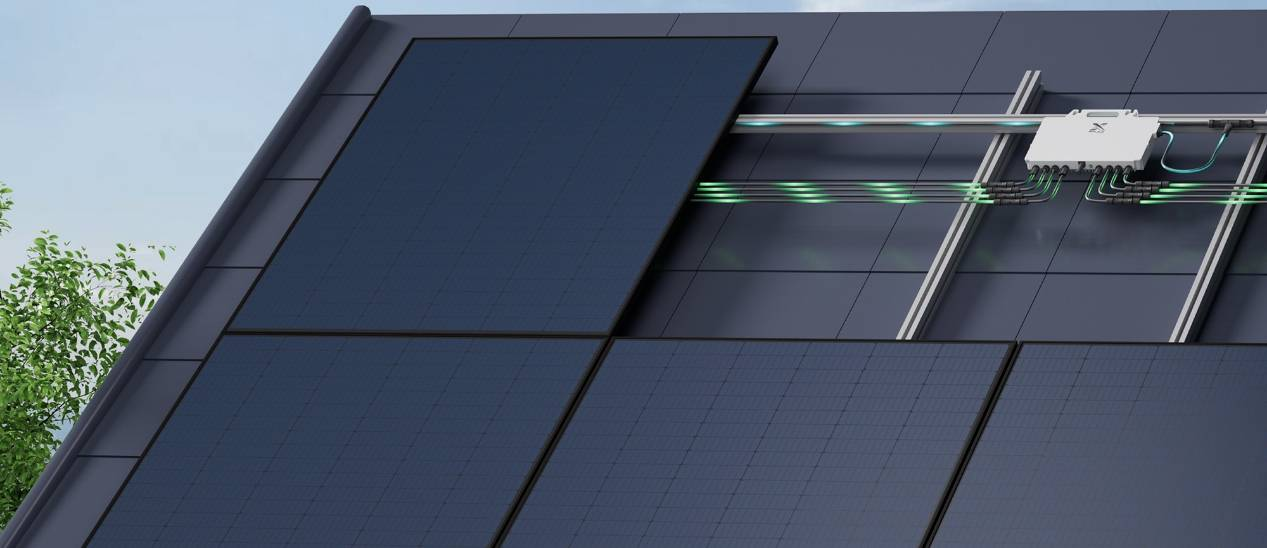
The inverter decision is where many solar buyers stall. Panels are easy to compare — wattage, efficiency, price per watt. Inverters are murkier. The installer recommends microinverters; the quote is noticeably higher, and it’s not immediately obvious whether the premium is justified or just a margin. The solar micro inverter vs string inverter debate has a real answer — but it depends heavily on your specific roof, your shading situation, and how long you plan to own the system. Here is how the two technologies actually compare.
How Do the Two Systems Convert Solar Power?
Both inverter types do the same fundamental job: convert DC electricity from solar panels into AC electricity your home can use. The difference is in the architecture — where that conversion happens, and what that means for the rest of the system.
The String Inverter Architecture
In a string inverter setup, panels are wired together in series, and all DC power flows to a single central inverter, typically mounted on an exterior wall or in a garage. That one unit handles conversion for the entire array. The efficiency of a string inverter in ideal conditions is genuinely excellent. Central units from quality manufacturers such as SMA, Fronius, and SolarEdge achieve CEC efficiencies of 97–98%. The hardware is proven, widely serviced, and straightforward to troubleshoot. The structural weakness is the series wiring — panels connected in series share a single operating current. When one panel underperforms due to shade, soiling, or degradation, every panel in that string adjusts downward to match. The weakest panel sets the ceiling for the whole string.
The Solar Micro Inverter Architecture
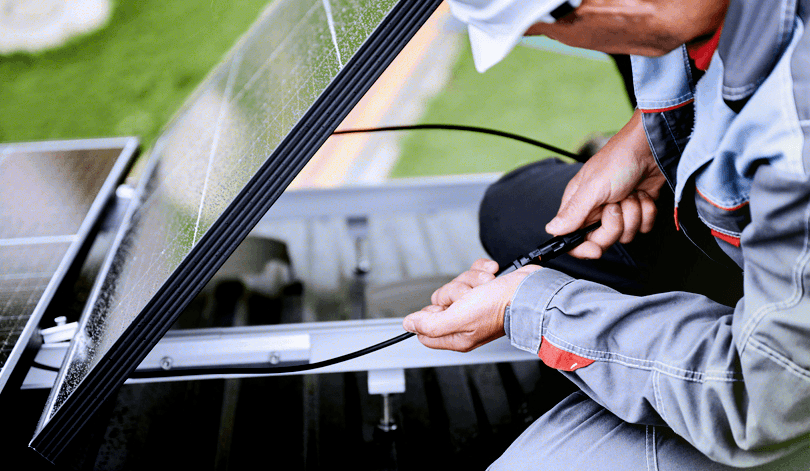
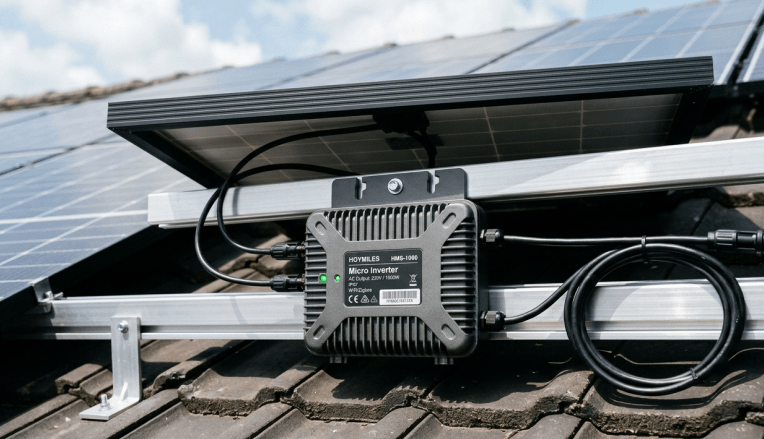
A solar micro inverter mounts directly beneath each panel on the racking. DC-to-AC conversion occurs within the module itself, independently, before power ever leaves the roof. Each panel has its own dedicated inverter, its own maximum power point tracking (MPPT), and its own production curve. Because panels operate independently, a single underperforming module does not affect its neighbors. In a microinverter system, a shaded panel loses only its own output, while the rest of the array continues at full capacity. This independence also allows panel-level monitoring, with a cloud dashboard displaying real-time production for each panel—no extra hardware needed.
Performance & Shading: Solar Micro Inverter vs. String
Under ideal conditions—abundant sunlight, uniform temperatures, and no shading—string and microinverter systems produce nearly identical output, with less than a 2% difference in annual energy generation. However, in real rooftop environments, studies show that microinverters outperform string inverters by 5% to 25% due to shading—the more shading, the greater the impact on energy yield.
Shading affects string inverters in ways most buyers don’t anticipate. A shadow covering just 10% of a module can reduce output by 30–50%, depending on the module’s location and the bypass diode configuration. Microinverters isolate this impact. At current U.S. electricity rates, a 10% generation advantage adds $150–$200 annually for a 7kW system. Over 25 years, this results in $3,750–$5,000 in recovered energy value.
Cost, Reliability, & Warranty: Micro vs. String Inverters
A solar microinverter system adds $0.20 to $0.40 per watt to the installed cost, or $1,400 to $2,800 for a 7kW array. While this may seem high, it’s worth considering. String inverters have 10–12 year warranties, but most residential systems last 25–30 years, requiring at least one inverter replacement costing $1,000–$2,500. Leading microinverter brands like Enphase and APsystems offer 25-year warranties, matching panel life and eliminating the need for replacement. Additionally, a string inverter failure can take the entire array of panels offline for days, while a microinverter failure affects only one panel and has minimal impact. The cost of avoided replacements and improved shading tolerance brings the total cost closer to string inverters over 25 years.
Which System Actually Fits Your Roof and Budget
Neither technology is universally superior; the right choice depends on your installation conditions. String inverters work well on south-facing roofs with no shading, simple panel layouts, and where cost is a primary concern. In these cases, a quality string inverter offers excellent performance at a lower cost, with a negligible production gap versus microinverters. Microinverters are ideal if any part of the roof receives shade, panels span multiple orientations, panel-level monitoring is needed, future expansion is likely, or long-term reliability and warranties matter more than upfront cost. For borderline cases, DC optimizers with a string inverter offer shade mitigation without the full microinverter cost. The inverter choice is as important as the panel choice. Over 25 years, it affects performance just as much, so it’s worth deciding before signing the contract.