
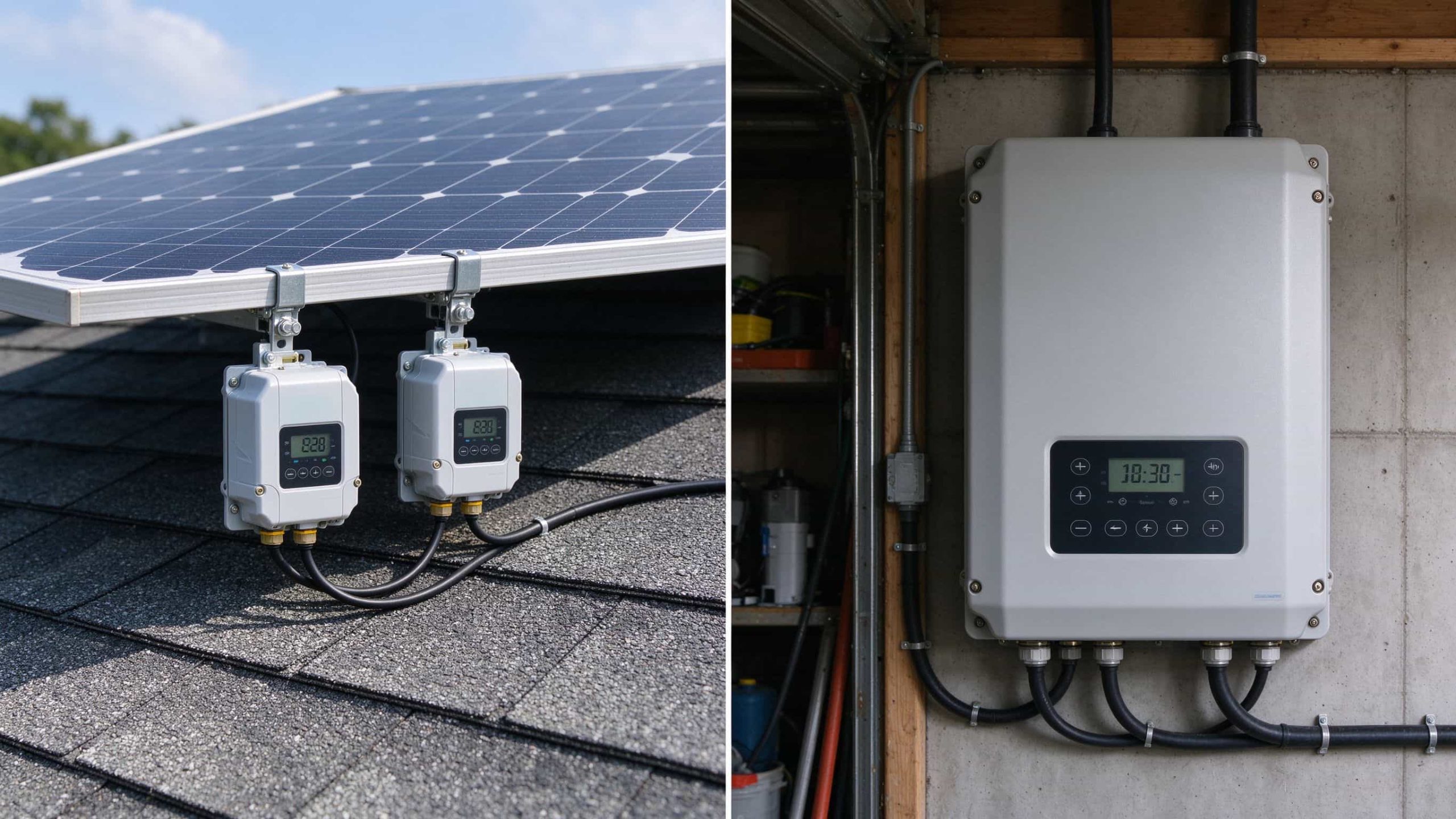
Choosing between a micro inverter vs home inverter comes down to one question: does your roof have shade, or does it face the sun all day? A micro inverter converts power at each panel, so one shaded panel does not drag down the whole string. A home inverter — also called a string or central inverter — converts all the panels at once into one box on your wall, and it costs less per watt. The right pick depends on your roof orientation, your budget, and whether you want panel-level monitoring.
Micro Inverter vs Home Inverter Side by Side
Once you know how each device works, the comparison comes down to three factors: what you pay up front, how your roof handles shade, and how easy the system is to monitor and repair. Price is the number most buyers start with, but it is rarely the one that decides the system’s real-world value over twenty years. A slightly cheaper inverter that forces you to climb the roof twice a year costs more than a few extra hundred dollars spent on the right hardware the first time. Shade tolerance matters more on older homes surrounded by mature trees than on new construction with a cleared lot. Monitoring and serviceability decide how much time you spend on the phone with a technician after year five. The three sections below break each factor down so you can weight them the way your own roof and budget actually demand.
Micro Inverter vs Home Inverter Upfront Cost Per Watt
A 5 kW home string inverter costs roughly $600 to $1,000. The same 5 kW in micro inverters runs $1,200 to $1,800. Over a 20-year system life, the per-watt gap narrows because micro inverters often last longer and need less roof service. But if you are paying cash, the sticker price difference is real. Browse both string inverters and the components that pair with them, so you can compare quotes on the same roof layout before you commit.
Shade and Panel-Level Performance
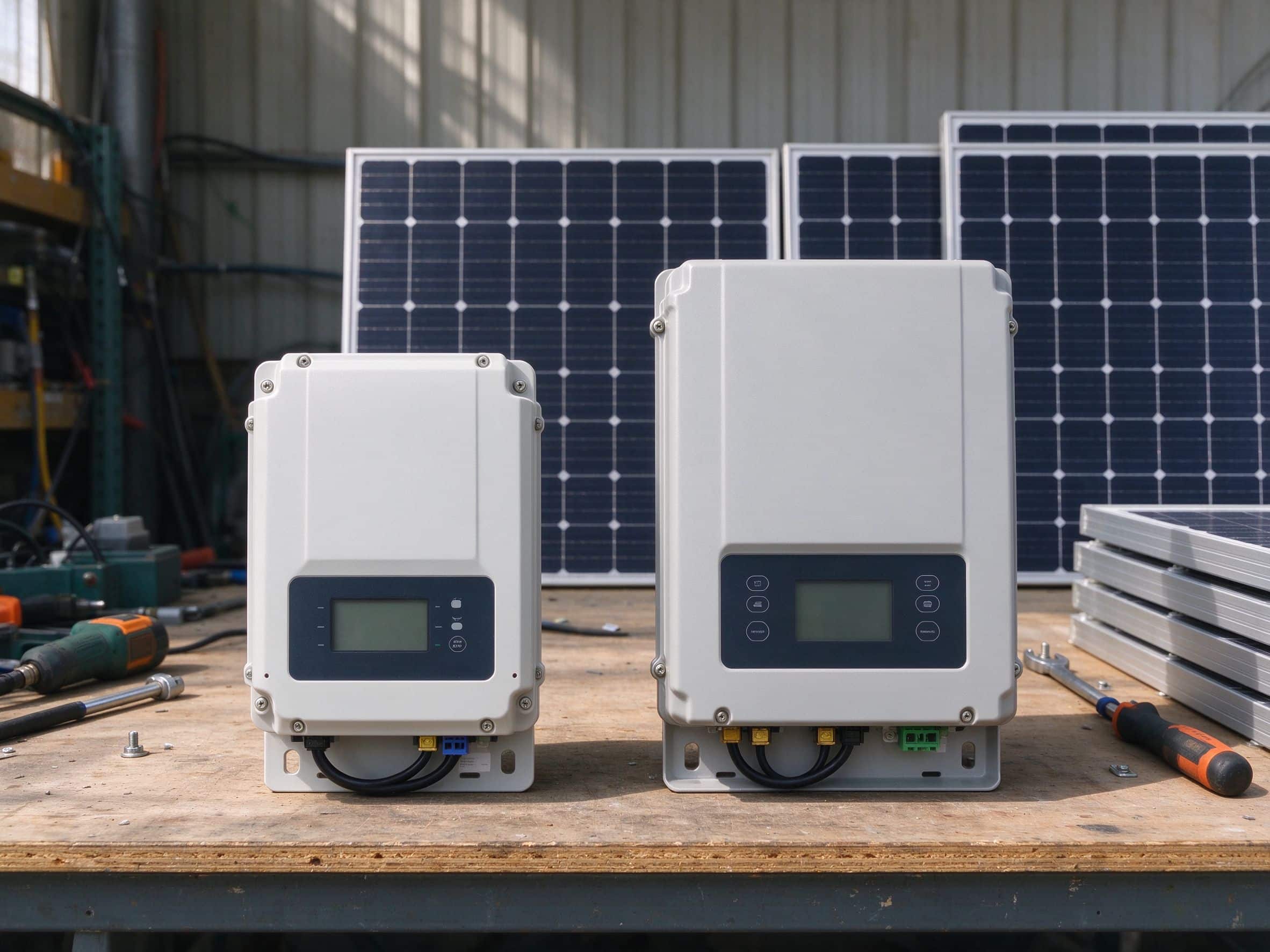
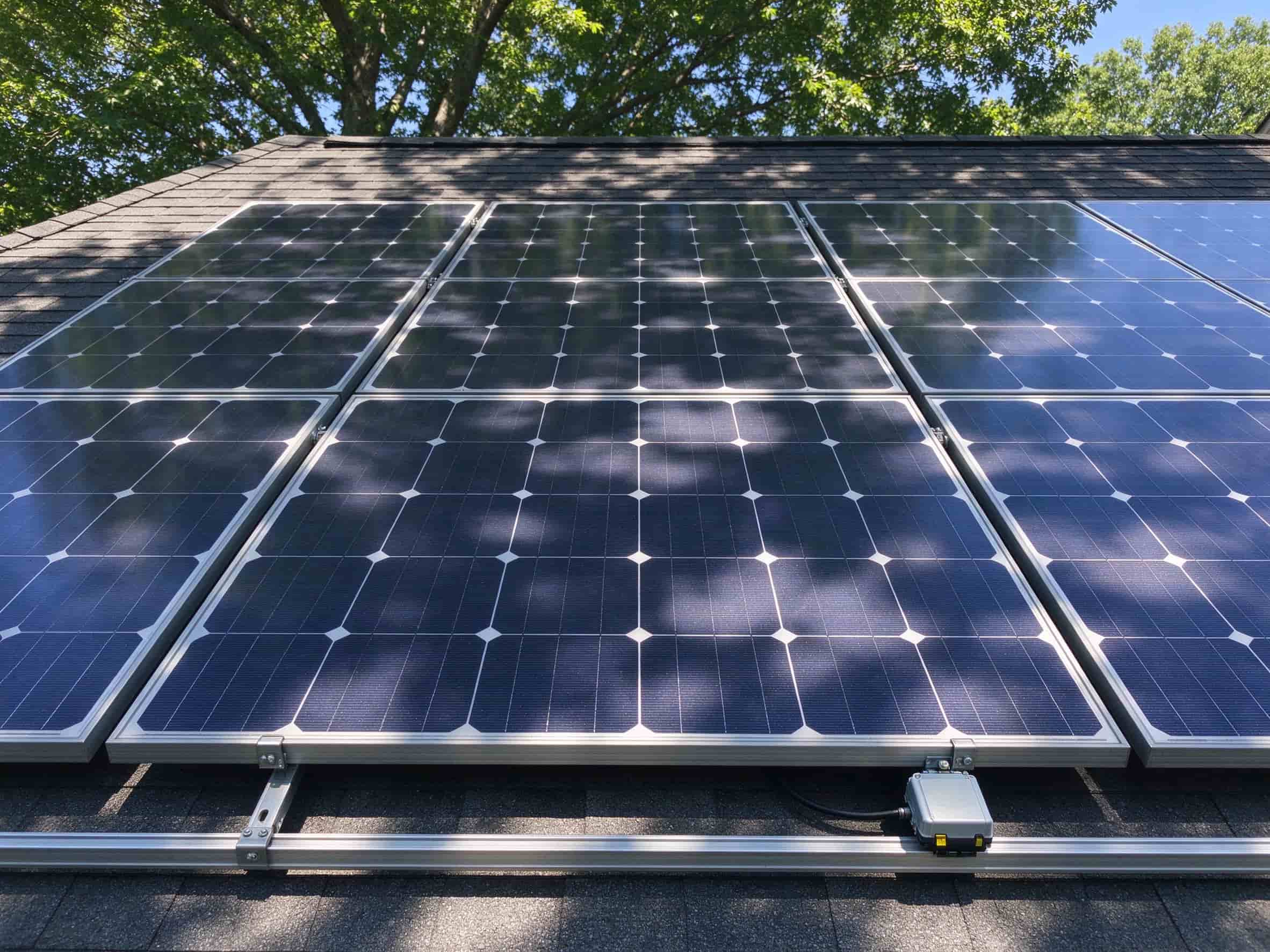
This is where the choice usually gets made. If your roof is fully south-facing and nothing casts a shadow on it, a home inverter is the rational buy. If a chimney, a vent pipe, a neighbor’s oak, or a dormer covers even one corner at any hour of the day, micro inverters earn the premium. The same logic shows up on the DC side: an MPPT charge controller optimizes each source independently, while a PWM controller treats the whole string as one — and under uneven conditions, per-source optimization wins.
Monitoring and Servicing
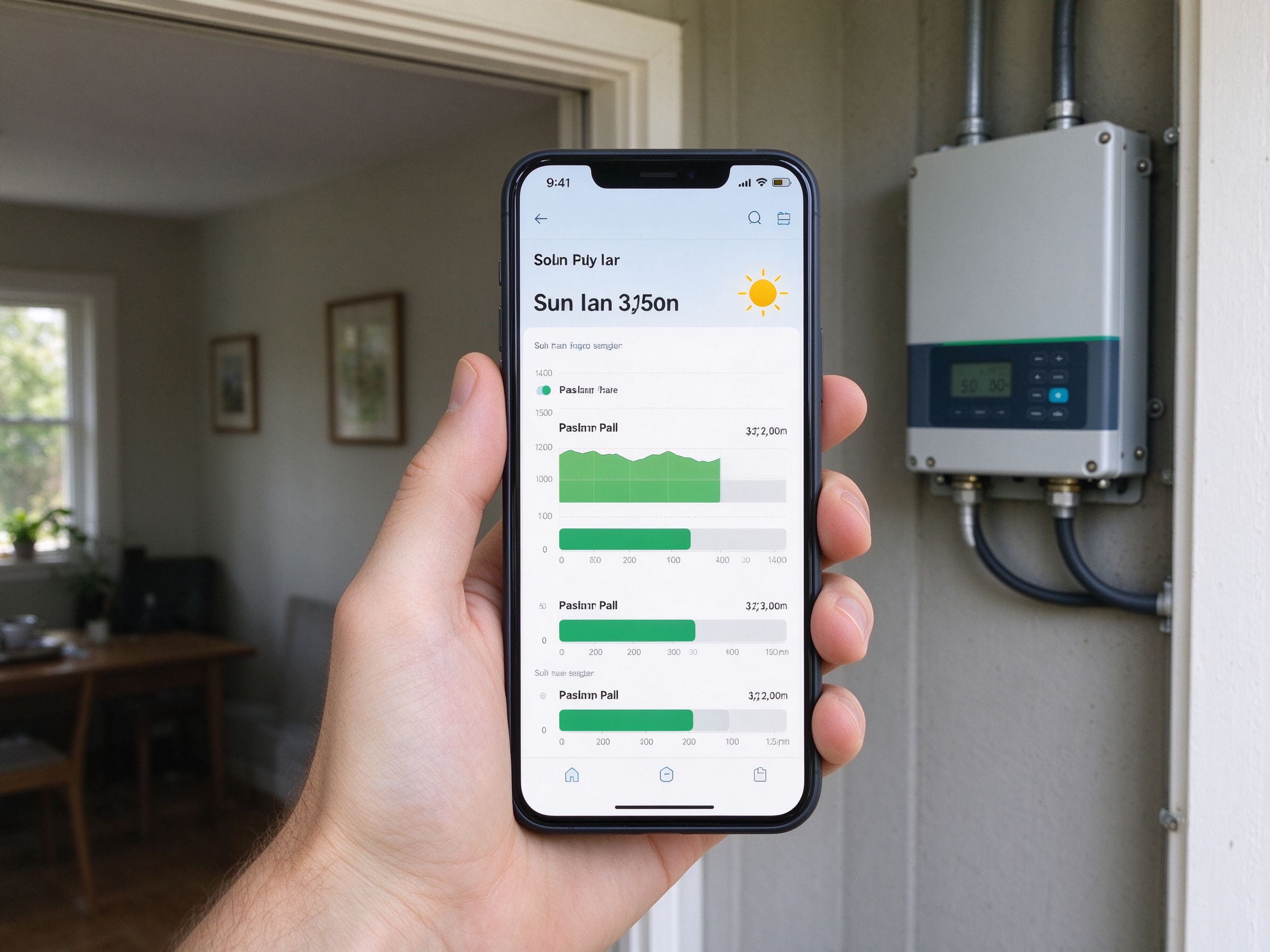
Micro inverters give you per-panel data. Open the app, and you see each panel’s wattage, so when production drops, you know exactly which panel to clean, which one to reseat, and which one to replace. A string inverter tells you the whole string’s total. If production drops, you are walking the roof with a clamp meter hunting for the weak link. On the service side, a string inverter comes down from the wall on one set of ladders. A failed micro inverter means a trip back onto the roof.
Where Each Inverter Type Actually Makes Sense
By now the trade-off is clear, but the practical question remains: which one goes on your roof? A home string inverter is the right call on a single-family home with a clear south-facing roof, a homeowner who wants the lowest upfront cost, and a local electrician comfortable working on a wall-mounted enclosure. It also fits small commercial arrays on flat commercial rooftops where shade is essentially zero. A micro inverter is the right call when the roof has chimneys, dormers, vent pipes, or mature trees nearby, when panels face more than one direction, or when you plan to add panels one at a time over several years. It is also the safer pick on a rental property where you will not be the one climbing the roof to service it.
Micro Inverter vs Home Inverter Selection Data
|
Spec
|
Micro Inverter
|
Home Inverter
|
|---|---|---|
|
Typical price per watt
|
$0.25–$0.35/W
|
$0.12–$0.20/W
|
|
Placement
|
Under each panel on the roof
|
One wall-mounted box indoors or in the garage
|
|
Shade tolerance
|
High — one shaded panel does not drag the string
|
Low — weakest panel caps the whole string
|
|
Monitoring
|
Per-panel production via app
|
Whole-array totals only
|
|
Typical warranty
|
20–25 years
|
10–12 years, often extendable to 25
|
|
Service access
|
Roof work required to swap a unit
|
Wall box, serviceable from the ground
|
|
Best roof type
|
Shaded, multi-orientation, future expansion
|
Clear south-facing, budget install
|
Pick the Inverter That Matches Your Roof
The micro inverter vs home inverter question is not really about which brand is better. It is about what your roof looks like at two in the afternoon. A clear, unshaded, south-facing roof makes a home string inverter the cheap, simple, and easy-to-service choice. A roof with chimneys, trees, multiple orientations, or future expansion calls for micro inverters. Either way, size the inverter to the array, match its voltage to your panels, and install the disconnect and surge protection the NEC requires. Do that, and the box you choose quietly turns your roof into usable power for the next twenty years — whether it lives on the wall or under each panel.