

A portable battery power station should be selected from the devices it must run, the hours they will operate and the available charging time. Choosing from capacity alone can produce two different failures. The unit may store enough energy but lack the output needed to start a motor, or it may power the load but take too long to recharge between uses. A useful comparison separates power, energy, recharge input and compatibility.
List Loads Before Choosing a Portable Battery Power Station
Create a device list before comparing products. Record the running power, expected operating hours and any startup demand shown by the manufacturer. Add only devices that may run at the same time when calculating combined output. For energy, calculate each device separately and then total the results.
The U.S. Department of Energy explains practical methods for estimating appliance energy use. A plug-in power meter can provide better information for devices whose consumption changes during operation. Use manufacturer data for startup loads and equipment with special power requirements.
Calculate Usable Energy From the Daily Load
Energy demand is measured over time. Multiply each device’s watts by its operating hours to estimate watt-hours. A 40 W device used for five hours represents 200 Wh of load energy. Repeat the calculation for every planned device. This creates a common basis for comparing a rechargeable power station with the intended use.
Estimate Portable Battery Power Station Runtime
Published battery capacity and usable AC output energy are not always identical because power conversion and internal operation consume energy. Use the manufacturer’s stated usable-energy basis or tested output data when available. For planning, avoid treating the nameplate capacity as fully deliverable until the product documentation confirms it.
Allow for Conversion Losses and Operating Conditions
Inverter load, temperature, battery state and device behavior can change runtime. Build a reasonable reserve into the energy plan instead of sizing to the exact arithmetic total. A larger reserve may be appropriate when the station supports communications, medical equipment or another load that cannot tolerate an early shutdown.
Match Portable Battery Power Station Output to Peak Demand
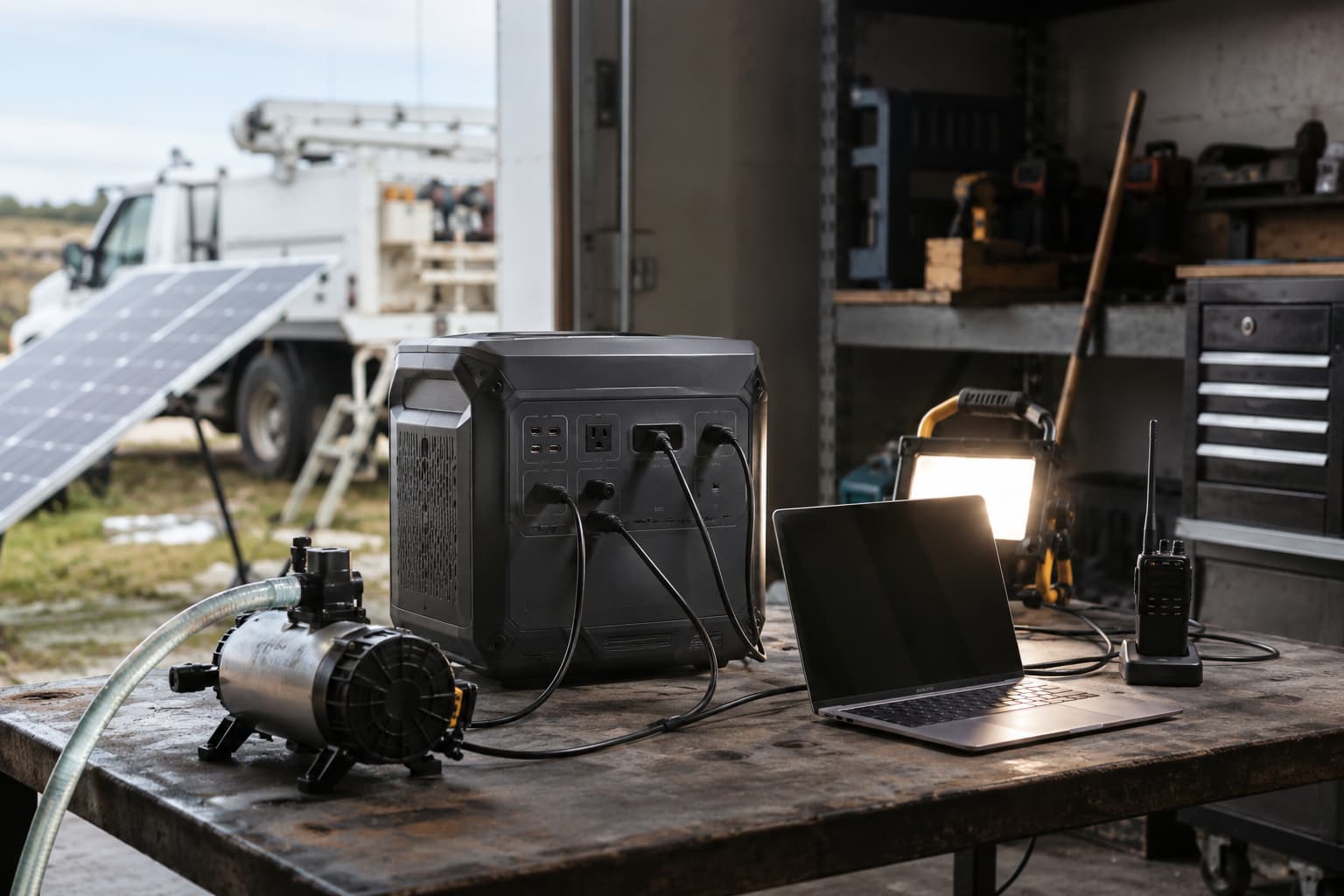
Continuous output must cover the combined running load. Peak or surge capability must also support devices that draw more power during startup. Refrigerators, pumps, compressors and some tools can create a short demand above their normal operating value. Confirm both requirements against documented product ratings.
Do not add every startup value automatically. Consider which devices could start at the same moment and how the user will sequence them. A simple operating plan may reduce peak demand, but it should remain practical for the real scenario.
Compare Portable Battery Power Station Recharge Time
Recharge time depends on the energy that must be replaced, accepted charging input and actual source conditions. Divide the energy to be restored by the effective charging power for a rough estimate, then allow for charging losses and input variation. Manufacturer charging curves provide better guidance when they are available.
Check Portable Battery Power Station AC and DC Inputs
Confirm which charging sources the product accepts and the supported input limits. AC charging, vehicle charging and solar charging may use different connectors, voltage ranges and input ceilings. Do not assume a cable fits or a solar panel is compatible because both products use similar marketing terms.
Estimate Real Solar Charging Availability
Solar output changes with sunlight, panel angle, shading, temperature and system losses. Compare the station’s documented solar input window with the panel configuration. Plan from realistic daily conditions rather than the panel’s maximum rating alone. A portable solar power station used across seasons may need a different charging schedule in winter or cloudy weather.
Review Cycle Life, Storage and Service Conditions
Cycle-life claims should be compared at the stated test conditions and remaining-capacity threshold. Check the battery chemistry, warranty terms, storage instructions and supported operating temperatures in the current product documentation. These factors matter when the station is stored for emergencies or used frequently in mobile work.
Ask how the product should be stored between uses and how often its charge level should be checked. Confirm access to replacement cables, support and warranty service. A low purchase price can lose value if the required accessories or service route are unclear.
Plan Solar Charging Around the Usage Schedule
A solar power station must balance energy used during the day with energy available for recharge. Map the load schedule and charging window on the same timeline. If equipment runs while the station charges, use the product’s documented operating guidance and account for the net energy entering the battery.
Browse the solar shop to identify relevant product categories, then compare only the specifications published for each candidate. The current Homesolars product details page should be checked for updated capacity, output and charging information before a purchase decision.
Check Portable Battery Power Station Ports and Compatibility
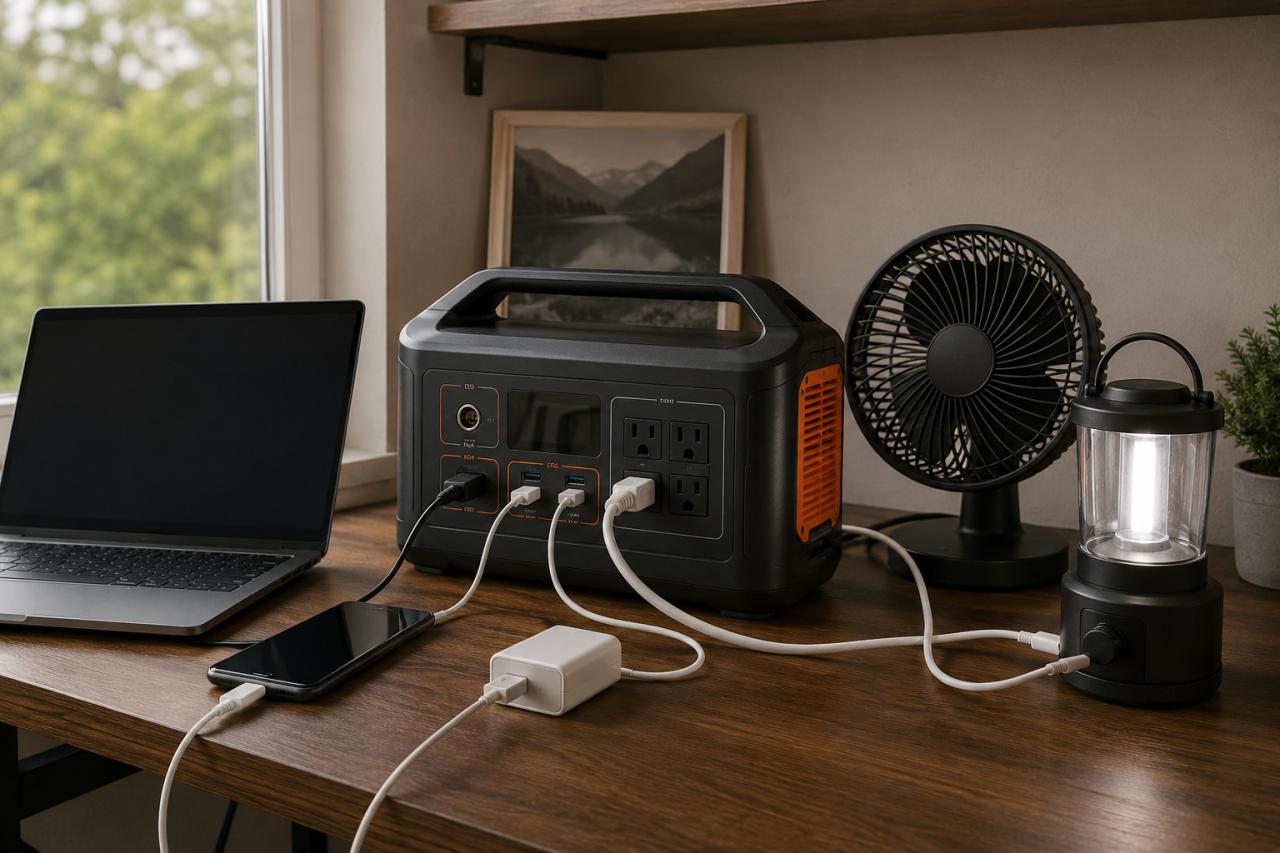
List every connection the devices require. Check AC outlet type, DC outputs, USB formats, connector polarity and charging cables. Confirm voltage and frequency for AC equipment. For sensitive electronics, review the waveform and grounding guidance provided by the equipment and station manufacturers.
- Confirm continuous output against simultaneous running loads.
- Compare surge capability with documented startup demand.
- Calculate usable energy for the required operating hours.
- Check every charging source, connector and input limit.
- Review warranty, storage and environmental requirements.
Use a Portable Battery Power Station Decision Checklist
Reduce the comparison to measurable requirements. Record maximum running watts, realistic startup demand, daily watt-hours, desired reserve, available recharge hours and required ports. Mark any value that the seller has not published. Missing data should remain an open question rather than being replaced with an estimate from another model.
Choose a Portable Battery Power Station From Measured Loads
The right capacity and output come from the actual device list and operating schedule. Start with measured or documented loads, add a justified reserve, and confirm that the available charging method can restore the used energy in time. Buyers can review Homesolars and send the load list to the contact team for product-specific clarification. Final selection should wait until capacity, continuous output, surge rating, charging limits and port compatibility are all documented for the proposed model.