
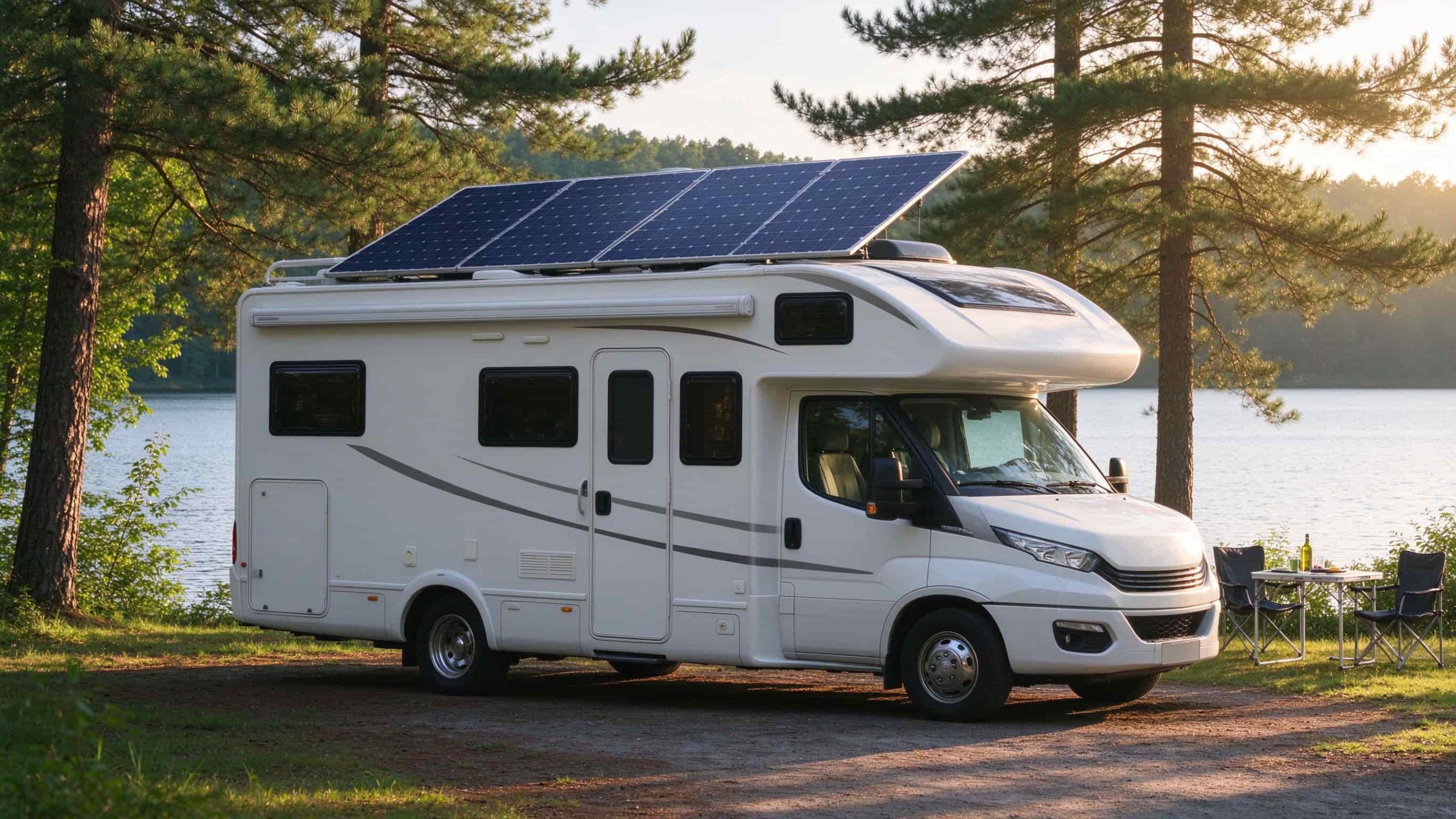
Yes, RV solar for beginners is worth trying before your first big trip — a basic setup keeps your fridge, lights, and phone chargers running without hunting for a campsite with hookups. Whether it makes sense for you depends on three things: How much power do you use each day? How often do you camp off-grid? What do you want to spend on panels, a charge controller, and a battery? For most new owners, that comes down to four parts — panels, controller, battery, and wiring.
What Does RV Solar for Beginners Include?
RV solar for beginners usually comes down to four parts: solar panels, a charge controller, a battery, and the wiring that joins them — and the right size and style come straight from the three factors above.
Daily power use sets the size: a fridge, lights, and phone chargers pull a few hundred watt-hours. So a couple-sized battery and two panels cover a typical night. A microwave or coffee maker — which needs an inverter on top — pushes you toward a bigger battery and a second panel.
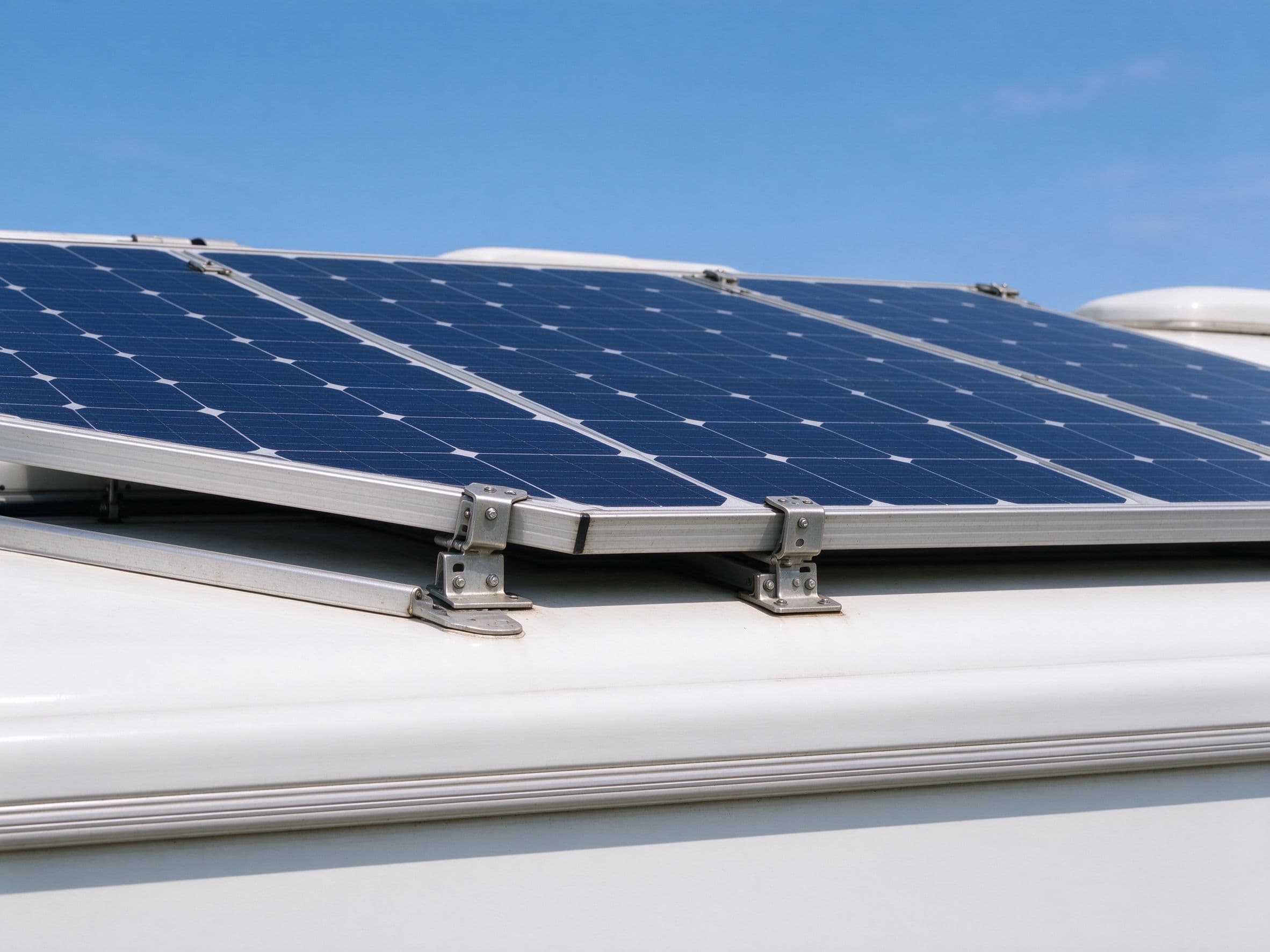
How often you camp off-grid shapes the panel choice: frequent boondocking trips call for rigid panels bolted to the roof. While occasional outings are best served by a portable folding panel you angle toward the sun and stow away.
Your budget then picks the tier: a no-drill portable power station with a folding panel for occasional trips. Or a roof-mounted rig with an MPPT charge controller and a lithium battery for longer off-grid stretches. Brackets and sealant round out the roof install, and a cool, ventilated spot near the battery keeps the controller running for years. Every part connects to the next, so buying a matched set saves beginners headaches and wiring mistakes.
The Basic Principles of RV Solar System Configuration
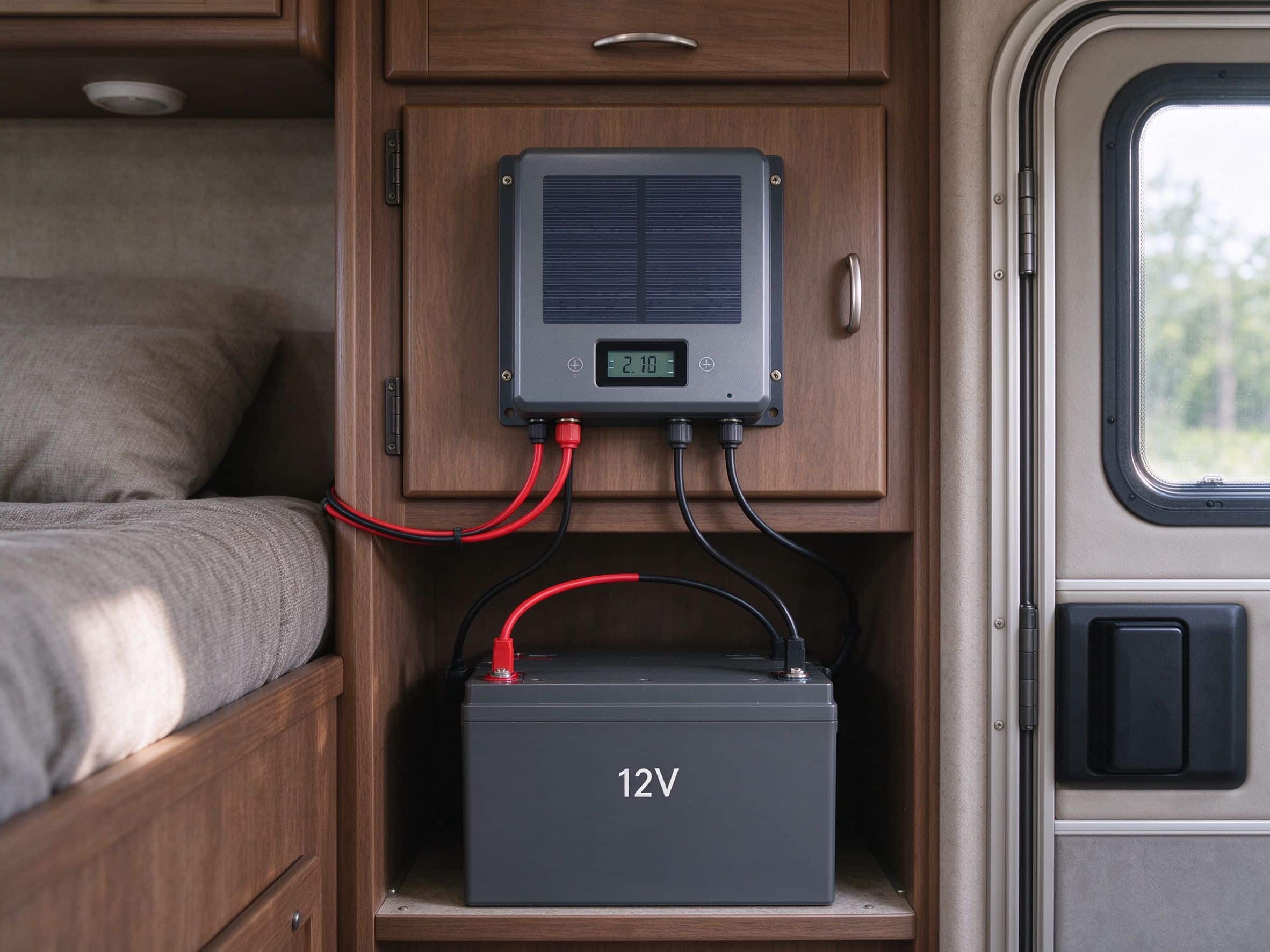
RV solar power follows one simple loop. The panels feed the charge controller, which decides how much current the battery can safely accept and eases off when the battery is full. On a sunny day, a single 100W panel typically delivers 300 to 500 watt-hours, depending on your latitude and the season; on a cloudy one. It still adds something. Many controllers also switch off the load when the battery drops too low, protecting your bank overnight. That flow is the same in a motorhome, a travel trailer, or a camper van. Which is why RV solar for beginners looks similar across all three.
How to Choose the Right RV Solar for Beginners Setup
Choosing the right RV solar for beginners setup starts with your daily watt-hours, not the biggest panel on the shelf. List the devices you run — fridge, lights, phones, a water pump — and add up what they draw. A typical couple uses 1,500 to 2,500 watt-hours per day, which pairs well with 200 to 400 watts of roof panels and a battery bank that holds at least one day of reserve. Round the number up, not down, and you will not be chasing power on the first cloudy day. This load-first approach follows the same logic as peer-reviewed research on standalone solar system sizing. So the numbers hold up before you spend a dollar.
Start Small and Expand Later
For your first build, start with one or two panels and a single lithium battery, then grow the system after you know your real usage. Most beginners overestimate what they need and underestimate what a weekend of sun delivers. LiFePO4 chemistry is the standard choice for RV use because it is light, safe, and survives thousands of charge cycles. Pair the array with an MPPT charge controller sized at least 25 percent above the panel current, and check your roof space first — vents, air conditioning, and the roof edge all reduce usable area.
How Much RV Solar for Beginners Costs
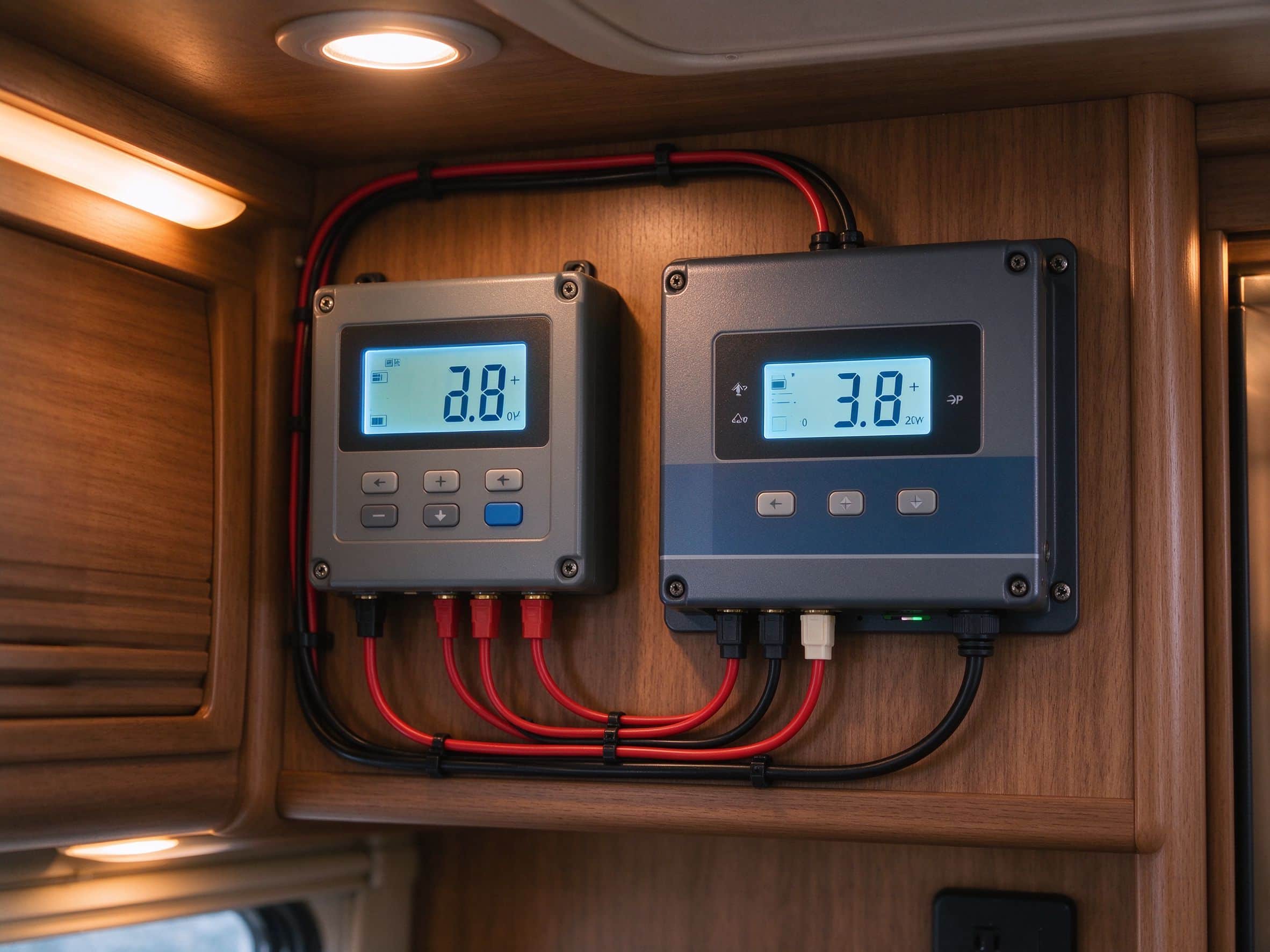
A complete RV solar package for beginners usually costs between $300 and $800 when you install it yourself. Panels run roughly one dollar per watt, and a PWM charge controller costs $20 to $60. An MPPT controller runs $80 to $300, and a 100Ah lithium battery costs $300 to $700. Add brackets, cables, fuses, and sealant, and the total still beats what a season of generator fuel costs. Shop the whole package rather than the cheapest single part, because a weak controller can bottleneck your entire array. If the roof route feels like too much to start, a portable power station with a folding panel gets you going for less and needs no drilling.
Make Your First Off-Grid Weekend a Good One
RV solar for beginners is worth trying before your first big trip — it keeps your fridge, lights, and chargers running without hunting for a campsite with hookups. Start with a simple load list, size the panels and battery to your daily watt-hours, and choose roof or portable panels by how often you boondock. Let the charge controller protect the battery, and add a second panel once you know your real usage. Do that, and your new RV will feel at home in any campground — with or without hookups.