
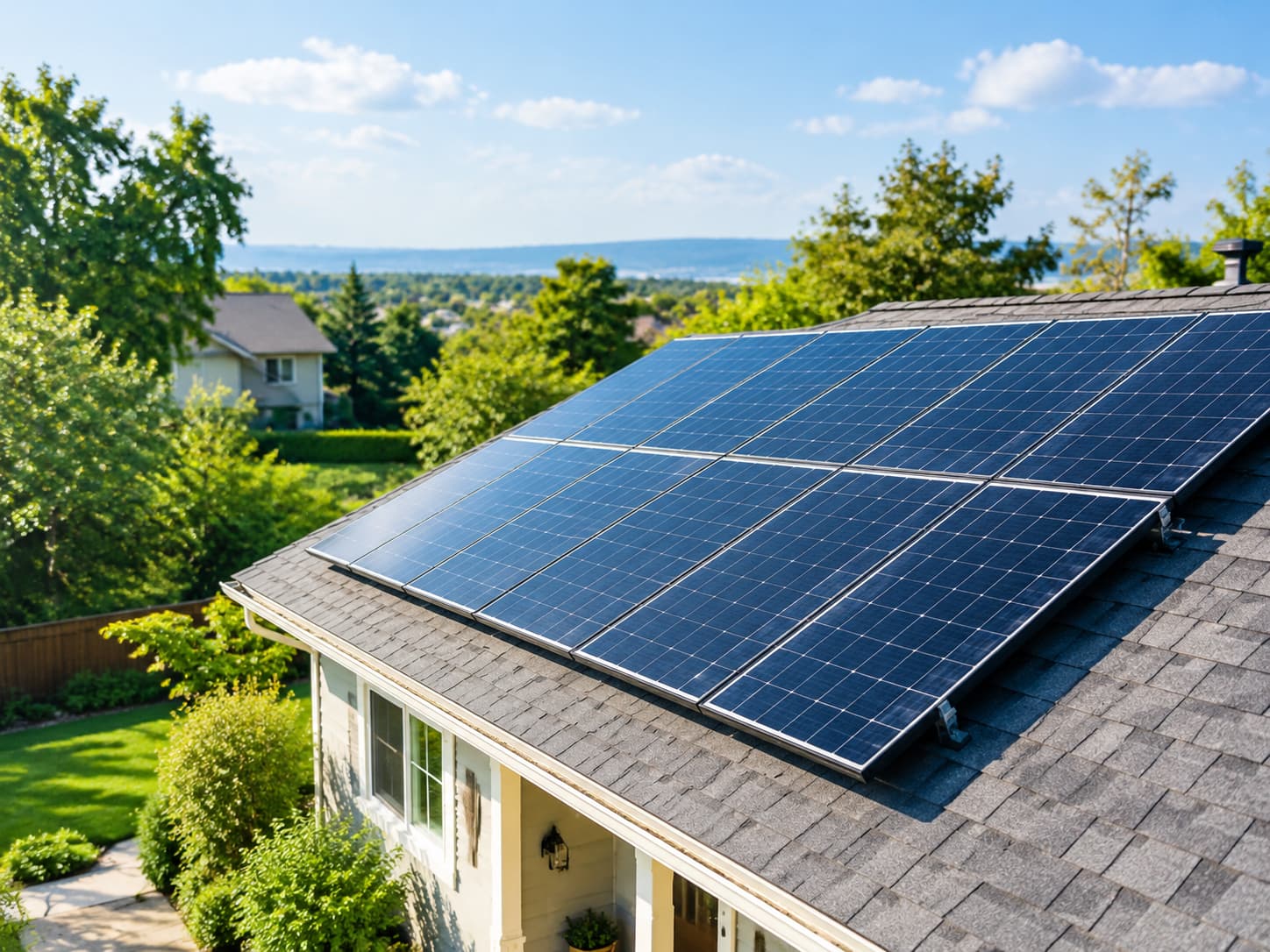
The best solar panel is not automatically the one with the highest efficiency or the lowest price. The best panel meets your energy target, fits the available space, performs well under local conditions, and delivers good value over the system’s lifetime. A useful comparison of solar panel types starts with three established categories: monocrystalline silicon, polycrystalline silicon, and thin-film photovoltaic (PV) modules. Their materials and designs create different trade-offs, but the product datasheet and project quote matter more than the category label alone. For many new homes with limited roof space, monocrystalline modules are a sensible first option to compare. Polycrystalline panels remain relevant when evaluating existing systems or a specific available offer, while thin-film products can suit selected commercial, utility-scale, lightweight, or building-integrated applications.
What Are the Main Types of Solar Panels?
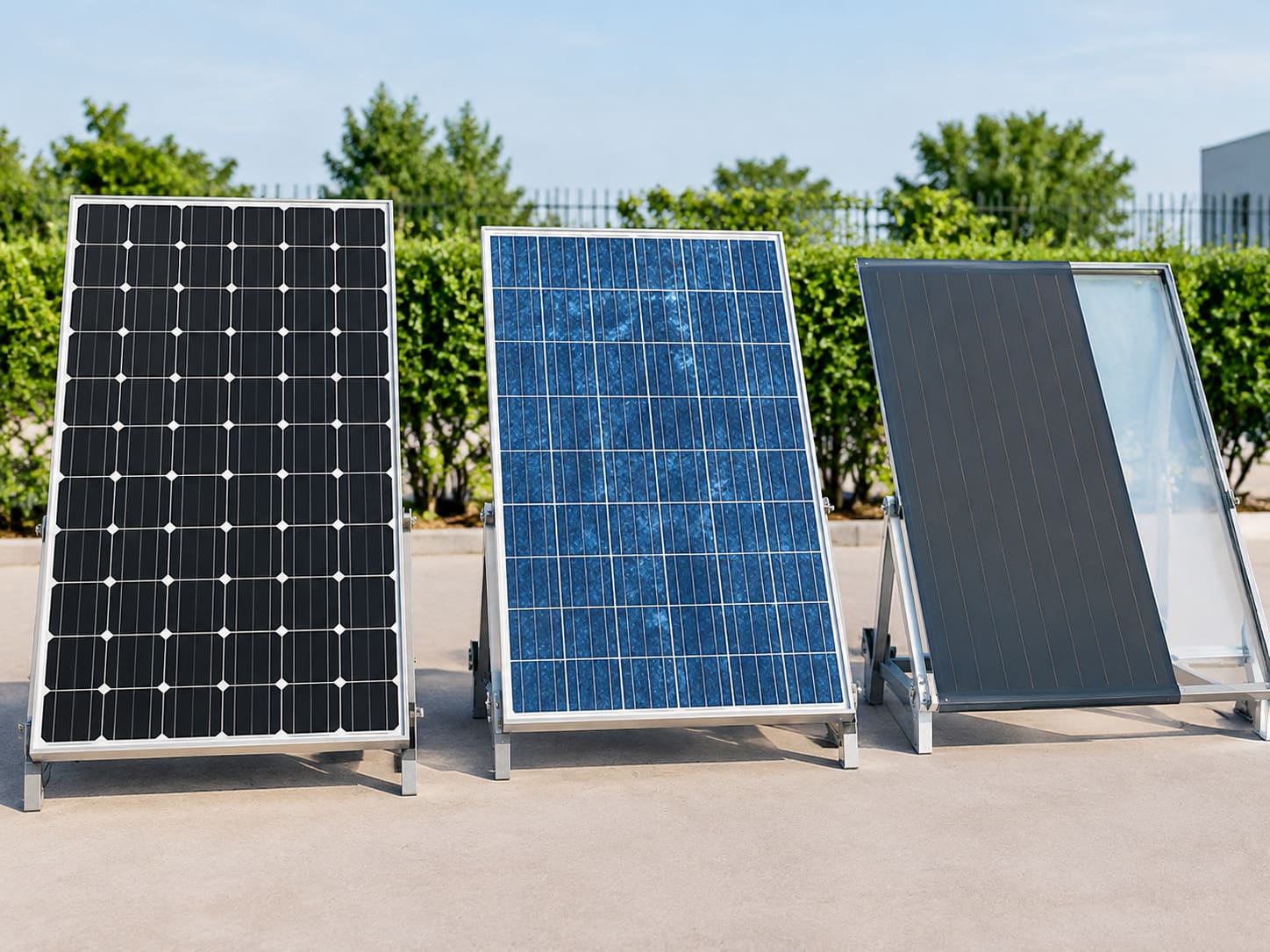
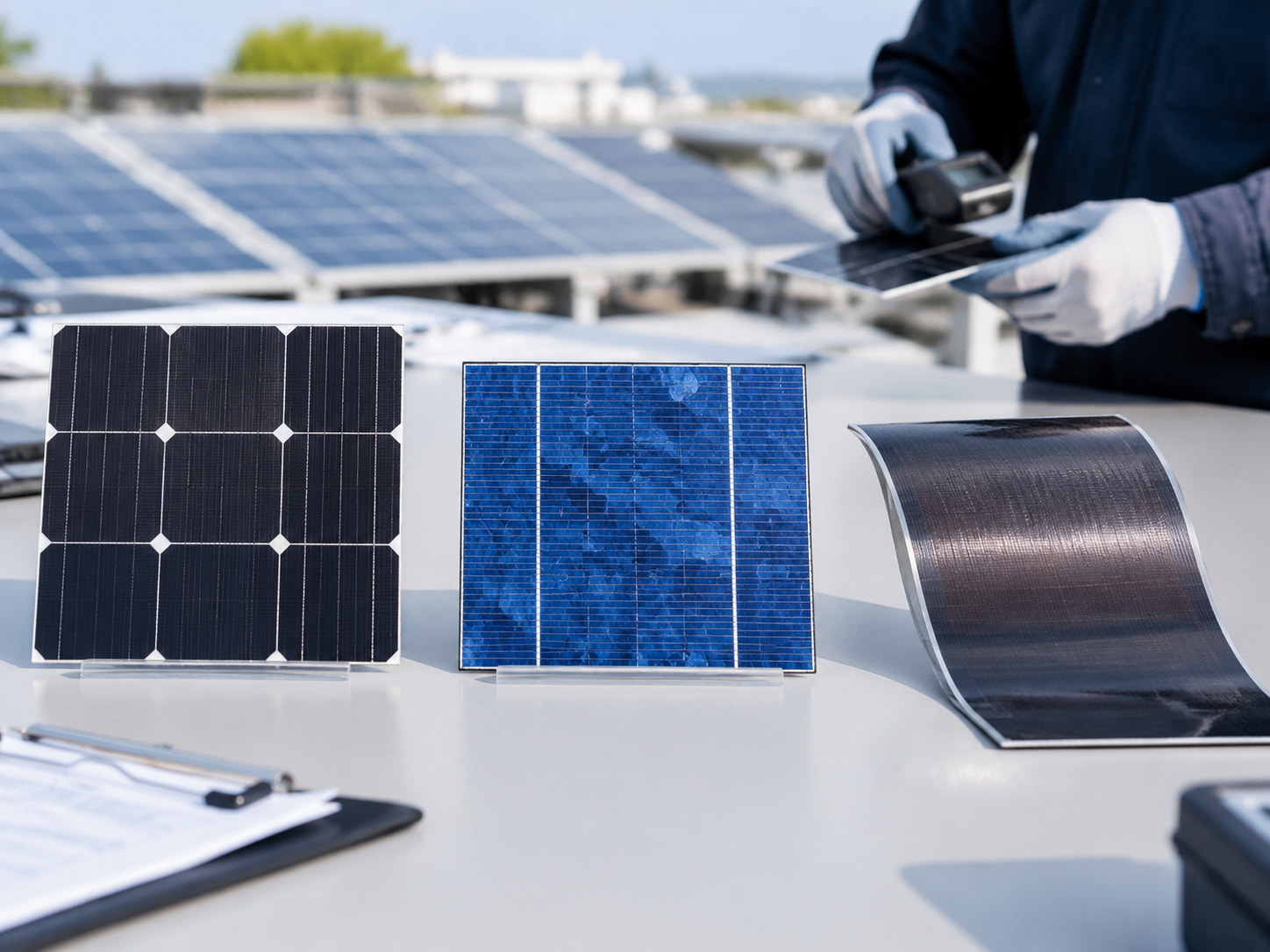
Solar Panel Types Comparison: fall into three main cell technologies, each suited to different roofs, budgets, and installation contexts. Monocrystalline silicon panels are the default choice on most modern residential and commercial roofs, especially where space is tight. Polycrystalline silicon panels are the older blue-wafer product that still appears on existing roofs and in replacement-module decisions. Thin-film is a separate family of chemistries — CdTe, CIGS, and amorphous silicon — chosen for specific large-scale or specialized designs rather than as a drop-in rooftop upgrade. After walking through each technology, a side-by-side comparison chart makes the trade-offs in efficiency, space, form factor, and decision context easy to read against the exact datasheet.
Monocrystalline silicon panels
Monocrystalline cells are made from single-crystal silicon; they’re typically dark and widely used in residential, commercial, and utility installations. Their key practical advantage is strong power output per unit area, which helps when roof space is limited. However, “monocrystalline” does not guarantee a particular efficiency, annual output, or lifespan. Cell architecture, module size, manufacturing quality, and product generation all affect performance. Compare the rated power, module efficiency, temperature coefficient, mechanical-load ratings, and warranty on the exact datasheet. Often worth comparing when the roof is small, the project has a defined power target, or you need to maximize output from a limited area.
Polycrystalline silicon panels
Polycrystalline cells contain multiple crystal regions. Older products often have a blue, visibly textured appearance and typically offered lower module efficiency than comparable monocrystalline products. They historically had a manufacturing-cost advantage, but that should not be assumed in today’s market. Product availability and pricing vary, and many new installations now focus on monocrystalline options. A polycrystalline panel can still be worth considering if it is part of an existing system, available from a reliable supplier, or included in a quote that offers clear overall value. Compare the actual installed price, expected energy production, warranty, and replacement availability rather than relying on older generalizations about cost. This matters when assessing an older installation, comparing a specific available product, or reviewing a project that needs compatible replacement modules.
Thin-film photovoltaic modules
Thin-film is a family of technologies, not a single material. Commercial examples include cadmium telluride (CdTe), copper indium gallium selenide (CIGS), and amorphous silicon. These modules are manufactured differently from wafer-based crystalline silicon panels. Depending on the product, thin-film may offer a useful form factor, lower weight, or performance characteristics that suit a particular large-scale or specialized design. The trade-offs also vary by chemistry and construction. Not every thin-film module is flexible, lightweight, or suitable for a roof. Check the exact module’s certified ratings, mounting instructions, durability data, environmental guidance, and end-of-life options. Often worth investigating when: the project has specific weight or design constraints, a utility-scale application is being evaluated, or a product’s documented characteristics suit the site better than conventional rigid modules.
How Do You Choose the Right Solar Panel for Your Needs?
The right solar panel depends on your electricity use, available roof space, and installation budget. Solar Panel Types Comparison: For most new residential rooftop systems, modern monocrystalline panels are the first option to compare because they generally offer strong power output per unit of roof area. Polycrystalline panels are more relevant when replacing or matching an existing system, while thin-film modules are best considered for projects with specific design, weight, or large-scale installation requirements. The examples below use California residential installation prices as a reference. They show how panel quantity, system size, and estimated upfront cost change with different energy needs.
Choose a panel based on your energy use and roof space
For a straightforward comparison, assume each panel has a rated output of 400 watts (W). This is a calculation assumption, not a claim that every available panel has this rating.
| Example Household Situation | Suggested System Size | Approx. Number of 400 W Panels | Estimated Installation Cost |
|---|---|---|---|
| Lower electricity use; limited budget | 4 kW | 10 panels | $8,600–$11,600 |
| Moderate electricity use | 6 kW | 15 panels | $12,900–$17,400 |
| Higher electricity use or more electrified appliances | 8 kW | 20 panels | $17,200–$23,200 |
Use these examples as a starting point—not as a way to determine your final system size from household size alone.
Cost estimates use an illustrative range of about $2.15–$2.90 per watt, based on published California market figures. They exclude battery storage and any additional costs for major roof repairs, electrical upgrades, or unusual installation conditions. Two homes with the same number of occupants can have very different electricity consumption because of air conditioning, heating, electric vehicles, pool pumps, and other loads.
Which option should you choose?
Choose a 4 kW system as a starting point if your annual electricity use is relatively low, you want to offset only part of your bill, or your usable roof area is limited. Confirm that the expected annual production meets your goal before settling on this size. If your electricity use is moderate and your roof has enough unshaded space, start by comparing 6 kW systems. This is a useful middle ground for comparing quotes, but it isn’t a universal recommendation for every household. Consider an 8 kW system or larger if you use a lot of air conditioning, have high electricity consumption, or expect additional loads such as an electric vehicle. Check whether the extra generation is financially worthwhile under your utility’s export-credit rules.
Prioritize higher-efficiency monocrystalline modules if roof space is the main constraint. They may allow you to fit more rated capacity into the available area, but compare actual module dimensions and efficiency rather than relying on the technology name alone. Consider thin-film modules only when their specific design offers an advantage for your project, such as a specialized commercial application or a surface with particular weight or form-factor constraints. Do not assume thin-film is automatically cheaper or easier to install. The estimated cost range is based on California market pricing, not the panels alone. The full installation typically includes modules, an inverter, mounting equipment, wiring, labor, permitting, and related electrical work. Battery storage, when needed, can add substantially to the project budget.
Calculate the panel count and estimate the cost
Once you have a preliminary system size, use these two calculations:
Panel count: System size (W) ÷ rated power per panel (W) = number of panels. For example, an 8 kW system using 400 W modules would require:8,000 W ÷ 400 W = 20 panels
Illustrative installed cost: System size (W) × estimated installed cost per watt = estimated installation cost.
For the same 8 kW system, using $2.15–$2.90 per watt:8,000 W × $2.15–$2.90 = $17,200–$23,200
These calculations estimate the system’s rated capacity and a preliminary budget. They do not establish how much electricity the system will actually generate. A 6 kW system in one location may produce a different amount of energy from a 6 kW system elsewhere because of sunlight, roof direction, shading, temperature, and system losses. To estimate annual electricity production, enter your location and system assumptions into the NLR PVWatts calculator. Use the result as a preliminary estimate, then ask an installer for a site-specific production estimate with clearly stated assumptions. PVWatts is a planning tool, not a guarantee of actual output. Source: NLR PVWatts documentation.
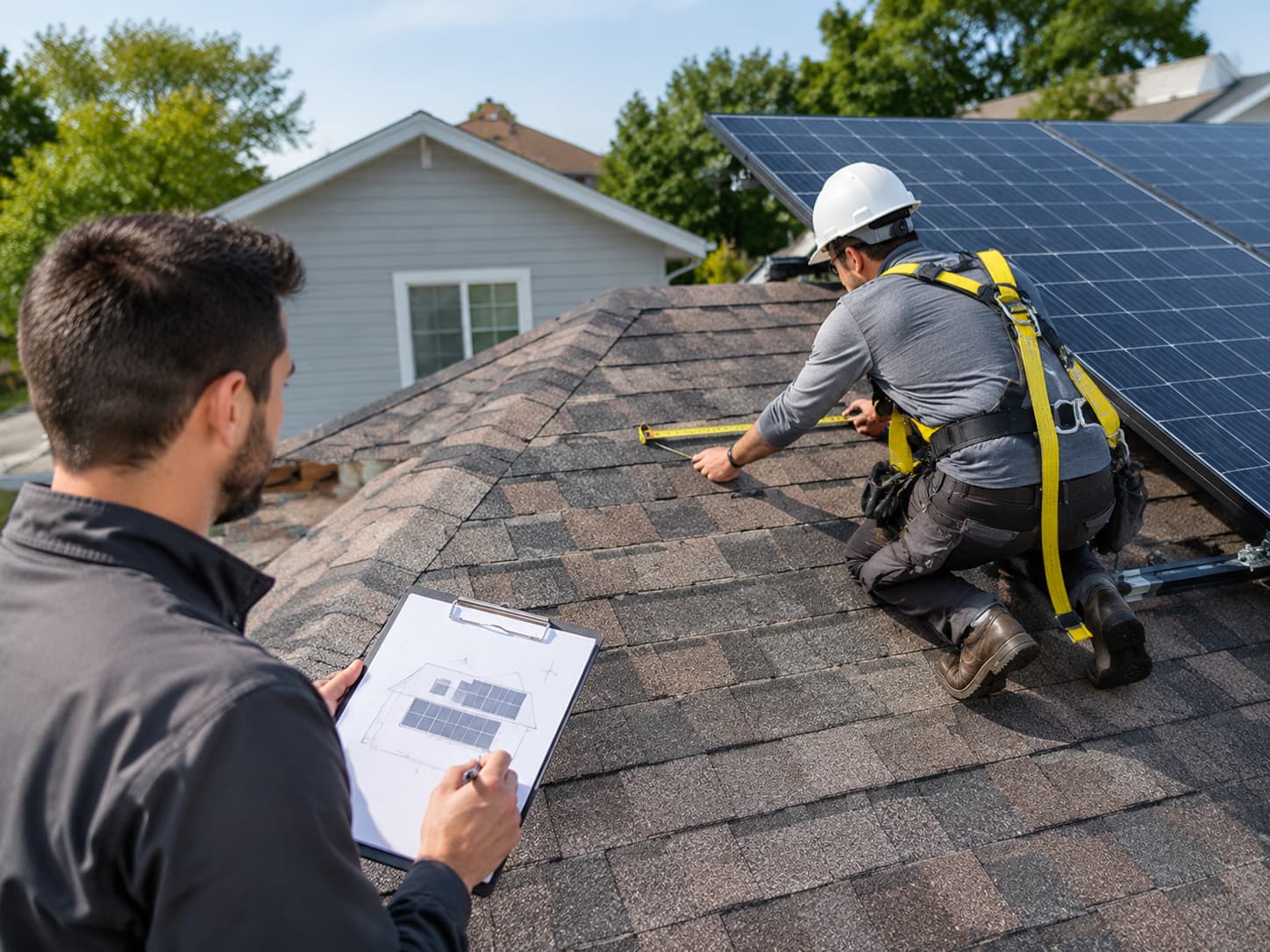
Check usable roof space and local installation rules before buying.
Don’t calculate the number of panels from the roof’s total area alone. Some roof space may be unsuitable because of shade, vents, chimneys, roof edges, access paths, or required clearances. A 400 W panel’s physical dimensions also vary by model, so confirm the actual product datasheet before estimating how many modules will fit. For example, California’s current fire-code provisions include rooftop access pathways and ridge setbacks for applicable residential installations. Some requirements have exceptions depending on building type, roof slope, and other conditions. The local building department and fire authority determine which rules apply to a particular project. These requirements can reduce the area available for panels and therefore affect the final system size. See the California Fire Code provisions for solar PV systems and the California Energy Commission’s 2025 Energy Code guidance.
Before accepting a quote, ask the installer to confirm:
- The number, wattage, model, and physical dimensions of the proposed panels.
- The usable roof area after shading and applicable access clearances are accounted for.
- The estimated annual electricity production and the assumptions behind it.
- Whether the quoted price includes permits, installation, inverter equipment, and any required electrical upgrades.
- Whether a battery is included, optional, or excluded—and how that choice affects the total cost.
- Whether the system design complies with local building, fire, electrical, and utility-interconnection requirements.
Compare complete system quotes, not just panel prices.
Suppose two quotes both propose an 8 kW system. One uses higher-efficiency modules and costs more; the other uses lower-priced modules but requires a different layout. Consider the more expensive option if the roof is space-constrained and the extra capacity is valuable. If both systems fit comfortably and deliver similar expected annual production, the lower-priced system may offer better value—provided its equipment quality, warranties, and installer support are comparable. Ask each installer to quote the same approximate system capacity and to state the expected annual production, total installed price, equipment specifications, warranty terms, and exclusions. In California, also check how the utility’s billing and export-credit arrangements affect the value of electricity sent back to the grid. A system sized to generate the most electricity isn’t necessarily the one that delivers the best financial outcome.
Disclaimer: Start by comparing monocrystalline modules for a typical residential rooftop, then choose the system size from your actual electricity use and a location-specific production estimate. Use the 4 kW, 6 kW, and 8 kW examples above to set an initial budget, but confirm roof fit, local code compliance, and the full installed quote before deciding.
Solar Panel Types Comparison chart
| What to compare | Monocrystalline silicon | Polycrystalline silicon | Thin-film |
| Cell material | Single-crystal silicon | Multi-crystal silicon | Depends on technology, such as CdTe, CIGS, or amorphous silicon |
| Area efficiency | Generally high among mainstream rooftop options; verify the specific module | Often lower than comparable mono products, though products vary | Varies widely by chemistry and product |
| Space needed for a target capacity | Often advantageous where space is limited | May require more area for similar rated capacity | Depends on module efficiency and system design |
| Form factor | Commonly rigid-framed modules | Commonly rigid-framed modules | Product-dependent; some designs target specialized surfaces or formats |
| Typical decision context | Homes and many commercial rooftops | Existing systems or specific value/availability cases | Selected commercial, utility-scale, or specialized projects |
| Price comparison | Compare total installed cost and expected output | Do not assume it is always cheaper | Compare the full project economics and product requirements |
| What to verify | Datasheet, warranty, temperature coefficient, supplier support | Compatibility, availability, quote value, warranty | Exact chemistry, certifications, installation limits, environmental guidance |
Solar Panel Types Comparison: Efficiency ranges and prices change as products and manufacturing methods evolve. Don’t compare a laboratory cell-efficiency record with a commercial module’s datasheet; they measure different things. For a fair decision, compare products under equivalent rating conditions and use a current manufacturer datasheet.
Choose the Panel That Fits Your Need
A useful solar panel types comparison ends with the project—not with a universal winner. Monocrystalline silicon is often a strong starting point when roof space is limited; polycrystalline modules may be relevant when comparing an existing system or a specific available offer; and thin-film can be suitable where its weight, form factor, or technology fits the design. In every case, verify the current datasheet, warranty, installation requirements, and total system quote. Start by defining your energy target, measuring usable space, and setting a realistic budget. Then compare expected annual production and installed cost across products that meet your technical requirements. If you are planning a residential, RV, commercial, or off-grid system, share your application and site constraints in the comments or contact a qualified solar professional to review the options.