
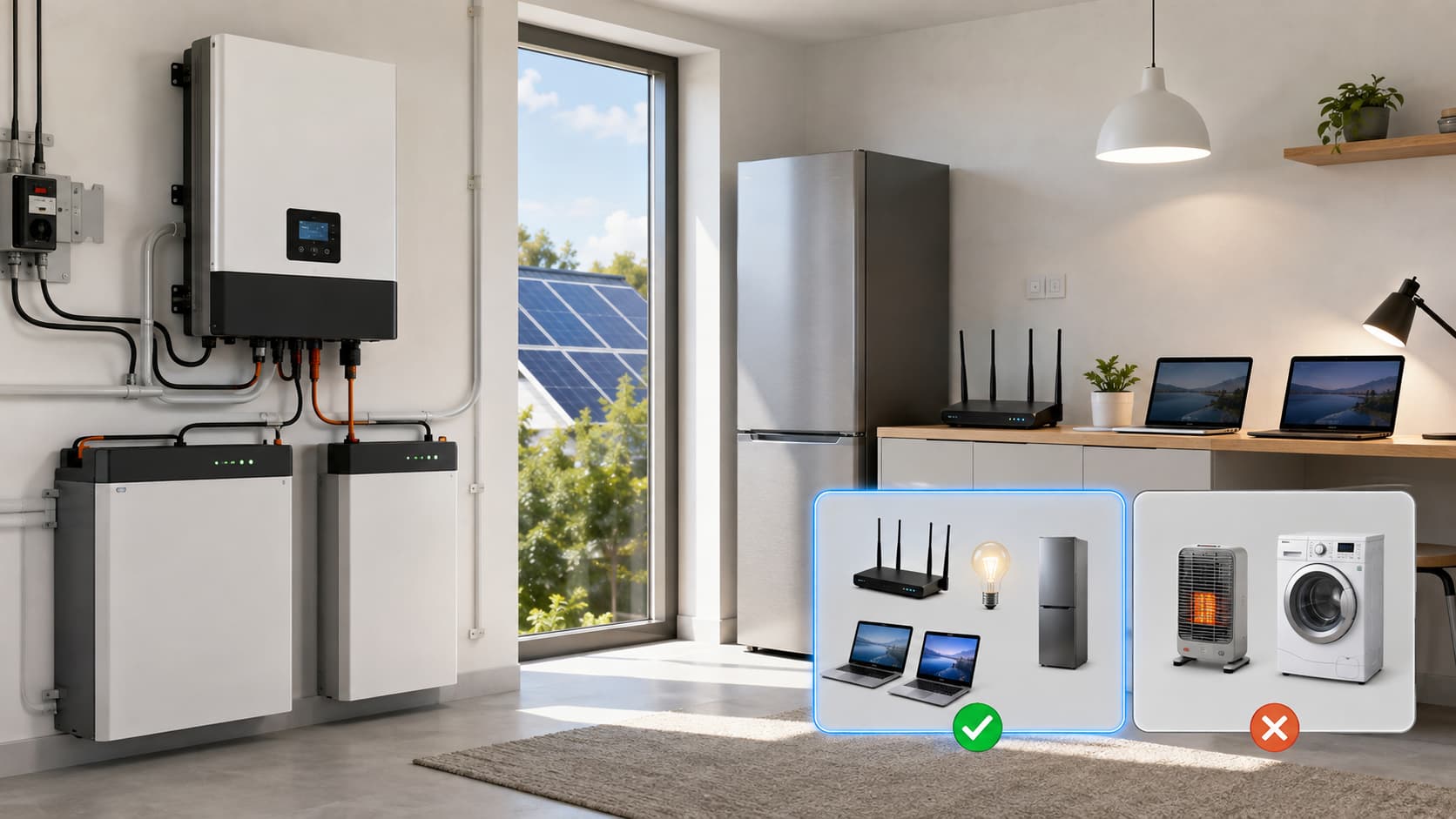
A solar backup power solution should start with load priorities, not a product list. Many owners include every appliance, choose a large battery, and later discover that the inverter surge rating, charging time, available solar area, or installation conditions don’t support the plan. A more practical approach is to decide which services must remain available, how long they need to operate, and which loads can be switched off during an outage. This load-priority method gives the system a measurable operating purpose. It also makes it easier to compare portable solar power solutions, estimate backup energy, and control costs without relying on an arbitrary battery or inverter size.
Define a Solar Solution with a Measurable Outage Scenario
“Backup power” can describe several different operating requirements. A two-hour utility interruption may require only lighting, communications, refrigeration, and several outlets. A remote cabin may need daily energy independence, while a small business may require enough continuity to protect stock, maintain communications, and complete a controlled shutdown.
Each scenario creates a different requirement for battery reserve, solar charging, inverter output, and generator support. Before requesting a quotation, write one realistic operating scenario that identifies:
- Expected outage duration
- Season and local operating conditions
- Normal number of users
- Essential services that cannot stop
- Optional loads that may be disconnected
- Required battery reserve
- Recovery plan after a poor solar day
- Whether grid or generator charging is available
The scenario should be measurable. “Keep one refrigerator, one router, six LED lights, and two laptops operating for eight hours, with one additional day of reserve” gives a supplier a usable design target. A request such as “power the house” leaves too many assumptions undefined.
A practical Solar Solution should also explain what happens after the initial discharge. A system that survives one outage but cannot restore its reserve before the next outage does not meet a reliable backup requirement.
Rank Loads by Service Value and Daily Consumption
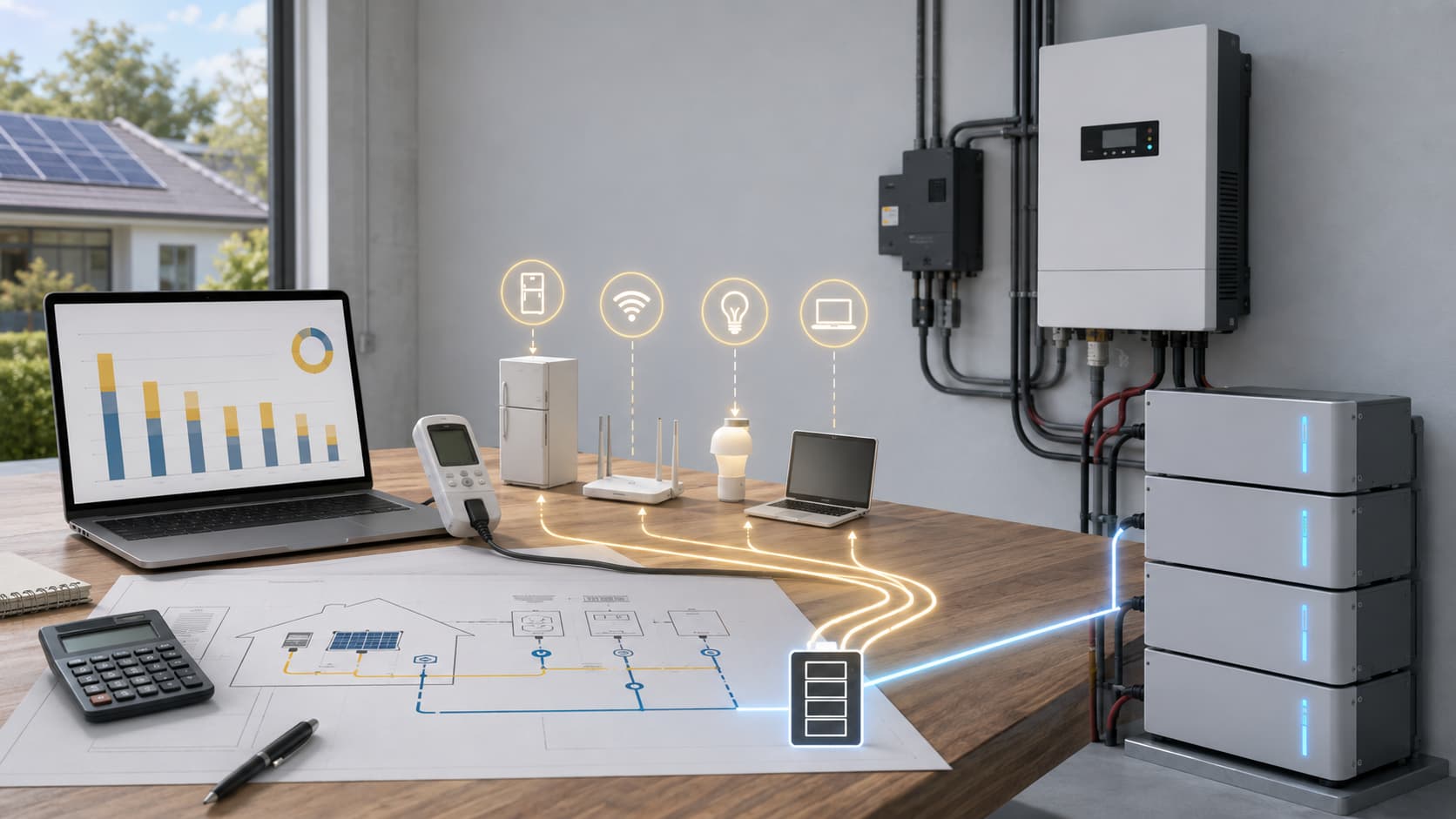
Divide the proposed loads into three priority levels. This prevents one high-consumption appliance from using energy reserved for several essential services.
| Load tier | Operating purpose | Typical treatment |
|---|---|---|
| Tier 1 | Safety, communication, refrigeration, medical support, or process control | Must remain available throughout the defined backup period |
| Tier 2 | Useful but schedulable services | Operate during selected periods or when sufficient solar power is available. |
| Tier 3 | High-consumption convenience loads | Remain off during restricted backup operation |
The classification should reflect the consequences of losing each service, not simply the appliance size. A small communications device may have a higher load priority than a much larger comfort appliance.
Separate Continuous Loads from Occasional Loads
A small device operating continuously can consume more energy than a larger device used briefly. Record the power and estimated operating hours of each approved load.
The initial daily consumption calculation is:
Daily energy in watt-hours = load power in watts × operating hours
For example, a 60W device operating for eight hours uses an estimated 480Wh. If it runs continuously for 24 hours, the estimated demand becomes 1,440Wh.
Refrigerators, pumps, and similar appliances cycle on and off, while routers, inverters, and control equipment may draw power continuously. Where possible, measure representative operation instead of relying only on the highest number shown on the equipment label.
Keep measured values, manufacturer ratings, and planning assumptions in separate columns. This makes the calculation easier to review when actual operating data becomes available.
Identify Inverter Surge Before Selecting Equipment
Motors, compressors, and pumps may require substantially more power during startup than during steady operation. A daily energy calculation can therefore appear acceptable while the inverter still trips when a motor starts.
Record the following information for each surge load:
- Normal running power
- Expected startup power
- Surge duration
- Number of starts per hour
- Whether other loads may start simultaneously
Ask the supplier to state the inverter’s continuous output and short-duration surge capability. If two motors could start at the same time, either include that event in the design or establish a control rule that prevents simultaneous startup.
Do not assume that increasing the inverter rating automatically solves every problem. Battery discharge capability, cables, protection devices, and connectors must also support the surge current.
Size the Solar Solution Battery Reserve from Approved Loads
Calculate the battery reserve in a Solar Solution from the approved load schedule. Add the daily watt-hours for those loads and then account for conversion losses, allowable discharge limits, standby consumption, and the reserve required for uncertainty.
Don’t compare battery capacity only in amp-hours. Voltage changes the amount of stored energy, so batteries should be compared using watt-hours:
Nominal battery energy in watt-hours = battery voltage × amp-hour capacity
Nominal energy is not necessarily equal to usable backup energy. The practical amount available depends on the battery type, permitted depth of discharge, inverter efficiency, discharge rate, temperature, protection settings, and aging allowance.
A useful planning calculation is:
Required nominal storage = approved load energy ÷ expected system efficiency ÷ usable battery fraction
The supplier should identify every value used in this calculation. Do not accept a single oversized capacity figure with no explanation of losses or reserve policy.
Battery reserve also depends on how the site will operate. A household that accepts manual load shedding can use a different reserve policy from an unattended communications or monitoring site. Cold temperatures, high discharge rates, and battery aging may further reduce practical runtime.
Present runtime as a range linked to a defined load schedule. A fixed runtime claim without a load table is weak evidence because it does not show which appliances, operating hours, or system losses were included.
Match Solar Charging to the Backup Energy Recovery Target
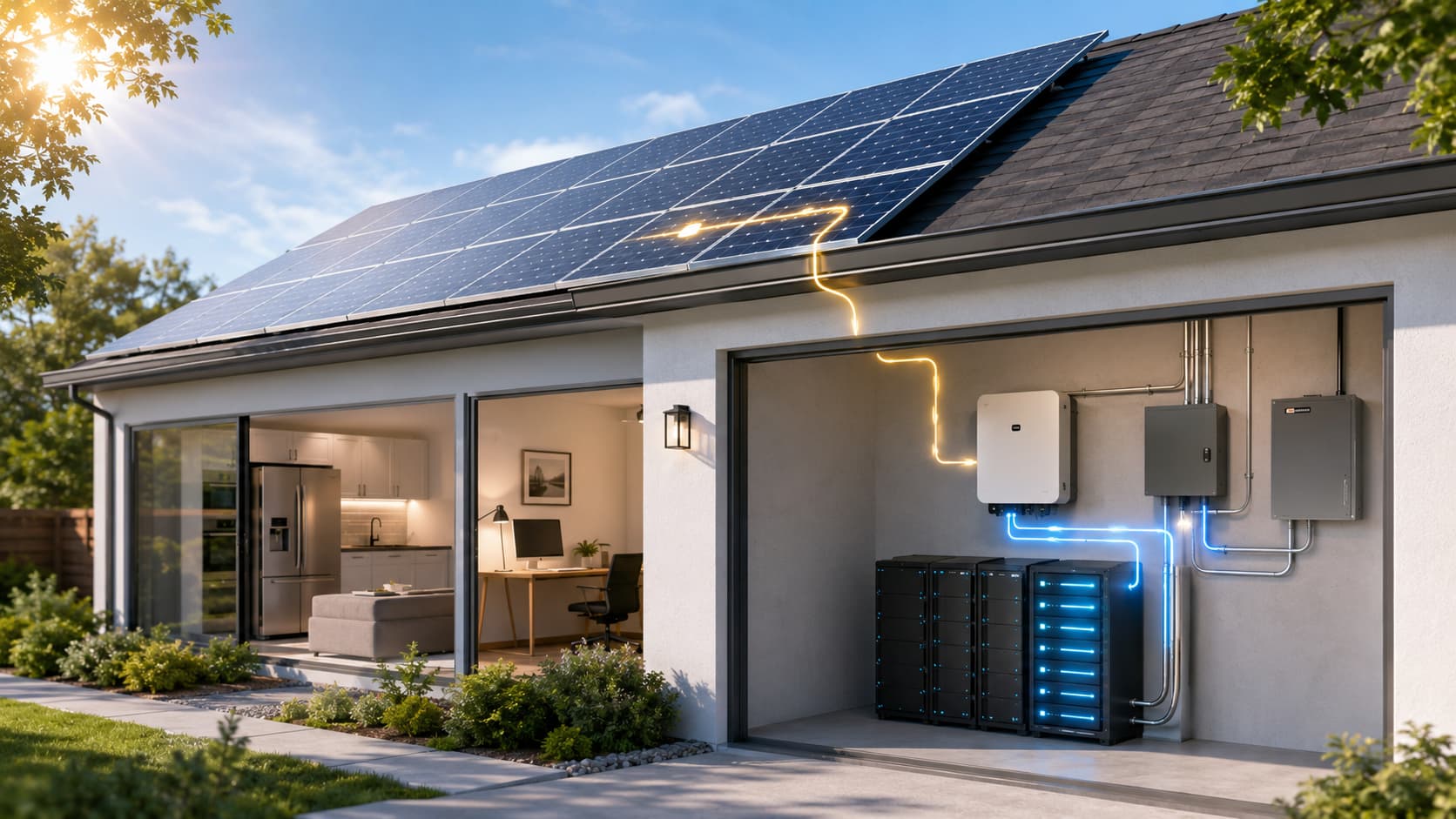
In a Solar Solution, battery size determines how much energy can be stored, while the solar array influences how quickly that energy can be restored. A large battery combined with limited solar charging may support the first outage but remain partly discharged before the next one.
Set a recovery target, such as restoring the normal battery reserve during one representative solar day while also supporting the approved daytime loads.
The calculation should consider:
- Local solar resource
- Seasonal variation
- Panel orientation
- Partial shading
- Module and inverter temperature
- Cable and conversion losses
- Daytime load consumption
- Battery charging limits
The U.S. Energy Information Administration solar energy overview explains the general relationship between sunlight and solar electricity. However, a practical solar power system still needs project-specific production assumptions based on its location, layout, shading, and operating season.
Monthly estimates are more useful than a single annual average when winter backup performance matters. Ask the designer to identify the representative month used for the recovery calculation and explain what happens during several poor solar days.
Charging may also come from the grid or a generator. If these sources are acceptable, define their operating role, automatic-start conditions, charging limits, fuel expectations, and operator responsibilities. These decisions can reduce the solar and storage needed for rare extended outages, but the operating plan must include them.
Check Every Solar Solution Component Interface
A Solar Solution operates as a coordinated system. A list of highly rated components does not prove that their electrical, mechanical, or communication interfaces are compatible.
The design review should confirm that:
- Solar panel voltage fits the controller input window
- Array current remains within controller limits
- Battery voltage matches the inverter
- Battery communication is compatible where required
- Cables and protection devices support continuous and surge current
- Disconnects are accessible
- Enclosures suit the installation environment
- Grounding and bonding are defined
- Monitoring data is available to the operator
Review the available solar products by function, but select equipment only after establishing the system requirements.
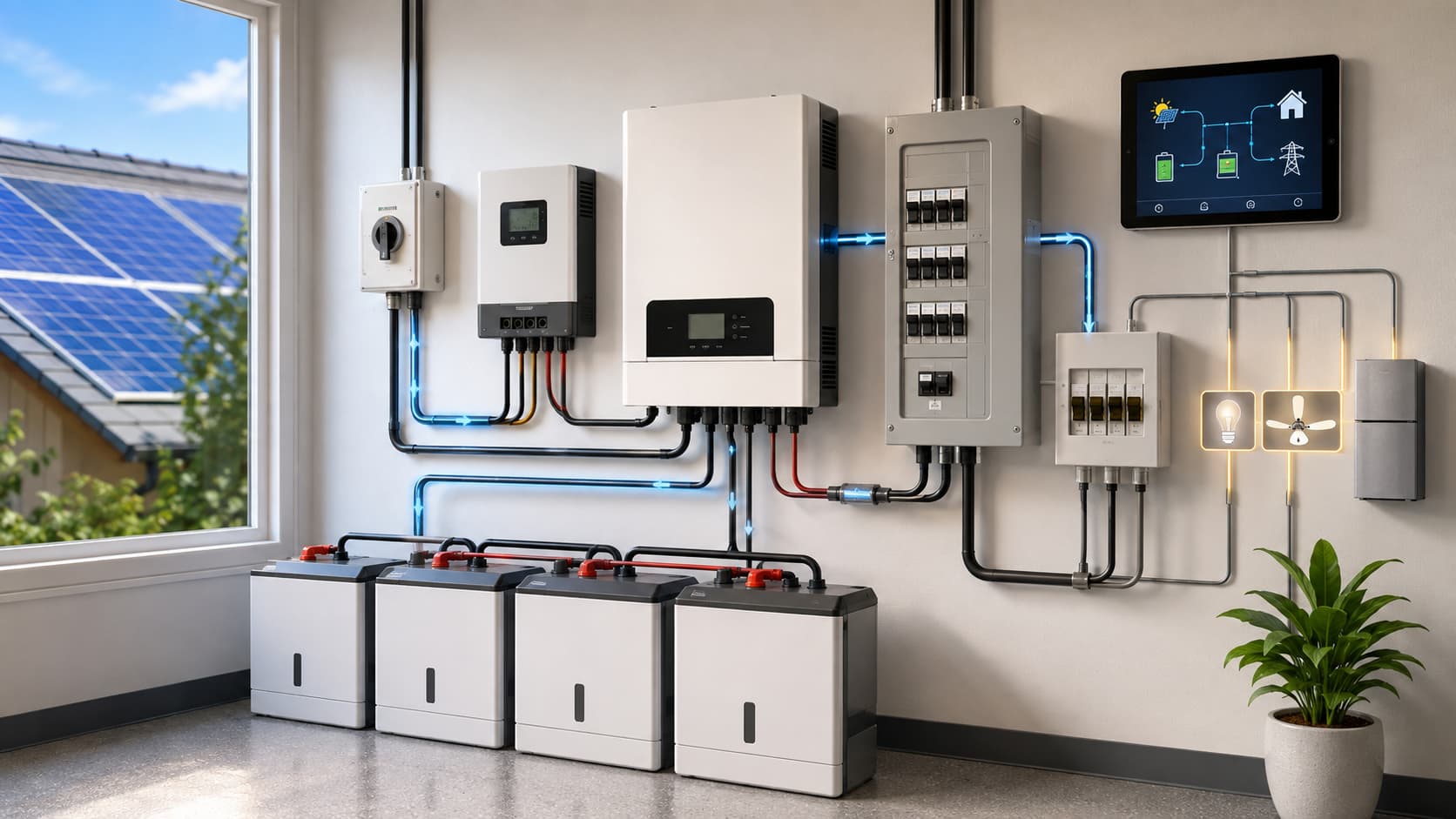
Request a one-line diagram showing the solar array, combiner or isolator, charge controller, inverter, battery, backed-up circuits, grid connection where applicable, disconnects, and main protection points. A qualified local professional should confirm applicable electrical, permit, and inspection requirements.
Monitoring should show at least battery state of charge, solar generation, load power, operating mode, and active alarms. The project plan should identify who receives fault notifications, who can change settings, and which configuration records to retain after commissioning.
Compare Solar Solution Quotations with One Operating Brief
Send every bidder the same load table, outage scenario, site information, battery reserve policy, and recovery target. Otherwise, each bidder may calculate a different system, making price comparisons unreliable.
Require every quotation to identify:
- Included equipment
- Excluded equipment and services
- Load and runtime assumptions
- Usable battery capacity
- Inverter continuous and surge output
- Solar production assumptions
- Installation responsibilities
- Commissioning tests
- Warranty boundaries
- Handover documents
- Expansion limitations
A compliance table can make differences visible. Each bidder should mark every requirement as compliant, alternative, or excluded and explain any proposed alternative.
Review the supplier’s project background, but judge the proposed system primarily on its calculations, documented assumptions, component compatibility, and installation scope. General experience can support a decision, but it does not replace a project-specific design.
Also check future expansion before approval. Adding panels may exceed controller input limits. Adding batteries may require matching rules, communication changes, or firmware updates. Adding loads may require a larger inverter, cables, and protection equipment. Planned headroom can cost less than replacing central components later.
Avoid Backup and Off-Grid Planning Mistakes Before Purchase
A common mistake is treating every circuit as equally important. Another is using peak watts as the complete energy model without calculating daily consumption. Other recurring problems include:
- Purchasing storage before checking recharge time
- Ignoring inverter surge requirements
- Using annual solar production to represent winter conditions
- Comparing batteries only by amp-hours
- Assuming all advertised battery capacity is usable
- Failing to document quotation exclusions
- Leaving operating decisions until handover
- Approving production without a commissioning plan
Off-grid planning also requires clear operating rules. Users should know which circuits remain active at a low state of charge, when optional loads may operate, and what action to take after a system alarm.
The solar planning FAQ can support early questions, but the final project requires instructions based on the installed equipment and approved load schedule.
Prepare a short operating card that records:
- Tier-one circuits
- Low-battery load-shedding rules
- Generator or grid-charging conditions
- Alarm response steps
- Manual shutdown procedure
- Contact person for technical support
Test these instructions during commissioning rather than handing them to the owner without demonstration.
Choose a Solar Solution by Protected Service, Not System Size
The right design is not automatically the system with the largest battery, array, or inverter. It is the smallest practical system that can protect the agreed services for the required period, restore its battery reserve within the accepted recovery window, and operate under clear load-control rules.
Before ordering, freeze five project items:
- Tier-one load table
- Required backup duration
- Battery reserve policy
- Solar recovery target
- Quotation exclusions
Then verify usable battery energy, inverter surge capability, monthly solar assumptions, component compatibility, installation responsibilities, monitoring, and commissioning evidence.
If a supplier cannot connect the proposed equipment sizes to these five project items, the design is not ready for approval. A well-planned Solar Solution makes trade-offs visible before money is committed and gives the owner clear criteria for checking performance after installation.