
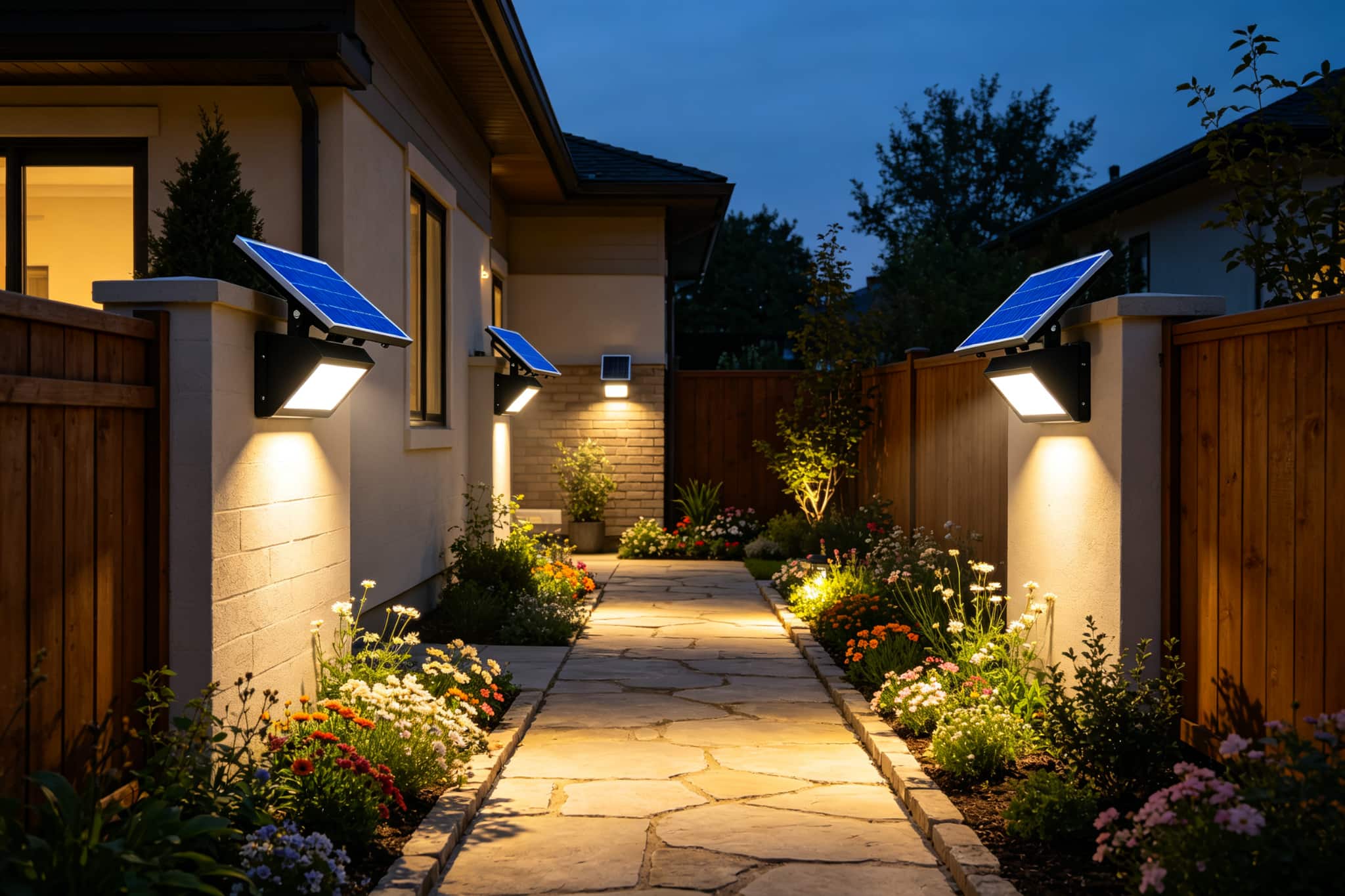
After sunset, most yards turn into a dark stretch that nobody wants to walk across. A set of sun-powered garden lights changes that without adding a single dollar to your electric bill.
- They light paths and steps to prevent falls.
- They add warm ambiance to patios and flower beds.
- They brighten entry points and deter intruders.
These solar lights run on free sunlight, turn on at dusk by themselves, and need no wiring or electrician. Knowing how they work and how to fix them keeps the lights running all year.
What Sun-Powered Garden Lights Do for Your Outdoor Space
Sun-powered garden lights earn their place in a yard in several ways. Some jobs are about safety, others are about mood. A few make the home feel lived-in after dark. Most outdoor solar lights handle more than one of these jobs at once. A single fixture by the back door can mark a step and welcome a visitor. It also makes the house look occupied. You never need to hire an electrician. You can place them exactly where the dark spots are, and move them again if the layout changes. Across the yard, these jobs fall into three clear groups: safety, ambiance, and security.
Sun-powered garden lights Make Paths and Steps Safer.
The most practical job is lighting the ground you walk on. A short line of solar lights for yard use marks the edge of a path. It can also outline a set of steps or a sloping driveway. Each fixture stores power during the day, so no wires trip you up. You never need to call an electrician. After dark, the soft glow prevents falls and makes it clear where the path bends. This matters most for older visitors and anyone carrying groceries or luggage after sunset.
Create Warm Ambiance on Patios and Around Garden Beds
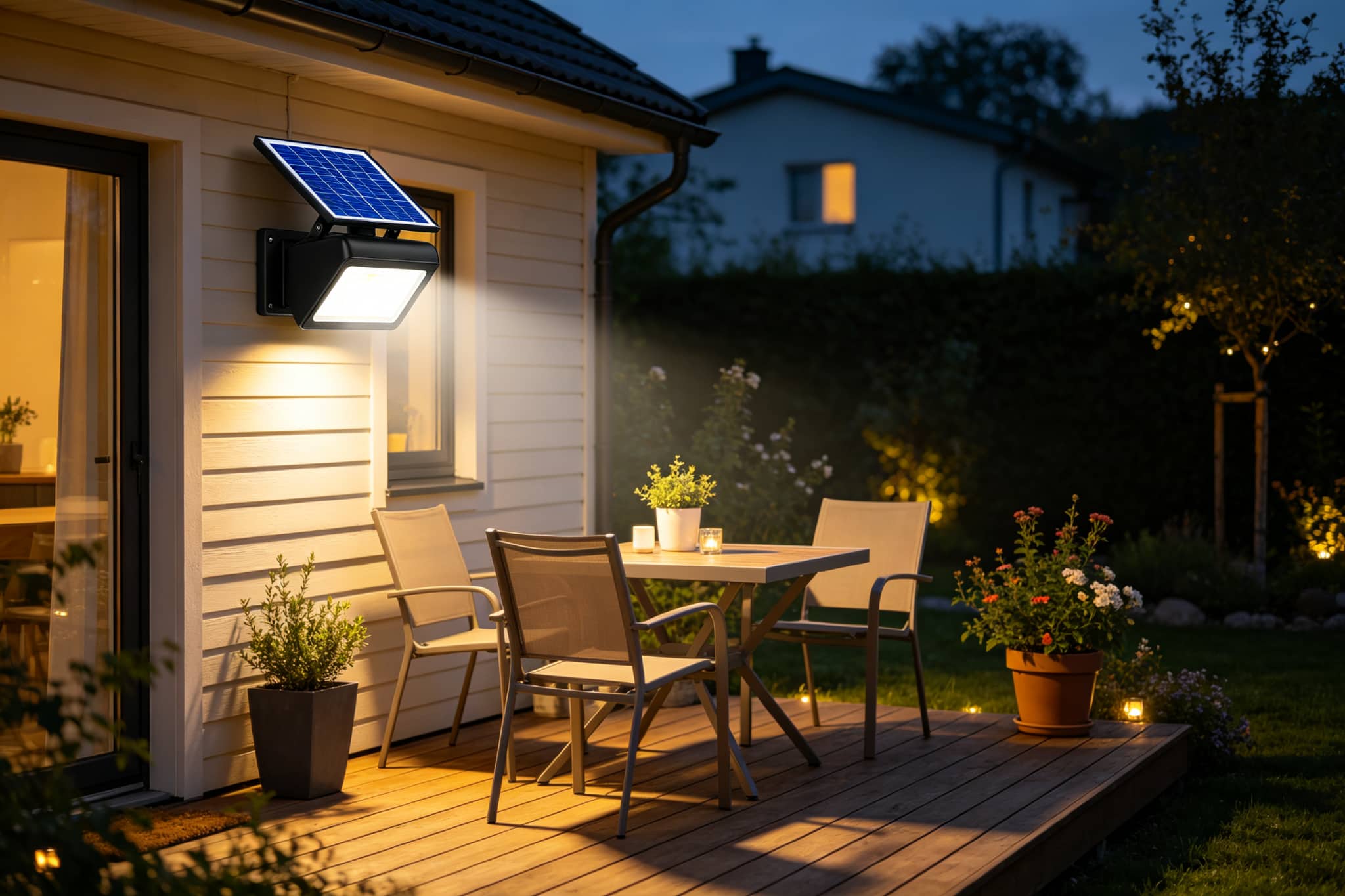
Lighting is also the easiest way to make a garden feel inviting at night. Solar lights for patio tables, decks, and flower beds cast a gentle glow that makes the space feel larger. A few well-placed fixtures turn a plain backyard into a spot where people want to sit and talk. Warm-white LEDs feel softer and more natural than the harsh blue of cheap security lights. Because running costs are zero, you can leave the whole display on every evening without guilt.
Brighten Entry Points and Discourage Unwelcome Visitors
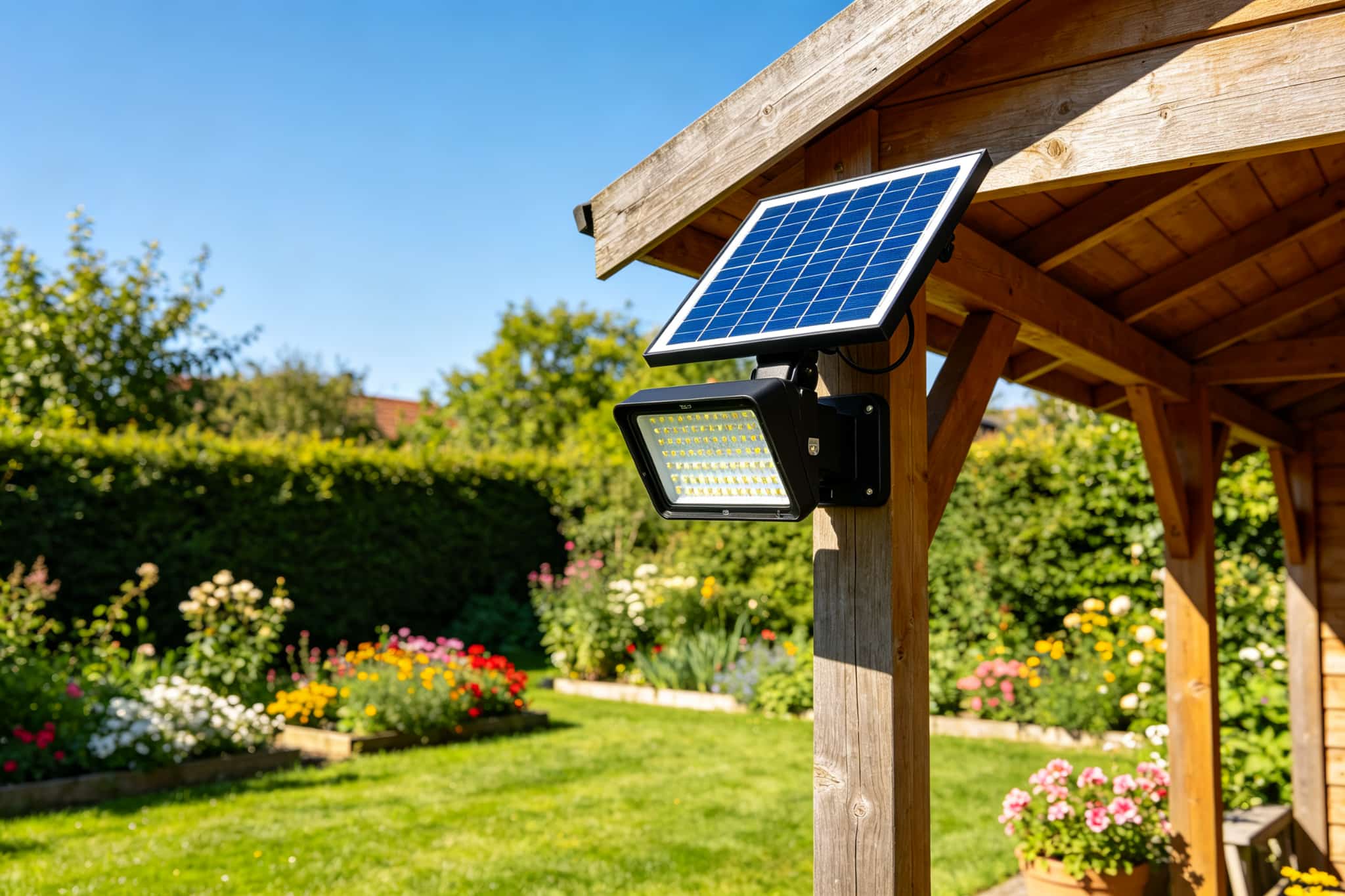
A lit home is a less attractive target. A solar LED flood light aimed at the front door, side gate, or back fence removes the darkness. Trespassers prefer exactly that kind of darkness. The same light helps security cameras capture a clear image and lets you see who is at the door. Most homeowners place one bright floodlight at each entry and softer lights along the rest of the yard. This layered approach gives security without flooding every window with light.
How Solar Outdoor Lights Work and How to Fix Common Problems
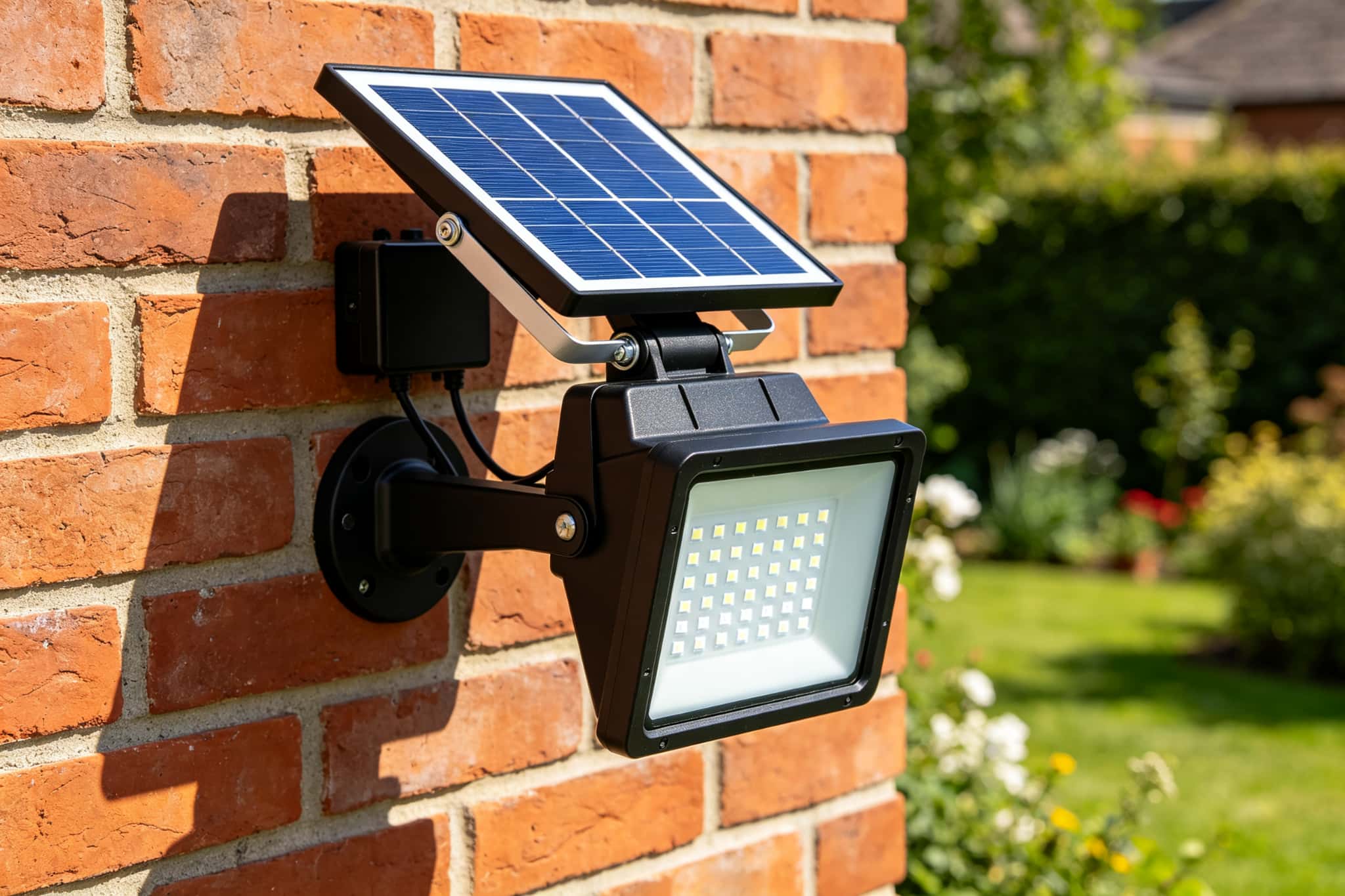
These solar outdoor lights may look simple, but each part plays a clear role. Every solar light has the same four parts. These are a small panel, a rechargeable battery, a light sensor, and an LED. The panel charges the battery during the day, and the sensor turns the LED on at dusk. The same parts that charge the light by day are also behind most of the problems you will meet. A dirty panel, a tired battery, a confused sensor, or a shaded spot can make the light look dead. Each cause has a simple check, and most fixes need no tools. A little basic knowledge turns a dead-looking light into a five-minute fix.
How Sun-powered garden lights Work
The working process of solar lighting can be divided into three stages: charging, energy storage, and discharging.
- Charging: Solar panels absorb sunlight and convert light energy into direct current. The controller regulates the current to charge the battery properly and prevents overcharging—the battery stores electrical energy for nighttime use.
- Energy Storage: When the ambient light dims, the controller detects a decrease in light intensity and automatically switches to the discharge mode.
- Discharging: The battery releases stored electrical energy to power the LED lights. The next day after sunrise, the solar lights re-enter charging mode and repeat the cycle.
The working principle of solar lights achieves true green lighting through a perfect combination of photovoltaic technology, an energy storage system, and intelligent control.
Why Sun-powered garden lights Go Dim or Refuse to Turn On
When a light fails, the battery is the most common culprit. Rechargeable NiMH cells typically wear out after one to two years of nightly cycles. A panel covered in dust, pollen, or autumn leaves cannot gather enough charge. Shade from a growing tree or a new porch light can also confuse the sensor. The fixture then thinks it is still daytime and stays off. Water that passes a cracked seal can corrode the contacts and stop the light dead. ENERGY STAR notes that LEDs use far less energy and last far longer than old bulbs. The LED is therefore rarely the first part to fail.
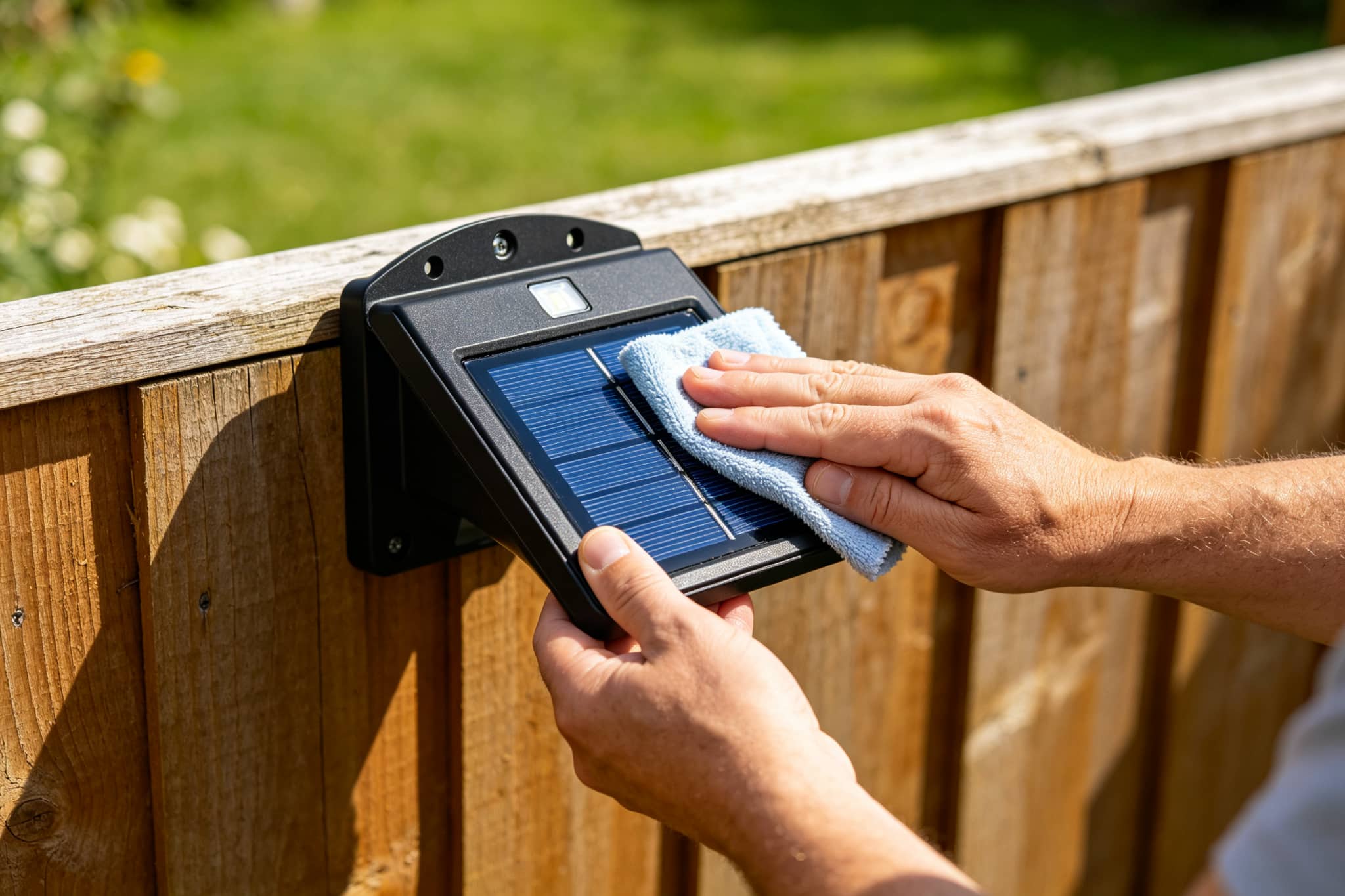
How to solve this: Start by wiping the panel with a damp cloth and moving the fixture back into full sun. Test the sensor in daylight by covering the panel with your hand. The light should come on within a few seconds. If it stays dark, open the battery compartment, check for corrosion, and fit a fresh rechargeable NiMH cell. Never use a single-use alkaline battery, because it cannot be recharged. Confirm the on-off switch is set to on and that the rubber seal sits flush. For a brighter, more reliable fixture built for gardens and patios, see the Solar Lights range. It offers a weatherproof solar LED flood light with an automatic dusk-to-dawn sensor.
Where to Position Sun-Powered Garden Lights for All-Night Charge
Placement decides whether a good light performs well or disappoints. Aim for a spot that gets at least six to eight hours of direct sunlight. Keep it away from the shade of eaves and trees. Keep the panel away from porch lamps and streetlights. Any nearby glow can stop the night sensor from switching on. Tilt the panel toward the midday sun and wipe it after dusty or snowy weather. If you need light in a permanently shaded corner, run a separate panel from a sunny spot. You can also choose a fixture with a separate panel cable.
For a larger yard, group your solar lights for yard and patio use instead of buying them one by one. Place a bright solar LED flood light at each entry and softer lights along paths and patio edges. When it is time to add more fixtures, you can browse the full solar lighting collection online.
Enjoying a Brighter Yard With Zero Running Cost
Sun-powered garden lights do three jobs at once: they make the yard safer, prettier, and more secure after dark. Once you understand the panel, battery, and sensor, upkeep is simple. It mostly comes down to sun, cleaning, and an occasional fresh battery. Choose a weatherproof solar LED flood light for the bright spots. Use softer solar lights for yard edges and patio corners. Place them in full sun, keep the panels clean, and they will switch on by themselves every single night. A well-lit garden costs nothing to run and works even when the power goes out.