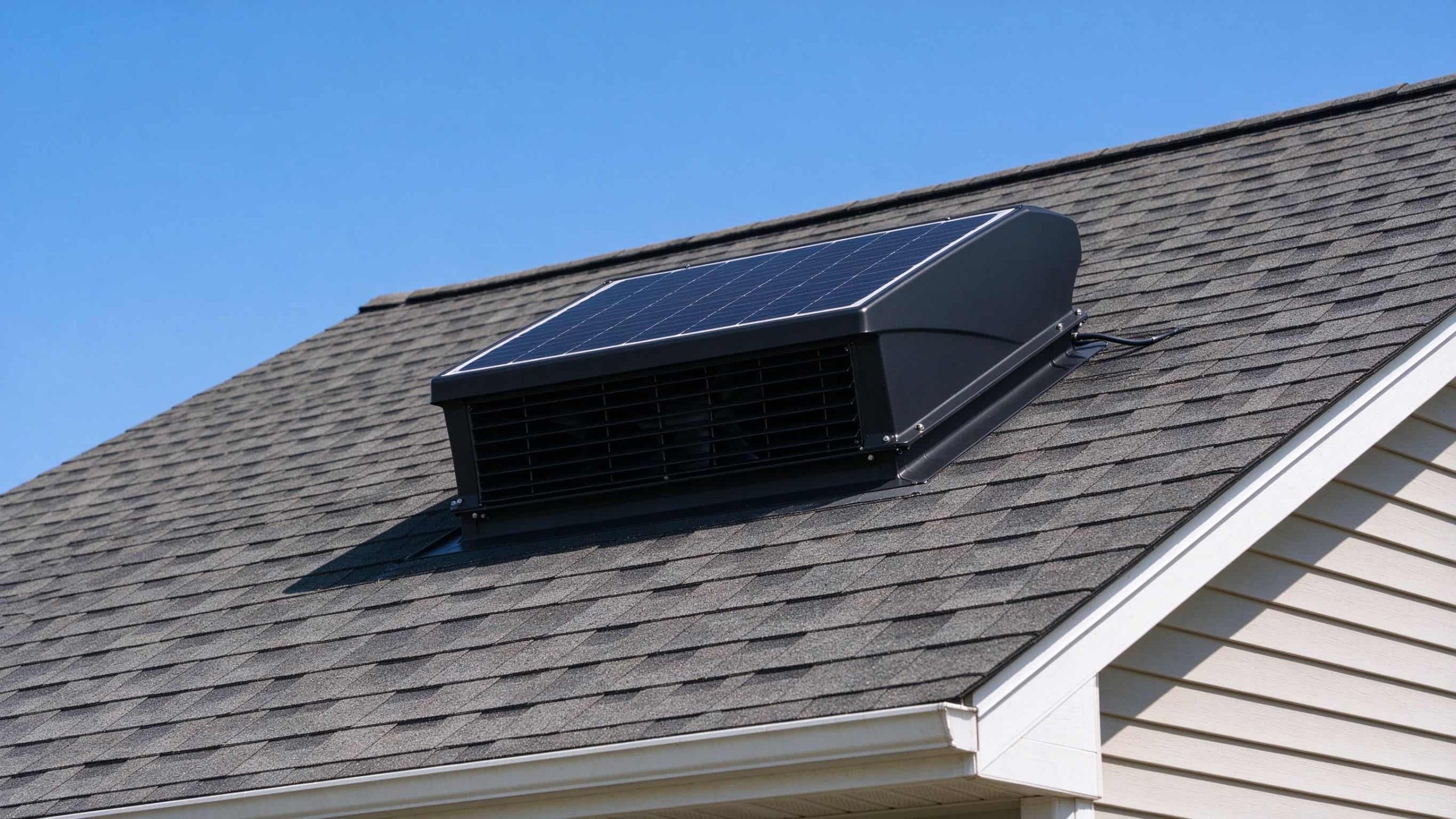
A solar attic ventilation fan removes excess heat and moisture from your attic. It uses energy from the sun to power the fan. During hot summer days, attics can become much hotter than the outside air. The roof absorbs sunlight and transfers heat into the attic space. A properly sized solar attic fan removes hot air and brings in cooler air through intake vents. The cooling effect depends on attic size, roof exposure, insulation, climate, and airflow design. A solar attic fan does not need household electricity or complex wiring. The solar panel powers a DC motor directly. The fan runs when sunlight is available, especially during the hottest part of the day.
What a Solar Ventilation Fan Actually Pulls Out of Your Attic
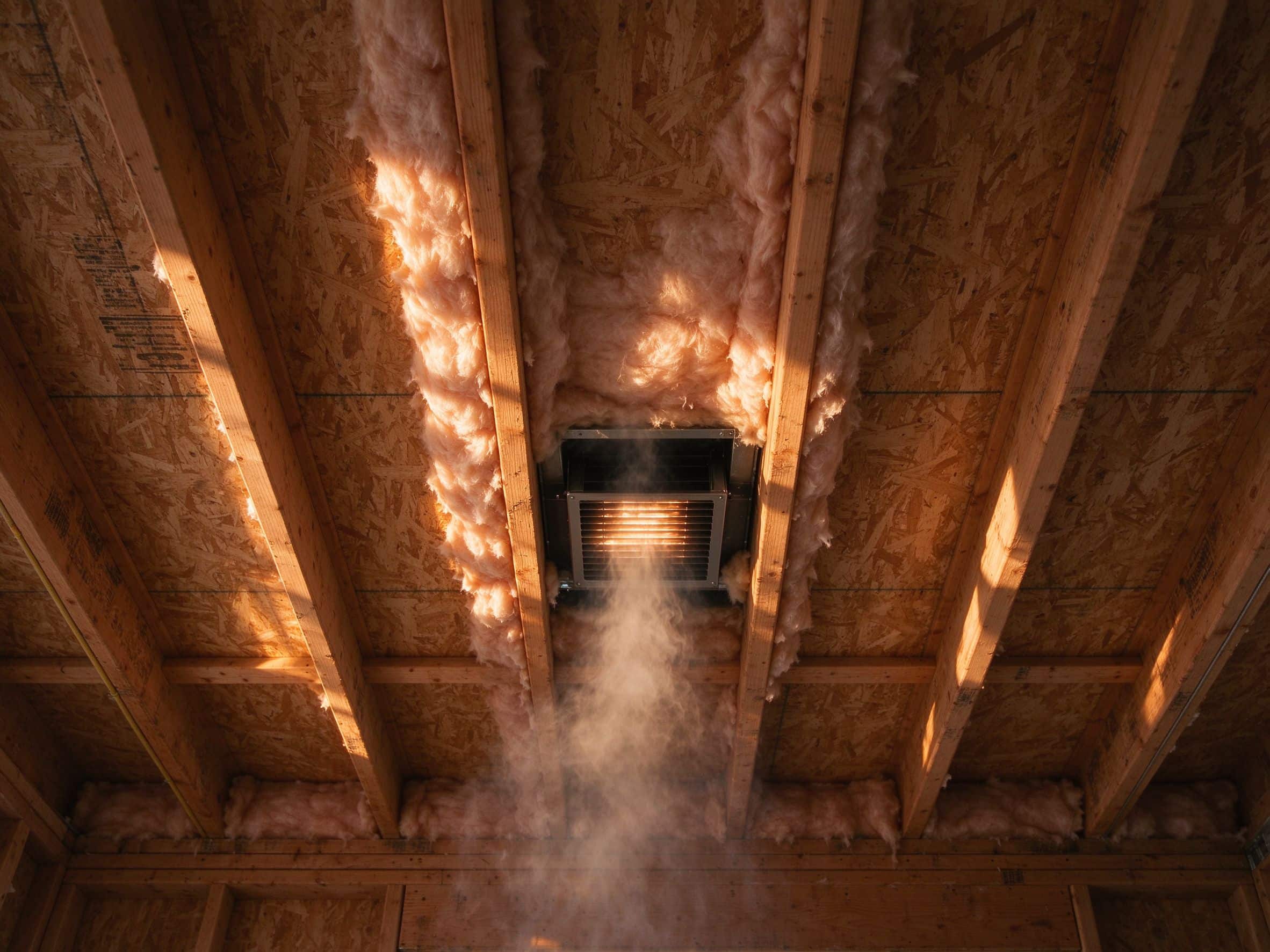
An attic becomes hot because sunlight heats the roof surface, and that heat transfers downward into the attic space. Without proper ventilation, hot air becomes trapped and continues building throughout the day. A solar roof vent fan sits near the highest part of the attic and exhausts this trapped hot air outside. The solar panel powers the motor directly, meaning:
- No connection to the electrical grid is required
- No household wiring is needed
- No battery system is necessary for daytime operation
When sunlight is strongest, the fan typically operates at its highest output. This matches the time when attic heat buildup is usually greatest. A common residential solar attic fan may move hundreds to more than 1,000 cubic feet of air per minute (CFM), depending on the model and solar panel size. The correct airflow depends on attic square footage, ventilation design, and the amount of available intake air. As hot air leaves the attic, replacement air enters through intake vents:
- Soffit vents
- Gable vents
- Other approved intake openings
This continuous airflow helps prevent the attic from trapping excessive heat.
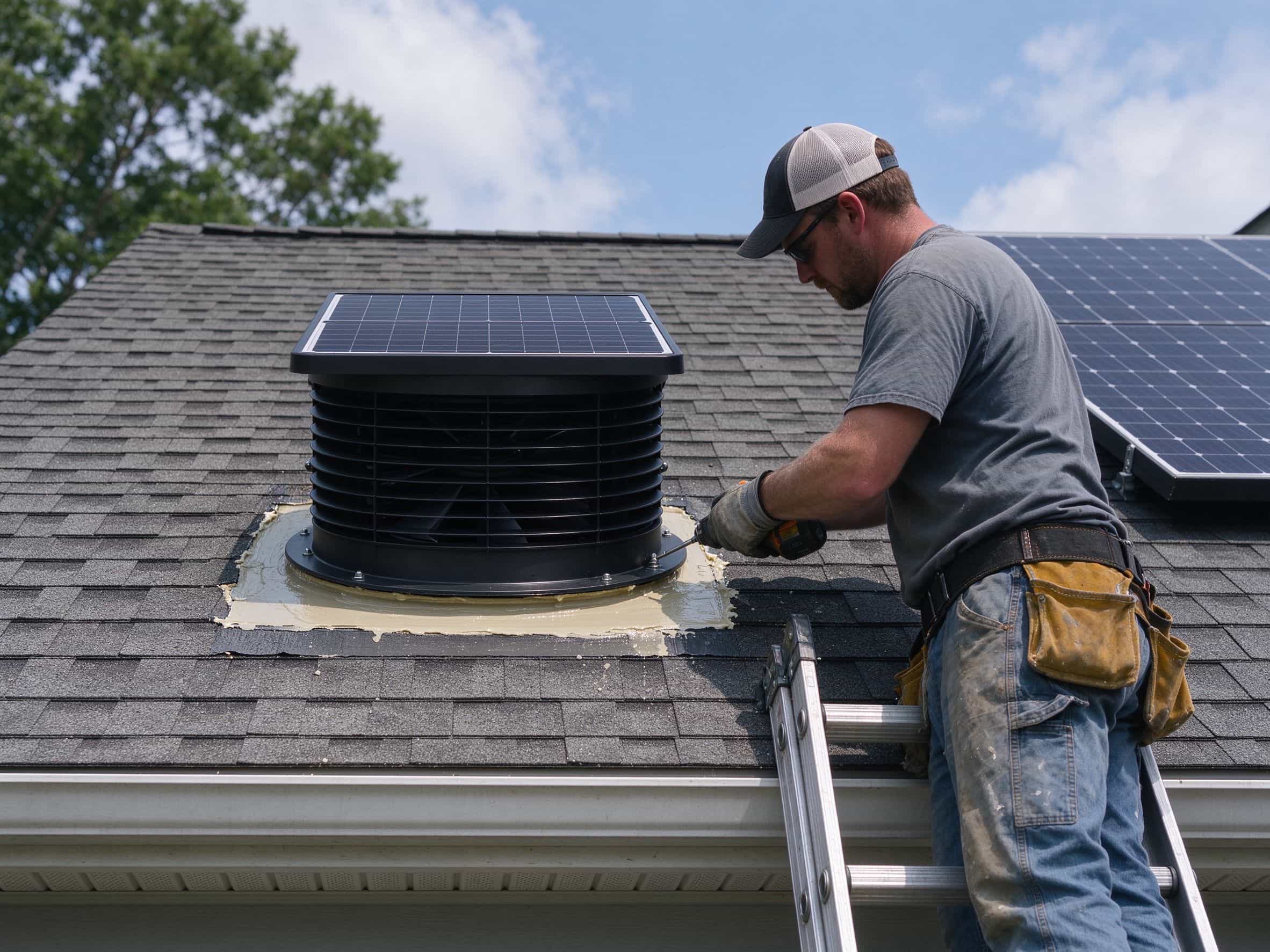
Sizing and Mounting a Solar Roof Vent Fan
Panel Size and Placement
Mounting on Asphalt or Metal Roofs
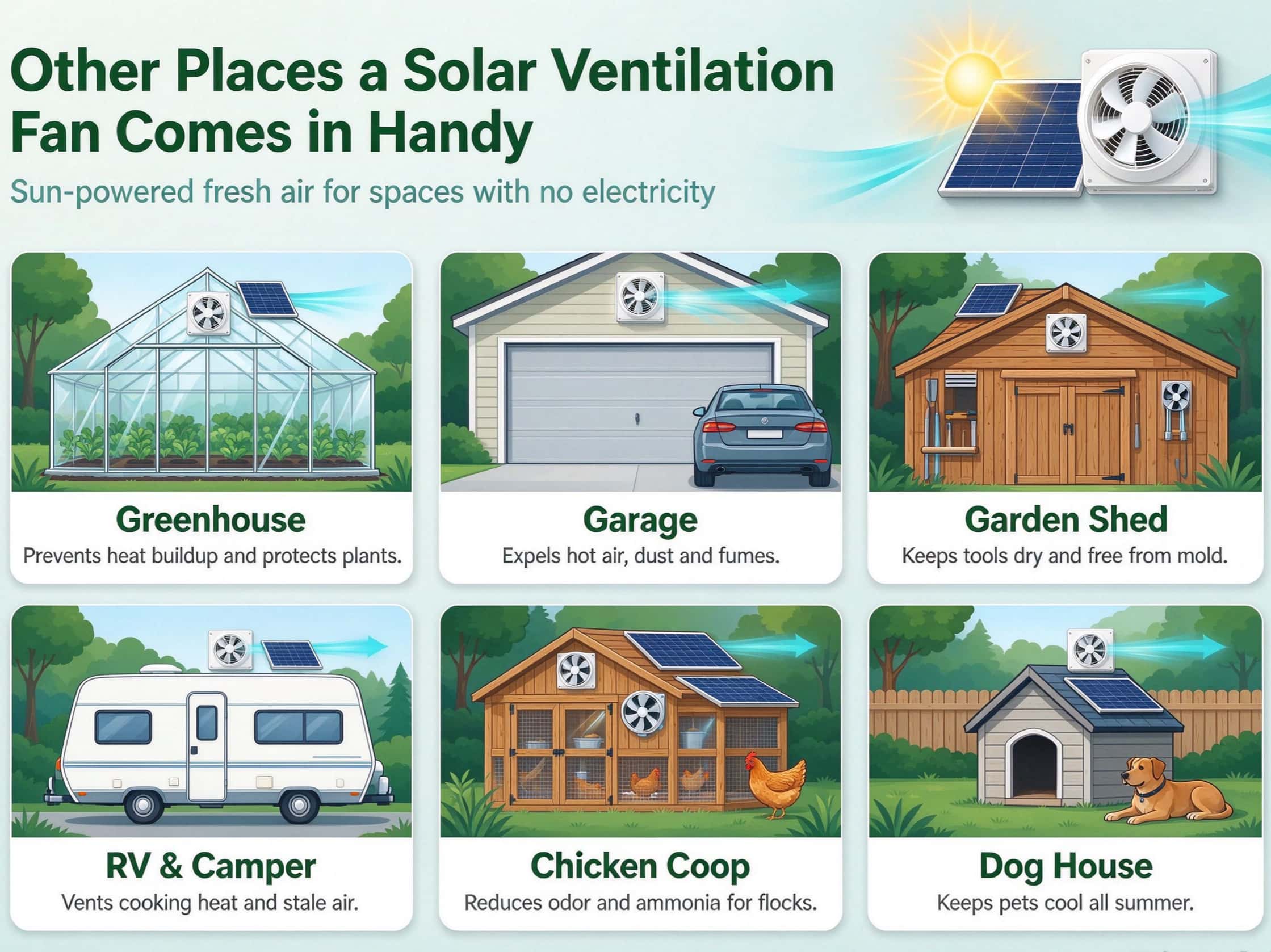
Other Places a Solar Ventilation Fan Comes in Handy
- Backyard sheds and workshops. A shed with a metal roof turns into an oven by noon. A small 20W fan mounted in the gable or the roof keeps the paint, the lawnmower, and the tools from baking all summer.
- Greenhouses and hoop houses. Plants die from heat before they die from cold. A gable-mounted solar fan pulls the 120°F air out while the vented ridge lets cooler air in, which keeps seedlings alive through July.
- RVs and camper vans. A tiny roof vent fan on the bathroom or the living area runs while the rig is parked off-grid. It pulls cooking heat and condensation out without draining the house battery.
- Garages and pole barns. A garage that sits under a bedroom floor in summer radiates heat up through the ceiling. A solar fan in the gable drops that garage temperature by 20 to 30 degrees, which also slows the paint on the walls from peeling.
- Crawl spaces and basements. Moist crawl spaces grow mold and rot floor joists. A solar fan pulling the damp air out keeps the wood dry and cuts the humidity that creeps up into the house.
- Dog kennels, chicken coops, and barns. Animal housing needs fresh air more than it needs heat in summer. A solar fan on the roof of a coop or kennel keeps the birds and dogs cooler without the owner paying to run it.