
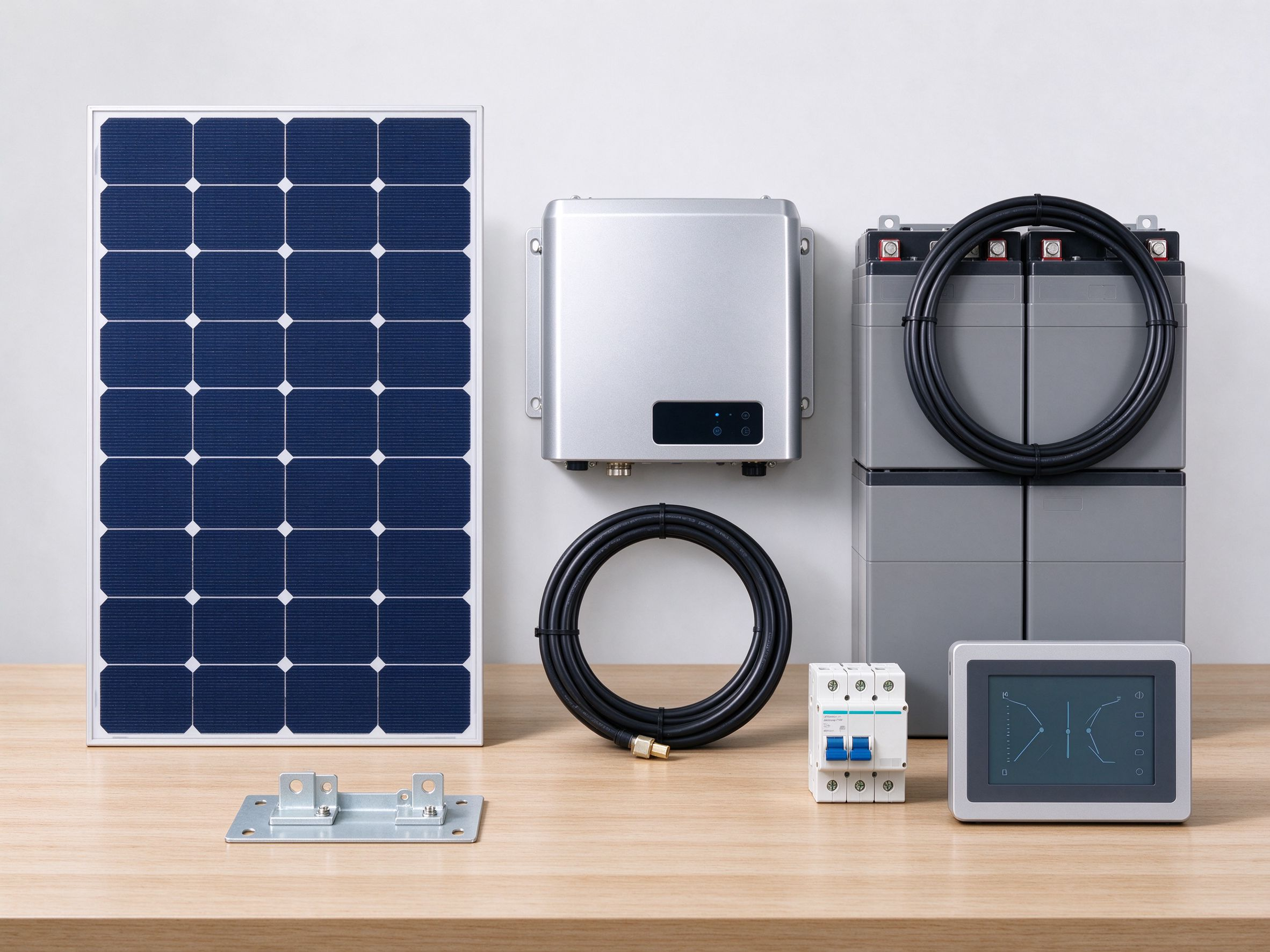
A complete solar energy system does more than just a few panels on a roof. Every working installation relies on several solar power components, each serving a specific job. The exact list changes depending on whether the system is grid-tied, off-grid, or hybrid. At minimum, you need panels, an inverter, mounting hardware, wiring, and electrical protection. To store energy for later use, add batteries and a charge controller. Monitoring equipment helps you track output and spot problems early. Knowing which parts are essential and which are optional saves you money and prevents design mistakes.
What Are the Main Solar Power Components in a Typical System?
Understanding each part separately is the first step to sizing a system correctly. The five groups- panels, an inverter, mounting hardware, wiring, and electrical protection- cover everything from the panels that generate electricity to the monitoring equipment that tracks performance. Some parts are mandatory for every installation. Others depend on whether you want battery storage or a grid connection.
Solar Panels: Converting Sunlight Into Electricity
Solar power system components start with the panels themselves. Photovoltaic cells inside each panel convert sunlight into direct current (DC) electricity. The number of panels you need depends on your daily energy use, local sun hours, and panel wattage. Panel efficiency, tilt angle, and shading all affect output. A single shaded panel can drag down an entire string. Roof orientation matters less in cloudy climates but still matters in sunny regions. Most residential systems use between 10 and 30 panels.
Inverters: Converting DC Power Into Usable AC Electricity
Home appliances run on alternating current (AC). That is where the solar inverter and battery components category comes in. The inverter changes DC power from the panels into the AC power your home uses. Three main types exist. String inverters handle multiple panels wired together. Microinverters mount on each panel individually. Hybrid inverters combine inverter and battery charging functions in one unit. The right choice depends on system size, shading, and whether you plan to add batteries later.
Batteries and Charge Controllers: Managing Energy Storage
Not every system needs batteries. Grid-tied homes often skip them entirely and rely on the utility grid for backup. Off-grid systems, however, cannot function without storage. Off-grid solar PV systems always include a battery bank and a charge controller. Batteries store excess daytime generation for use at night or during cloudy periods. The charge controller regulates the current flowing into the battery to prevent overcharging. Lithium-ion batteries now dominate new installations because they last longer and can be discharged deeper than older lead-acid types.
Mounting Structures, Wiring, and Electrical Protection Devices
Panels and inverters get most of the attention, but the supporting hardware matters just as much. Wiring and mounting components hold everything together and keep it safe. Mounting rails attach panels to roofs or ground frames. PV-rated cables carry DC from panels to the inverter. Circuit breakers, disconnect switches, and grounding protect against overload, fire, and electric shock. Surge protectors guard against lightning-induced voltage spikes. Skipping any of these creates both safety risks and code violations.
Monitoring Equipment and Grid Connections
Modern systems include some form of monitoring. Basic models display output on a screen. Smart models send data to your phone or tablet. You can track daily production, energy use, and battery state of charge from anywhere. Grid-tied systems also need a grid connection. This includes the utility-approved meter, interconnection hardware, and safety relays that shut the system down during a power outage. According to PV Magazine industry coverage, grid-tied systems must follow local utility and electrical code requirements before going live.
How Do Solar Energy System Parts Work Together?
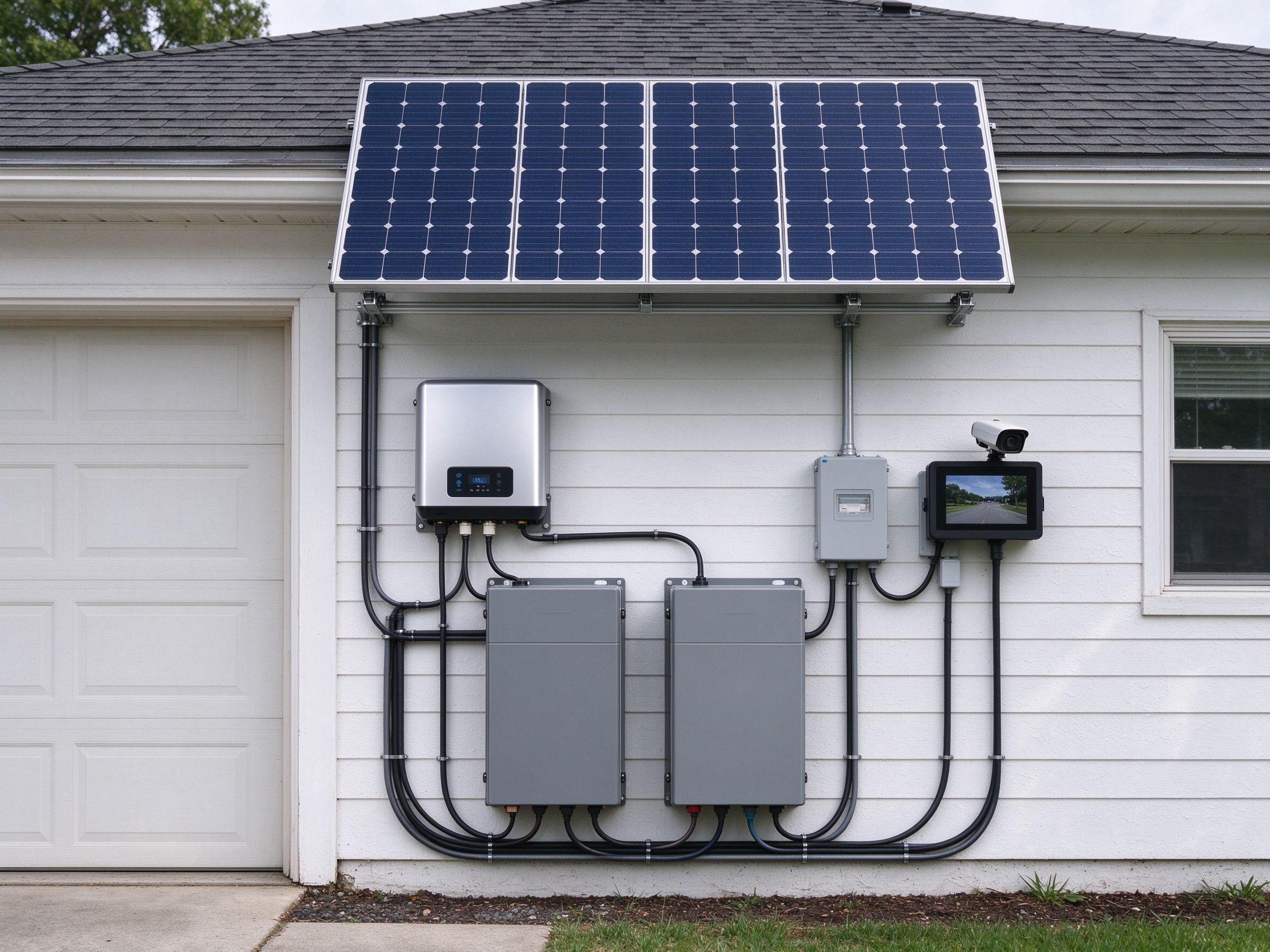
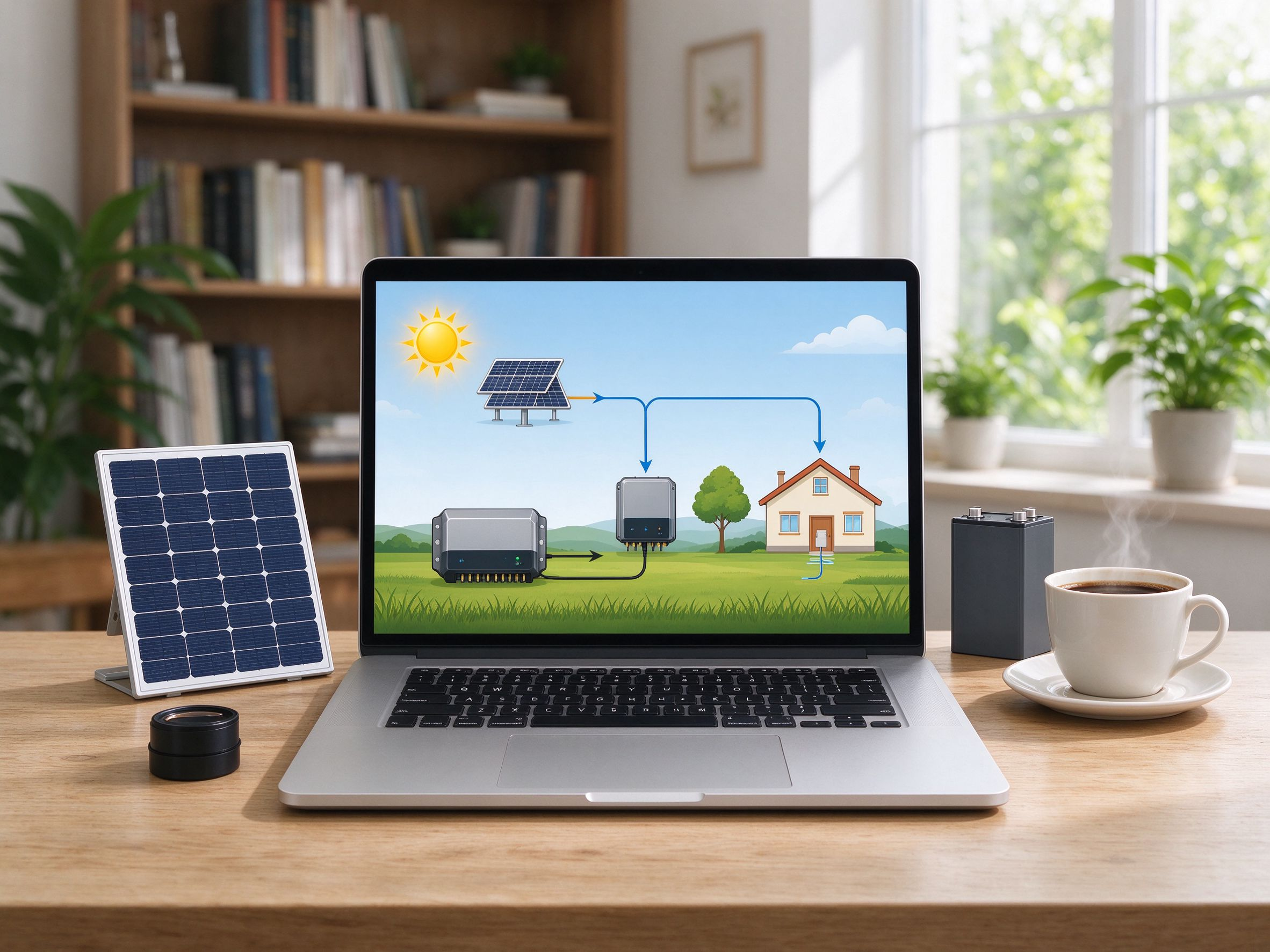
Knowing each part separately is useful. A solar energy system converts sunlight into usable electricity through a continuous sequence. First, photovoltaic (PV) panels absorb photons from sunlight and generate direct current (DC) electricity through the photovoltaic effect. This DC power then flows into an inverter, which converts it into alternating current (AC) — the standard form of electricity used in homes and businesses. From the inverter, AC power travels to the electrical panel (breaker box), which distributes it to wall outlets and appliances throughout the building.
From Sunlight to Electricity: The Basic Energy Flow
The basic flow follows a simple chain. Sunlight hits the panels and produces DC electricity. The DC travels through wiring to the inverter. The inverter converts it to AC electricity. From there, AC power goes straight to household loads or onto the utility grid. In a grid-tied system, surplus electricity flows to the grid. You get credit for that surplus under net metering rules. When panels underproduce, you draw power back from the grid. The whole process runs automatically without a battery.
How Batteries and Charge Controllers Support Off-Grid Power
Off-grid systems add two extra steps to that flow. After the panels produce DC power, some current first goes to the charge controller. The controller regulates charging and sends power to the battery bank for storage. When the sun goes down, the battery feeds DC power to the inverter. The inverter then converts it to AC for home use. This loop keeps the lights on at night and through cloudy stretches. A backup generator kicks in during extended periods of bad weather.
Key Differences Between Grid-Tied, Off-Grid, and Hybrid Setups
All three system types use the same core solar energy system components. They differ mainly in how batteries and grid connections are handled. The table below summarizes the key differences.
|
Feature
|
Grid-Tied
|
Off-Grid
|
Hybrid
|
|---|---|---|---|
|
Grid connection
|
Yes
|
No
|
Yes
|
|
Batteries required
|
Optional
|
Yes
|
Yes
|
|
Backup during outage
|
No (standard)
|
Yes
|
Yes (key loads)
|
|
Surplus power
|
Exported to grid
|
Stored in batteries
|
Stored or exported
|
|
Typical cost level
|
Lower
|
Higher
|
Medium to high
|
Grid-tied systems cost less because they skip batteries. Off-grid systems cost more but deliver full independence. Hybrid systems sit in the middle. They stay connected to the grid but include batteries for backup power. To learn more about the differences between off-grid and grid-connected solar systems, check out this guide comparing off-grid vs. grid-connected systems.
Can You Install Solar Power Components Yourself?
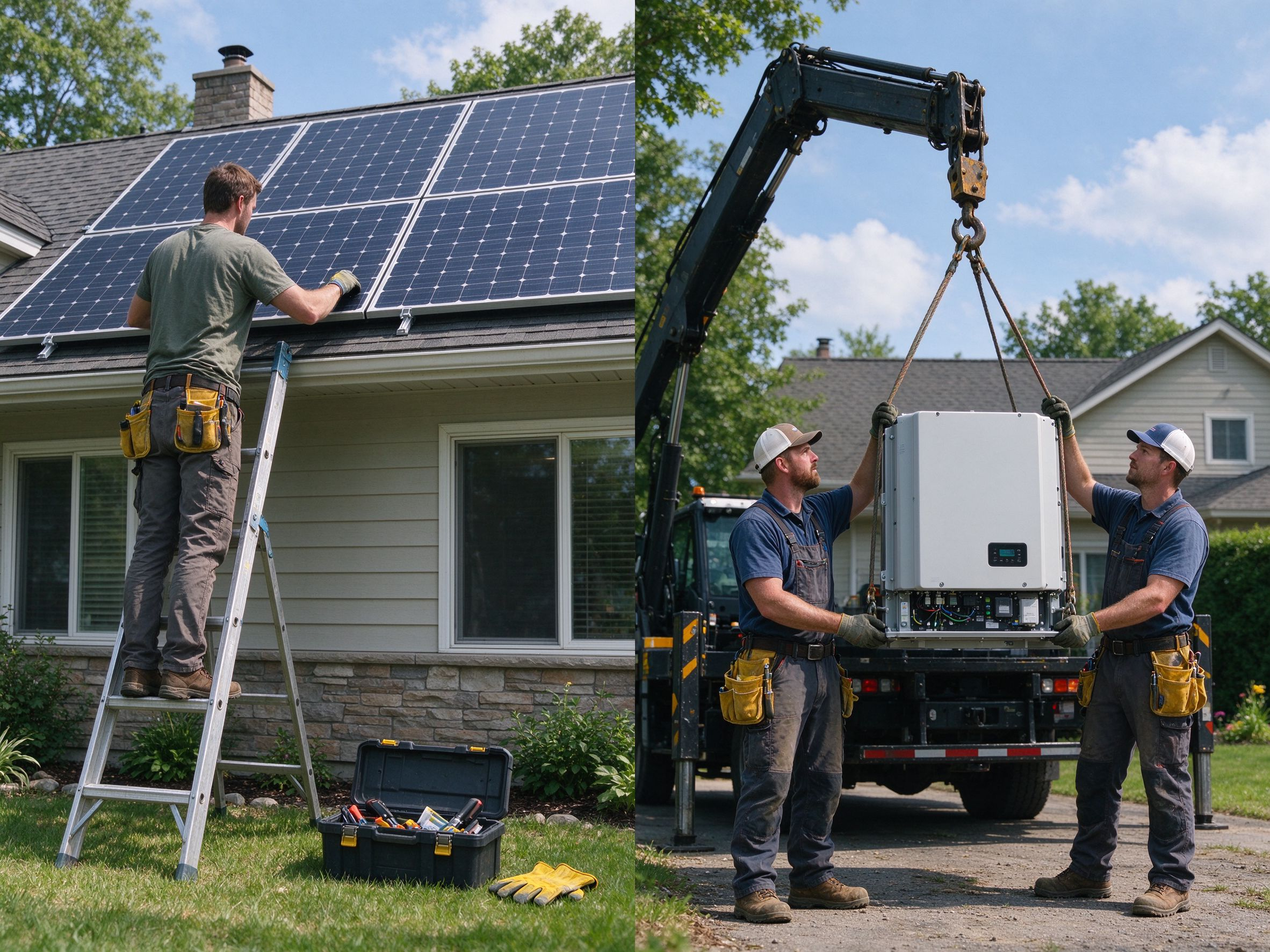
Once you know what parts you need, the next question is whether you can install them yourself. The answer depends on which tasks you mean. Some prep work and monitoring are reasonable DIY projects. Roof mounting and high-voltage DC wiring usually require a licensed professional.
Which Solar Installation Tasks Are Suitable for DIY?
Several steps make sense as DIY projects. You can calculate your daily electricity use and research panel and inverter specs. You can compare product prices, read user reviews, and install monitoring equipment once the system is up and running. Small off-grid kits for RVs or tiny cabins sometimes include everything needed for basic self-installation. These systems run at low voltage and carry less risk. Always follow the manufacturer’s instructions exactly.
What Tools, Skills, and Safety Precautions Do You Need?
If you tackle any installation yourself, start with the right tools. You will need wrenches, wire strippers, a multimeter, and mounting hardware. Basic electrical knowledge helps you understand wiring diagrams and breaker sizing. Safety matters. DC arcs from solar panels can cause serious burns even at low voltages. Working on a roof carries fall risks. Batteries store large amounts of energy and can short-circuit or leak. Wear proper safety gear and never work alone on a roof.
When Should You Hire a Qualified Solar Installer?
Licensed professionals should handle roof structural assessments, main panel upgrades, grid interconnection, and high-voltage DC wiring. These tasks affect both safety and code compliance. According to EnergyTrend solar analysis, poorly installed systems are the leading cause of early failures and fire hazards. Local building codes and utility rules vary by region. A qualified installer knows your area’s setback requirements, permitting process, and inspection standards. The extra cost usually pays for itself through smoother permitting and safer operation.
Match the Right Components to Your System Goals
Understanding solar power components starts with separating essential parts from optional ones. Every system needs panels, an inverter, mounting hardware, wiring, and protection devices. Batteries, charge controllers, and smart monitoring depend on whether you want storage or full off-grid capability. The way these parts connect also shapes your experience. Grid-tied systems send surplus power to the utility. Off-grid systems store everything in batteries. Hybrid systems combine both approaches. Choose the configuration that matches your energy goals, budget, and need for backup during outages. Before buying anything, calculate your daily load, survey your roof or ground space, and check local utility rules. DIY prep work saves money. For high-voltage and grid-connected work, professional installation keeps you safe and compliant.